The Bible. For many, it’s a venerable, ancient book, perhaps intimidating in its sheer volume and historical distance. For Catholics, however, it’s much more than a collection of stories and laws; it’s a living, breathing Word of God, a cornerstone of their faith, and a deeply personal guide for daily life. But how do Catholics read the Bible? It’s a question that can lead to a rich exploration of faith, tradition, and individual spiritual practice. It’s not a rigid, one-size-fits-all approach, but rather a multifaceted engagement that involves both intellectual understanding and prayerful reflection.
This journey into the Catholic understanding of biblical readership reveals a tapestry woven with threads of history, community, and personal encounter. It’s about discerning God’s voice in the midst of everyday experiences, recognizing that the sacred text offers timeless wisdom for contemporary challenges. The Bible, in Catholic eyes, is not a dusty relic, but a dynamic source of divine revelation that continues to speak to us today.
For Catholics, the Bible isn’t just a book written about God; it’s a book from God. This understanding, rooted in the doctrine of divine inspiration, means that while human authors penned the Scriptures, they were guided by the Holy Spirit. This divine authorship is what lends the Bible its infallible authority in matters of faith and morals. It’s a testament to God’s desire to communicate with humanity, to reveal His love, His plan for salvation, and His will for our lives.
Think of it like a gifted artist creating a masterpiece. The artist uses brushes, paints, and canvas – the tools of their trade. Similarly, the Holy Spirit used human authors, with their unique styles, vocabularies, and cultural contexts, to convey God’s message. This means that when Catholics read the Bible, they are encountering God’s very own words, albeit mediated through human hands. This profound belief shapes their entire approach to understanding and interpreting its contents, fostering a deep reverence and a desire to listen attentively.
Beyond the Literal: Understanding the Bible’s Many Layers
One of the most significant aspects of how Catholics read the Bible is their appreciation for the different senses of Scripture. While the literal meaning is the bedrock, it’s not the sole destination. The Church teaches that Scripture can be understood on multiple levels, enriching our comprehension and deepening our spiritual connection. This approach acknowledges that the Bible is a complex literary and theological work, not simply a historical record.
The literal sense is the most straightforward meaning, what the human authors intended to convey. For example, the story of creation in Genesis literally describes God bringing the world into being. However, there are also spiritual senses:
The allegorical sense points to Christ and His Church. For instance, the crossing of the Red Sea can be seen as an allegory for Baptism, signifying liberation from sin.
The moral sense teaches us how to live. The Ten Commandments, for example, offer clear moral guidance.
The anagogical sense leads us toward our heavenly destiny. Prophetic visions of the New Jerusalem can inspire hope in eternal life. Recognizing these layers allows for a much richer and more profound engagement with the biblical narrative.
The Role of the Church: A Guided Interpretation
Perhaps the most distinctive element in how Catholics read the Bible is the indispensable role of the Magisterium, the teaching authority of the Church, vested in the Pope and the bishops in communion with him. Because the Bible is a divine revelation, and because God’s truth is unified, the Church provides a guided framework for interpretation. This doesn’t stifle individual reading, but rather ensures that individual interpretations remain consistent with the broader deposit of faith handed down through the apostles.
Imagine a vast, ancient library. While you can explore the shelves yourself, a knowledgeable librarian can help you navigate the collections, understand the context of different books, and point out the most significant works. The Church, through its teachings, historical documents, and liturgical practices, acts as this wise librarian, ensuring that the faithful are not led astray and that the Bible’s message is understood in its fullness. This communal interpretation, known as Tradition, is seen as a vital partner to Scripture.
Lectio Divina: A Prayerful Encounter
While the Church provides the authoritative framework, the personal, prayerful engagement with Scripture is paramount. A beloved method for how Catholics read the Bible on a personal level is Lectio Divina, or “divine reading.” This is not mere academic study; it’s a contemplative practice designed to foster a direct encounter with God through His Word. It’s a slow, prayerful unfolding of the text, allowing it to penetrate the heart and transform the soul.
This ancient practice typically involves four movements:
1. Lectio (Reading): Reading a short passage of Scripture slowly and attentively, allowing the words to sink in.
2. Meditatio (Meditation): Reflecting on a word or phrase that stands out, pondering its meaning and personal relevance.
3. Oratio (Prayer): Responding to God in prayer, perhaps with thanksgiving, petition, or confession, based on the meditation.
4. Contemplatio (Contemplation): Resting in God’s presence, allowing His grace to work in the soul beyond words.
For Catholics, encountering the Bible isn’t confined to private devotion. A significant portion of how Catholics read the Bible happens within the sacred liturgy, particularly at Mass. The lectionary, a carefully curated collection of biblical readings assigned for each day of the liturgical year, ensures that over a three-year cycle, the faithful hear a substantial portion of both the Old and New Testaments. This communal proclamation and hearing of God’s Word is central to Catholic worship.
During the Mass, the readings are not just recited; they are proclaimed with reverence. The homily, delivered by the priest or deacon, then helps to unpack the readings, connecting them to the faith and to the lives of the worshippers. This liturgical context provides a shared understanding and experience of Scripture, reinforcing its importance within the community and fostering a sense of unity in faith. It’s a constant reminder that the Bible is a living document, actively engaged in the present moment of worship.
Tools for Deeper Understanding
While faith and prayer are the primary lenses through which Catholics approach the Bible, they also utilize various tools and resources to deepen their understanding. This reflects a respect for the intellectual aspect of faith and a desire to grapple with the historical, cultural, and linguistic nuances of the sacred text. It’s about informed faith, where belief is enriched by knowledge.
Some of these tools include: Study Bibles: These Bibles often feature introductions to each book, scholarly notes, cross-references, maps, and theological explanations, providing invaluable context. Commentaries: Written by theologians and biblical scholars, these delve deeply into specific books or passages, offering detailed analysis and interpretation. Catechism of the Catholic Church: This authoritative summary of Catholic doctrine provides a framework for understanding how the Church interprets Scripture on key theological questions. Scriptural Concordances: These indexes help to locate specific words or verses within the Bible, facilitating deeper study of recurring themes.
Embracing the Journey
Ultimately, how Catholics read the Bible is a dynamic and ongoing journey of faith. It’s a commitment to encountering God, to allowing His Word to shape their hearts and minds, and to living out the Gospel message in the world. It’s a practice that is both deeply personal and profoundly communal, guided by the wisdom of the Church and illuminated by the Holy Spirit.
So, if you’ve ever wondered about the heart of Catholic biblical engagement, know that it’s an invitation to a relationship – a relationship with the Divine Author, who invites each of us to listen, to learn, and to be transformed by His enduring love story. It’s about seeing the Bible not as a rulebook, but as a love letter from God, waiting to be opened and cherished.
What is the Catholic Church’s stance on the Bible?
The Catholic Church views the Bible as the inspired Word of God, a sacred text that reveals God’s plan for salvation. It is considered the cornerstone of Catholic faith and practice.
How is the Bible interpreted in the Catholic Church?
Catholics interpret the Bible through the lens of Catholic Tradition and the Magisterium (the teaching authority of the Church, comprised of the Pope and bishops). This approach ensures a consistent and orthodox understanding of scripture.
What role does the Holy Spirit play in reading the Bible?
The Holy Spirit is believed to guide believers in understanding and applying the teachings of the Bible. Catholics pray for the Holy Spirit’s assistance when reading scripture to gain deeper insight and spiritual wisdom.
Are there specific methods or approaches recommended for Catholic Bible reading?
Yes, Catholics are encouraged to engage in various forms of prayerful reading, such as Lectio Divina (divine reading), which involves reading, meditating, praying, and contemplating scripture. Studying commentaries and engaging in discussions with fellow Catholics are also beneficial.
Do Catholics believe the Bible should be read literally?
While some parts of the Bible are historical accounts, Catholics understand that the Bible contains various literary genres (poetry, prophecy, allegory, etc.). Therefore, interpretation considers the intended meaning and context, not always a strictly literal understanding.
How does Catholic teaching on the Bible differ from other Christian denominations?
A key difference lies in the Catholic emphasis on the complementary roles of Scripture and Tradition, interpreted by the Magisterium. While many Protestant denominations emphasize “Sola Scriptura” (Scripture alone), Catholics see Scripture and Tradition as two interconnected sources of divine revelation.
What are the key parts of the Catholic Bible?
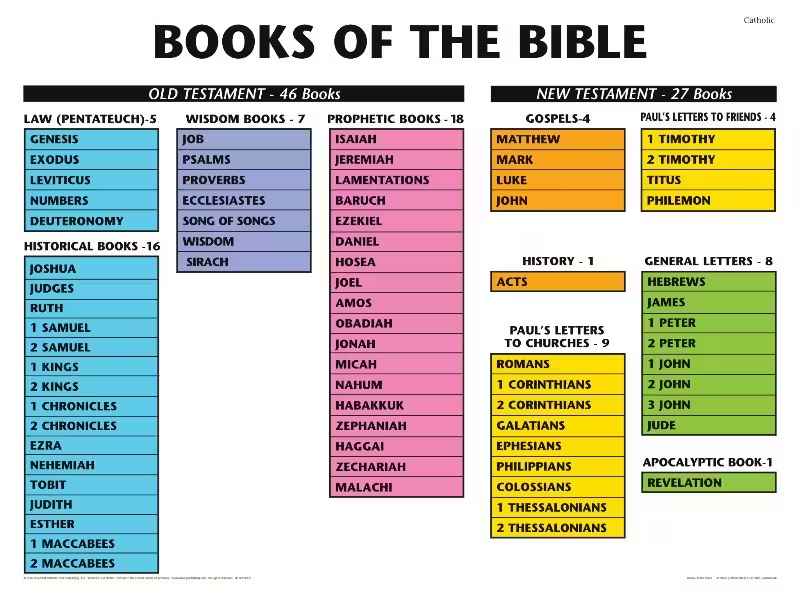
The Catholic Bible includes the Old Testament (which contains books not found in all Protestant Bibles, known as the deuterocanonical books) and the New Testament, which focuses on the life and teachings of Jesus Christ and the early Church.
Where can Catholics find guidance on reading the Bible?
Guidance can be found through the Church’s official teachings, the Catechism of the Catholic Church, parish priests and deacons, religious education programs, and approved Catholic commentaries and study guides.