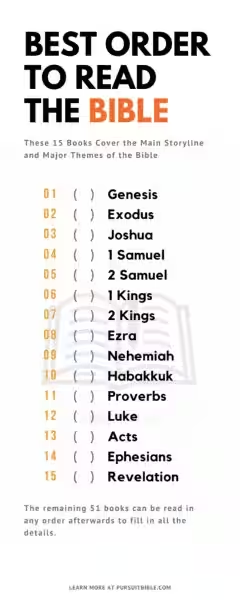
What Order Should the Bible Be Read? Unlocking Its Profound Narrative
The Bible, a cornerstone of faith and a literary masterpiece, often sparks a fundamental question for those embarking on its study: what order should the Bible be read? This isn’t a question with a single, universally prescribed answer, but rather an invitation to explore a journey of faith, history, and divine revelation. Understanding the structure and flow of Scripture can profoundly enhance your comprehension and connection to its timeless message. Whether you’re a seasoned believer seeking deeper insight or a curious newcomer, navigating this sacred text with intention can transform your spiritual walk.
Many approach the Bible with a desire to understand its teachings, its historical context, and its overarching narrative. The sheer volume and distinct styles of its books can feel daunting, leading to the natural inclination to seek guidance on the most effective reading path. This article aims to demystify the process, offering practical approaches and insightful perspectives on what order should the Bible be read to foster genuine understanding and spiritual growth.
The Case for Chronological Order: Tracing God’s Redemptive Story
One of the most intuitive ways to engage with the Bible is to read it in chronological order, attempting to follow the timeline of events as they unfolded. This approach allows you to witness the unfolding of God’s plan for humanity from creation to the establishment of the New Covenant. Imagine reading a captivating historical novel; you wouldn’t jump randomly between chapters. Similarly, a chronological reading helps you grasp the cause-and-effect relationships between biblical events, seeing how promises made in the Old Testament are fulfilled in the New.
Beginning with the creation accounts in Genesis, moving through the patriarchs, the Exodus, the Law given to Moses, the history of Israel, the prophets, and then transitioning to the life, death, and resurrection of Jesus Christ and the early church, offers a powerful, overarching narrative. This method is particularly beneficial for understanding the historical development of God’s relationship with His people and the gradual revelation of His character and purposes. For instance, understanding the struggles and faithfulness of Abraham lays a crucial foundation for appreciating the significance of God’s covenant promises throughout subsequent generations. When considering what order should the Bible be read, the chronological method provides a cohesive and flowing story.
Benefits of the Chronological Approach
Reading the Bible chronologically offers a unique advantage: it helps to contextualize each event and prophecy. You can see how God’s interactions with individuals and nations shaped the landscape of faith and paved the way for future revelations. For example, understanding the covenant God made with Abraham becomes even more impactful when you see how that covenant is revisited and reaffirmed throughout the Old Testament, culminating in the ultimate fulfillment through Jesus Christ. This method emphasizes the progressive nature of revelation, showcasing how God gradually revealed Himself and His plan over millennia.
This approach also helps to connect the dots between different biblical books. You might read about a specific historical event in one book and then see its consequences or further development in a later book, even if they weren’t written in immediate succession. This interconnectedness is a testament to the Bible’s unified message. When asking yourself what order should the Bible be read, the chronological path can feel like tracing a magnificent, divinely authored epic.
The Canonical Order: Following the Structure of the Original Texts
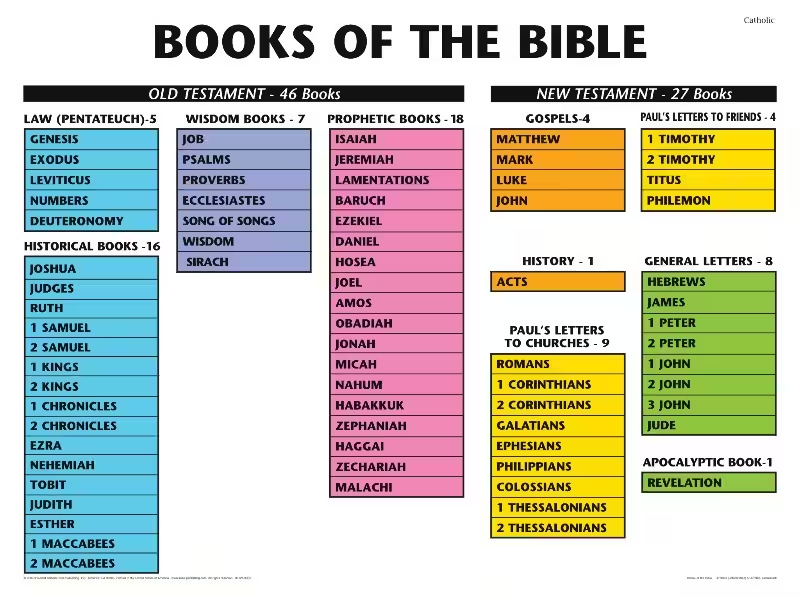
Alternatively, many choose to read the Bible in its canonical order, meaning the order in which the books are traditionally arranged in most Bibles. This arrangement wasn’t arbitrary; it reflects centuries of theological consideration and understanding of the books’ content and purpose. This order often moves from historical narratives and law in the Old Testament to wisdom literature, poetry, and prophecy, then transitions to the Gospels, Acts, epistles, and Revelation in the New Testament. This structure is designed to guide the reader through different genres and themes in a way that builds understanding.
The canonical order often groups books by theme or author, which can help in understanding the unique contribution of each book to the overall biblical message. For example, the grouping of the Pentateuch (Genesis, Exodus, Leviticus, Numbers, Deuteronomy) provides a foundational understanding of God’s law and covenant. Following this with the historical books shows the outworking of that covenant in the life of Israel. This is a well-established method for a reason, and for many, it answers the question of what order should the Bible be read.
Advantages of Canonical Reading
The canonical order often facilitates a theological understanding of the Bible. Each book is placed where it is to build upon previous themes and introduce new ones in a logical progression of thought. For instance, reading the Law in Leviticus before the Psalms allows for a deeper appreciation of the psalmist’s longing for God’s righteousness and forgiveness. This order helps readers to see how different parts of Scripture complement and illuminate each other, creating a rich tapestry of divine truth.
Furthermore, the canonical order respects the original intent and structure given to the collection of biblical writings. It allows you to engage with the books as they were intended to be presented within the larger corpus of Scripture. This methodical approach can lead to a more nuanced understanding of biblical theology and the development of Christian doctrine. When contemplating what order should the Bible be read, the canonical arrangement offers a time-tested pathway.
Topical Reading: Exploring Specific Themes of Faith
Perhaps you have a particular question or a spiritual need that you want to explore. In such cases, a topical approach can be incredibly rewarding. Instead of reading through entire books, you can dive into specific themes that resonate with your current life circumstances or theological interests. This method involves identifying key biblical topics and then locating the relevant passages across different books. Think of it like creating a personalized study guide on a subject that matters most to you right now.
This approach is excellent for gaining a comprehensive understanding of what the Bible says about crucial aspects of faith, such as prayer, love, forgiveness, suffering, or God’s sovereignty. It allows for a focused and direct engagement with Scripture, addressing your specific questions with biblical answers. For those asking what order should the Bible be read with a specific purpose, topical reading is a powerful tool.
The Power of Focused Study
Topical reading allows for a deep dive into specific doctrines or life principles. For example, if you’re struggling with anxiety, you could study passages on faith, trust in God, and peace found in Christ. This focused approach can lead to practical application and spiritual transformation. You’re not just passively reading; you’re actively seeking God’s wisdom on issues that are immediately relevant to your life.
This method also highlights the unity of Scripture by demonstrating how the same themes are addressed and developed throughout both the Old and New Testaments. You’ll see the continuity of God’s character and His promises across different eras. When you consider what order should the Bible be read for personal growth, topical study offers a direct and impactful route.
A Hybrid Approach: Combining the Best of All Worlds
Many find that the most effective way to engage with the Bible is through a hybrid approach, blending the strengths of chronological, canonical, and topical reading. You might start with a chronological or canonical reading to grasp the overarching narrative and then, at specific points, delve deeper into topical studies that pique your interest or address your needs. This flexible strategy acknowledges that spiritual growth is multifaceted and that different methods can serve different purposes at different times.
For instance, you could begin by reading through the Gospels chronologically to understand Jesus’ life and ministry. Then, after finishing the Gospels, you might decide to explore a topical study on the nature of discipleship as described in the epistles. This layered approach ensures that you benefit from the foundational understanding provided by a narrative flow while also allowing for focused exploration of specific themes. This is often the most practical answer to what order should the Bible be read for a balanced and enriching experience.
Building a Personalized Spiritual Journey
A hybrid approach allows you to tailor your Bible reading to your unique journey. It prevents you from feeling locked into a rigid system and encourages you to be responsive to the Holy Spirit’s leading. You can use this method to build a robust understanding of biblical theology while also nurturing your personal faith. This is about more than just reading; it’s about engaging with God’s Word in a way that fosters transformation.
Ultimately, the most important aspect of reading the Bible is to engage with it consistently and prayerfully. Regardless of the order you choose, approach Scripture with an open heart, a willingness to learn, and a desire to know God more intimately. The question of what order should the Bible be read is less about finding a perfect system and more about embarking on a lifelong, dynamic relationship with God through His Word.
Frequently Asked Questions: Reading the Bible & Religion
What order should the Bible be read?
There is no single “correct” order to read the Bible, as it can be approached in various ways depending on your goals. Some common approaches include:
Chronological Order: Reading the events of biblical history as they happened. This can provide a narrative flow but requires a timeline or a specially organized Bible.
Book-by-Book (Order of the Canon): Reading the Bible in the order its books are traditionally listed. This follows the structure established by religious tradition.
Thematic Reading: Focusing on specific themes like love, forgiveness, or justice by selecting relevant passages from different books.
New Testament First: Many recommend starting with the New Testament, particularly the Gospels (Matthew, Mark, Luke, John), to understand Jesus’ life and teachings, before delving into the Old Testament.
Ultimately, the best order is one that helps you understand and connect with the text. Consistency and prayerful reflection are more important than a specific reading sequence.
What is religion?
Religion is a complex and multifaceted phenomenon that generally refers to a system of beliefs, practices, and values that relate to the sacred or divine. It often involves:
Belief in a higher power or powers: This can range from a monotheistic God to polytheistic deities, or even a more abstract spiritual force.
Moral and ethical codes: Religions typically provide guidelines for how individuals should live and interact with others.
Rituals and practices: These may include prayer, worship, meditation, ceremonies, and festivals.
Sacred texts or traditions: Scriptures, oral traditions, or teachings that convey religious beliefs and history.
Community and belonging: Many religions involve a community of adherents who share beliefs and practices.
Meaning and purpose: Religions often offer explanations for life’s big questions, such as the origin of the universe, the meaning of existence, and what happens after death.
There are thousands of different religions worldwide, each with its unique doctrines, histories, and expressions.