In the tapestry of faith, the Reconciliation Sacrament, often referred to as the Sacrament of Penance or Confession, stands as a beacon of hope and healing. It is a profound encounter with God’s boundless mercy, a pathway back to wholeness when we’ve strayed from His love. This sacred rite isn’t merely a ritual; it’s a transformative experience designed to mend the brokenness that sin creates within ourselves, our relationships, and our connection with the divine. For many, the very idea of confessing sins can evoke a sense of apprehension, a nervous flutter in the stomach at the thought of unburdening our deepest faults. Yet, understanding the true nature and purpose of the Reconciliation Sacrament can dissolve these fears and reveal its immense spiritual richness.
The journey of faith is rarely a straight line. We are all, by nature, imperfect beings, prone to mistakes, misjudgments, and moments of weakness. These human frailties, when they lead to actions or inactions that displease God and harm ourselves or others, are what we understand as sin. Sin, in its essence, is a disruption of love, a turning away from the goodness that defines God and His creation. It can manifest in a myriad of ways, from petty dishonesty to more grievous offenses, each leaving its mark on our spiritual well-being. It’s in these moments of realization, when the weight of our transgressions feels heavy, that the Reconciliation Sacrament offers a divine lifeline.
Understanding the Core of Reconciliation: God’s Unending Love
At its heart, the Reconciliation Sacrament is a testament to God’s unconditional love and His desire for our restoration. He doesn’t abandon us when we fall; instead, He provides a concrete means through which we can return to Him, seek His forgiveness, and be reintegrated into the vibrant life of His Church. This sacrament is not about shaming or punishment, but about healing and renewal. It’s a divine invitation to step back into the light of God’s grace, leaving behind the shadows of guilt and separation.
The Church teaches that Jesus Himself instituted the Reconciliation Sacrament, granting His apostles the authority to forgive sins in His name (John 20:22-23). This apostolic succession ensures that the power and grace of God’s forgiveness are continually available to believers throughout the ages. Think of it like a physician offering a cure for an ailment. The ailment is sin, and the cure is the grace of God mediated through the priest in the Reconciliation Sacrament. This is a powerful reminder that our faith provides tangible tools for spiritual well-being, not just abstract concepts.
Navigating the Reconciliation Sacrament can seem daunting, but it’s a beautifully structured process designed to facilitate a profound encounter with God’s mercy. It typically involves several key steps, each carrying its own spiritual significance. Understanding these stages can demystify the experience and empower you to approach it with confidence and openness. This isn’t a legalistic audit of your soul, but a sacred dialogue aimed at spiritual health.
The initial step is self-examination, a prayerful reflection on one’s actions, thoughts, and omissions since the last confession. This involves honestly assessing where we have fallen short of God’s commandments and the teachings of Jesus. It’s not about dwelling in self-condemnation but about recognizing where healing is needed. For instance, if you’ve been prone to impatience with loved ones, or perhaps a lack of charity in your words, this examination helps pinpoint those areas for seeking forgiveness and growth.
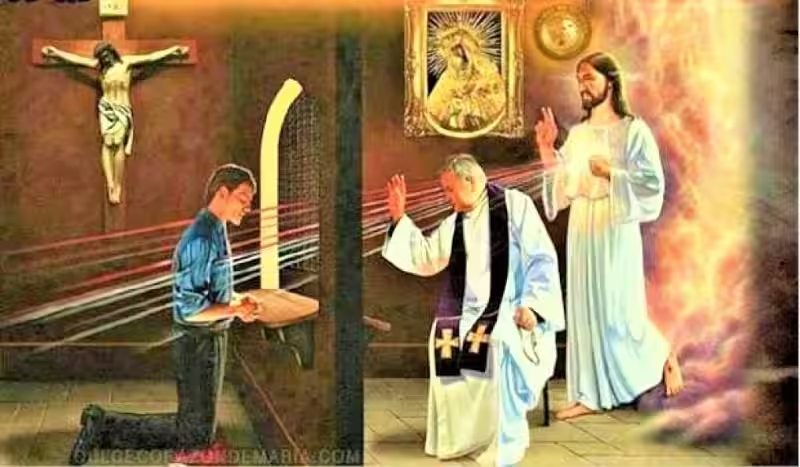
Following self-examination is the act of confession. This is where you approach a priest, acting in the person of Christ, and articulate your sins. The priest, bound by the sacred seal of confession, will never reveal what he hears. His role is to listen with compassion, offer guidance, and impart God’s forgiveness. This is a confidential and sacred space where you can speak freely, knowing you are heard without judgment, but with understanding and love.
The next step is contrition, a genuine sorrow for having offended God and a firm purpose of amendment – a commitment to avoid future sin. This is the engine of conversion. It’s not just regretting getting caught, but truly feeling the pain of having hurt God, who loves you infinitely. This sincere regret is crucial for the effectiveness of the sacrament.
Finally, the priest imparts absolution, the formal declaration of God’s forgiveness through the Church. This is the moment of divine release, where the burden of sin is lifted. It is accompanied by an assigned penance, an act of prayer or charity, which is a way to make amends and strengthen our resolve against future sin. This penance is not a punishment, but a spiritual exercise to help us grow in virtue and repair the harm caused by sin.
The Transformative Power of God’s Forgiveness
The Reconciliation Sacrament offers far more than just the removal of guilt; it bestows sanctifying grace, imbuing us with the strength to live a more virtuous life. This grace is a divine assistance that helps us overcome temptation and grow in holiness. It’s like receiving a spiritual boost, equipping us to face life’s challenges with a renewed sense of purpose and God’s presence.
When we receive the Reconciliation Sacrament with a sincere heart, we experience a deepening of our relationship with God. The barriers to His grace are removed, allowing His love to flow more freely into our lives. This can lead to a profound sense of inner peace, clarity of conscience, and a renewed joy in our faith. Imagine the relief of finally being able to let go of a heavy secret; this is the spiritual equivalent, magnified by God’s immeasurable love.
Reconciliation in Daily Life: Living the Sacrament
The Reconciliation Sacrament isn’t meant to be a once-a-year event for most Catholics; it’s an ongoing resource for spiritual growth and maintaining our connection with God. Regularly participating in this sacrament helps us to cultivate a more honest self-awareness and fosters a habit of turning to God in times of weakness. It becomes a familiar and comforting path to spiritual renewal.
Living the spirit of reconciliation extends beyond the confessional. It means actively seeking to mend broken relationships, to forgive those who have wronged us, and to ask for forgiveness when we have erred. This outward expression of God’s mercy ripples through our communities, creating a more loving and compassionate world. True reconciliation, therefore, is not just about receiving God’s forgiveness, but about becoming agents of that transformative grace in our everyday lives, making the Reconciliation Sacrament a living testament to God’s enduring love.
Frequently Asked Questions about the Sacrament of Reconciliation
What is the Sacrament of Reconciliation?
The Sacrament of Reconciliation, also known as Confession, is a sacrament of healing and forgiveness in the Catholic Church. Through the prayers and absolution of a priest, individuals confess their sins, receive God’s forgiveness, and are restored to communion with Him and the Church.
Why is it called the Sacrament of Reconciliation?
It is called the Sacrament of Reconciliation because it reconciles us with God, whom we have offended by our sins. It also reconciles us with the Church, our spiritual community.
Who can receive the Sacrament of Reconciliation?
Any baptized Catholic who has reached the age of reason (typically around seven years old) and has committed a mortal sin is obliged to confess at least once a year. All Catholics are encouraged to receive the sacrament regularly for spiritual growth and the forgiveness of venial sins.
What is the difference between mortal and venial sins?
Mortal sins are grave offenses against God’s law that destroy sanctifying grace in the soul. They require full knowledge and deliberate consent. Venial sins are less serious offenses that weaken our relationship with God but do not destroy sanctifying grace.
How often should I go to Confession?
The Church obliges Catholics to confess mortal sins at least once a year. However, it is highly recommended to go more frequently, such as monthly, or whenever one feels the need for spiritual guidance or has committed venial sins.
The essential parts of Confession are: an examination of conscience, contrition (sorrow for sins), a firm purpose of amendment (the intention to sin no more), the confession of sins to a priest, and the reception of absolution and penance.
What is an examination of conscience?
An examination of conscience is a prayerful reflection on one’s thoughts, words, and actions in light of God’s commandments and the teachings of the Church, to identify sins committed since the last confession.
What is contrition?
Contrition is heartfelt sorrow and a turning away from sin, with a resolution not to sin again. Perfect contrition arises from love of God, while imperfect contrition arises from fear of punishment. Both are sufficient for the sacrament.
What is absolution?
Absolution is the prayer of forgiveness offered by the priest in the name of Christ and the Church, which assures the penitent that their sins are forgiven.
What is penance?
After absolution, the priest assigns a penance, which is a prayer or act of satisfaction, to help the penitent repair the harm caused by their sins and grow in virtue.
Do I have to confess all my sins?
It is an obligation to confess all mortal sins, both in kind and number, that one can recall after a careful examination of conscience. Confessing venial sins is highly recommended, as it helps in spiritual growth.
Can a priest reveal what I confess?
No. The seal of confession is an absolute and inviolable law. Priests are forbidden under the most severe penalties from revealing anything heard in confession to anyone.
What if I haven’t been to Confession in a long time?
Do not be afraid or ashamed. The Sacrament of Reconciliation is a sacrament of mercy. A priest will be understanding and can guide you through the process. You can prepare by examining your conscience and expressing your desire to return to God.
Can I go to Confession if I don’t feel sorry for my sins?
While genuine sorrow is ideal, the sacrament can still be received if you have at least imperfect contrition (a desire to avoid sin and the consequences of sin). The grace of the sacrament can help to deepen your sorrow.