For Catholics, the Bible isn’t just a book; it’s the living Word of God, a profound and transformative guide that illuminates the path of faith. But with the vast array of translations and editions available, a common and important question arises: what Bible should a Catholic read? This isn’t a trivial inquiry. Choosing the right Bible is a foundational step in a lifelong journey of discovery, understanding, and deepening one’s relationship with God. It’s about finding a translation that speaks to your heart, aids your comprehension, and remains faithful to the teachings of the Catholic Church.
The Catholic Church has specific requirements and recommendations for the Bibles its faithful use. This ensures that the sacred text is presented accurately, without doctrinal omissions or distortions, and includes the full 73 books of the Catholic canon. So, let’s embark on a journey to explore what makes a Bible suitable for a Catholic reader and how to make an informed choice.
Understanding the Catholic Canon: More Than Just a Book
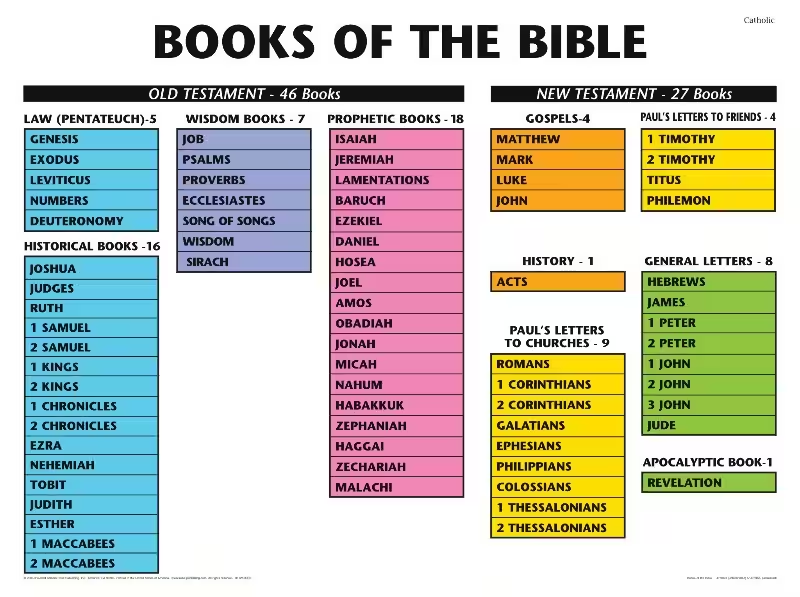
One of the most significant distinctions of a Catholic Bible lies in its canon of Scripture. Unlike some Protestant Bibles, the Catholic Bible includes seven additional books in the Old Testament: Tobit, Judith, 1 and 2 Maccabees, Wisdom, Sirach (Ecclesiasticus), and Baruch. These books, often referred to as the deuterocanonical books (meaning “second canon”), have been part of the Church’s Scripture for centuries and are considered divinely inspired. For a Catholic, therefore, a Bible’s adherence to this complete canon is paramount.
These deuterocanonical books offer invaluable insights into Jewish history and wisdom during the period between the Old and New Testaments, a crucial time for understanding the context of Christ’s coming. For instance, the Books of Maccabees vividly recount the struggle for religious freedom and the courage of faith in the face of persecution, providing powerful examples of heroism and faithfulness. Understanding the full canon is essential for a complete Catholic understanding of salvation history.
Why the Deuterocanonical Books Matter
The inclusion of these books isn’t merely an arbitrary addition; they hold significant theological weight and have been quoted or alluded to by New Testament writers and early Church Fathers. The Book of Wisdom, for example, offers profound reflections on the nature of justice, righteousness, and God’s providence, concepts that resonate deeply within Catholic theology. Similarly, the Book of Judith presents a compelling narrative of faith, courage, and divine intervention, inspiring believers to trust in God’s power even in dire circumstances.
For the inquiring Catholic, recognizing the importance of these books is a key step in discerning the right Bible. A Bible that omits them, or relegates them to an appendix, is not a suitable choice for personal or devotional use within the Catholic faith. The Church officially recognizes these books as inspired Scripture, and their presence enriches our understanding of God’s plan and His everlasting covenant with humanity. Therefore, when asking what Bible should a Catholic read, the first check is always the completeness of its canon.
Essential Qualities of a Catholic Bible Translation
Beyond the canon, the translation itself is a crucial factor. Catholic Bibles are typically translated or approved by Catholic scholars and adhere to the guidelines set forth by the Church, primarily concerning doctrinal fidelity. This means the translation will be accurate in its rendering of theological concepts and will not introduce interpretations that contradict Catholic teaching. The aim is to provide a text that is both understandable and theologically sound.
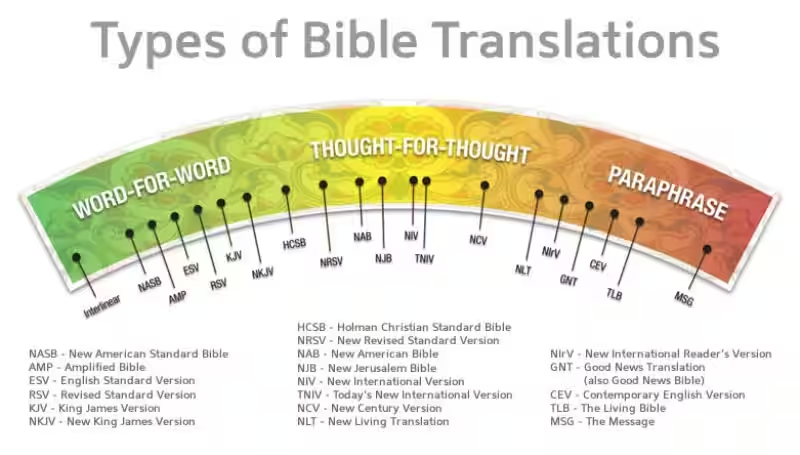
Different translations offer varying approaches to balancing literal accuracy with readability. Some may lean towards a more literal, word-for-word translation (like the RSV-CE or NRSV-CE), which can be excellent for in-depth study and exegesis. Others might prioritize a more dynamic, thought-for-thought translation (like the New American Bible Revised Edition – NABRE, the official translation for the USCCB), which can be easier to grasp for daily reading and prayer. The best choice often depends on your personal study habits and reading preferences.
Approved Translations for Catholic Use
The Catholic Church has officially approved several English translations for use in liturgy, study, and personal devotion. Familiarizing yourself with these approved options is a great starting point. Some of the most commonly recommended and widely used include:
The New American Bible Revised Edition (NABRE): This is the most commonly used translation in the United States for Mass readings and is highly recommended for its balanced approach. It is known for its clear language and helpful footnotes.
The Revised Standard Version Catholic Edition (RSV-CE): A more literal and traditional translation, favored by many for its scholarly accuracy and reverence in tone. It’s an excellent choice for those who appreciate a more formal style.
The New Revised Standard Version Catholic Edition (NRSV-CE): Similar to the RSV-CE but updated with more contemporary language while maintaining scholarly rigor. It is also well-regarded for its literary quality.
The Jerusalem Bible/New Jerusalem Bible: These translations are known for their scholarly introductions, extensive footnotes, and engaging translations that aim to bring the original texts to life. They offer a rich context for study.
When considering what Bible should a Catholic read, looking for the imprimatur (an official declaration by a bishop that a work is free of doctrinal or moral error) and the nihil obstat (a declaration that there is no objection from a censorship point of view) on the copyright page is a good indicator of an approved edition.
Beyond the Text: Features That Enhance Understanding
A good Catholic Bible isn’t just about the translated text and the correct canon; it can also be a valuable tool for spiritual growth through its accompanying features. Many editions are designed to help the reader engage more deeply with Scripture. These can include:
Footnotes and Annotations: These are crucial for a Catholic Bible as they often provide theological explanations, historical context, and cross-references that align with Church teaching. They can clarify difficult passages and reveal deeper meanings.
Introductions to Books: Many Bibles offer brief overviews of each book, outlining its author, historical background, key themes, and theological significance. This helps set the stage for reading and understanding the content.
Concordance: A concordance is an alphabetical index of the principal words in the Bible, with their immediate contexts, enabling you to locate specific passages or study the usage of particular terms.
Maps and Charts: Visual aids like maps of biblical lands and genealogical charts can significantly enhance comprehension by providing a geographical and historical framework for the narratives.
These supplementary materials transform a Bible from a mere collection of stories into a comprehensive catechetical tool. They are designed to support faith formation and guide the reader in understanding the Bible’s message within the context of Catholic tradition. Therefore, when deciding what Bible should a Catholic read, consider an edition with features that will aid your personal journey of faith.
Making Your Personal Choice: A Journey of Discovery
Ultimately, the question of what Bible should a Catholic read is a personal one, intertwined with your spiritual journey. While the Church provides guidance and approved translations, the best Bible for you is one that you will actually read, study, and pray with. Consider starting with the NABRE, as it’s widely accessible and officially sanctioned for liturgical use.
However, don’t hesitate to explore different translations to find the one that resonates most with your spirit. Perhaps you prefer the more literal approach of the RSV-CE for deep study, or you find the dynamic translation of the NRSV-CE more engaging for daily reflection. The most important aspect is to choose a Bible that fosters a love for Scripture, encourages prayer, and draws you closer to God. A Bible that becomes a cherished companion on your faith walk.
Engaging with Scripture is a lifelong endeavor. Whether you’re a seasoned reader or just beginning your exploration, selecting the right Bible is a significant and rewarding step. It’s an invitation to encounter God’s love, wisdom, and truth in a profound and personal way. So, take your time, explore the options, and find the Catholic Bible that will best illuminate your spiritual path.
Frequently Asked Questions about the Bible for Catholics
What Bible should a Catholic read?
Catholics should read a Bible translation that is approved by the Catholic Church. These Bibles contain all the books of the Old and New Testaments, including the deuterocanonical books (also known as the apocrypha), which are part of the Catholic canon. Some commonly recommended translations include the New American Bible Revised Edition (NABRE), the Revised Standard Version Catholic Edition (RSV-CE), and the New Revised Standard Version Catholic Edition (NRSV-CE).
What does “religion” mean in the context of Catholicism?
In the context of Catholicism, “religion” refers to the organized system of beliefs, practices, and worship that centers on the belief in God and our relationship with Him, as revealed through Jesus Christ and the teachings of the Catholic Church. It encompasses our faith, our moral life, our participation in the sacraments, and our communion with God and fellow believers.