Embarking on a journey to understand the Catholic Bible explained is more than just reading a book; it’s an invitation to explore the very heart of the Catholic faith. This sacred collection of writings, divinely inspired and meticulously preserved, serves as the bedrock of Catholic belief and practice. For many, the sheer size and complexity of the Bible can seem daunting, but with a little guidance, its profound wisdom and relatable narratives can become a source of immense comfort, enlightenment, and spiritual growth. This article aims to demystify its contents, illuminate its unique place within religion, and reveal how the Catholic Bible explained can enrich your life.
The Bible, in its entirety, is a testament to God’s unfolding relationship with humanity. It’s not a single book, but rather a library of 73 individual books, written over centuries by various authors under the inspiration of the Holy Spirit. These texts offer a panoramic view of salvation history, from the creation of the universe to the establishment of the Church and the promise of eternal life. Understanding the Catholic Bible explained means appreciating its dual nature: it is both a historical document and a living word, speaking to us across millennia with timeless truths.
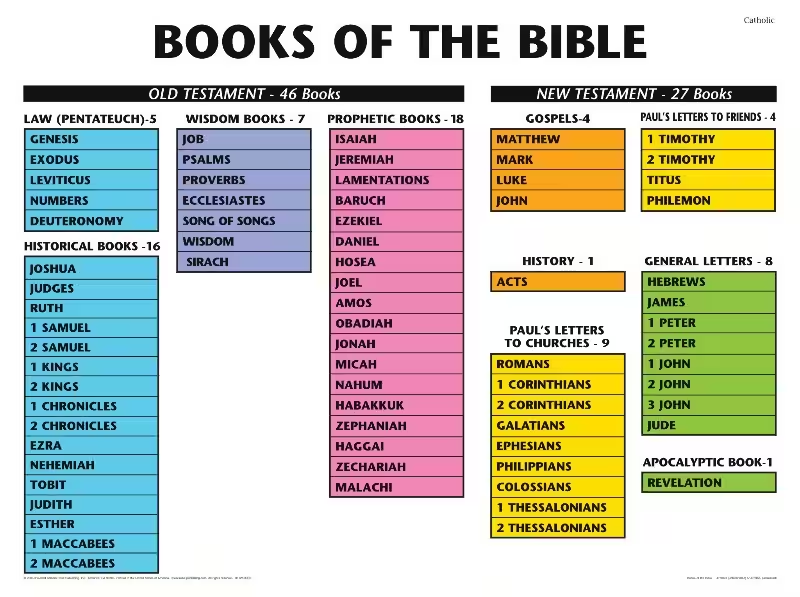
One of the most significant distinctions of the Catholic Bible explained lies in its canon – the official list of books considered to be divinely inspired scripture. While Protestant Bibles contain 66 books, the Catholic Bible includes an additional seven books in the Old Testament, known as the deuterocanonical books (or “second canon”). These books, such as Tobit, Judith, Wisdom, Sirach (Ecclesiasticus), Baruch, 1 and 2 Maccabees, and additions to Esther and Daniel, have been part of the Church’s canon since its earliest days.
The inclusion of these books is not arbitrary; they offer crucial historical context and theological insights that are integral to the Catholic understanding of God’s covenant with His people. For instance, the books of Maccabees detail the heroic struggle of the Jewish people for religious freedom, highlighting themes of faithfulness and divine providence that resonate deeply within the Catholic Bible explained. These narratives provide a richer tapestry of God’s actions in the world, demonstrating His unwavering love and guidance even in times of persecution.
The process of canonization was a gradual one, involving centuries of discernment by the Church. Early Christian communities recognized certain texts as authoritative, and councils like the Council of Hippo (393 AD) and the Council of Carthage (397 AD and 419 AD) formally affirmed the list that forms the basis of the Catholic Bible explained today. This consistent acceptance across the early Church underscores the divine guidance believed to be at work in shaping this sacred collection.
Navigating the Old Testament: A Foundation of Faith
The Old Testament, comprising 46 books, forms the foundational narrative of the Catholic Bible explained. It tells the story of God’s creation, humanity’s fall, and His covenantal relationship with the nation of Israel. This section is a rich tapestry of law, history, prophecy, poetry, and wisdom literature, each contributing to our understanding of God’s character and His plan for salvation. It sets the stage for the coming of Jesus Christ, the promised Messiah.
Within the Old Testament, we find pivotal stories that illustrate profound theological concepts. The creation accounts in Genesis reveal God as the source of all existence and the inherent goodness of His creation. The stories of Abraham, Moses, and David demonstrate God’s faithfulness to His promises, even when His chosen people faltered. The prophetic books, such as Isaiah and Jeremiah, offer powerful messages of judgment and hope, foretelling God’s ultimate plan for redemption. These ancient narratives are not merely historical accounts; they are theological lessons that continue to inform our religion.
Consider the story of Noah’s Ark. While a gripping tale of survival, it also symbolizes God’s judgment on sin and His promise of renewal. It’s a powerful reminder of God’s justice and His desire to preserve life. Similarly, the Exodus narrative, detailing the liberation of the Israelites from slavery in Egypt, is a foundational story of God’s power to rescue and redeem His people, a theme central to the Catholic Bible explained and the very essence of our faith.
Exploring the New Testament: The Life of Christ and the Early Church
The New Testament, containing 27 books, is the culmination of the Old Testament narrative and the heart of the Catholic Bible explained. It focuses on the life, teachings, death, and resurrection of Jesus Christ, the Son of God. This section includes the four Gospels (Matthew, Mark, Luke, and John), the Acts of the Apostles, the Epistles (letters written by apostles like Paul, Peter, and John), and the Book of Revelation.
The Gospels are the most crucial part of the New Testament, offering distinct yet complementary accounts of Jesus’ ministry. They present His teachings on love, forgiveness, and the Kingdom of God, His miracles that demonstrate His divine power, and His ultimate sacrifice on the cross for the redemption of humanity. Understanding the Catholic Bible explained necessitates a deep engagement with these four powerful testimonies to the life of Christ.
Following the Gospels, the Acts of the Apostles chronicles the birth and early expansion of the Christian Church, empowered by the Holy Spirit. The Epistles then delve into the practical application of Christ’s teachings for the burgeoning Christian communities, addressing theological issues, ethical challenges, and offering guidance for living a Christ-centered life. Finally, the Book of Revelation offers a symbolic vision of the ultimate triumph of good over evil and the fulfillment of God’s eternal plan. This entire section solidifies the teachings and impact of Jesus within religion.
Imagine the parable of the Prodigal Son. In the Catholic Bible explained, this story vividly illustrates God’s boundless mercy and His eager anticipation of our return to Him, no matter how far we may have strayed. It’s a relatable example of divine love that offers hope to all.
Understanding the Catholic Approach: Interpretation and Tradition
The Catholic Bible explained is not merely a text to be read in isolation; it is understood within the living Tradition of the Catholic Church. The Church teaches that Scripture and Tradition are two complementary sources of divine revelation, both flowing from the same divine wellspring. This means that the interpretation of the Bible is guided by the teachings of the Magisterium (the teaching authority of the Church entrusted to the Pope and bishops) and the wisdom of the Church Fathers and saints throughout history.
This approach ensures a consistent and orthodox understanding of biblical teachings, protecting against misinterpretations and heresies. The Church acts as a faithful custodian of God’s Word, safeguarding its integrity and making its profound messages accessible to all believers. This integrated understanding is a cornerstone of what makes the Catholic Bible explained so rich and nuanced.
For example, when pondering the Eucharist, the Catholic Church draws upon both scriptural accounts of Jesus instituting the Last Supper (found in the Gospels and 1 Corinthians) and centuries of liturgical practice and theological reflection within Tradition. This combined understanding leads to the Catholic doctrine of the Real Presence of Christ in the sacrament. The Church’s consistent teaching on this matter, rooted in both Scripture and Tradition, is a prime example of how the Catholic Bible explained is lived out in religion.
Making the Catholic Bible Meaningful in Your Life
Engaging with the Catholic Bible explained can transform your spiritual life. It’s not about memorizing facts or winning debates, but about encountering God’s living Word. Here are some practical ways to make the Bible a more integral part of your journey:
Regular Reading: Set aside dedicated time each day or week to read Scripture. Even a few verses can offer profound insights. Consider using a Catholic lectionary or a daily Bible reading plan designed for Catholics.
Prayerful Reflection (Lectio Divina): This ancient practice involves reading, meditating, praying, and contemplating a passage of Scripture. It’s a way to allow God’s Word to speak directly to your heart.
Study and Discussion: Join a Bible study group or take courses on biblical studies. Discussing passages with others can deepen your understanding and expose you to different perspectives.
Connect to Liturgy: Pay close attention to the Scripture readings during Mass. The liturgy is a prime example of the Catholic Bible explained in action, connecting the readings to the celebration of the Eucharist and the life of the Church.
Seek Guidance: Don’t hesitate to ask your priest, a Catholic educator, or a knowledgeable fellow parishioner for clarification on passages you find challenging. The Church is a community of faith, and guidance is readily available.
Ultimately, the Catholic Bible explained is a treasure trove of divine wisdom and love, designed to guide us, inspire us, and draw us closer to God within the context of our religion. By approaching it with an open heart and a willingness to learn, you can unlock its immense power and discover a deeper relationship with the God who speaks to us through its sacred pages.
Frequently Asked Questions about the Catholic Bible
What is the Catholic Bible?
The Catholic Bible is the collection of sacred scriptures recognized as divinely inspired by the Catholic Church. It includes the Old Testament and the New Testament, with a distinct canon of books compared to some other Christian traditions.
The Catholic Old Testament includes the 39 books found in the Protestant Old Testament, plus seven additional books known as the deuterocanonical books: Tobit, Judith, 1 Maccabees, 2 Maccabees, Wisdom, Sirach (Ecclesiasticus), and Baruch. It also includes additions to Esther and Daniel.
What books are in the Catholic New Testament?
The Catholic New Testament contains the same 27 books as the New Testament in Protestant Bibles: the four Gospels (Matthew, Mark, Luke, John), the Acts of the Apostles, the 13 letters of Paul, the Letter to the Hebrews, the letters of James, Peter, John, and Jude, and the Book of Revelation.
Why do Catholics include the deuterocanonical books?
Catholics include the deuterocanonical books because they have been part of the canon of Scripture for the Church since early Christianity, particularly accepted by the councils of Hippo (393 AD) and Carthage (397 and 419 AD), and affirmed at the Council of Trent (1545-1563 AD). These books offer important theological insights and historical context.
What is the role of the Catholic Bible in the Catholic faith?
The Catholic Bible is considered the Word of God, a primary source of divine revelation. It is a foundational text for Catholic belief, practice, and the Church’s teachings, interpreted through the authority of the Magisterium (the teaching office of the Church).
How is the Catholic Bible interpreted?
The Catholic Church teaches that the Bible should be interpreted in light of tradition and reason, under the guidance of the Holy Spirit through the Magisterium. This means that the Church’s understanding of Scripture is seen as an authoritative guide for its faithful.
Are there different translations of the Catholic Bible?
Yes, there are many translations of the Catholic Bible into various languages. When choosing a translation, Catholics often look for those approved by the Church, such as the New American Bible Revised Edition (NABRE) in English, which is commonly used in liturgy and religious education.
What is the difference between the Catholic Bible and the Protestant Bible?
The primary difference lies in the Old Testament canon. The Catholic Bible includes the seven deuterocanonical books (and additions to Esther and Daniel) that are not found in the Protestant Old Testament. The New Testament canon is the same for both.
Where can I find a Catholic Bible?
Catholic Bibles can be purchased at most bookstores, Christian bookstores, and online retailers. Many Catholic churches also have Bibles available for purchase or for use during Mass.
What is the importance of the Catholic Bible for prayer and devotion?
The Catholic Bible is a vital resource for prayer and personal devotion. Catholics are encouraged to read, meditate on, and pray with Scripture (lectio divina) to deepen their relationship with God and to understand His will for their lives.