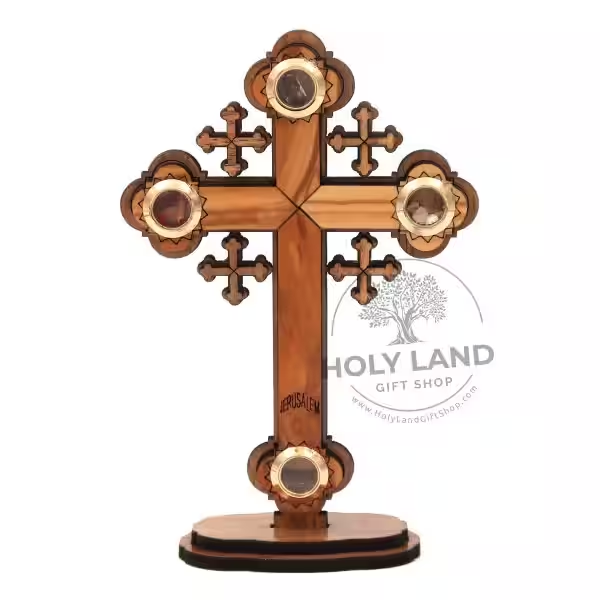
The Holy Land Cross, a symbol deeply intertwined with the history of Christianity and its most sacred pilgrimage sites, carries with it a profound narrative of faith, sacrifice, and enduring devotion. More than just a decorative emblem, it represents a tangible connection to the very places where the cornerstone events of Christianity unfolded. For centuries, pilgrims, crusaders, and believers alike have been drawn to its imagery, seeking solace, spiritual grounding, and a renewed sense of purpose. This article delves into the rich history, diverse meanings, and lasting impact of the Holy Land Cross, exploring its place within the broader spectrum of religious symbolism.
Understanding the Holy Land Cross requires an appreciation for the geographical and historical context from which it emerged. The very notion of a “Holy Land” – primarily the region encompassing modern-day Israel and Palestine – holds immense spiritual weight for adherents of Judaism, Christianity, and Islam. Within Christianity, however, the Holy Land Cross specifically evokes the narrative of Jesus Christ’s life, death, and resurrection, with Jerusalem and its surrounding areas serving as the backdrop for these pivotal moments. The cross, as the ultimate symbol of Christian faith, becomes amplified when associated with these hallowed grounds, transforming it into a powerful emblem of pilgrimage and remembrance.
The origins of the Holy Land Cross are not tied to a single, definitive moment but rather to a gradual evolution of symbolism that began to solidify around the era of the Crusades. While the cross itself has been a central Christian symbol since its earliest days, the specific designation of “Holy Land Cross” often refers to designs that incorporate elements or are directly linked to the physical relics and sacred sites of Jerusalem. Early Christian art and iconography frequently depicted the cross, but it wasn’t until a more focused interest in pilgrimage and the recapture of the Holy Land that these symbols began to be more consistently associated with that specific geography.
During the medieval period, particularly with the advent of the Crusades, the cross became a potent military and religious banner for knights and soldiers venturing to the East. The Jerusalem cross, a distinct variation featuring a large central cross with four smaller crosses in its quadrants, is perhaps the most widely recognized form of the Holy Land Cross. This design is thought to represent Christ’s commission to his apostles to spread the Gospel to the four corners of the world. Imagine a knight, far from home, gazing upon this emblem on his shield or tunic; it was a constant reminder of his sacred mission and connection to the birthplace of his faith, offering both a martial purpose and profound spiritual solace.
The Holy Land Cross is not a monolithic symbol; it manifests in various forms, each carrying nuanced meanings. The most prominent is the aforementioned Jerusalem Cross, also known as the Crusader’s Cross. Its design, a large central cross with four smaller Greek crosses in each quadrant, is rich in interpretation. Some scholars suggest the four smaller crosses represent the four Gospels, while others believe they symbolize the four cardinal directions, emphasizing the universal reach of Christ’s message. This design was famously adopted by the Knights of the Holy Sepulchre, a chivalric order dedicated to protecting Christian pilgrims and sites in the Holy Land, further cementing its association with the region.
Beyond the Jerusalem Cross, other configurations can also be considered Holy Land Crosses, especially when they are crafted from materials sourced from the Holy Land or depict specific biblical scenes. For instance, crosses carved from olive wood, a prevalent resource in the region, are widely popular pilgrimage souvenirs and are imbued with the sanctity of their origin. These crosses, while perhaps simpler in design, carry the weight of being handmade in the very land where Jesus walked. The tactile experience of holding a wooden cross, knowing it was shaped by hands in Bethlehem or Jerusalem, can foster a profound spiritual connection for the believer, making it a deeply personal and revered artifact.
The Holy Land Cross as a Symbol of Pilgrimage and Faith
For countless individuals throughout history, the Holy Land Cross has served as a potent symbol of pilgrimage. It represents the arduous journey undertaken to reach sacred sites like Jerusalem, Bethlehem, and Nazareth. Many pilgrims would purchase or commission a Holy Land Cross to wear during their travels, a tangible reminder of their spiritual quest and a source of protection and encouragement. Upon their return, these crosses would often be treasured as mementos, keeping the memory of their journey and the spiritual insights gained alive in their daily lives.
Consider the modern-day pilgrim, perhaps facing personal struggles or seeking a deeper connection to their faith. The act of acquiring a Holy Land Cross purchased directly from a craftsman in Jerusalem can be a deeply moving experience. This cross, whether a simple wooden piece or an intricately designed metalwork, becomes more than an object; it is a testament to their commitment, a physical anchor to their spiritual journey. It serves as a constant reminder of the profound events that transpired in the Holy Land, reinforcing their belief and offering a sense of belonging to a global community of faith. The Holy Land Cross, in this context, is a passport to spiritual reflection.
The Cross in Religious Practice and Personal Devotion
The presence of the Holy Land Cross extends far beyond the realm of souvenirs and historical artifacts; it is deeply integrated into personal religious practice and devotion. Many Christians choose to display a Holy Land Cross in their homes, perhaps above a fireplace or on a prayer altar, as a constant visual reminder of their faith and its foundational narrative. The act of touching or holding such a cross during prayer can help focus the mind and heart, fostering a deeper connection with God and the sacrifices made for humanity. This tangible connection to sacred geography can make abstract theological concepts feel more real and relatable.
For individuals unable to physically journey to the Holy Land, the Holy Land Cross offers a vicarious connection. It allows them to participate, in a symbolic way, in the spiritual heritage of the region. This can be particularly meaningful during significant religious holidays like Easter, when the events of Christ’s crucifixion and resurrection in Jerusalem are central to the observance. The Holy Land Cross acts as a bridge, connecting believers across time and space to the very heart of their religious tradition, fostering a sense of shared experience and enduring faith. It is an anchor in a world that often feels adrift, a constant reminder of unwavering hope and redemption.
The Lasting Legacy of the Holy Land Cross
The enduring appeal of the Holy Land Cross lies in its multifaceted symbolism and its deep resonance with the core tenets of Christianity. It is a symbol of sacrifice, of redemption, and of the enduring power of faith. In a world that is constantly changing, the Holy Land Cross offers a sense of continuity, a link to an ancient tradition that continues to inspire and guide millions. Its presence, whether worn, displayed, or contemplated, serves as a powerful reminder of the spiritual foundations of Christianity and the sacred significance of its birthplace.
As we reflect on the significance of the Holy Land Cross, we understand that its power lies not just in its form, but in the stories it tells and the emotions it evokes. It speaks of journeys, both physical and spiritual, of devotion that transcends borders, and of a faith that has shaped civilizations. The Holy Land Cross continues to be a beacon for believers, a tangible representation of the profound mysteries and enduring truths of the Christian religion, connecting the faithful to the very heart of their spiritual heritage. It is a testament to the fact that some symbols, infused with history and meaning, possess a timeless power that continues to touch lives across generations.
Frequently Asked Questions about the Holy Land Cross and Religion
What is the Holy Land Cross?
The Holy Land Cross, also known as the Jerusalem Cross, is a symbol featuring a large central cross with four smaller crosses in each quadrant. It is deeply significant in Christianity, representing the five wounds of Christ or the four Gospels and the spread of Christianity to the four corners of the world.
What is the religious significance of the Holy Land Cross?
The Holy Land Cross is a powerful religious symbol for Christians. It is often associated with the Holy Land itself, the birthplace of Christianity, and is frequently found in churches, religious art, and as devotional items carried by pilgrims. Its design carries profound theological meaning, evoking the sacrifice of Jesus and the mission of the apostles.
Is the Holy Land Cross specific to any particular Christian denomination?
While the Holy Land Cross is widely recognized and revered across many Christian denominations, it holds particular significance for those with strong ties to the Holy Land, such as the Catholic Church and the Eastern Orthodox Church. However, its symbolism transcends denominational boundaries.
Where can one find the Holy Land Cross?
The Holy Land Cross can be found in various forms. Historically, it was used as a symbol by Crusaders. Today, it is commonly seen on jewelry, pendants, bracelets, and other religious artifacts. It is also incorporated into architectural designs of churches and is often sold by religious organizations and souvenir shops in the Holy Land.
What is the connection between the Holy Land Cross and pilgrimage?
The Holy Land Cross is strongly associated with pilgrimage to the Holy Land. Many pilgrims purchase or are gifted these crosses as tangible reminders of their journey and their faith. It serves as a symbol of their connection to the sacred sites and the history of Christianity.
Are there any other religious meanings attributed to the Holy Land Cross?
Beyond the common interpretations, some traditions associate the four smaller crosses with the four evangelists (Matthew, Mark, Luke, and John), or with the four cardinal directions to which the Gospel message was to be preached.