Embarking on a spiritual journey often begins with a profound desire to connect with the divine, and for Catholics, the bedrock of this connection is the Holy Bible. Yet, for many, the question arises: what Bible should Catholics read? This isn’t a trivial question; it’s an invitation to delve into the sacred texts that have guided billions for centuries. Understanding the nuances of various Bible translations and editions specifically tailored for Catholic readers can transform your study from a daunting task into a deeply rewarding experience.
The Catholic Church, with its rich tradition and historical wisdom, offers specific guidance on the scriptures that are considered authoritative. This means that while many Bibles exist, not all are officially endorsed for Catholic use. The process of selecting the right Bible is therefore a journey of discernment, one that involves understanding what makes a Bible truly Catholic and how to use it effectively to deepen your faith and understanding of God’s word.
Understanding the Catholic Bible: More Than Just Pages
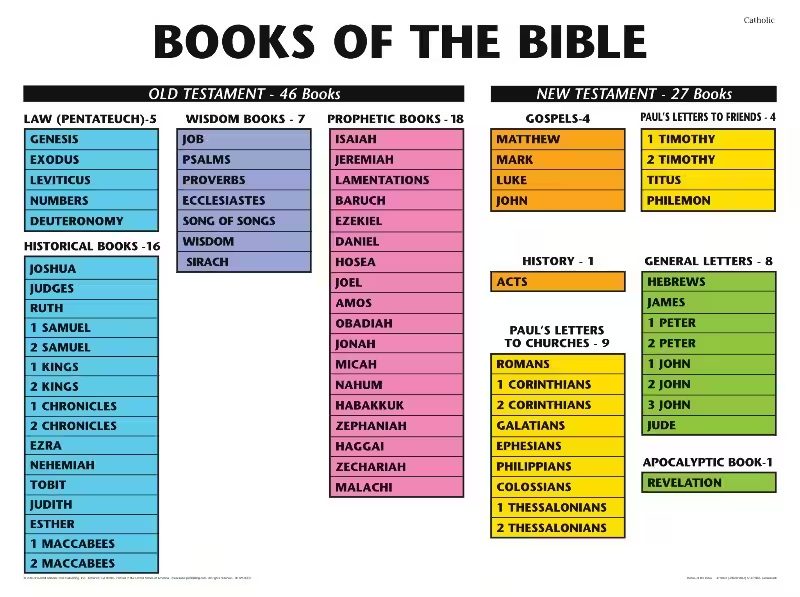
When we talk about a Catholic Bible, we’re referring to more than just a collection of books. It’s a carefully curated collection that includes the Deuterocanonical books, also known as the Apocrypha by Protestants. These books, such as Tobit, Judith, Wisdom, Sirach, Baruch, 1 and 2 Maccabees, and additions to Esther and Daniel, are an integral part of the Catholic canon of Scripture. Their inclusion is rooted in the ancient Septuagint translation of the Old Testament, which was widely used by the early Church. For a Catholic seeking to understand their faith fully, these books offer invaluable historical context and theological insights that are essential to the complete narrative of salvation history.
The inclusion of these books is a significant distinction. For instance, the book of 1 Maccabees provides a detailed account of the Maccabean Revolt, a pivotal moment in Jewish history that directly foreshadows themes of divine intervention and faithfulness in the face of persecution, themes that resonate deeply within Catholic teaching. Therefore, when asking what Bible should Catholics read?, the primary answer must include a Bible that respects and incorporates this complete Old Testament canon. This ensures that the reader is engaging with the fullness of God’s revealed word as understood and preserved by the Catholic Church throughout history.
Key Features of a Catholic Bible Translation
Beyond the canonical content, the translation of the biblical text itself is crucial. Catholic Bibles are typically translated by scholars who are mindful of Catholic doctrine and tradition. This means that the language used aims to be both accurate to the original languages (Hebrew, Aramaic, and Greek) and consistent with the Church’s understanding of key theological concepts. For example, passages related to the Eucharist or the role of Mary might be translated in a way that reflects Catholic theology, avoiding interpretations that might contradict established teachings. A good Catholic Bible translation will often feature:
Imprimatur and Nihil Obstat: These are official declarations from a bishop indicating that the book contains no errors of faith or morals. Think of them as a stamp of approval from the Church’s leadership, assuring you of the text’s orthodoxy.
Annotations and Study Notes: Many Catholic Bibles include footnotes and endnotes that provide historical background, explain difficult passages, connect verses to other parts of Scripture, and illuminate theological themes from a Catholic perspective. These are invaluable for someone asking what Bible should Catholics read? to understand the deeper meaning.
Cross-References: These link related passages throughout the Bible, helping you to see the interconnectedness of God’s message. For instance, a cross-reference might connect a prophecy in Isaiah to its fulfillment in the Gospels.
Consider the translation of a verse like John 1:14, “And the Word became flesh and dwelt among us.” A Catholic translation might subtly emphasize the theological weight of “Word” (Logos) as referring to Jesus Christ as the second person of the Trinity, a concept consistently upheld in Catholic tradition. The presence of these features transforms a simple reading into an active engagement with divine revelation, guided by the wisdom of the Church.
Popular and Recommended Catholic Bible Editions
Navigating the landscape of available Bibles can be overwhelming. However, several editions are consistently recommended for their accuracy, readability, and thoroughness in serving the Catholic reader. When considering what Bible should Catholics read?, these options often rise to the top due to their widespread acceptance and the quality of their scholarly work. Each offers a slightly different approach to translation and presentation, catering to various needs and preferences.
The first step in choosing is to recognize that different translations can have distinct “flavors.” Some prioritize a more literal, word-for-word translation, aiming for maximum fidelity to the original text, while others lean towards a more dynamic equivalence, seeking to convey the meaning in more natural-sounding English. Both approaches have merit, and the best choice often comes down to personal preference and what resonates most with your learning style. Familiarizing yourself with a few key options is a wise strategy.
The New American Bible Revised Edition (NABRE)
For Catholics in the United States, the New American Bible Revised Edition (NABRE) is the most commonly used translation, particularly in liturgical settings. Its translation was a collaborative effort by Catholic scholars, and it features extensive notes and commentary that are invaluable for understanding the text from a Catholic perspective. The NABRE’s strength lies in its accessibility and its direct connection to the Mass readings, making it a natural choice for many. It aims for a balance between scholarly accuracy and readability, making it a solid foundational choice for anyone asking what Bible should Catholics read?
The NABRE’s revisions, especially in the Old Testament, have aimed to incorporate the latest biblical scholarship while remaining faithful to Church tradition. The accompanying notes are designed to clarify historical context, explain difficult passages, and highlight theological connections relevant to Catholic belief. For example, the notes might explain the significance of covenants in the Old Testament or the theological implications of Jesus’ teachings. This makes the NABRE an excellent resource for both personal study and for understanding the readings heard during Mass.
The Revised Standard Version Catholic Edition (RSV-CE) and Ignatius Catholic Study Bible
Another highly respected translation is the Revised Standard Version Catholic Edition (RSV-CE). This edition is known for its more literal translation, which many scholars and devout Catholics appreciate for its fidelity to the original biblical languages. The RSV-CE is also the foundation for the popular Ignatius Catholic Study Bible, which offers exceptionally thorough and insightful commentary from respected Catholic theologians. If you’re looking for a deep dive into the theological richness of Scripture, the Ignatius Bible is an outstanding option when considering what Bible should Catholics read?
The RSV-CE’s literal approach means that it can sometimes feel more formal, but this very characteristic is what draws many to it for serious study. The Ignatius Catholic Study Bible takes this a step further, providing verse-by-verse commentary that often draws connections to the Catechism of the Catholic Church and the writings of Church Fathers. For instance, when studying the Psalms, the Ignatius edition might explain how specific psalms are understood in light of Christ. This level of detail makes it an indispensable tool for those seeking a robust theological understanding.
Other Worthy Mentions
While the NABRE and RSV-CE are perhaps the most prominent, other translations are also suitable for Catholic readers and worth considering when asking what Bible should Catholics read? The New Jerusalem Bible (NJB) is known for its scholarly introductions and notes, offering a more contemporary feel while maintaining a high degree of accuracy. It’s a favorite among many who appreciate its literary quality and insightful commentary. Similarly, the Douay-Rheims Bible, a historical translation from the Latin Vulgate, offers a more traditional approach and is cherished by those who prefer older English phrasing and a direct link to a significant part of Catholic history.
Each of these Bibles offers a unique lens through which to view the Scriptures. The NJB, for example, might offer a different perspective on certain passages due to its translation philosophy and the scholarly insights of its editors. The Douay-Rheims, on the other hand, connects readers to centuries of Catholic tradition through its venerable language. Exploring these different editions can help you discover which translation best suits your personal study habits and spiritual needs, making your journey with God’s word even more fulfilling.
How to Choose and Use Your Catholic Bible Effectively
Selecting the right Bible is just the first step; learning how to engage with it is where the real transformation happens. When you’re pondering what Bible should Catholics read?, remember that the best Bible is the one you will actually read and study. Don’t be intimidated by the choices. Start with one of the recommended editions and commit to regular reading and prayer.
Think of your Bible as a spiritual companion. It’s not a textbook to be read once and put away; it’s a living Word that speaks to you in different ways at different times in your life. The journey of understanding Scripture is lifelong, filled with moments of profound insight and quiet contemplation. The key is to approach it with an open heart and a willingness to learn.
Tips for Bible Study
To make your Bible study truly fruitful, consider these practical tips. Firstly, pray before you begin. Ask the Holy Spirit to guide your understanding and open your heart to God’s message. Then, read consistently. Even a few minutes each day can make a significant difference over time. Try to read in context, perhaps following a specific book from beginning to end, or focusing on a particular theme.
Secondly, utilize the study aids within your chosen Bible, such as the footnotes and cross-references. These are designed to enhance your understanding. Don’t be afraid to consult other resources, like commentary from reputable Catholic scholars or the Catechism of the Catholic Church, to deepen your grasp of specific passages. Finally, discuss what you’re learning with others. Joining a Bible study group or talking with your priest or a knowledgeable fellow Catholic can provide invaluable insights and fellowship.
Ultimately, the goal of reading the Bible is not simply intellectual knowledge, but a deeper, more intimate relationship with God. When you encounter a passage that speaks to you, take time to reflect on it. How does it apply to your life? What is God saying to you personally through these ancient words? This personal application is what transforms Bible reading from an academic exercise into a vibrant spiritual practice.
As you continue to ask yourself what Bible should Catholics read?, remember that the most important factor is your intention and your willingness to let God’s Word shape your heart and mind. Whether you choose the NABRE for its liturgical connection, the RSV-CE for its literal accuracy, or another endorsed Catholic translation, the journey of discovery awaits. Embrace the richness of the Catholic tradition, engage with the sacred texts prayerfully, and allow the Holy Scriptures to be a guiding light on your path of faith.
Frequently Asked Questions: Which Bible Should Catholics Read?
What Bible should Catholics read?
Catholics should read a Bible translation that is approved by the Catholic Church. This means the translation has received an “imprimatur” or “nihil obstat,” signifying that it is free from doctrinal or moral error. Popular and widely recommended translations for Catholics include the New American Bible Revised Edition (NABRE), the New Revised Standard Version Catholic Edition (NRSV-CE), and the Jerusalem Bible.
Why are there different Bible translations?
Different Bible translations exist because translators approach the original biblical languages (Hebrew, Aramaic, and Greek) with different philosophies. Some focus on word-for-word accuracy, aiming to reproduce the structure and vocabulary of the original languages as closely as possible. Others prioritize a thought-for-thought or dynamic equivalence approach, which seeks to convey the meaning and spirit of the text in more contemporary language, even if it means departing from a literal rendering.
What is an “imprimatur” and “nihil obstat”?
An “imprimatur” (Latin for “let it be printed”) and a “nihil obstat” (Latin for “nothing hinders”) are official declarations by a Catholic bishop or other ecclesiastical authority that a book or publication is considered free from doctrinal or moral error according to Catholic teaching. They indicate that the text has been reviewed and approved for publication for Catholics.
Are there any Bibles Catholics should avoid?
Catholics should generally avoid Bible translations that are not approved by the Church. Translations that lack an “imprimatur” or “nihil obstat” may contain theological interpretations or doctrinal stances that are not in line with Catholic faith and morals. It’s always best to consult a Catholic priest or religious educator if you are unsure about a particular translation.
Can I use a Protestant Bible translation?
While many Protestant translations contain the same books as the Catholic Bible, they may differ in the order of books and may omit the Deuterocanonical books (also known as the Apocrypha). These seven books (Tobit, Judith, 1 & 2 Maccabees, Wisdom, Sirach, and Baruch) are part of the Catholic canon. Therefore, it is recommended for Catholics to use a translation that includes these books and has been approved by the Church.