The question, “Who do Muslims worship?” is fundamental to understanding Islam, one of the world’s largest religions. At its heart, Islam is a monotheistic faith, meaning it centers around the belief in and worship of one God. This singular, all-powerful deity is known in Arabic as Allah. This concept of absolute monotheism, known as Tawhid, is not just a belief but the very cornerstone upon which the entire religion is built. It permeates every aspect of a Muslim’s life, from their daily prayers to their ethical conduct and their understanding of the universe.
For Muslims, Allah is the creator and sustainer of all that exists. He is not a physical being, nor is He to be associated with any partners or intermediaries. This absolute oneness distinguishes Islam from polytheistic religions, where multiple gods are worshipped, and also from other monotheistic faiths in its specific theological emphasis. The relationship is direct and personal, a constant awareness of God’s presence and guidance in every moment. Understanding who do Muslims worship is thus synonymous with understanding their profound devotion to this singular, transcendent being.
The Arabic word “Allah” translates simply to “The God.” However, its significance in Islam goes far beyond a mere linguistic definition. Muslims believe Allah is unique, eternal, and all-encompassing. He possesses perfect attributes described in the Quran, Islam’s holy book. These attributes include mercy (Ar-Rahman), compassion (Ar-Rahim), power (Al-Qadir), and wisdom (Al-Hakim). These names and attributes are not merely labels but reflections of His essence, providing Muslims with a deeper understanding of His nature and how He interacts with His creation.
When Muslims contemplate who do Muslims worship, they are thinking of a God who is both immanent, meaning present and involved in the world, and transcendent, meaning beyond human comprehension and the limitations of the physical universe. This duality is crucial. He is close to those who call upon Him, yet His knowledge and power extend infinitely beyond our grasp. Think of it like the sun: it provides warmth and light to everyone on Earth, yet its true size and distance are unfathomable to us. This is a simple analogy to grasp the immense scope of Allah’s being.
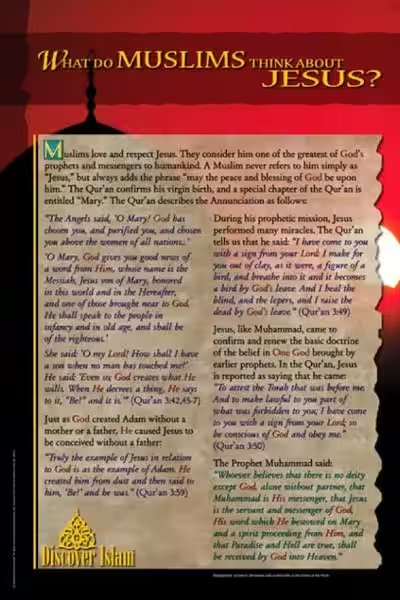
While Muslims worship only Allah, they hold prophets and messengers in extremely high regard. These individuals, including figures recognized in Judaism and Christianity like Adam, Noah, Abraham, Moses, and Jesus, are seen as divinely appointed guides who conveyed God’s message to humanity throughout history. The final prophet in this lineage, according to Islamic belief, is Prophet Muhammad (peace be upon him), who received the Quran from Allah.
It is vital to distinguish between worshipping Allah and revering His prophets. Muslims do not pray to or seek help from prophets; their prayers and supplications are directed solely to Allah. However, they emulate the prophets’ lives, striving to follow their teachings and example as a way to live in accordance with God’s will. This reverence for prophets is a testament to their faith in God’s plan and the importance of the guidance He provided through them. Therefore, when discussing who do Muslims worship, the role of prophets is in relaying the message, not receiving worship.
The Practice of Worship in Islam
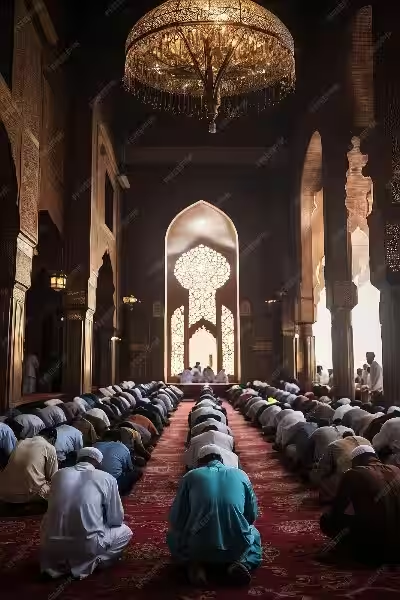
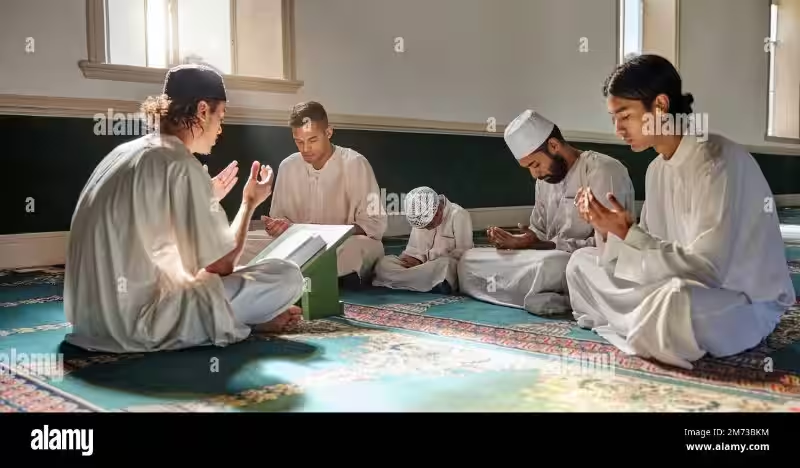
The act of worship in Islam, known as Ibadah, is a comprehensive concept that extends beyond ritualistic prayer. It encompasses all acts performed with the intention of pleasing Allah. This includes the five daily prayers (Salat), fasting during the month of Ramadan (Sawm), charity (Zakat), and the pilgrimage to Mecca (Hajj). These pillars of Islam are structured acts of devotion that reinforce the core belief in Allah.
Beyond these prescribed acts, Ibadah also includes living an ethical and moral life. Honesty, kindness, compassion, justice, and seeking knowledge are all considered forms of worship. Even mundane activities, when performed with the right intention and adherence to Islamic principles, can be elevated to acts of devotion. This holistic approach means that for a Muslim, the entire life is a continuous journey of submission and service to Allah, the one being they worship. Understanding who do Muslims worship is thus an understanding of their entire way of life as a devoted act.
The primary sources of guidance for Muslims in understanding Allah and His commandments are the Quran, which Muslims believe to be the literal word of God revealed to Prophet Muhammad, and the Sunnah, which comprises the teachings, actions, and silent approvals of Prophet Muhammad. These two sources provide a detailed roadmap for living a life that is pleasing to Allah.
Through studying the Quran, Muslims learn about Allah’s attributes, His laws, and His expectations. The Sunnah offers practical examples of how to implement these teachings in daily life. For instance, the Quran might command justice, while the Sunnah provides specific examples of Prophet Muhammad demonstrating justice in his dealings. This symbiotic relationship between the Quran and Sunnah ensures that Muslims have a clear and comprehensive understanding of who do Muslims worship and how to do so effectively and sincerely.
Avoiding Shirk: The Ultimate Sin
A central tenet in Islam is the absolute prohibition of Shirk, which means associating partners with Allah or worshipping anything or anyone else alongside Him. This is considered the gravest sin in Islam, as it directly contradicts the principle of Tawhid. Any act of idol worship, attributing divine qualities to created beings, or seeking intercession from anyone other than Allah in matters that are exclusively His domain, falls under Shirk.
For Muslims, this strict prohibition ensures that their devotion remains pure and focused on the one true God. It is a constant reminder that who do Muslims worship is an exclusive relationship. This principle helps maintain the integrity of their faith and prevents the dilution of their monotheistic belief. The emphasis on Tawhid is not about denying the existence or importance of other beings but about recognizing their created status and their inability to share in the divinity of Allah.
Ultimately, the worship of Allah is a deeply personal and intimate experience for Muslims. It is a relationship built on love, fear of God, and hope in His mercy. Through prayer, reflection, and striving to live a righteous life, Muslims aim to draw closer to their Creator. This personal connection provides them with solace, purpose, and guidance in navigating the complexities of life.
The journey of faith is a continuous one, marked by moments of striving, repentance, and seeking forgiveness. For every Muslim, the answer to “Who do Muslims worship?” is unequivocally Allah, the One and Only God. This worship is not a passive act but an active, lifelong commitment to submission and devotion, a recognition of His absolute sovereignty and boundless grace. Their entire existence is a testament to this singular devotion.
Frequently Asked Questions about Islam
Who do Muslims worship?
Muslims worship only one God, who is known in Arabic as Allah. This concept of the oneness of God is the central tenet of Islam.
Is Islam a religion of peace?
Yes, the word “Islam” itself means “submission to the will of God,” and it is rooted in principles of peace, compassion, and justice. The Quran, Islam’s holy book, emphasizes peace and forgiveness.