The very name “Vatican” conjures images of awe-inspiring architecture, centuries of spiritual devotion, and an almost palpable sense of history. Yet, beneath the grandeur of St. Peter’s Basilica lies a realm even more profound, a silent testament to faith that whispers stories of early Christianity: the Vatican Scavi. This subterranean necropolis, literally meaning “excavations” in Italian, is not merely an archaeological site; it’s a living, breathing chapter in the religion of millions, offering a tangible connection to the very foundations of their beliefs. For anyone seeking to understand the enduring power of faith, a journey into the Vatican Scavi provides unparalleled insight.
Imagine standing in the heart of Rome, surrounded by the bustling energy of modern life, and then descending into a world that has remained remarkably preserved for nearly two millennia. This is the experience of exploring the Vatican Scavi. It’s a place where the sacred is not just preached from pulpits but is etched into stone, where the echoes of ancient prayers seem to linger in the air. The Vatican Scavi offers a unique perspective on the evolution of religion, showcasing how beliefs were expressed, preserved, and passed down through generations, long before the magnificent basilica above even existed.
From Humble Burials to Sacred Ground: The Genesis of the Vatican Scavi
The story of the Vatican Scavi begins not with imperial pronouncements, but with the simple, deeply held belief in an afterlife held by early Christians. In the first and second centuries AD, Rome, while increasingly tolerant of Christianity, did not yet possess grand basilicas. Instead, followers of Christ sought communal resting places for their deceased, often in pagan cemeteries or in newly established Christian burial grounds. The area now known as the Vatican Scavi was once a pagan necropolis, a city of the dead, where Romans from various walks of life were interred.
It was within this ancient burial ground that tradition holds St. Peter, the apostle and first Pope, was martyred and subsequently buried. This pivotal event transformed a common burial site into a place of immense spiritual significance. The Vatican Scavi essentially grew around this venerated tomb, becoming a pilgrimage destination for devoted Christians seeking to honor and connect with their spiritual leader. Over time, the desire to be buried as close as possible to St. Peter’s resting place fueled extensive excavations and the construction of elaborate mausoleums, creating the layered and intricate labyrinth we can explore today. The transition from a pagan cemetery to the heart of Christian veneration is a powerful illustration of how religion can imbue even the most ordinary spaces with extraordinary meaning.
The Layers of History: Unearthing Early Christian Life
The Vatican Scavi is a masterclass in historical layering, a testament to the evolving practices and beliefs within early Christianity. As you navigate its dimly lit corridors, you’re not just walking through tunnels; you’re traversing through time, encountering different eras of burial customs and religious expression. The earliest sections reveal simple graves, indicating a period when Christianity was still establishing its identity and facing persecution. These humble interments stand in stark contrast to the later, more elaborate structures that emerged as the faith gained acceptance and followers sought to express their devotion through more permanent memorials.
The Vatican Scavi is a rich tapestry woven with the threads of everyday life and profound spiritual aspirations. Archaeologists have uncovered not only tombs but also fragments of pottery, inscriptions bearing Christian symbols like the fish (ichthys) and the Chi-Rho, and even remnants of pagan structures repurposed by early Christians. These discoveries offer invaluable insights into the daily lives, artistic expressions, and evolving theological understandings of the first centuries of Christianity. For instance, the recurring motif of the Good Shepherd found in the Vatican Scavi speaks to a deeply personal and comforting aspect of their faith, illustrating a religion that provided solace and hope amidst challenging times.
The Tomb of St. Peter: The Undisputed Heart of the Scavi
At the absolute core of the Vatican Scavi lies the presumed tomb of St. Peter. This is not a grand, ostentatious monument, but rather a humble, inscribed stone, known as the “Red Wall” or “Memoria Apostolica.” Its significance, however, is immeasurable, representing the bedrock upon which the entire tradition of the papacy and the Catholic Church is built. The painstaking archaeological work conducted over decades has provided compelling evidence to support this sacred identification, solidifying its status as a paramount pilgrimage site.
The journey to actually witness the “Red Wall” within the Vatican Scavi is a carefully managed and deeply reverent experience. Visitors are guided through the excavation, culminating in a moment of quiet contemplation before this ancient marker. This is where the abstract concept of religion becomes profoundly tangible. Standing before the tomb of St. Peter is to touch a direct lineage to Christ’s apostles, a connection that has sustained and inspired believers for centuries. The Vatican Scavi allows us to bridge the immense gap of time and feel the weight of history, the unwavering commitment of faith, and the profound impact of one individual on the course of religion worldwide.
Beyond the Stone: The Enduring Relevance of the Vatican Scavi
The Vatican Scavi is more than just an archaeological wonder; it is a powerful reminder of the enduring strength and adaptability of religion. It demonstrates how faith can take root in the most unexpected places, transforming pagan burial grounds into sacred sanctuaries. The very existence of this subterranean city speaks volumes about the human need for meaning, connection, and the promise of something beyond the earthly realm.
For contemporary believers, the Vatican Scavi offers a tangible link to their spiritual heritage. It’s a place where they can connect with the struggles and triumphs of early Christians, understanding that their own faith is part of a continuum that stretches back to the very dawn of Christianity. This connection provides a grounding and a sense of belonging that transcends the everyday. The Vatican Scavi serves as a constant testament to the fact that religion is not static but a living, evolving force, shaped by the experiences and devotion of countless individuals.
Experiencing the Scavi: A Journey of Faith and Discovery
Visiting the Vatican Scavi is not a casual stroll; it’s a carefully orchestrated pilgrimage. Access is limited, and tours are often booked months in advance, a testament to its immense popularity and the need to preserve its delicate environment. This exclusivity, however, only enhances the sense of sacredness and anticipation. The guided tours are designed to be informative and respectful, allowing visitors to absorb the history and spiritual significance of the site without overwhelming it.
The experience of exploring the Vatican Scavi can be profoundly moving. The hushed atmosphere, the dim lighting, and the sheer weight of history contribute to a sense of reverence. Seeing the ancient tombs, the early Christian art, and the inscribed epitaphs can evoke a deep appreciation for the sacrifices and devotion of those who came before. It’s an opportunity to reflect on the core tenets of religion, to consider the enduring human quest for meaning, and to marvel at how a faith born in humble beginnings could grow to shape the world. For those who approach it with an open heart and mind, the Vatican Scavi offers an unforgettable encounter with the very essence of religious history.
The Legacy of Sacrifice and Devotion: Lessons from the Vatican Scavi
The Vatican Scavi is a powerful testament to the sacrifices made by early Christians for their beliefs. They chose to remain steadfast in their faith, even in the face of persecution, and their commitment is immortalized in the very stones of this ancient necropolis. The desire to be buried near St. Peter was not merely a matter of proximity but a profound expression of their loyalty and their hope for eternal life, a central tenet of their religion.
The Vatican Scavi teaches us that religion is not solely about grand pronouncements or elaborate ceremonies; it is also about individual devotion, community solidarity, and unwavering conviction. The stories whispered by the tombs, the faint echoes of prayers, and the enduring presence of St. Peter’s resting place all converge to create a powerful narrative of faith that continues to resonate today. This subterranean world beneath the Vatican serves as a constant reminder of the deep historical roots and the profound human impact of religion, urging us to consider its enduring significance in our own lives.
Frequently Asked Questions about the Vatican Necropolis (Scavi)
What is the Vatican Necropolis (Scavi)?
The Vatican Necropolis, commonly known as the Scavi, is an ancient Roman necropolis located directly beneath St. Peter’s Basilica in Vatican City. It contains the tombs of many early Christians, including, according to tradition, the tomb of Saint Peter himself.
Can I visit the Vatican Necropolis?
Yes, but visits are strictly limited and require advance booking. Due to the fragile nature of the site and the limited space for visitors, tours are small and conducted by authorized guides.
How do I book a tour of the Scavi?
You must book your tour well in advance through the Ufficio Scavi (Office of the Excavations) website. It is highly recommended to book months ahead, especially during peak tourist seasons. Applications are processed in the order they are received.
What is the significance of the Scavi?
The Scavi is one of the most important archaeological sites in the Christian world. It offers a unique glimpse into early Christian burial practices and is believed to contain the tomb of Saint Peter, the first Pope. The discovery and excavation of the site in the 20th century were groundbreaking.
What will I see on a Scavi tour?
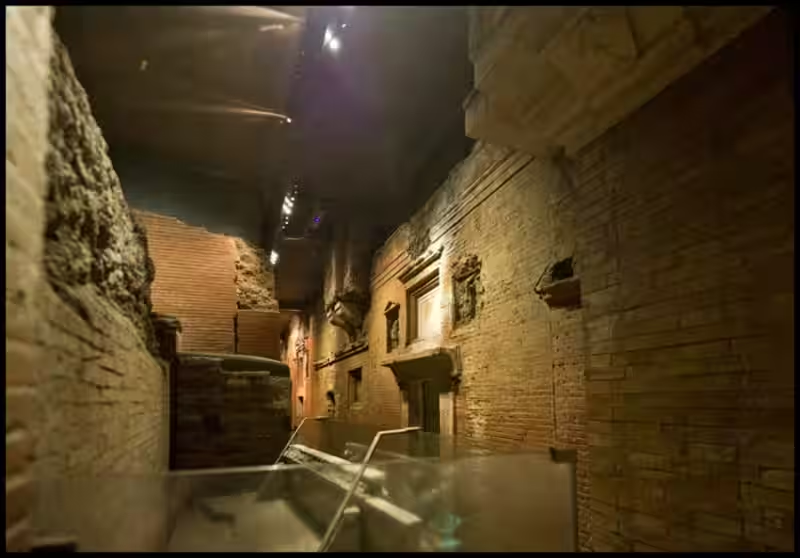
A guided tour will take you through the ancient Roman streets, mausoleums, and burial chambers. You will see pagan tombs, early Christian frescoes, and the “Tropaion” (a memorial monument believed to mark Saint Peter’s burial place), as well as the confessionale (the area above the tomb).
Is the Scavi a religious site?
Yes, the Scavi is a profoundly religious and historical site. It is considered the holiest shrine in Christendom due to its connection with Saint Peter. Many pilgrims and visitors find the experience deeply spiritual.
What are the requirements for visiting the Scavi?
Visitors must be able to walk and stand for extended periods and navigate narrow passages and stairs. The site is not wheelchair accessible. Children under 15 are generally not permitted. Comfortable shoes are essential. Photography is strictly forbidden inside the Necropolis.
How long does a Scavi tour last?
A typical tour lasts approximately 60 to 90 minutes.
Can I attend Mass in the Scavi?
There are opportunities for Mass to be celebrated in the Confessionale area, but these are reserved for specific groups or individuals who make special arrangements, often related to priestly ordinations. General visitors do not attend Mass within the Scavi itself.