Imagine standing at the precipice of two millennia of history, feeling the weight of empires and the echo of ancient footsteps. This is Rome. For many, the Eternal City is a bucket-list destination, a vibrant tapestry woven with threads of unparalleled art, breathtaking architecture, and profound religious significance. But what if you only have a single day? Fear not, for a meticulously planned Rome in a day tour with Vatican and Colosseum is not only possible but can be an intensely rewarding experience, offering a potent glimpse into the heart of Western civilization and its enduring spiritual legacy.
This isn’t just about ticking off landmarks; it’s about absorbing the atmosphere, understanding the narratives, and connecting with the very essence of what makes Rome so captivating. From the spiritual epicenter of the Catholic world to the gladiatorial arenas of ancient Rome, this concentrated journey promises a day of unforgettable sights and profound reflections, particularly for those with a keen interest in religion and its historical impact.
Your Rome in a day tour with Vatican and Colosseum must, by necessity, begin with the Vatican. This sovereign city-state, the smallest in the world, is a treasure trove of religious art and history, drawing millions each year in pilgrimage and admiration. The sheer scale of human devotion and artistic genius concentrated within these walls is staggering. Arriving early is paramount to maximizing your time and minimizing the inevitable queues. Consider booking skip-the-line tickets in advance; it’s a small investment for a significant time-saver.
The journey into the Vatican typically begins with the Vatican Museums. Here, prepare to be overwhelmed by masterpieces at every turn. The Raphael Rooms, with their intricate frescoes depicting significant theological and philosophical themes, are a visual feast. However, the undisputed highlight, the crescendo of the museum experience, is the Sistine Chapel. Gazing up at Michelangelo’s celestial ceiling and the powerful “Last Judgment” is a spiritual and artistic revelation. The narrative depicted, from the creation of Adam to the expulsion from Eden, forms the bedrock of Christian understanding, a testament to faith rendered in breathtaking artistry. Remember, photography is forbidden inside the Chapel, a rule that encourages a more present and contemplative experience.
Saint Peter’s Basilica: A Monument to Faith
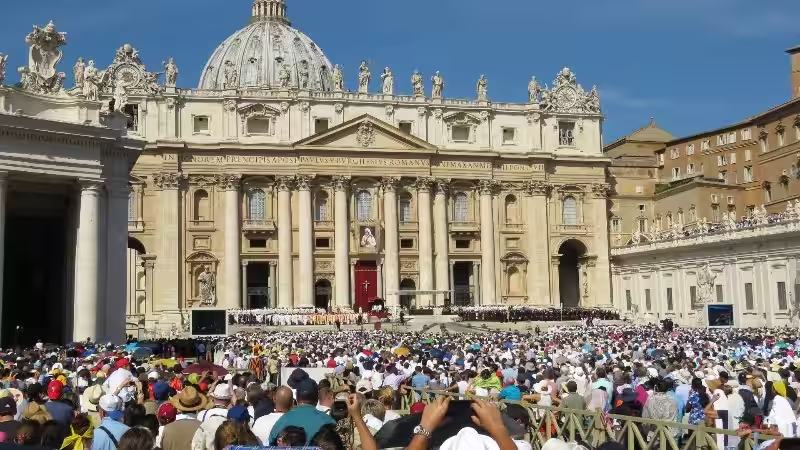
Emerging from the museums, you’ll find yourself in the magnificent embrace of St. Peter’s Square, designed by Bernini to symbolically welcome pilgrims. And then, there is St. Peter’s Basilica itself. This colossal church, a masterpiece of Renaissance architecture, stands as a monument to faith and human endeavor. Its sheer size is humbling, and the artistry within is unparalleled. Inside, marvel at Michelangelo’s Pietà, a sculpture of profound emotional power, and Bernini’s Baldacchino, a towering bronze canopy over the papal altar, a symbol of the Church’s authority.
For those with the energy and a desire for panoramic views, climbing to the top of the dome is highly recommended. The ascent, part elevator and part stairs, offers increasingly spectacular vistas of Rome. This vantage point allows you to truly appreciate the grandeur of the Vatican and the sprawling city beyond. It’s a moment where the historical weight of the place, its role in centuries of religious events, and its ongoing spiritual significance, all converge. This part of your Rome in a day tour with Vatican and Colosseum offers a powerful perspective on the enduring influence of religion.
Echoes of Empire: The Majestic Colosseum and Roman Forum
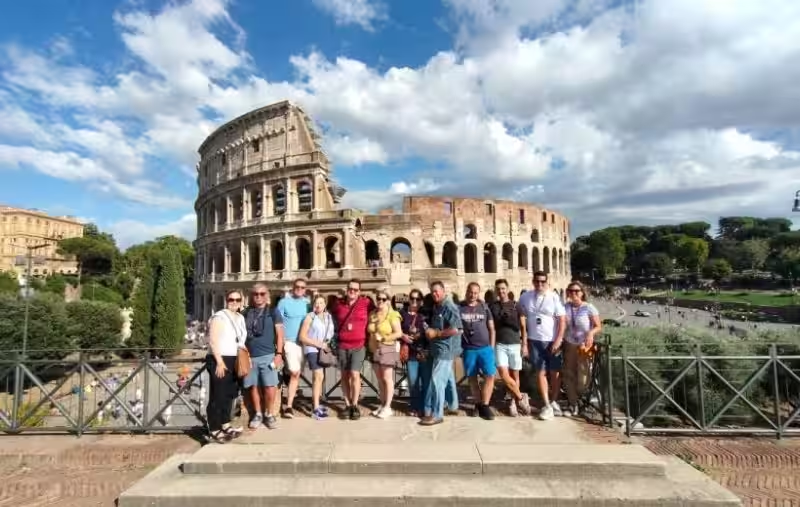
From the spiritual heights of the Vatican, your Rome in a day tour with Vatican and Colosseum plunges into the heart of ancient Roman power and spectacle. The Colosseum, an icon of the ancient world, is an awe-inspiring testament to Roman engineering and their thirst for entertainment, however brutal. Walking through its arches and standing on the arena floor (or imagining it), you can almost hear the roar of the crowds and the clash of gladiatorial combat. It’s a stark reminder of a different era, where public spectacles served as both diversion and a display of imperial might.
Understanding the context of the Colosseum is crucial. It was a venue for gladiatorial contests, animal hunts, and public executions, a place where life and death played out for the masses. While the religious implications here are less direct than in the Vatican, the Roman pantheon and their beliefs about fate and the afterlife were deeply interwoven with public life, including these grand spectacles. The sheer scale of construction, requiring immense labor and resources, also speaks to the organizational prowess and the societal values of ancient Rome, which, while distinct from modern religious practices, were deeply rooted in their own spiritual and civic beliefs.
The Roman Forum: The Pulse of Ancient Rome
Adjacent to the Colosseum lies the Roman Forum, the vibrant heart of ancient Roman political and social life. This sprawling archaeological site, once a bustling marketplace and civic center, is now a labyrinth of ruins that whispers tales of emperors, senators, and everyday citizens. Imagine toga-clad figures debating laws, merchants hawking their wares, and religious processions winding their way through these very streets. Key structures like the Arch of Titus, the Temple of Saturn, and the Rostra offer tangible links to the past.
Exploring the Forum provides a broader understanding of Roman society, including their religious practices. Temples dedicated to various gods and goddesses dotted the landscape, and public rituals were an integral part of daily life. The remnants of these sacred spaces offer a glimpse into the complex belief systems that underpinned Roman civilization. A guided tour here can bring these stones to life, explaining the function of each building and the stories associated with them. This historical immersion is a powerful counterpoint to the religious focus of the Vatican, showcasing the multifaceted nature of human civilization and its varied expressions of faith and governance.
Bridging Faiths and Eras: A Day of Contrast and Continuity
Your Rome in a day tour with Vatican and Colosseum is a masterclass in historical and cultural contrast. You’ve moved from the spiritual epicenter of one of the world’s largest religions to the very ground where an ancient empire conducted its business and entertained its citizens. This juxtaposition is precisely what makes Rome so uniquely compelling. It’s a city where the sacred and the secular, the ancient and the modern, coexist in a breathtakingly harmonious, if sometimes jarring, fashion.
The enduring power of religion is palpable in the Vatican. The continuity of faith, the artistic expressions of devotion, and the organizational might of the Church have shaped centuries of history. Conversely, the Colosseum and Roman Forum speak to the rise and fall of empires, the ingenuity of human civilization, and the evolution of societal values. Yet, even in the ruins of the Forum, one can find evidence of religious devotion, reminding us that faith, in its various forms, has always been a fundamental aspect of the human experience, irrespective of the era or the specific deities worshipped.
Practical Tips for Your Rome in a Day Adventure
To truly conquer your Rome in a day tour with Vatican and Colosseum, preparation is key. Comfortable walking shoes are non-negotiable. You’ll be covering a lot of ground, and the cobblestones of Rome demand respect. Stay hydrated – carry a reusable water bottle, as there are numerous public fountains (nasoni) throughout the city offering fresh, potable water. Dress respectfully, especially for the Vatican; shoulders and knees must be covered to enter St. Peter’s Basilica and the Vatican Museums.
Consider a guided tour for at least one of the major sites. A knowledgeable guide can transform stones and ruins into vivid narratives, offering insights into the history, art, and religion that might otherwise be missed. For your Rome in a day tour with Vatican and Colosseum, booking skip-the-line tickets for both the Vatican Museums and the Colosseum is a wise investment to maximize your precious daylight hours. Lastly, embrace the pace. It will be a whirlwind, but allow yourself moments to simply stand, observe, and absorb the unparalleled atmosphere of this eternal city.
Frequently Asked Questions: Rome in a Day Tour with Vatican and Colosseum
What religious sites are included in the tour?
The tour typically includes visits to St. Peter’s Basilica in the Vatican City, and the Colosseum, which, while not a religious site itself, is a historically significant landmark often visited in conjunction with the Vatican.
Is there a dress code for visiting religious sites like St. Peter’s Basilica?
Yes, there is a strict dress code. Shoulders and knees must be covered for both men and women. This generally means no shorts, miniskirts, or sleeveless tops. It’s advisable to wear comfortable walking shoes as well.
Will the tour provide information about the religious history of the sites?
Yes, guided tours usually include historical and religious context for the sites visited, including St. Peter’s Basilica and the significance of the Vatican.
Can I participate in religious services during the tour?
The tour itinerary is generally focused on sightseeing and historical commentary. While you may have some free time within St. Peter’s Basilica, it’s unlikely to align with specific service times. If you wish to attend a Mass, it’s best to check the basilica’s schedule and plan accordingly, potentially before or after the tour.
Are there opportunities to purchase religious souvenirs?
Yes, there are usually souvenir shops within or near the Vatican and St. Peter’s Basilica where you can purchase religious items.
Is the tour suitable for individuals with strong religious beliefs?
Absolutely. The tour offers an in-depth look at significant religious landmarks and their history, which can be a deeply enriching experience for individuals with strong religious beliefs.