Saint George and Islam: A Shared Reverence Beyond Religion
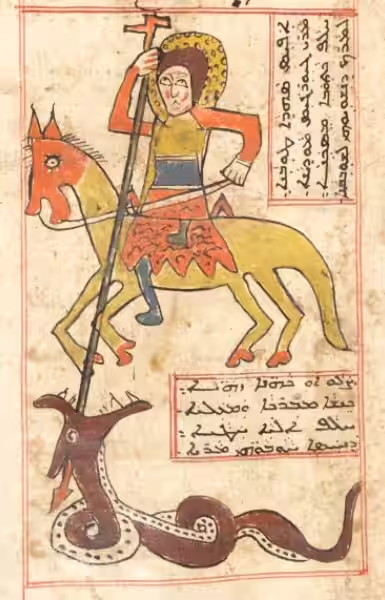
The image of Saint George, the valiant knight slaying a dragon, is deeply embedded in Western culture, a symbol of courage and triumph over overwhelming evil. Yet, the story of this revered figure extends far beyond Christian iconography. In the realm of Islam, Saint George, known as Al-Khidr (or sometimes as Jirjis), holds a significant and revered status, embodying a profound connection to divine wisdom, spiritual guidance, and the protection of the faithful. This shared reverence highlights how certain figures and narratives can transcend religious boundaries, fostering understanding and a sense of common heritage.
Exploring the presence of Saint George in Islamic tradition offers a unique perspective on interfaith dialogue and the universality of spiritual aspirations. It demonstrates that the core values attributed to him – bravery, justice, and divine favor – resonate deeply across different faith communities. Understanding this connection can enrich our appreciation for the multifaceted nature of religious history and the enduring power of stories that speak to the human condition.
The Enigmatic Figure of Al-Khidr in Islamic Tradition
Within Islam, the character most closely identified with Saint George is Al-Khidr, a mysterious and eternally living prophet or saint. His story is prominently featured in the Quran, particularly in Surah Al-Kahf (The Cave), where he accompanies the prophet Moses on a spiritual journey. Unlike the clear-cut narrative of George the Dragon-Slayer, Al-Khidr’s presence in Islamic scripture is more enigmatic, characterized by his unknowable wisdom and his ability to perform acts that, while seemingly inexplicable or even harsh to an outsider, are ultimately guided by divine insight and serve a greater, hidden purpose. This often involves acts of divine intervention and the dispensing of spiritual knowledge that transcends ordinary human understanding.
The attributes of Al-Khidr – his immortality, his profound knowledge, and his role as a guide – are remarkably consistent with the veneration of Saint George in other traditions. Many Muslims believe Al-Khidr appears to those in dire need, offering guidance, protection, and spiritual enlightenment. He is seen as a protector of travelers and a dispenser of justice, often intervening in critical moments to aid the oppressed or guide those who have strayed. This sacred figure is not confined to a single historical event but is believed to be a perpetual presence, a testament to the ever-present hand of the divine in the lives of believers.
Al-Khidr’s Role as a Spiritual Guide and Protector
The Quranic account of Al-Khidr with Moses illustrates his function as a teacher of divine secrets. While Moses, a prophet of great stature, struggled to comprehend Al-Khidr’s actions – such as mending a broken boat or killing a young boy – Al-Khidr consistently revealed the underlying divine wisdom. This established Al-Khidr as a figure who possesses esoteric knowledge and understands the divine plan in ways that are not immediately apparent. For Muslims, this makes Al-Khidr an ultimate source of spiritual insight and a guide for those seeking deeper understanding of God’s will.
Beyond his role as a sage, Al-Khidr is also widely invoked as a powerful intercessor and protector. Many Sufi traditions, in particular, hold Al-Khidr in high esteem, believing he can be called upon in times of danger, hardship, or spiritual confusion. His legendary ability to appear and assist those in need has led to numerous stories and anecdotal evidence of his interventions. This aspect of Al-Khidr’s veneration aligns perfectly with the popular image of Saint George as a champion of the weak and a defender against evil, demonstrating a shared devotional core.
The Overlapping Narratives: Saint George and Jirjis
While the name “Al-Khidr” is more prevalent in direct Quranic reference and theological discussion, the figure of Jirjis is often used interchangeably or as a more direct parallel to Saint George in popular Islamic veneration, particularly in regions with a historical Christian presence. Jirjis, in these contexts, is often depicted with similar attributes: a brave warrior who confronted injustice and tyranny, often a pagan ruler or oppressive force. The narrative of slaying a monstrous entity, while not always a literal dragon, often involves overcoming symbolic forces of evil or ignorance.
The reverence for Jirjis, a figure strongly reminiscent of Saint George, is a testament to the syncretic nature of religious and cultural exchange. In many parts of the Middle East and North Africa, where Christianity and Islam have coexisted for centuries, shared saints and revered figures are common. The story of Saint George’s courage and his victory over adversity resonated so powerfully that it found a natural home within the Islamic spiritual landscape, often under the name Jirjis, embodying the Islamic ideal of standing for truth and justice.
Jirjis as a Symbol of Faithfulness and Victory
The stories of Jirjis often highlight his unwavering faith in the face of persecution. He is portrayed as someone who refused to renounce his beliefs, even when threatened with severe punishment. This steadfastness is a core tenet in Islam, and Jirjis’s narrative serves as a potent example of patience (sabr) and reliance on God (tawakkul). His stories are told to inspire believers to remain firm in their faith, even when confronted by societal pressures or overt opposition.
Furthermore, the victory attributed to Jirjis, whether over a literal beast or a metaphorical oppressor, symbolizes the ultimate triumph of good over evil and the divine support for those who uphold righteousness. This resonates deeply with the Islamic belief that God is on the side of the righteous. The veneration of Jirjis, therefore, is not just about a historical figure but about embracing the principles of courage, truth, and divine assistance that he represents, making him a beloved figure for many Muslims seeking inspiration.
The Dragon-Slaying Motif and its Islamic Interpretation
The iconic image of Saint George slaying a dragon is perhaps his most recognizable attribute. While a literal dragon may not be a central figure in every Islamic rendition of Al-Khidr or Jirjis, the concept of confronting and conquering formidable evils is certainly present. In Islamic lore, these “dragons” can be interpreted in various ways: they can represent personal vices like greed or pride, societal injustices such as tyranny and oppression, or even supernatural forces of disbelief and temptation.
The act of slaying the dragon, therefore, can be seen as a metaphor for the spiritual struggle that every Muslim undertakes. It signifies the triumph of faith over doubt, self-discipline over base desires, and justice over corruption. When Muslims venerate Al-Khidr or Jirjis, they are often drawing strength from the idea that these figures embody the divine power to overcome adversaries, both internal and external, reinforcing the message that with faith and perseverance, victory is attainable.
Symbolic Meanings and Enduring Relevance
The dragon-slaying motif translates into a powerful symbol of resilience and hope within Islamic understanding. It encourages individuals to face their challenges head-on, armed with faith and a commitment to righteousness. The presence of Al-Khidr or Jirjis as a protector in times of turmoil offers a sense of divine assurance, reminding believers that they are not alone in their struggles and that God’s aid is available to those who seek it earnestly.
The enduring relevance of these figures in Islam speaks to the universal human desire for protection, wisdom, and a champion against adversity. Whether recognized as Saint George, Al-Khidr, or Jirjis, the essence of the figure remains consistent: a beacon of strength, divine guidance, and the ultimate victory of good. This shared veneration fosters a sense of cultural and spiritual commonality, bridging divides and highlighting the profound ways in which different religious traditions can find resonance in shared ideals and symbolic narratives.
Conclusion: A Bridge of Reverence
The veneration of Saint George, or his Islamic counterparts Al-Khidr and Jirjis, offers a compelling example of how sacred figures and narratives can transcend religious boundaries. In Islam, these figures are not merely historical footnotes but vibrant embodiments of divine wisdom, spiritual guidance, and unwavering protection. They represent the universal struggle against evil and the triumph of faith, principles that resonate deeply across diverse spiritual paths.
Understanding the place of Saint George in Islam, through the figures of Al-Khidr and Jirjis, enriches our appreciation for the complex tapestry of religious history and interfaith understanding. It demonstrates that beneath differing doctrines and practices, there often lies a shared reverence for courage, justice, and the divine presence in human life, creating a powerful bridge of commonality and mutual respect.
Frequently Asked Questions about Saint George in Islam
Who is Saint George in Islam?
In Islam, Saint George is known as Jirjis. He is revered as a righteous individual and a prophet, though not one of the most prominent in the Quran. His story is found in later Islamic traditions and hagiography.
What is the story of Jirjis (Saint George) in Islam?
The most popular narrative of Jirjis tells of his unwavering faith in God (Allah) in the face of tyrannical rulers. He is said to have challenged idol worship and performed miracles, including the revival of the dead and the defeat of a dragon or monstrous beast that was terrifying a community. His steadfastness in his faith led to his eventual martyrdom.
Is Jirjis mentioned in the Quran?
Jirjis (Saint George) is not explicitly mentioned by name in the Quran. His story is primarily found in Hadith literature and later Islamic historical and hagiographical texts, which are secondary sources of Islamic teachings.
What is the significance of Jirjis in Islam?
Jirjis is significant for his symbol of courage, faith, and perseverance. His story serves as an example of standing firm against oppression and disbelief, and trusting in God’s power. He is seen as a defender of truth and a symbol of divine victory over evil.
Are there any specific prayers or rituals associated with Jirjis in Islam?
There are no specific obligatory prayers or rituals prescribed in mainstream Islamic practice that are directly tied to Jirjis. However, in some Sufi traditions and popular devotion, individuals may invoke his name or read narratives about him for blessings or as a source of inspiration.
Is Saint George celebrated in Islam?
While there isn’t a formal, universally observed religious holiday for Jirjis in Islam, his story is known and appreciated by many Muslims, particularly within certain cultural contexts and Sufi circles. He is respected as a noble figure in religious history.