In the tapestry of human struggle and progress, the threads of organized labor and spiritual conviction often weave together in unexpected and profound ways. For centuries, the fight for fair treatment, dignity in work, and a just society has been fueled not only by economic necessity but also by a deep-seated moral imperative. This moral compass, frequently informed by religious teachings, has guided countless individuals to stand up for their rights and the rights of their fellow workers. When we examine quotes on labor unions and religion, we uncover a rich history of shared values and a powerful synergy that continues to shape the modern workforce.
This article explores the intrinsic connection between religious faith and the labor movement, showcasing how spiritual beliefs have inspired and sustained the pursuit of justice in the workplace. We will delve into the wisdom of past leaders, the enduring principles that bind these seemingly disparate forces, and the relatable experiences of individuals whose faith has been a bedrock in their union activism. By understanding these shared foundations, we can gain a deeper appreciation for the ongoing dialogue between conscience and collective action.
The Moral Imperative: Faith as a Catalyst for Workers’ Rights
At its core, many religious traditions champion principles of justice, compassion, and the inherent dignity of every human being. These tenets naturally align with the fundamental goals of labor unions: ensuring fair wages, safe working conditions, and the right to organize without fear of reprisal. This shared ethical ground has often served as a powerful catalyst, transforming individual grievances into collective movements for change. As the renowned theologian and activist, Martin Luther King Jr., powerfully stated, “[I]njustice anywhere is a threat to justice everywhere.” This quote, while broadly applicable, resonates deeply within the context of labor struggles, where the exploitation of one worker can, and often does, impact the entire community.
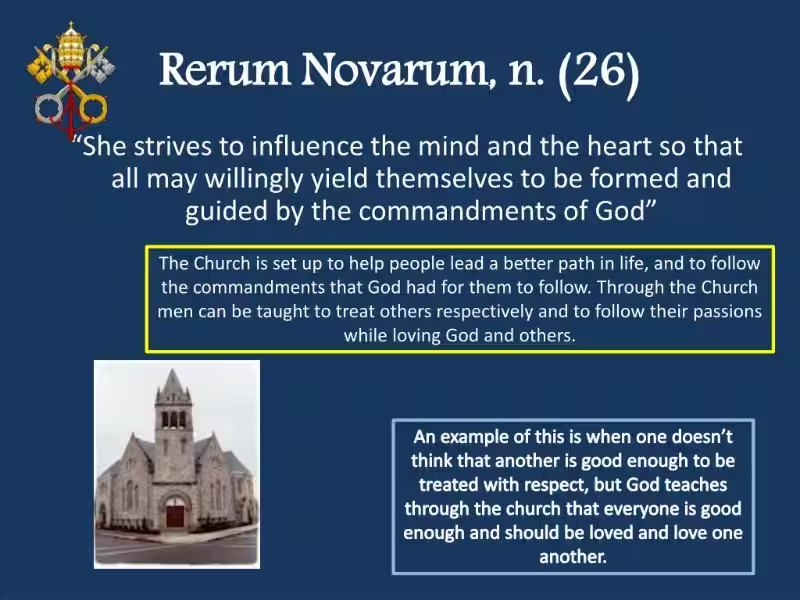
Consider the historical context: in the early days of industrialization, workers often faced brutal conditions, long hours, and meager pay. Many found solace and strength in their faith communities, where sermons often spoke of liberation from oppression and the importance of standing with the marginalized. This spiritual grounding provided the courage to challenge powerful employers and advocate for a more equitable distribution of wealth and opportunity. For instance, the Catholic Church, through encyclicals like Rerum Novarum, explicitly supported the rights of workers to form unions and bargain collectively, recognizing it as a legitimate response to the injustices of capitalism. This provided a theological framework that legitimized and encouraged unionization among its adherents.
Early Echoes: Religious Leaders and the Birth of the Labor Movement
The genesis of modern labor movements is intrinsically linked to individuals and institutions who, guided by their faith, recognized the moral failings of exploitative labor practices. These pioneers didn’t just see economic disparity; they saw a violation of divine principles. The concept of the “common good,” a cornerstone of much religious philosophy, became a powerful rallying cry for early union organizers. They believed that a just society prioritized the well-being of all its members, particularly those most vulnerable.
Many of the early champions of workers’ rights drew inspiration from biblical narratives of liberation and social justice. The story of the Israelites’ exodus from slavery in Egypt, for example, served as a potent metaphor for the struggle against oppressive working conditions. This spiritual resonance provided a sense of purpose and a conviction that their fight was not merely for material gain but for a higher moral ideal. As the esteemed labor leader Samuel Gompers once remarked, “[W]e are fighting for the right to be free, to be citizens, to be men.” This sentiment, imbued with a sense of inherent worth often rooted in religious understanding, drove the foundational efforts to establish unions as vehicles for human dignity.
Shared Values: Justice, Dignity, and the Common Good
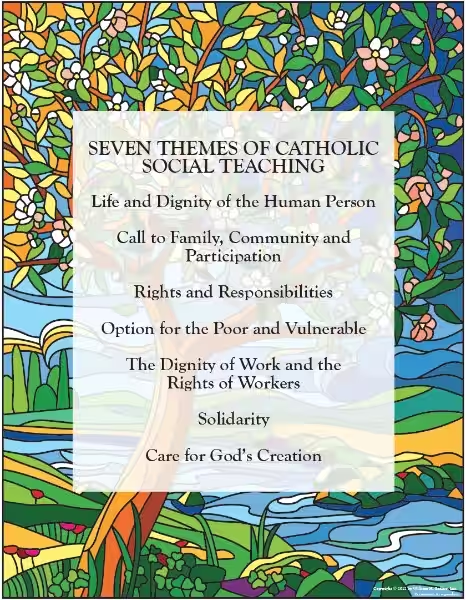
The alignment between religious values and labor union objectives is remarkable. Concepts like charity, solidarity, and the sanctity of human life are not just abstract ideals in many faiths; they are calls to action. Labor unions, in their pursuit of safe workplaces and fair compensation, are essentially striving to uphold these very values in the economic sphere. The idea that every individual deserves respect and a living wage is a profoundly religious concept that finds practical expression in the demands of organized labor.
This shared commitment to human dignity is evident in the persistent efforts of unions to secure benefits that go beyond mere wages, such as healthcare and retirement security. These provisions reflect an understanding that workers are not simply cogs in a machine but individuals with families, needs, and aspirations that deserve to be protected. When faith leaders and union organizers speak about the importance of “caring for the least among us,” they are articulating a common vision that transcends organizational boundaries and speaks to the heart of human decency. This echoes in the words of the Reverend Jesse Jackson, a tireless advocate for social justice, who stated, “[A]ll labor that uplifts humanity has dignity and importance.” This profound affirmation underscores the spiritual value placed on work itself when it is performed in a just and equitable environment.
From Pulpit to Picket Line: The Influence of Religious Teachings
Throughout history, religious institutions and leaders have played a crucial role in supporting and even initiating labor organizing efforts. In many communities, churches, synagogues, mosques, and temples served as meeting places for workers to discuss their grievances and plan their actions. The moral authority of religious leaders often lent weight to the workers’ demands, making it more difficult for employers to dismiss them outright.
The teachings of various faiths often provide a theological framework for understanding and advocating for economic justice. For example, the concept of “tzedek” (righteousness or justice) in Judaism, or the emphasis on social justice in Christian theology, directly informs the labor movement’s pursuit of fairness. These spiritual underpinnings provide a powerful sense of conviction and a moral compass that guides activists. As the influential labor organizer Dolores Huerta (who, while not solely religiously focused, often spoke of the spiritual dimensions of her activism) articulated, “[W]e must make sure that everyone has the opportunity to live a life of dignity.” This sentiment, deeply rooted in humanistic and often spiritual values, encapsulates the aspirations that fuel many labor struggles.
The intersection of religion and labor is beautifully captured in the words of those who have experienced both firsthand. These quotes offer a glimpse into the profound motivations that drive individuals to fight for a better world for themselves and their communities.
Enduring Wisdom from Labor Leaders and Theologians:
“The labor movement is the most powerful force for social justice in our society.” – Rabbi Abraham Joshua Heschel. This powerful statement highlights the belief that the organized pursuit of fair labor practices is not merely an economic endeavor but a moral imperative, deeply aligned with the pursuit of justice that is central to many religious faiths.
“Every person has a right to a decent living, and that includes a decent wage, decent working conditions, and the right to organize.” – Pope John Paul II. His encyclicals consistently affirmed the dignity of labor and the right of workers to associate, viewing unions as essential for protecting human rights in the economic realm, a perspective deeply rooted in Catholic social teaching.
“Where there is injustice, there is work to be done. And that work is often found on the picket line.” – A sentiment often echoed by faith-based community organizers. This speaks to the active role many religious individuals and groups take in supporting labor disputes, seeing the struggle for fair treatment as a direct application of their spiritual calling.
These quotes are more than just words; they are testaments to a shared heritage of fighting for the rights and dignity of working people. They remind us that the pursuit of a just society is a multifaceted endeavor, one that often draws strength and inspiration from the deepest wells of human conviction.
The language of faith and the language of labor are often remarkably similar, speaking of hope, redemption, and the possibility of radical change. When individuals of faith engage in union activities, they often see their work as an extension of their spiritual duties – a way to embody their beliefs in the tangible world. This synergy creates a powerful force for positive transformation, reminding us that the fight for economic justice is, at its heart, a fight for human dignity and a more compassionate world.
Conclusion: A Symbiotic Relationship for a More Just Future
The connection between quotes on labor unions and religion is not a relic of the past; it is a vibrant and ongoing force. As we navigate the complexities of the modern economy, the moral grounding provided by religious traditions continues to be a vital source of inspiration and motivation for workers seeking fairness and dignity. The principles of compassion, solidarity, and justice that are central to so many faiths find their tangible expression in the goals and actions of labor unions.
Ultimately, understanding this symbiotic relationship empowers us to recognize the inherent moral weight behind the labor movement. It encourages us to see the pursuit of workers’ rights not just as an economic issue but as a fundamental ethical and spiritual imperative. By continuing to draw strength from both our faith and our collective action, we can build a more just, equitable, and humane future for all. The ongoing dialogue between these powerful forces promises to continue shaping the narrative of work and human worth for generations to come.
Frequently Asked Questions about Labor Unions and Religion
Can I be a member of a labor union and still practice my religion freely?
Absolutely. Labor unions in many countries, including the United States, are legally obligated to respect and accommodate the religious practices of their members. This means that union membership and participation should not force you to violate your sincerely held religious beliefs. Unions are generally prohibited from discriminating against members based on religion.
Do labor unions have an official stance on religion or specific religious doctrines?
No, labor unions are typically secular organizations. They represent the common economic and workplace interests of their members, regardless of their religious affiliations or beliefs. Unions do not promote or endorse any particular religion or religious doctrine. Their focus is on collective bargaining, worker rights, and improving working conditions.
How do labor unions handle religious holidays or observances that might conflict with work schedules?
Many unions negotiate for provisions in their collective bargaining agreements that allow for religious accommodations. This can include requesting time off for religious holidays or observances. The specific process and success of such requests can vary depending on the employer’s policies, the nature of the job, and the specific language negotiated into the union contract. It’s advisable to discuss your needs with your union representative.
Can a labor union compel me to participate in activities that violate my religious beliefs?
No, a labor union cannot legally compel you to participate in activities that violate your sincerely held religious beliefs. If a union requires membership as a condition of employment, and your religion prohibits joining such an organization, there may be legal avenues for accommodation or exemption. Unions are generally expected to make reasonable accommodations to avoid infringing on religious freedom.
If my religious beliefs conflict with a union’s position on a specific issue, what can I do?
If you have a religious objection to a union’s stance on a particular issue, you can express your concerns to your union leadership. Depending on the issue and the union’s structure, you may be able to advocate for an alternative position or seek an accommodation. Unions are collections of diverse individuals, and open communication is often the best approach to address differing viewpoints.