In the grand tapestry of human existence, few threads are as deeply woven and as perennially debated as the relationship between our fundamental rights and the profound spiritual impulses that have guided civilizations for millennia. We often hear pronouncements about the inherent dignity of every individual, the right to freedom of thought and conscience, and the imperative to treat others with compassion and justice. These are the cornerstones of what we call human rights, and it’s a revelation to discover how often these very principles find their echo within the sacred texts and teachings of diverse religious traditions. This isn’t about conflating secular law with religious dogma, but rather about acknowledging a shared language of value that transcends specific doctrines, a common ground where the pursuit of human flourishing is elevated to a divine calling.
Understanding this intersection can be incredibly empowering. It allows us to see how deeply ingrained the concept of human dignity is within many of our oldest belief systems. For instance, the Golden Rule, a principle found in myriad forms across the world’s religions, from Christianity’s “Do unto others as you would have them do unto you” to Hinduism’s “Do not do to others what would cause pain to you,” is a profoundly human rights-oriented statement. It’s a call for empathy, a recognition that the other person’s feelings and experiences are as valid as our own. This simple yet powerful maxim, when truly embraced, forms the bedrock for respecting individual autonomy, preventing harm, and fostering a society where everyone feels seen and valued.
The Divine Mandate: Faith as a Foundation for Rights
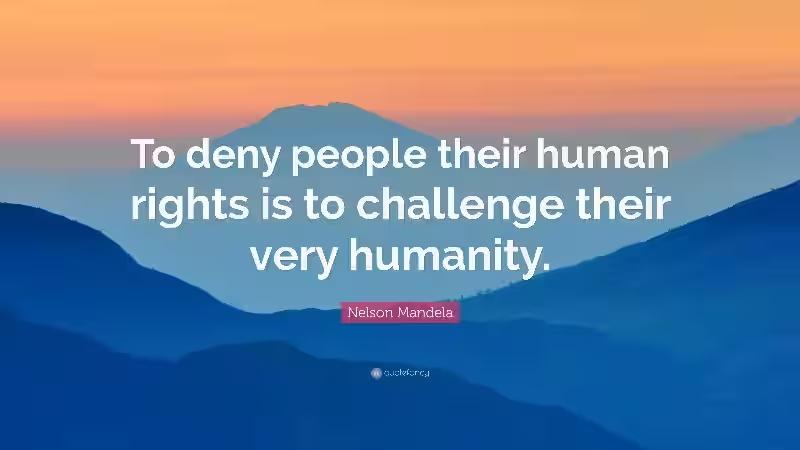
Many religious traditions posit that humanity is created in the image of a divine being. This theological concept, in its purest form, bestows an inalienable dignity upon every person, regardless of their background, beliefs, or social standing. This inherent worth, gifted by a higher power, becomes the ultimate justification for human rights. If we are all reflections of the divine, then to infringe upon the rights of one is, in a sense, to dishonor the creator. As Desmond Tutu profoundly stated, “Human rights are not a privilege to be granted by governments, but are inherent to the human person, given by God.” This perspective shifts the focus from state-sanctioned permissions to an intrinsic endowment, a sacred birthright that no earthly power can legitimately revoke.
This foundational belief translates into concrete ethical imperatives within religious teachings. The emphasis on compassion, mercy, and justice found in scriptures like the Quran, the Torah, and the Bible isn’t merely abstract philosophy; it’s a divine command to act in ways that uphold the well-being of others. Consider the concept of zakat in Islam, a mandatory form of charity that ensures the poor and needy are cared for, or the Jewish emphasis on tzedakah (justice and righteousness), which often manifests as charitable giving and social responsibility. These are not simply acts of kindness; they are seen as religious obligations that directly address the material and social needs of individuals, thereby safeguarding their right to a life free from destitution and hardship.
One of the most cherished human rights is the freedom of thought, conscience, and religion. This right recognizes the sacred space within each individual where their deepest beliefs are formed and nurtured. It acknowledges that forcing someone to believe or practice something against their will is not only ineffective but also a profound violation of their personhood. Many religious texts themselves champion this internal liberty, even when advocating for specific beliefs. Jesus, for example, did not compel adherence but rather invited followers. Likewise, the Quran, while presenting its own divine truth, allows for “no compulsion in religion” (2:256). This foundational principle is crucial in fostering a diverse and tolerant society.
When we talk about freedom of conscience, we are talking about the right to hold beliefs, to change them, and to express them, as long as such expression does not infringe on the rights of others. This is a delicate balance, but the underlying principle is that the state should not dictate the contents of our hearts or minds. Religious traditions, in their most inclusive interpretations, often understand this. The persecution of a minority faith group, for instance, directly contradicts this tenet. The stories of prophets and saints enduring hardship for their convictions often serve as powerful narratives that underscore the importance of inner conviction and the right to hold it, even in the face of adversity. This resonates deeply with the modern understanding of protecting individual autonomy and the sanctity of personal belief.
Justice and Compassion: The Ethical Imperatives of Faith
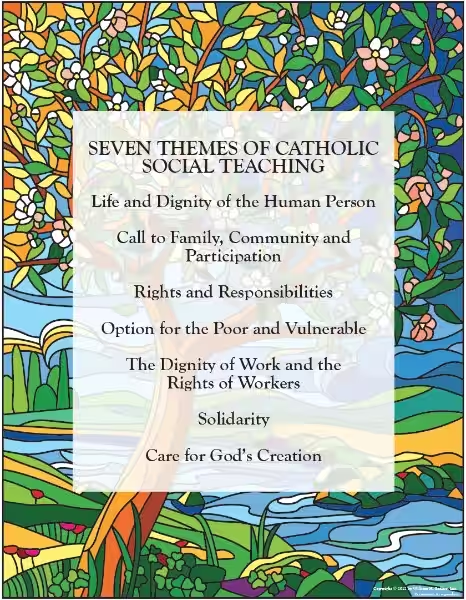
Religious traditions are replete with calls for justice and compassion, principles that are directly aligned with the spirit of human rights. The prophets of old, whether speaking from a mountaintop or a bustling marketplace, consistently railed against oppression, exploitation, and the disregard for the vulnerable. Their messages were often a divine indictment of injustice, urging societies to reform their ways and uphold the dignity of every person. The “love your neighbor” commandment in Judaism and Christianity, for example, is a powerful call to extend empathy and care to all, transcending tribal or sectarian boundaries. Similarly, the Buddhist concept of karuṇā (compassion) encourages a deep understanding of suffering and a desire to alleviate it in all beings.
These ethical imperatives manifest in various ways, from advocating for the poor and marginalized to demanding fair treatment in legal and social systems. Consider the historical role of religious institutions in establishing hospitals, schools, and charitable organizations that served the needs of communities, often those overlooked by secular powers. Such actions are a practical embodiment of human rights, ensuring access to basic necessities like healthcare, education, and a dignified existence. The phrase, “Justice will not roll down like waters and righteousness like a mighty stream” (Amos 5:24) is a powerful reminder from the Hebrew Bible that the pursuit of justice is not a passive hope but an active and ongoing struggle that requires moral courage and persistent effort. This is the very essence of advocating for human rights.
The Universal Declaration: A Synthesis of Sacred Wisdom?
It’s not an overstatement to suggest that the foundational principles of the Universal Declaration of Human Rights (UDHR) bear a striking resemblance to the ethical teachings found in many major religions. Concepts like the inherent dignity of all persons, the right to life and liberty, freedom from torture, and equality before the law are not novel inventions of the 20th century. They have, in various forms, been articulated and championed by religious thinkers and traditions for centuries. Eleanor Roosevelt herself, a key figure in drafting the UDHR, acknowledged the deep wellsprings of moral conviction that inspired its creation, drawing from diverse philosophical and religious traditions.
The UDHR, in its aspiration to be a common standard of achievement for all peoples and all nations, can be seen as a secular articulation of the divine yearning for justice and dignity that resonates across so many faiths. When a religious text speaks of the sanctity of life, and the UDHR affirms the right to life, these are not competing ideas but rather converging expressions of a shared human value. Understanding this intersection can foster dialogue and cooperation between religious communities and secular human rights advocates, recognizing that their ultimate goals – the protection and flourishing of every human being – are often aligned. This shared ground allows for a powerful synergy in working towards a more just and compassionate world.
Ultimately, whether one finds their moral compass guided by scripture or by secular philosophy, the principles of human rights offer a universal language of respect and dignity. The echoes of this sacred wisdom can be found in the pronouncements of prophets, the teachings of sages, and the enduring quest for a just and humane society. By recognizing these connections, we can strengthen our collective commitment to upholding the rights of all, ensuring that the sacred spark within each person is recognized, protected, and allowed to shine brightly.
Frequently Asked Questions About Quotes on Human Rights and Religion
What are some common themes in quotes about human rights and religion?
Many quotes explore the intersection of religious teachings with the universal principles of human rights. Common themes include the inherent dignity of all individuals, the importance of compassion and justice, the right to freedom of belief and conscience, and the responsibility to care for the vulnerable. Some quotes highlight how religious principles can be a source of inspiration for advocating for human rights, while others may address historical or contemporary tensions between religious doctrines and human rights norms.
Can religious texts provide a basis for human rights?
Yes, many scholars and religious leaders argue that religious texts offer a foundation for human rights. For instance, the concept of humans being created in the image of God in Abrahamic religions is often cited as evidence for inherent human dignity and equality. Principles of charity, justice, and compassion found in various religious traditions can be interpreted as calls to protect fundamental rights. However, interpretations can vary, and some passages within religious texts may be seen by some as conflicting with modern human rights understandings.
How do different religions view the concept of human rights?
Different religions have diverse perspectives on human rights, often stemming from their unique theological frameworks and historical contexts.
* Christianity: Emphasizes love for one’s neighbor, the inherent worth of every individual, and justice, often drawing from the teachings of Jesus.
* Islam: Highlights the concept of khilafah (stewardship) and ummah (community), with emphasis on justice, compassion, and the protection of life, property, and dignity.
* Judaism: Focuses on Tikkun Olam (repairing the world) and Tzedek (justice), emphasizing the importance of ethical conduct and the rights of the marginalized.
* Buddhism: Promotes compassion (karuṇā) and non-violence (ahiṃsā), advocating for the alleviation of suffering and the respect for all sentient beings.
* Hinduism: Contains principles of dharma (righteousness) and ahimsa, emphasizing duties and ethical responsibilities, which can be extrapolated to human rights.
It’s important to note that within each religion, there are a wide range of interpretations and practices.
Are there quotes that highlight potential conflicts between religion and human rights?
Yes, some quotes and discussions point to potential conflicts. These may arise from differing interpretations of religious law versus secular human rights law, or from instances where religious dogma has been used to justify discrimination against certain groups (e.g., based on gender, sexual orientation, or religious minority status). Quotes in this vein often caution against the misuse of religion to suppress fundamental freedoms or violate established human rights principles.
What role does freedom of religion play in human rights?
Freedom of religion or belief is a fundamental human right, enshrined in international law. Quotes on this topic emphasize the right of individuals to hold any belief, or no belief, and to manifest their religion or belief in practice, worship, observance, and teaching, subject to limitations necessary to protect public safety, order, health, or morals, or the fundamental rights and freedoms of others. This right is crucial for ensuring individual autonomy and fostering peaceful coexistence between different faith communities and non-believers.