In a world often characterized by rapid change, complex challenges, and sometimes, a disheartening disconnect between people, understanding the principles that guide a faith-filled approach to society can be a powerful source of hope and action. For Catholics, and indeed for anyone seeking to build a more humane and equitable world, the seven Catholic social teachings offer a profound and time-tested framework. These teachings aren’t abstract theological concepts; they are practical calls to live out our faith in the public square, inspiring us to see the divine spark in every person and to work towards a world where justice and peace can flourish.
These principles, rooted in scripture and centuries of reflection by Church leaders, provide a moral compass for navigating the intricacies of modern life. They challenge us to look beyond our own immediate needs and to consider the well-being of our global community. Whether you are a devout follower of the Catholic faith, exploring different ethical perspectives, or simply curious about what drives positive social change, these teachings offer a rich and accessible roadmap for building a better tomorrow, one action at a time. They are not merely suggestions but imperatives for a life lived in solidarity and service.
The Dignity of the Human Person: The Foundation of All Else
At the very core of Catholic social teaching lies the foundational principle of the dignity of the human person. This teaching asserts that every single human being, from conception to natural death, is created in the image and likeness of God. This isn’t just a nice sentiment; it’s a radical assertion of inherent worth, meaning that no one is disposable, no one is irrelevant, and no one’s value can be diminished by their circumstances, background, or abilities. Think of a newborn baby: their innocence and vulnerability immediately evoke a sense of profound care and protection. This innate dignity is the bedrock upon which all other social teachings are built. It means we must always treat each other with respect and recognize the sacredness of every life.
This profound respect for human dignity has far-reaching implications. It means we must advocate for policies that protect the unborn, support families, care for the elderly, and ensure that all individuals have access to basic necessities like food, shelter, and healthcare. When we encounter someone struggling with addiction, homelessness, or poverty, the principle of human dignity compels us not to judge, but to offer compassion and seek solutions that restore their inherent worth. It challenges us to see the person behind the label and to champion their right to live a full and meaningful life. This is not passive observation; it demands active engagement and unwavering advocacy.
The Common Good: Our Shared Responsibility
Building upon the dignity of individuals, the concept of the common good emphasizes that the ultimate goal of society is to promote the well-being of all its members. It’s not simply about maximizing individual happiness, but about creating conditions that allow every person and every group to reach their full potential. Imagine a well-functioning neighborhood: it’s not just about a few wealthy families thriving, but about safe streets for children to play, good schools accessible to all, and opportunities for everyone to contribute and feel a sense of belonging. The common good requires us to consider the broader societal impact of our actions and decisions, prioritizing collective flourishing over narrow self-interest.
Achieving the common good necessitates a commitment to justice, peace, and the protection of fundamental rights. It means supporting institutions and policies that serve the needs of everyone, especially the most vulnerable. For instance, investing in public transportation benefits not only those who rely on it daily but also reduces traffic congestion and pollution for everyone. Similarly, ensuring access to affordable education for all strengthens the entire society by unlocking potential and fostering innovation. The common good is a dynamic pursuit, requiring constant dialogue, compromise, and a willingness to work together for the betterment of our shared home.
Rights and Responsibilities: A Delicate Balance
Catholic social teaching highlights the inseparable link between rights and responsibilities. We all have fundamental human rights, such as the right to life, religious freedom, and a voice in our society. However, these rights are not absolute entitlements; they come with corresponding responsibilities to respect the rights of others and to contribute to the well-being of the community. Think of the right to free speech: it’s a vital freedom, but it comes with the responsibility to speak truthfully and to avoid inciting hatred or violence. Our freedoms are best exercised when they uphold the freedoms of others.
This interconnectedness is crucial for a healthy society. For example, the right to property comes with the responsibility to use that property in ways that benefit the community and do not harm others. It means that while we are entitled to own what we earn, we also have a moral obligation to consider the needs of the less fortunate and to support efforts that alleviate poverty. Balancing these rights and responsibilities demands wisdom and a constant awareness of our interconnectedness, ensuring that individual liberties do not come at the expense of the common good or the dignity of others.
Option for the Poor and Vulnerable: A Moral Imperative
One of the most distinctive and powerful tenets of Catholic social teaching is the option for the poor and vulnerable. This isn’t about neglecting the needs of others, but about giving special preference and consideration to those who are marginalized, oppressed, or struggling. Scripture is replete with examples of God’s preferential love for the poor, and this teaching calls us to mirror that divine concern. Imagine a family facing a crisis: the first priority is to ensure the safety and well-being of the children and those most susceptible to harm. This teaching is a direct challenge to indifference and calls us to actively seek out and support those on the fringes of society.
This option translates into concrete actions: advocating for fair wages, accessible healthcare, and educational opportunities for all. It means supporting charities that provide direct aid, but also working to dismantle the systemic injustices that perpetuate poverty and vulnerability. When we see a person experiencing homelessness, this teaching urges us to move beyond pity and to advocate for policies that address the root causes of homelessness, such as affordable housing and mental health services. It’s about seeing Christ in the face of the poor and acting with urgency and compassion.
The Dignity of Work and the Rights of Workers: Building a Just Economy
Catholic social teaching places a high value on the dignity of work and the rights of workers. Work is not merely a means to an end, but a way for individuals to participate in God’s creation, to contribute their talents, and to support themselves and their families. Therefore, work should be dignified, fair, and safe. This principle challenges the idea that labor is just a commodity to be exploited and insists that workers deserve fair wages, reasonable hours, safe working conditions, and the right to organize. Consider a mechanic who takes pride in their craftsmanship: that dedication and skill deserve recognition and fair compensation. A just economy recognizes the inherent worth of every laborer.
This teaching calls for an economic system that prioritizes people over profit. It means supporting policies that ensure workers are not left behind by automation or globalization, and that they have access to training and opportunities for advancement. It also encourages the formation of unions and other worker organizations that can collectively advocate for their rights. When we hear about unfair labor practices or exploitative working conditions, this teaching compels us to speak out and demand that businesses uphold the rights of their employees, ensuring that every job contributes to human flourishing rather than diminishing it. This is about creating an economy that serves humanity, not the other way around.
Solidarity: We Are One Human Family
The principle of solidarity is a powerful reminder that we are all interconnected and share a common destiny. It means recognizing that the suffering of one is the suffering of all, and that we have a responsibility to support and uplift one another, across borders and differences. Think of a global pandemic: the virus doesn’t respect national boundaries, and our ability to overcome it depends on collective action and mutual support. Solidarity calls us to move beyond our own immediate circles and to embrace our shared humanity with genuine care and concern.
This teaching compels us to address global poverty, injustice, and conflict with a sense of shared responsibility. It means advocating for fair trade practices, supporting international aid efforts, and working towards peace and reconciliation. When a natural disaster strikes in another part of the world, solidarity urges us to respond with generosity and a commitment to helping rebuild lives and communities. It’s about seeing ourselves as members of one global family, bound together by common hopes and shared vulnerabilities, and acting accordingly.
Care for God’s Creation: Stewards of Our Planet
Finally, Catholic social teaching calls us to be responsible stewards of God’s creation. Our planet is a precious gift, and we have a moral obligation to protect it for ourselves and for future generations. This principle, often referred to as environmental justice, recognizes that the health of the environment is intrinsically linked to the well-being of humanity, especially the poor who are often most affected by environmental degradation. Imagine the impact of pollution on a community living near a chemical plant: their health and livelihoods are directly threatened. This teaching is an urgent call to safeguard the natural world.
This means making conscious choices in our daily lives to reduce our environmental impact, supporting sustainable practices, and advocating for policies that protect our air, water, and land. It involves recognizing that our consumption patterns have global consequences and that we must work towards a more sustainable and equitable way of life. When we witness deforestation, water shortages, or the effects of climate change, this teaching compels us to act with a sense of urgency and responsibility, understanding that caring for creation is an essential part of living out our faith and ensuring a healthy planet for all.
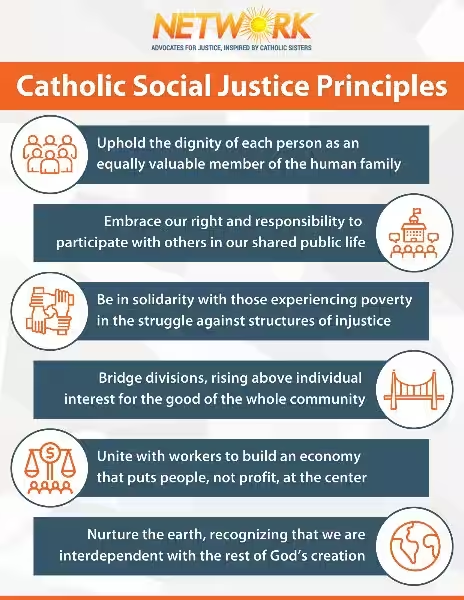
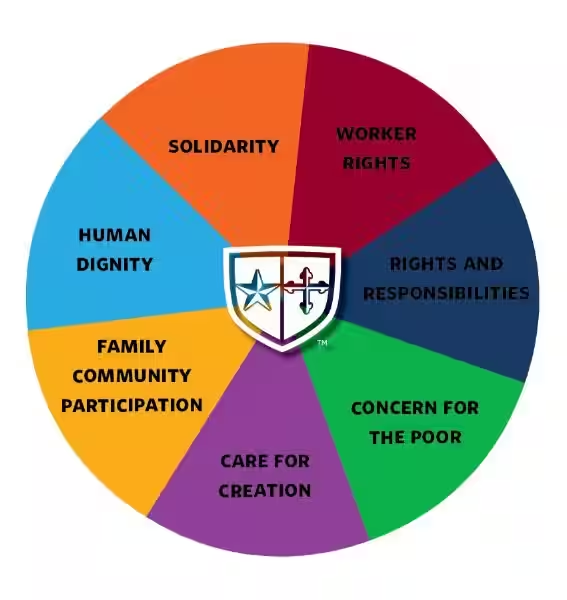
These seven Catholic social teachings – the dignity of the human person, the common good, rights and responsibilities, the option for the poor and vulnerable, the dignity of work and the rights of workers, solidarity, and care for God’s creation – offer a profound and practical framework for building a more just, compassionate, and sustainable world. They invite us to a deeper engagement with our faith and with the challenges of our time, reminding us that living out these principles is not an optional extra, but the very essence of a life lived in service and love.
Frequently Asked Questions about Catholic Social Teaching
What are the seven Catholic Social Teachings?
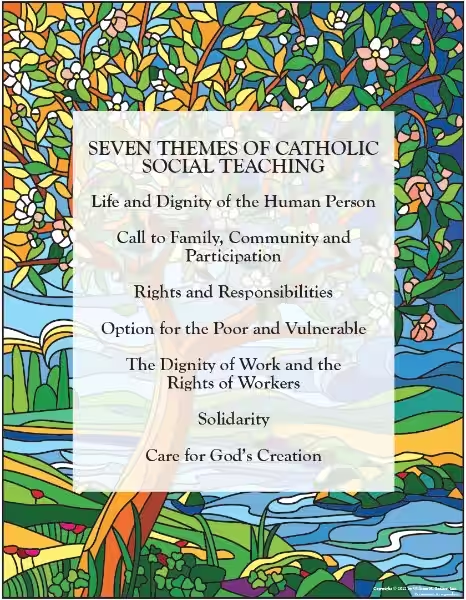
The seven Catholic Social Teachings are principles that guide Catholics in understanding their faith and how to live it in the world. They are:
The Dignity of the Human Person
The Common Good
Rights and Responsibilities
The Option for the Poor and Vulnerable
The Dignity of Work and the Rights of Workers
Solidarity
Care for God’s Creation
What is meant by “The Dignity of the Human Person”?
This teaching emphasizes that every human being is created in the image and likeness of God and therefore possesses inherent dignity and worth, regardless of their circumstances, abilities, or social status. This dignity calls for respect for life from conception to natural death.
What is the “Common Good”?
The Common Good refers to the sum total of social conditions that allow people, either as groups or as individuals, to reach their fulfillment more fully and more easily. It requires a commitment to the well-being of all members of society, not just a select few.
What are “Rights and Responsibilities”?
This teaching affirms that every person has fundamental rights (like the right to life, food, shelter, education, and healthcare) that are essential for a just and decent life. Corresponding to these rights are responsibilities to respect the rights of others and to work for the common good.
What is “The Option for the Poor and Vulnerable”?
This principle calls for prioritizing the needs and concerns of those who are economically, socially, or politically disadvantaged. It means seeing the world from their perspective and working to alleviate their suffering and promote their dignity.
What is “The Dignity of Work and the Rights of Workers”?
This teaching recognizes that work is a fundamental part of human dignity and a way to participate in God’s creation. It calls for fair wages, safe working conditions, the right to organize, and the protection of workers’ rights.
What does “Solidarity” mean in Catholic Social Teaching?
Solidarity is the principle of unity in a social movement or a group of people. It is the recognition that we are all interconnected and interdependent, and that we have a responsibility to support one another and work for justice and peace throughout the world.
What is “Care for God’s Creation”?
This teaching highlights the responsibility entrusted to humanity to be stewards of the Earth. It calls for respecting the environment, using natural resources wisely, and protecting the planet for future generations, recognizing that creation is a gift from God.