The allure of Christian sites extends far beyond mere historical landmarks. For millions, these hallowed grounds represent living testaments to faith, offering profound connections to the origins of Christianity and the lives of its most influential figures. Whether you’re a devout believer seeking spiritual rejuvenation, a history enthusiast eager to uncover ancient narratives, or a curious traveler drawn to the beauty and significance of these places, exploring Christian sites offers a multifaceted experience that can enrich your understanding of both religion and human history. These locations, scattered across the globe, are not just stone and mortar; they are repositories of stories, echoes of prayers, and tangible links to the enduring power of belief.
Embarking on a journey to Christian sites is more than just sightseeing; it’s an immersion into a narrative that has shaped civilizations and continues to inspire countless individuals. From the humble beginnings in the Holy Land to the grand cathedrals that grace European skylines, each site whispers tales of devotion, sacrifice, and the transformative power of the Gospel. Understanding the context and significance of these places can deepen one’s appreciation for the evolution of Christian thought and practice, offering a tangible connection to the faith’s profound journey through time and across cultures.
The Holy Land is, without question, the spiritual heartland for Christians worldwide. It is here, amidst the ancient landscapes of Israel and Palestine, that the foundational events of Christianity unfolded. Walking the very paths trod by Jesus, visiting the sites where His miracles are believed to have occurred, and standing in places of immense theological importance provides an unparalleled spiritual experience. These locations are not simply tourist attractions; they are living sanctuaries, imbued with centuries of prayer and devotion.
Within the Holy Land, several Christian sites stand out for their profound significance. The Church of the Nativity in Bethlehem, built over the traditional site of Jesus’ birth, is a place of awe-inspiring reverence. Imagine the hushed whispers of pilgrims from every corner of the earth, gathered in this sacred space, contemplating the miraculous arrival of the Savior. Similarly, the Church of the Holy Sepulchre in Jerusalem, believed to encompass both the site of Jesus’ crucifixion and His burial tomb, is a pilgrimage destination of immense importance. The sheer weight of history and faith that permeates these ancient stones is palpable, offering a deeply moving connection to the core tenets of Christianity.
Bethlehem: The Birthplace of Hope
Bethlehem, a small town with an enormous spiritual footprint, draws millions to its sacred grounds each year. The Church of the Nativity is the crown jewel, a testament to the enduring belief in the Incarnation. Inside, the Grotto of the Nativity, a dimly lit cave adorned with mosaics and icons, is where tradition holds that Mary gave birth to Jesus. The air within this sacred space is thick with the prayers of generations, creating an atmosphere of profound contemplation and spiritual connection.
Beyond the Church of the Nativity, Bethlehem offers other significant Christian sites. The Shepherd’s Field, where angels are said to have announced Jesus’ birth to the shepherds, provides a tranquil space for reflection. Visiting this site allows one to connect with the humble beginnings of the Christmas story, imagining the awe and wonder experienced by those first witnesses. For many, these sites represent more than just historical markers; they are touchstones of faith, offering a tangible link to the divine narrative that continues to shape their lives.
Jerusalem, a city revered by Jews, Christians, and Muslims alike, holds unparalleled significance within Christian sites. The Old City, with its labyrinthine alleys and ancient walls, is a treasure trove of sacred locations. The Via Dolorosa, the traditional route Jesus is believed to have taken to His crucifixion, is a pilgrimage of immense emotional and spiritual weight. Walking this path, marked by stations commemorating key moments of His suffering, allows pilgrims to deeply engage with the sacrifice of Christ.
The Mount of Olives, offering panoramic views of the Old City, is another crucial Christian site. It is here that Jesus is believed to have wept over Jerusalem, delivered significant teachings, and ascended into heaven. The Garden of Gethsemane, at the foot of the Mount of Olives, is a place of quiet prayer and reflection, where Jesus endured His agony before His arrest. The ancient olive trees, some believed to be centuries old, stand as silent witnesses to these pivotal events, grounding visitors in the historical and spiritual reality of these sacred moments.
Rome: The Eternal City and the Seat of the Papacy
Rome, the Eternal City, has been a central hub for Christianity for nearly two millennia. As the traditional seat of the Pope, the head of the Catholic Church, Rome houses some of the most iconic and historically significant Christian sites in the world. These locations are not only architectural marvels but also deeply spiritual centers that attract millions of pilgrims and visitors annually, eager to connect with the history and leadership of the Catholic faith.
The Vatican City, an independent city-state within Rome, is the epicenter of Catholic worship and administration. It is home to St. Peter’s Basilica, a breathtaking masterpiece of Renaissance architecture and one of the largest churches in the world. The sheer scale and artistic grandeur of the basilica are awe-inspiring, drawing visitors to marvel at Michelangelo’s dome and Bernini’s baldacchino. Inside, the tomb of St. Peter is a focal point for pilgrims, offering a profound connection to the apostle considered the first Pope.
St. Peter’s Basilica: A Monument to Faith
St. Peter’s Basilica is more than just a church; it is a living testament to the enduring legacy of Christianity and a symbol of the Catholic faith’s global reach. The construction of this magnificent edifice took over a century, involving some of the greatest artists and architects of the Renaissance, including Bramante, Michelangelo, and Bernini. Their contributions have resulted in a space that is both artistically stunning and deeply spiritually resonant.
Within the basilica, pilgrims often seek out the Pietà, Michelangelo’s poignant sculpture depicting Mary holding the body of Jesus after His crucifixion. The emotional depth and exquisite craftsmanship of this masterpiece resonate deeply with visitors, offering a powerful visual representation of maternal grief and divine love. The basilica also houses countless other relics and works of art, each contributing to the rich tapestry of faith and history that defines this extraordinary Christian site.
The Colosseum and Roman Forum: Echoes of Early Christianity
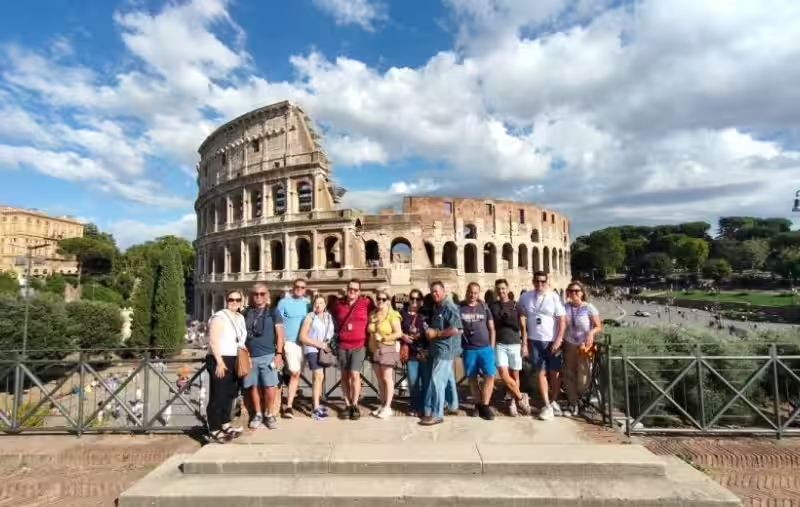
While not exclusively Christian sites, the Colosseum and the Roman Forum are crucial for understanding the early context of Christianity in Rome. The Colosseum, a colossal amphitheater, is a somber reminder of the persecutions faced by early Christians, many of whom are believed to have been martyred within its walls. Walking through its ancient arches prompts reflection on the courage and resilience of those who held fast to their faith in the face of immense adversity.
The Roman Forum, the heart of ancient Roman public life, also holds significance for early Christianity. It was within this bustling civic center that Christianity began to spread, challenging the prevailing Roman polytheism. While no specific ruins directly mark early Christian worship in the Forum, its historical context is vital for understanding the societal shifts that paved the way for Christianity’s eventual acceptance and eventual establishment as the state religion. These sites offer a broader perspective on the historical and cultural landscape in which Christianity first took root in the West.
Lisbon: A Maritime Gateway to Faith
Lisbon, Portugal’s vibrant capital, boasts a rich maritime history intertwined with the spread of Christianity during the Age of Discovery. As a pivotal port for explorers setting sail to distant lands, Lisbon became a significant center for religious devotion and evangelization. This era left an indelible mark on the city, resulting in numerous beautiful and historically important Christian sites that reflect Portugal’s deep Catholic heritage.
One of the most iconic Christian sites in Lisbon is the Jerónimos Monastery in Belém. This UNESCO World Heritage site is a breathtaking example of Manueline architecture, a style characterized by its intricate ornamentation and maritime motifs. Commissioned to commemorate Vasco da Gama’s successful voyage to India, the monastery stands as a grand testament to both Portugal’s maritime prowess and its profound Catholic faith. The cloisters, with their elaborate stonework, offer a serene atmosphere for contemplation.
Belém Tower: A Sentinel of Faith and Exploration
Standing proudly on the banks of the Tagus River, Belém Tower is more than just a defensive fortress; it’s a symbol of Portugal’s Age of Discovery and its role in spreading Christianity across the globe. Built in the early 16th century, this UNESCO World Heritage site served as a departure point for many explorers and missionaries. Its strategic location and unique architecture make it a striking landmark, embodying the spirit of adventure and religious zeal that characterized Portuguese exploration.
Inside Belém Tower, visitors can explore its various levels and imagine the sailors and clergy who once passed through its gates, setting out to new worlds with both the cross and the compass. The tower’s intricate carvings, including religious symbols, further underscore its connection to the Christian faith. It serves as a powerful reminder of how faith and exploration were often intertwined during this transformative period of history, making it a significant Christian site with a compelling story to tell.
Alfama District: Echoes of Devotion
The historic Alfama district, Lisbon’s oldest neighborhood, resonates with centuries of faith and devotion. Its narrow, winding streets are home to numerous ancient churches and chapels, each with its own unique history and spiritual significance. The Lisbon Cathedral (Sé de Lisboa), the city’s oldest church, stands as a powerful symbol of faith and resilience, having survived earthquakes and fires throughout its long history.
Exploring the Alfama district is a journey back in time, where the sounds of Fado music mingle with the distant chime of church bells. Many small, intimate churches offer a quiet sanctuary for prayer and reflection, allowing visitors to experience a more personal connection to the faith. These humble yet historically rich Christian sites provide a glimpse into the everyday lives of Lisbon’s faithful over the centuries, showcasing the enduring presence of Christianity in the city’s soul.
Conclusion: A Journey of Spiritual Discovery
Exploring Christian sites offers an unparalleled opportunity for spiritual growth, historical understanding, and cultural enrichment. Whether you are drawn to the sacred grounds of the Holy Land, the grandeur of Rome’s basilicas, or the maritime legacy of Lisbon’s churches, each destination promises a unique and transformative experience. These sites act as living testaments to the enduring power of faith, the resilience of human spirit, and the profound impact of Christianity on the world.
Embarking on a journey to these venerated locations is more than just a vacation; it’s an exploration of one’s own beliefs and a deeper connection to a faith that has shaped history. The stories embedded within the stones, the prayers whispered in sacred spaces, and the artistry dedicated to divine praise all contribute to a rich tapestry that invites contemplation and inspiration. By visiting Christian sites, we engage with a legacy that continues to resonate today, offering solace, guidance, and a profound sense of belonging for believers and a fascinating insight for all.
Frequently Asked Questions about Christian Sites
What are some of the most significant Christian pilgrimage sites?
Some of the most significant Christian pilgrimage sites include Jerusalem (Israel), Bethlehem (Palestine), Nazareth (Israel), Rome (Italy), and Santiago de Compostela (Spain). These locations are central to the life and ministry of Jesus Christ and the early Christian Church.
What is the significance of the Church of the Holy Sepulchre?
The Church of the Holy Sepulchre in Jerusalem is believed by many Christians to be the site of Jesus’ crucifixion, burial, and resurrection. It is a major pilgrimage destination and a place of great spiritual importance for Orthodox, Catholic, and other Christian denominations.
Where can I find historically important early Christian sites?
Historically important early Christian sites can be found throughout the Mediterranean region. This includes Ephesus (Turkey), where the Apostle Paul ministered, and the catacombs of Rome (Italy), which served as early Christian burial grounds and places of worship.
What are some important Christian historical sites in Europe?
In Europe, significant Christian historical sites include the Vatican City (Rome, Italy) with St. Peter’s Basilica, Canterbury Cathedral (England), Notre-Dame de Paris (France), and the basilicas of Lourdes (France) and Fatima (Portugal), which are renowned Marian shrines.
Are there any important Christian sites in the Middle East outside of the Holy Land?
Yes, there are important Christian sites outside of the Holy Land in the Middle East. For example, the Monastery of Saint Catherine at Mount Sinai (Egypt) is one of the oldest continuously inhabited Christian monasteries in the world, and cities like Antioch (modern Antakya, Turkey) were crucial centers in early Christianity.