Rome, the Eternal City, is a vast tapestry woven with threads of history, art, and faith. For many, its allure lies not just in its ancient ruins and Renaissance masterpieces, but in its profound religious significance. A journey through its sacred sites offers a unique opportunity to connect with stories that have shaped civilizations and continue to inspire millions. This is where Rome Bible tours come into their own, transforming a sightseeing trip into a deeply enriching spiritual experience. Imagine walking in the footsteps of apostles, witnessing the very places where pivotal moments in Christian history unfolded.
These specialized tours are designed to illuminate the biblical narrative within its geographical and historical context. They go beyond simply pointing out landmarks; they breathe life into the scriptures, making them tangible and resonant. Whether you’re a devout believer seeking to deepen your faith or a curious traveler eager to understand the roots of Western civilization, Rome Bible tours offer an unparalleled perspective. They provide a framework for understanding how the early Church flourished amidst the grandeur and power of the Roman Empire, offering insights that a standard historical tour might miss.
The Foundations of Faith: Early Christianity in the Heart of the Empire
The early days of Christianity were a time of both immense persecution and fervent growth. Rome, as the capital of a vast empire, became a crucial, albeit challenging, center for this burgeoning faith. Rome Bible tours often begin by exploring the catacombs, these underground burial chambers that served as secret meeting places and sanctuaries for early Christians. Within these dimly lit tunnels, the whispered stories of martyrs and the nascent symbols of faith come alive, offering a visceral connection to the struggles and resilience of those who first spread the Gospel.
Consider the symbolic power of the ichthys, the ancient Greek word for fish, which was used as a secret sign among Christians. Seeing these ancient symbols etched into the walls of the catacombs, places where believers gathered in secrecy for worship and burial rites, provides a profound sense of continuity. Rome Bible tours help us understand that these were not just historical curiosities, but the very bedrock upon which a global religion was built, often in the shadow of immense imperial power.
Echoes of the Apostles: St. Peter and St. Paul’s Roman Legacy
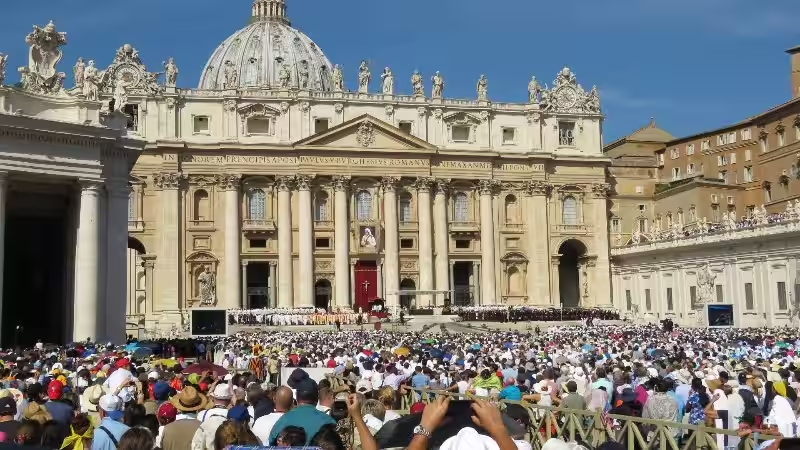
No exploration of Rome’s religious heritage would be complete without focusing on its most prominent apostles: Saint Peter and Saint Paul. Their presence in Rome is inextricably linked to the city’s Christian identity. Rome Bible tours dedicated to their legacy often lead visitors to the Basilica of Saint Peter in the Vatican, a monumental testament to their martyrdom and the enduring power of their ministry. Standing within this magnificent basilica, one can almost feel the weight of history and the immense spiritual significance of the site.
The stories of their imprisonment, their preaching, and their ultimate sacrifice are central to Christian theology. Rome Bible tours bring these narratives to life by guiding you through locations like the Mamertine Prison, where Peter and Paul are believed to have been held. Imagine the conditions they endured, the prayers they offered, and the unwavering conviction that fueled their mission. This tangible link to their lives makes their teachings and sacrifices even more poignant and understandable.
The apostle Paul, a prolific writer of epistles that form a cornerstone of New Testament theology, also spent significant time in Rome. Rome Bible tours often highlight the places associated with his ministry and imprisonment, such as the Basilica of Saint Paul Outside the Walls. This basilica stands as a powerful reminder of his tireless efforts to spread Christianity throughout the Roman Empire, even from within its very heart.
From Persecution to Papal Power: The Evolving Narrative of Roman Religion
The transformation of Rome from a city where Christians were persecuted to the seat of the Catholic Church is one of history’s most remarkable narratives. Rome Bible tours adeptly trace this evolution, showcasing how the faith moved from clandestine gatherings to monumental basilicas and the establishment of a global religious institution. This shift is a testament to the enduring power of belief and the strategic influence of the early Church.
This journey through time is not just about grand structures; it’s about understanding the social and political forces that shaped religious practice. Rome Bible tours can delve into the Edict of Milan, which granted religious tolerance, and the subsequent rise of Christianity as the state religion. This period saw the construction of many of the impressive basilicas that still stand today, transforming the city’s landscape and its spiritual atmosphere.
Sacred Sites that Speak Volumes: Vatican City and Beyond
Vatican City, an independent city-state within Rome, is the spiritual and administrative heart of the Catholic Church. For those participating in Rome Bible tours, a visit to the Vatican is often a highlight. The Vatican Museums, housing an unparalleled collection of art and historical artifacts, also offer glimpses into the Church’s long and complex relationship with art and culture. The Sistine Chapel, with Michelangelo’s breathtaking frescoes, is a powerful visual sermon in itself, depicting key biblical narratives with unparalleled artistry.
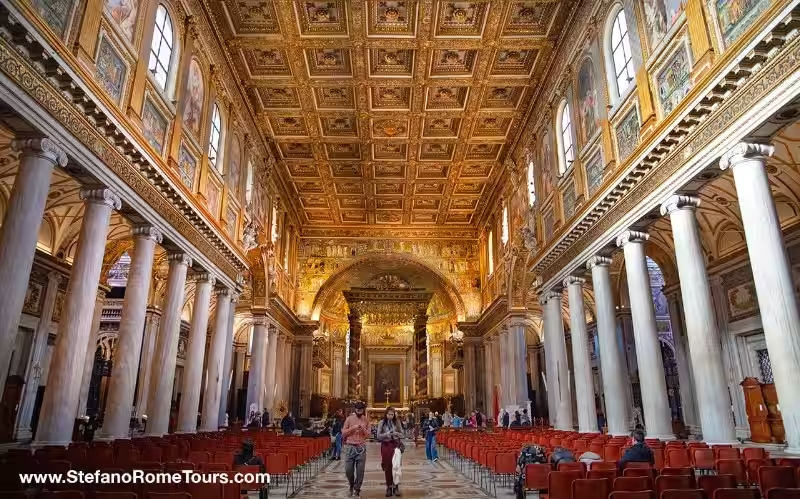
Beyond the Vatican, Rome Bible tours can guide you to other significant churches and holy sites. The Pantheon, originally a Roman temple dedicated to all gods, was later consecrated as a Christian church. This transition beautifully symbolizes the way Christianity absorbed and transformed elements of Roman culture. Other churches, such as Santa Maria Maggiore and Saint John Lateran, hold immense historical and religious importance, each with its own unique stories and artistic treasures to discover.
Experiencing the Divine: How Rome Bible Tours Enhance Your Spiritual Journey
Participating in Rome Bible tours offers a depth of experience that simply reading a guidebook or wandering independently cannot replicate. Expert guides, often with theological training or a deep personal connection to the history, can unlock layers of meaning that might otherwise remain hidden. They don’t just present facts; they weave narratives, connect dots, and foster a deeper understanding of the spiritual significance of each location.
These tours provide a structured yet flexible way to engage with Rome’s religious heritage. Whether you opt for a general overview of biblical sites, a more focused exploration of the apostles’ journeys, or a tour delving into the art and theology of the early Church, there’s a program to suit your interests. Rome Bible tours can be tailored to individuals, families, or larger groups, ensuring a personal and impactful experience for everyone.
The ability to ask questions, engage in discussions, and share reflections with fellow travelers and a knowledgeable guide enriches the learning process immeasurably. Rome Bible tours are not merely educational excursions; they are opportunities for personal reflection, spiritual growth, and a profound connection to the timeless stories of faith. They transform a visit to Rome into an unforgettable pilgrimage, leaving you with a renewed appreciation for the enduring power of the Bible and the sacred history embedded within the Eternal City.
What kind of religious sites can I expect to see on a Rome Bible tour?
Rome Bible tours typically focus on significant Christian sites. This often includes St. Peter’s Basilica in Vatican City, the catacombs (ancient underground burial chambers), early Christian churches like Santa Maria Maggiore and St. John Lateran, and locations associated with the Apostle Paul, such as his traditional burial site. Some tours may also incorporate sites related to the early Christian community in Rome.
Are Rome Bible tours suitable for people of all faiths or no faith?
Yes, Rome Bible tours are generally designed to be informative and engaging for a wide audience. While the focus is on biblical and Christian history, guides often provide historical context and cultural insights that can be appreciated by individuals from various religious backgrounds or those with no religious affiliation. The emphasis is on understanding the historical development of Christianity and its impact on Rome.
Do I need to be a Christian to go on a Rome Bible tour?
No, you do not need to be a Christian to join a Rome Bible tour. These tours are excellent opportunities for anyone interested in history, art, and the origins of one of the world’s major religions. Many participants are history enthusiasts, art lovers, or individuals curious about the historical foundations of Western civilization.
What is the typical duration of a Rome Bible tour?
The duration can vary. Many tours are half-day excursions, lasting around 3-4 hours. However, some comprehensive tours might extend to a full day, or be part of a multi-day itinerary that covers more extensive religious and historical sites across Rome.
How should I dress for a Rome Bible tour, especially when visiting churches and the Vatican?
Modesty is key when visiting religious sites in Rome, particularly within Vatican City. It is generally required to have shoulders and knees covered. This means avoiding sleeveless tops, short shorts, and short skirts. Comfortable walking shoes are also highly recommended as you’ll be doing a lot of walking.
Can I take photos inside the churches and religious sites on a Rome Bible tour?
Photography policies vary. In many churches, including St. Peter’s Basilica, photography without flash is usually permitted. However, in certain areas, like inside the Vatican Museums or the Sistine Chapel, photography may be restricted or prohibited. Your tour guide will inform you of the specific rules for each location you visit.
What is the significance of the catacombs in relation to early Christianity in Rome?
The catacombs served as underground burial grounds for early Christians (and some Jews and pagans) during a time when public cemeteries were often unavailable or prohibited for Christians. They are also significant as they contain some of the earliest Christian art and inscriptions, offering invaluable insights into early Christian beliefs, practices, and persecution.
How do Rome Bible tours differ from general historical tours of Rome?
While general historical tours might cover ancient Roman ruins, art, and broader historical periods, Rome Bible tours have a specific focus on the history and development of Christianity. They highlight locations and narratives directly connected to biblical events, figures, and the early growth of the Christian church within the city of Rome.
Are there opportunities for religious services or prayer during a Rome Bible tour?
Some tours may include opportunities for quiet reflection or prayer at significant religious sites. However, the primary purpose of these tours is educational and historical. Dedicated religious services are typically not part of the standard itinerary, although you can often attend Mass at St. Peter’s Basilica or other churches independently.
What should I bring with me on a Rome Bible tour?
Besides comfortable shoes and appropriate attire, it’s advisable to bring a bottle of water, especially during warmer months. A small bag for personal items and a camera are also useful. Some people like to bring a small Bible or notebook to jot down insights or references.