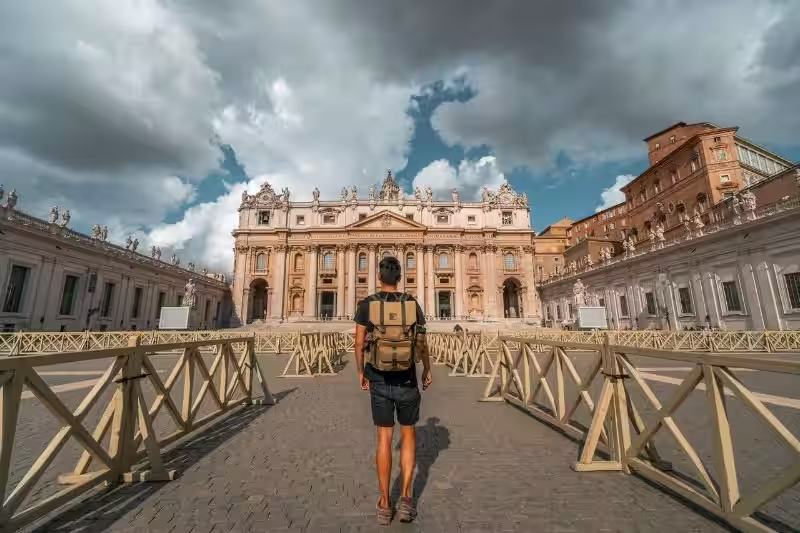
For many, the mere mention of Vatican City conjures images of majestic domes, ancient art, and the solemn pronouncements of the Pope. It’s a place synonymous with religious significance, a sovereign state nestled within Rome, acting as the spiritual and administrative center for over a billion Catholics worldwide. But beyond the iconic landmarks, Vatican City pulses with a vibrant energy, a hub of diverse Vatican City activities that extend far beyond simple sightseeing. It’s a living, breathing organism where faith, art, history, and daily life intertwine in a way that’s both awe-inspiring and remarkably human.
Understanding the essence of Vatican City requires looking beyond the postcard-perfect facades. It’s about delving into the daily rhythms of religious life, the intellectual pursuits that foster theological understanding, and the cultural heritage that enriches the global spiritual landscape. Whether you’re a devout pilgrim seeking solace and connection, an art enthusiast eager to explore unparalleled masterpieces, or a curious traveler yearning to understand a unique microcosm of faith and governance, Vatican City offers a profound and multifaceted experience. This article aims to illuminate the breadth of Vatican City activities, revealing the spiritual heart that beats at its core, making it a destination unlike any other on Earth.
The Sacred Pilgrimage: Engaging with Faith in Vatican City
At the very soul of Vatican City lies its role as a premier destination for religious pilgrimage. Millions journey here each year, drawn by an unshakeable faith and a desire to connect with the origins of their spiritual beliefs. The iconic St. Peter’s Basilica, a masterpiece of Renaissance architecture, is not merely a tourist attraction; it’s a sacred space where pilgrims gather for Mass, prayer, and to venerate the tomb of Saint Peter himself. Imagine standing beneath Michelangelo’s breathtaking dome, the air thick with centuries of devotion, a palpable sense of history and faith surrounding you. This profound sense of connection is at the heart of the pilgrim’s experience.
Beyond the Basilica’s grandeur, numerous other Vatican City activities cater to spiritual seekers. Participating in the Papal Audience, held weekly, offers a unique opportunity to hear directly from the Pope, to receive his blessings, and to feel part of a global Catholic community. This isn’t just a public address; it’s a moment of shared faith, where people from all walks of life converge, united by their devotion. Furthermore, the numerous churches and chapels within Vatican City, each with its own history and treasury of sacred art, offer quiet spaces for meditation and personal reflection. These intimate settings allow for a deeper, more personal engagement with the religious essence of the place, fostering a sense of peace and spiritual renewal.
Exploring Sacred Spaces: Beyond the Main Attractions
While St. Peter’s Basilica and the Vatican Museums are undoubtedly the most visited sites, a deeper exploration of Vatican City reveals a wealth of less-trodden sacred spaces that offer equally profound experiences. The Vatican Necropolis, for instance, allows a select few to descend beneath the Basilica and walk amongst the tombs of early Christians, even the legendary tomb of St. Peter. This is a journey back in time, an intimate encounter with the very foundations of the faith, and requires pre-booking due to its restricted access. It’s a truly sacred experience, a tangible link to the earliest days of Christianity.
Another often overlooked, yet deeply spiritual, location is the Vatican Gardens. These meticulously maintained grounds offer a tranquil escape from the bustling crowds, providing a serene environment for contemplation and appreciating the beauty of nature intertwined with faith. Walking through these gardens, dotted with fountains, sculptures, and ancient trees, one can feel a sense of profound peace, reflecting on the spiritual significance of creation. These quieter Vatican City activities allow for a more personal and introspective connection with the religious heart of the enclave.
The Intellectual and Artistic Tapestry: Faith Through Culture
Vatican City is not solely defined by its religious rites; it is also a vibrant center of intellectual and artistic endeavor, where religion and culture are inextricably linked. The Vatican Museums stand as a testament to this, housing one of the world’s most extensive and significant art collections. From the awe-inspiring Sistine Chapel, with Michelangelo’s iconic frescoes, to the Raphael Rooms and countless other galleries filled with masterpieces spanning centuries, the museums offer an unparalleled journey through human creativity inspired by faith. The sheer volume and quality of the art invite deep contemplation and provide a visual narrative of religious history and biblical stories.
Beyond the visual arts, Vatican City is a hub for theological scholarship and academic pursuit. The Pontifical Gregorian University, one of the oldest Jesuit universities in the world, is located within Vatican City, attracting students and scholars from across the globe. Here, rigorous study of theology, philosophy, and canon law takes place, contributing to the ongoing intellectual discourse within the Catholic Church. These Vatican City activities ensure that the faith is not only preserved but also continuously explored and understood in the context of the modern world, fostering a dynamic and evolving religious tradition.
Preserving Heritage: The Vatican Apostolic Archive and Library
The Vatican Apostolic Archive (formerly the Secret Archive) and the Vatican Apostolic Library are crucial, albeit less accessible, institutions that underpin the religious and historical significance of Vatican City. These repositories safeguard centuries of documents, manuscripts, and books, offering invaluable insights into the history of the papacy, the Church, and Western civilization. While not open to the casual visitor for browsing, their existence highlights the Vatican City activities focused on preserving knowledge and ensuring the continuity of faith through historical record. Researchers and scholars who gain access embark on a profound journey of discovery, unearthing the threads of faith and history that have shaped the world.
The sheer immensity of information held within these archives and libraries is staggering. Imagine poring over ancient papal letters, illuminated manuscripts detailing biblical narratives, or theological treatises that have shaped doctrine for generations. These are not dusty relics but living testaments to the enduring power of religion and human intellect. The Vatican City activities involved in their maintenance and study are fundamental to understanding the historical trajectory of the faith and its impact on global society, making them cornerstones of the Vatican’s intellectual landscape.
Daily Life and Governance: The Working Heart of Vatican City
While the grand ceremonies and artistic treasures often steal the spotlight, it’s crucial to remember that Vatican City is a functioning state with its own unique daily life and governance. Thousands of individuals – clergy, religious sisters, lay employees, and Swiss Guards – call Vatican City home or work within its walls. Their daily routines, from administrative tasks and diplomatic missions to the maintenance of its historic structures, are integral Vatican City activities that keep this spiritual center alive and operational. The Swiss Guard, with their distinctive uniforms, are more than just ceremonial figures; they are highly trained professionals responsible for the safety of the Pope and the Vatican.
The governance of Vatican City is a complex system, headed by the Pope as the sovereign. Various departments, known as dicasteries, manage the Church’s global affairs, from evangelization and doctrine to social justice and interfaith dialogue. These administrative Vatican City activities are the engine that drives the Catholic Church’s mission worldwide. Understanding this operational aspect reveals Vatican City not just as a museum or a pilgrimage site, but as a dynamic entity actively engaged in shaping the spiritual and moral landscape of the planet, demonstrating the practical application of religious principles in the modern world.
The Economic and Diplomatic Engine: Beyond Spiritual Guidance
Vatican City also engages in economic and diplomatic activities that are essential for its functioning and its global reach. The Vatican Bank (Institute for the Works of Religion) manages its financial assets, and the Holy See maintains diplomatic relations with over 180 countries, appointing nuncios (ambassadors) and receiving their representatives. These are vital Vatican City activities that allow the Holy See to exert its influence on international affairs, advocating for peace, human rights, and the welfare of the less fortunate. It’s a fascinating intersection of religious authority and worldly engagement.
The economic engine of Vatican City, though discreet, is crucial for funding its extensive charitable work, its vast infrastructure, and its global operations. From the sale of Vatican stamps and souvenirs to the revenue generated by the museums, these financial Vatican City activities are carefully managed to support the Church’s mission. This demonstrates that even within a spiritual enclave, practical considerations are paramount, ensuring that the religious message can be disseminated and supported effectively across diverse populations and challenging circumstances.
Frequently Asked Questions: Vatican City Activities & Religion
What are the main religious activities available for visitors in Vatican City?
Visitors can attend Mass in St. Peter’s Basilica, participate in the Papal Audience (held weekly when the Pope is in Rome), and explore the various churches and religious sites within the Vatican. Pilgrims can also seek blessings and venerate relics.
Can I attend a Papal Audience?
Yes, Papal Audiences are typically held every Wednesday morning in St. Peter’s Square or the Paul VI Audience Hall. Tickets are required and can be obtained for free from the Prefecture of the Papal Household or through authorized Vatican ticket distributors.
Is Vatican City a religious state?
Yes, Vatican City is an independent city-state governed by the Holy See, which is the ecclesiastical jurisdiction of the Catholic Church in Rome. Its primary role is as the spiritual and administrative center of the Catholic Church worldwide.
What is the significance of St. Peter’s Basilica?
St. Peter’s Basilica is one of the holiest sites in Catholicism, built over the tomb of Saint Peter the Apostle. It is a major pilgrimage destination and a masterpiece of Renaissance architecture, housing significant works of art like Michelangelo’s Pietà.
Are there any dress code requirements for visiting religious sites in Vatican City?
Yes, modest dress is required when visiting religious sites within Vatican City. This typically means covering your shoulders and knees. T-shirts with offensive graphics and shorts are generally not permitted.
Can I arrange for a religious tour of Vatican City?
Yes, many tour operators offer guided tours specifically focused on the religious aspects of Vatican City, including St. Peter’s Basilica, the Vatican Museums, and other significant religious landmarks.
What are the main religious beliefs practiced in Vatican City?
The primary religion practiced in Vatican City is Roman Catholicism. The Pope, as the head of the Catholic Church, leads the religious and spiritual life of the Vatican and the global Catholic community.
How can I participate in religious services if I’m not Catholic?
Most religious services, including Mass at St. Peter’s Basilica, are open to everyone. While the sermons and rituals are Catholic, visitors are welcome to observe and participate respectfully.
Are there opportunities for quiet prayer or reflection in Vatican City?
Yes, beyond the main attractions, there are numerous chapels and quieter areas within St. Peter’s Basilica and other religious sites where visitors can engage in private prayer and reflection.