For millennia, a particular corner of the Earth has resonated with a spiritual hum unlike any other. This is the Holy Land, a region steeped in history, prophecy, and the very foundations of major world religions. More than just geographical markers, these sacred sites are living testaments to faith, offering a tangible connection to the divine and the pivotal events that shaped billions of lives. Whether you’re a devout pilgrim seeking spiritual renewal or a curious traveler yearning for understanding, exploring the Holy Land is an unforgettable journey into the heart of religion.
The allure of the Holy Land isn’t confined to a single creed. It is a tapestry woven with the threads of Judaism, Christianity, and Islam, each contributing its unique narrative and imbuing specific locations with profound sanctity. Understanding the interconnectedness of these faiths within this sacred geography is key to appreciating its enduring power. From the ancient stones of Jerusalem to the serene waters of the Sea of Galilee, every vista tells a story, inviting contemplation and a deeper understanding of humanity’s spiritual quest.
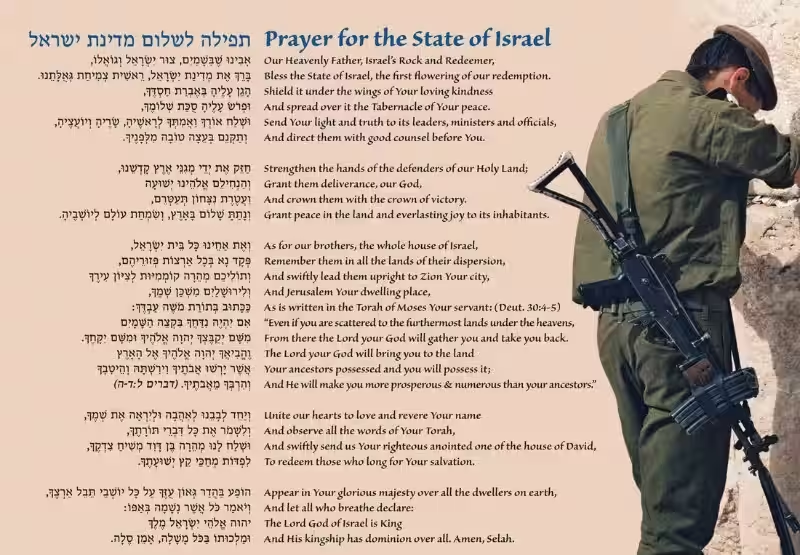
No discussion of Holy Land places is complete without focusing on Jerusalem, a city that breathes history and faith. For Jews, it is the eternal capital, the site of the First and Second Temples, and the focal point of prayer and longing for centuries. The Western Wall (Kotel), a remnant of the Second Temple’s retaining wall, stands as a powerful symbol of this connection, where millions have come to pour out their hearts in prayer, leaving whispered hopes and pleas in its ancient crevices. The very air in the Jewish Quarter hums with a palpable sense of historical continuity and spiritual devotion.
Christians revere Jerusalem as the backdrop for the final days of Jesus Christ. His crucifixion at Golgotha and his resurrection are central tenets of their faith, and the Church of the Holy Sepulchre, built over the traditional sites of these events, draws pilgrims from every corner of the globe. Walking the Via Dolorosa, the path Jesus is believed to have carried his cross, is a deeply moving experience, allowing individuals to connect with the narrative of sacrifice and redemption in a profoundly personal way. This sacred city is not merely a collection of buildings, but a living testament to the foundational events of Christianity.
The Dome of the Rock and Al-Aqsa Mosque: Islamic Reverence
For Muslims, Jerusalem holds immense significance as the “Al-Quds”, the Holy. It is the site of the Al-Aqsa Mosque, the third holiest mosque in Islam, and the Dome of the Rock, an iconic structure marking where the Prophet Muhammad is believed to have ascended to heaven during his miraculous night journey (Isra and Mi’raj). These sites are central to Islamic pilgrimage and prayer, representing a direct link to the divine revelation and the Prophet’s spiritual journey. The exquisite architecture and the serene atmosphere of the Haram al-Sharif (Temple Mount) complex offer a profound sense of peace and spiritual connection for Muslim visitors.
The presence of these three Abrahamic faiths in such close proximity within Jerusalem’s Old City is a testament to the complex and layered history of the region. While historical tensions have sometimes marred this coexistence, the shared reverence for these sacred sites underscores a common spiritual heritage. Understanding the significance of each place for its respective religion allows for a more nuanced and respectful appreciation of the global impact of these holy places.
Galilee: The Cradle of Jesus’ Ministry
Venturing north, the Sea of Galilee region unfolds as a landscape deeply intertwined with the life and teachings of Jesus. This serene freshwater lake was the setting for many of his most profound miracles and parables. Imagine standing on the Mount of Beatitudes, where Jesus is said to have delivered the Sermon on the Mount, a cornerstone of Christian ethics. The gentle slopes and the expansive views of the lake below create an atmosphere of tranquility and spiritual reflection, inviting contemplation of Jesus’ teachings on love, compassion, and inner peace.
The towns and villages surrounding the Sea of Galilee are dotted with archaeological treasures and significant holy sites. Capernaum, once a bustling fishing village, served as Jesus’ base during his Galilean ministry. Its ancient synagogue, where Jesus is believed to have taught, offers a glimpse into the daily life and spiritual landscape of the time. The Church of the Primacy of Peter, located on the shores of the lake, commemorates Jesus’ appearance to his disciples after his resurrection and his commission to Peter. These locations are not mere ruins; they are vibrant reminders of a transformative period in religious history.
The Jordan River: A Symbol of Purification and New Beginnings
Flowing south from the Sea of Galilee, the Jordan River holds a special place in the spiritual narratives of both Judaism and Christianity. For Christians, it is the site of Jesus’ baptism by John the Baptist, a pivotal moment marking the beginning of his public ministry and a powerful symbol of spiritual cleansing and divine affirmation. Many pilgrims today choose to be baptized in the Jordan River, seeking to emulate this sacred event and experience a personal renewal of their faith.
In Jewish tradition, the Jordan River is mentioned in the Book of Joshua as the point where the Israelites crossed into the Promised Land under miraculous circumstances, the waters parting to allow them passage. This event signifies divine intervention and the fulfillment of God’s promises. Whether viewed through a Christian or Jewish lens, the Jordan River embodies themes of transition, purification, and the journey towards a divinely ordained destiny.
A short journey south of Jerusalem lies Bethlehem, a town forever etched in the Christian consciousness as the birthplace of Jesus Christ. The Church of the Nativity, one of the oldest continuously operating churches in the world, stands as a testament to this profound event. Beneath its ancient walls lies the Grotto of the Nativity, a cave believed to be the exact spot where Jesus was born, marked by a silver star. The air within the Grotto is thick with a sense of awe and reverence, drawing millions of pilgrims to witness this cornerstone of Christian belief.
Beyond the immediate religious significance, Bethlehem’s story is also one of resilience and enduring hope. The town has witnessed centuries of history, conflict, and change, yet it remains a beacon for those who seek to connect with the origins of the Christmas narrative. The simple yet powerful act of birth in humble surroundings has resonated across cultures and generations, making Bethlehem a universal symbol of peace and goodwill.
Hebron: Echoes of Patriarchal Footsteps
In the southern Judean hills lies Hebron, a city with deep historical and religious significance for both Jews and Muslims. It is home to the Cave of the Patriarchs (Mearat HaMachpela), a sacred site believed to be the burial place of Abraham, Sarah, Isaac, Rebekah, Jacob, and Leah. For Jews, this is the first ancestral burial ground purchased by Abraham, making it a place of immense spiritual importance and a site of pilgrimage for centuries. The imposing structure built over the cave by Herod the Great stands as a powerful architectural testament to its ancient sanctity.
Muslims also revere Hebron and the Cave of the Patriarchs as the tomb of the prophets Ibrahim (Abraham) and Ishaq (Isaac), along with their wives. The site is considered holy and is visited by pilgrims seeking spiritual connection. The shared reverence for the patriarchs by these two major faiths highlights a common root in their spiritual lineage, even as their interpretations and practices may differ. Hebron offers a unique perspective on the complex tapestry of religious history and the figures who shaped its early development, serving as a potent reminder of our shared ancestral heritage.
Exploring the Holy Land places is not merely a historical or geographical expedition; it is a profound spiritual pilgrimage. Each site, from the bustling streets of Jerusalem to the quiet shores of Galilee, offers a unique window into the foundational narratives of religion and the enduring human quest for meaning. These sacred locations serve as living bridges to the past, inviting us to connect with the divine, reflect on our own beliefs, and gain a deeper appreciation for the sacred tapestry that binds humanity together.
Frequently Asked Questions about Holy Land Places and Religion
What is the significance of the Holy Land?
The Holy Land is a region of immense religious importance, particularly for Judaism, Christianity, and Islam. It is considered the birthplace of these faiths and contains numerous sacred sites mentioned in their respective scriptures.
Which religions consider the Holy Land sacred?
Judaism, Christianity, and Islam all hold the Holy Land as a profoundly sacred territory.
What are some of the most important Christian sites in the Holy Land?
Key Christian sites include the Church of the Holy Sepulchre in Jerusalem (believed to be the site of Jesus’ crucifixion and burial), the Church of the Nativity in Bethlehem (Jesus’ birthplace), the Sea of Galilee (where Jesus performed many miracles), and the Mount of Olives.
What are some of the most important Jewish sites in the Holy Land?
The most significant Jewish site is the Western Wall (Kotel) in Jerusalem, a remnant of the ancient Temple Mount. Other important sites include the Tomb of the Patriarchs in Hebron and the ancient city of Safed.
What are some of the most important Islamic sites in the Holy Land?
The most revered Islamic sites are in Jerusalem: the Dome of the Rock and the Al-Aqsa Mosque, both located on the Temple Mount (Haram al-Sharif). The Cave of the Patriarchs in Hebron is also significant in Islam.
What is the significance of Jerusalem for the three major religions?
Jerusalem is considered holy by all three Abrahamic religions. For Judaism, it is the site of the First and Second Temples and the spiritual heart of the Jewish people. For Christians, it is where Jesus was crucified, buried, and resurrected. For Muslims, it is the site of the Al-Aqsa Mosque and the location from which Prophet Muhammad is believed to have ascended to heaven.
Why is pilgrimage to the Holy Land important for religious followers?
Pilgrimage to the Holy Land allows followers to connect with the historical and spiritual roots of their faith, walk in the footsteps of prophets and religious figures, and experience the sacredness of these sites firsthand. It is often a deeply personal and transformative experience.