Rome, a city where millennia of history whisper from every cobblestone, offers a unique and profound journey for those seeking to connect with their faith on a deeper level. A Bible tour Rome isn’t just a vacation; it’s an immersion into the very foundations of Christianity, a chance to walk in the footsteps of apostles, and to witness firsthand the historical backdrop against which some of the most significant events in religious history unfolded. Imagine standing in the very places where St. Paul preached, where early Christians found refuge, and where the seeds of a global faith were sown. This is the transformative power of exploring Rome through a spiritual lens.
For many, the idea of a Bible tour Rome conjures images of grand basilicas and ancient ruins, and while these are certainly prominent features, the experience goes far beyond mere sightseeing. It’s about bringing scripture to life, transforming abstract narratives into tangible realities. Whether you’re a devout believer eager to deepen your understanding or a curious traveler seeking historical and cultural enrichment, Rome promises an unforgettable encounter with the sacred. This journey allows for personal reflection, a chance to contemplate the enduring power of faith and its impact on Western civilization.
The Apostles’ Footprints: Tracing Early Christianity in Rome
Rome, often referred to as the “Eternal City,” holds a special significance in the narrative of Christianity. It was in this vibrant metropolis that the early church, despite facing immense challenges, began to flourish. Understanding this context is crucial for anyone undertaking a Bible tour Rome. The city’s strategic importance within the Roman Empire meant that it was a natural hub for the dissemination of new ideas, including the burgeoning Christian faith.
You can literally walk where the apostles once trod. Consider the Mamertine Prison, a dark and stark reminder of the persecution faced by early believers. It is here that tradition holds St. Peter and St. Paul were imprisoned. Standing within its ancient walls, you can almost feel the weight of their faith and their unwavering commitment. This tangible connection to biblical figures makes the stories resonate with a visceral power, moving them from the pages of a book to the very ground beneath your feet.
St. Peter’s Basilica: A Monument to Faith and Legacy
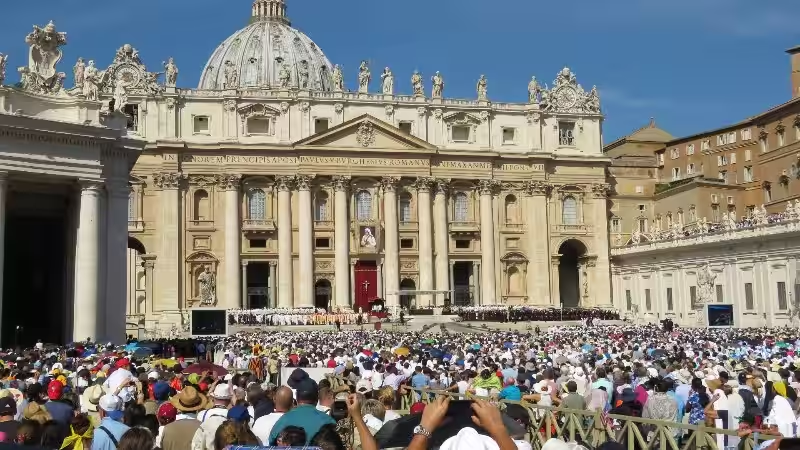
No Bible tour Rome would be complete without a visit to the awe-inspiring St. Peter’s Basilica. This magnificent structure, a masterpiece of Renaissance architecture, stands as a testament to the enduring legacy of the Apostle Peter. According to tradition, Peter, the “rock” upon which Jesus declared he would build his church, is buried beneath the basilica. The sheer scale and grandeur of the basilica, adorned with priceless art by masters like Michelangelo and Bernini, are intended to inspire awe and reverence.
Exploring the vast interior, you’ll encounter [key landmarks] such as the Pietà, Michelangelo’s breathtaking sculpture, and Bernini’s Baldacchino, an imposing canopy over the high altar. Beyond the artistic wonders, the spiritual significance is paramount. The sense of history and devotion that permeates the basilica is palpable. It’s a place for prayer, contemplation, and a profound appreciation for the faith that has drawn millions to this sacred site over centuries.
The Catacombs: Underground Sanctuaries of Early Believers
Beneath the bustling streets of Rome lie the Catacombs, an intricate network of underground burial chambers that served as sacred spaces for early Christians. These dimly lit tunnels offer a poignant glimpse into the lives and beliefs of the first followers of Christ. During times of persecution, these subterranean labyrinths provided not only a place for burial but also a sanctuary for worship and community.
Venturing into the Catacombs of Callixtus or the Catacombs of Domitilla on your Bible tour Rome is a uniquely moving experience. You’ll see ancient frescoes depicting biblical scenes, such as the Good Shepherd and the story of Jonah, offering a visual testament to their faith. These artistic expressions, created in secret and often under duress, reveal the vibrant spiritual life of these early communities. The quiet reverence of these underground chambers fosters a deep sense of connection to those who worshipped there centuries ago.
The Apostle Paul’s Roman Journey: From Prisoner to Preacher
The story of St. Paul in Rome is a pivotal chapter in Christian history, and a Bible tour Rome allows you to trace his steps and understand the impact of his ministry here. Despite being a prisoner under house arrest, Paul continued his mission, writing some of his most influential epistles from the very city that held him captive. His unwavering dedication to spreading the Gospel, even in the face of adversity, is an inspiring aspect of his legacy.
Imagine Paul, under escort, walking through the streets of Rome, engaging in discussions and sharing his faith with those he encountered. The Church of St. Paul Outside the Walls is believed to mark the burial site of the Apostle Paul, and its grandeur reflects his immense importance to the Christian faith. The sheer volume of his writings and the reach of his missionary journeys underscore his profound impact on the development and spread of Christianity throughout the Roman Empire and beyond.
Sites Connected to St. Paul: Echoes of His Ministry
Several locations in Rome are intrinsically linked to St. Paul’s presence and ministry, making them essential stops on any Bible tour Rome. The aforementioned Church of St. Paul Outside the Walls is a significant pilgrimage site for many. Its impressive architecture and the serene atmosphere offer a space for reflection on Paul’s life and teachings.
Another key location is the Ostian Way, the ancient road leading to Ostia Antica, the port of Rome. It is believed that Paul arrived in Rome via this route when he was brought as a prisoner. Walking along or near this ancient road can evoke images of his arrival and the initial stages of his Roman sojourn. Exploring these sites provides a concrete link to the historical accounts of Paul’s life and his profound influence on the early church.
Paul’s Epistles: Letters Written from the Heart of the Empire
The letters, or epistles, written by St. Paul during his time in Rome offer invaluable insights into early Christian theology and practice. These letters, addressed to various communities throughout the Roman world, were penned while he was under Roman authority, often from his place of confinement. Understanding the context in which these powerful messages were written enhances their meaning immeasurably.
When you engage with a Bible tour Rome, you’re not just seeing historical sites; you’re gaining a deeper appreciation for the intellectual and spiritual powerhouse that Paul was. His writings continue to shape Christian thought and practice today. Consider the Epistle to the Ephesians, a profound exploration of the church as the body of Christ, or the Epistle to the Philippians, a testament to joy and perseverance in faith, even amidst suffering. These texts, born from the heart of the Roman Empire, remain remarkably relevant.
Beyond the Major Sites: Discovering Hidden Spiritual Gems
While St. Peter’s Basilica and the Catacombs are undeniable highlights, a thorough Bible tour Rome also involves seeking out lesser-known but equally significant spiritual landmarks. These hidden gems often offer a more intimate and personal encounter with Rome’s sacred history. They reveal the pervasive influence of religion throughout the city, not just within its grandest religious edifices.
These smaller sites can include ancient churches that predate even the great basilicas, or places associated with specific saints and miracles. They speak to the long and continuous tradition of Christian devotion within Rome. Each discovery adds another layer to your understanding of the city’s multifaceted religious landscape and the deep roots of faith that have endured for centuries.
Churches with Ancient Roots: Echoes of Byzantine and Early Christian Art
Rome is home to numerous churches that boast ancient origins, some dating back to the early Christian period or the Byzantine era. These churches often contain remarkable examples of early Christian and medieval art, providing a visual narrative of faith’s evolution. Visiting these sites on a Bible tour Rome offers a chance to witness art that directly illustrates biblical stories and theological concepts from a bygone era.
For instance, the Basilica di San Clemente is a fascinating multi-layered archaeological site. Beneath the current 12th-century church, you can explore a 4th-century basilica and even further down, a 1st-century Roman house and a Mithraic temple. This descent through history offers an extraordinary perspective on the religious transitions and coexistences within Rome. You’ll find stunning frescoes and mosaics that are not only beautiful but also historically and theologically significant, depicting scenes from the lives of saints and biblical narratives.
The Tiber River and Early Christian Communities: A Lifeline of Faith
The Tiber River, flowing through the heart of Rome, has been a vital artery of the city for millennia. For early Christian communities, the river and its surrounding areas were crucial for daily life, trade, and the dissemination of their faith. A Bible tour Rome can sometimes incorporate lesser-known sites along the Tiber that hold quiet but significant religious history.
Exploring areas near the Tiber might lead you to discover ancient churches or sites where early Christian gatherings are believed to have taken place. These locations, often less crowded than the major attractions, offer a more contemplative experience. They serve as a reminder that the growth of Christianity wasn’t confined to grand basilicas but flourished in the everyday lives and communities of its followers, often centered around the life-giving waters of the Tiber.
Planning Your Bible Tour Rome: Practical Tips for a Meaningful Journey
Embarking on a Bible tour Rome requires thoughtful planning to ensure you maximize the spiritual and educational benefits of your trip. Whether you are traveling independently or as part of a guided group, a little preparation can go a long way in making your experience enriching and memorable. Consider what aspects of biblical history and Christian tradition you are most eager to explore.
The key to a successful Bible tour Rome is balancing iconic landmarks with deeper dives into specific historical periods or theological themes. It’s about creating a personal journey that resonates with your faith and interests. Don’t be afraid to seek out local guides who are knowledgeable about biblical history or to engage with resources that can provide context for the sites you will visit.
Choosing the Right Tour or Itinerary: Tailoring to Your Interests
When planning your Bible tour Rome, consider the various options available. Many tour operators offer specialized itineraries focusing on different aspects of biblical history, such as the early church, the lives of the apostles, or the development of papal authority. You can also opt for a more general historical and religious tour that covers the major sites.
Alternatively, you might prefer to design your own itinerary, focusing on specific churches, catacombs, or historical periods that hold particular significance for you. Consider your pace; do you prefer a fast-paced overview or a more in-depth exploration? Think about your budget and the type of accommodation and transportation that best suits your needs. Researching reputable tour guides or organizations known for their expertise in biblical history can greatly enhance your experience.
Practical Considerations: What to Pack and When to Visit
To make your Bible tour Rome as comfortable and enjoyable as possible, practical considerations are essential. Rome experiences distinct seasons, and the weather can influence your touring experience. Comfortable walking shoes are an absolute must, as you’ll be doing a lot of walking on cobblestone streets and exploring ancient sites.
Dress modestly, especially when visiting churches and religious sites, as shoulders and knees should generally be covered. Consider the time of year you plan to visit. Spring (April-May) and autumn (September-October) typically offer pleasant weather with fewer crowds. Summer (June-August) can be very hot and crowded, while winter (November-March) is cooler and less busy, but with a higher chance of rain. Booking accommodations and popular tours in advance is highly recommended, especially during peak seasons, to avoid disappointment. Finally, bring a good guidebook and perhaps a Bible to reference as you explore, allowing for spontaneous moments of reflection and deeper understanding.
Frequently Asked Questions: Bible Tour Rome
What is a Bible Tour in Rome?
A Bible Tour in Rome is a guided excursion that focuses on the historical and religious significance of the city as it pertains to biblical narratives and early Christian history. These tours often visit sites mentioned in the Bible or locations central to the development of Christianity, offering insights into the lives of apostles, early martyrs, and the foundational events of the faith.
What kind of sites are typically included in a Bible Tour of Rome?
Typical sites on a Bible Tour of Rome include:
* St. Peter’s Basilica and Vatican City: Exploring the burial site of St. Peter, the first Pope, and the heart of the Catholic Church.
* The Catacombs: Visiting ancient underground burial chambers used by early Christians, often featuring early Christian art and inscriptions.
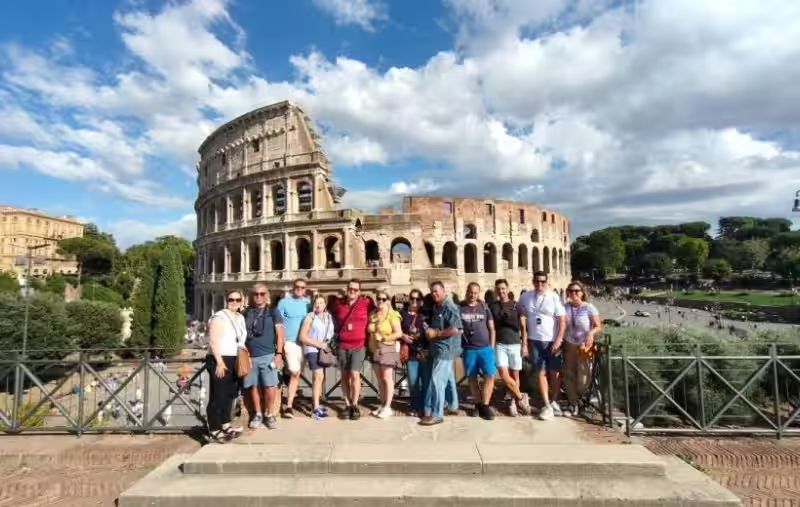
* The Colosseum and Roman Forum: Understanding the context of Roman persecution of Christians and the environment in which the early church grew.
* Churches associated with Apostles and Saints: Such as the Basilica of Saint Paul Outside the Walls (believed to be the burial site of St. Paul), Santa Maria Maggiore, and San Clemente al Laterano.
* Mamertine Prison: Where Saints Peter and Paul are traditionally believed to have been imprisoned.
Is a Bible Tour suitable for non-Christians?
Yes, Bible Tours in Rome can be very informative and engaging for individuals of any religious background or none at all. They offer a rich historical and cultural perspective on the development of Western civilization, art, and architecture, alongside the religious narratives. Many tours are designed to be educational and accessible to a broad audience.
What is the religious significance of Rome in Christianity?
Rome holds immense religious significance for Christians, particularly Catholics. It is considered the seat of the Papacy, the successor to Saint Peter. The city is home to numerous historical sites central to the early Christian church, including the martyrdom of Saints Peter and Paul. Its influence on the spread of Christianity throughout the Roman Empire and beyond is profound.
How long do Bible Tours in Rome typically last?
Bible Tours in Rome can vary in length. Some may be a half-day tour (3-4 hours), while others can be full-day tours (6-8 hours) or even multi-day experiences that encompass various biblical and historical sites within and around the city.
Should I book a Bible Tour in advance?
It is highly recommended to book Bible Tours in Rome in advance, especially during peak tourist seasons. This ensures availability, allows you to secure your preferred date and time, and sometimes offers better pricing. Many reputable tour operators offer online booking options.