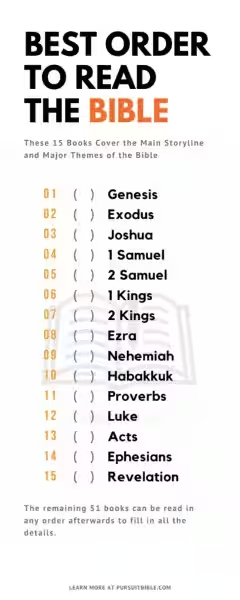
Embarking on a journey through the Bible can feel akin to navigating a vast, ancient library. The sheer volume of books, the interwoven narratives, and the rich tapestry of history and theology can be daunting. For many, a fundamental question arises: what order should the Bible be read? This isn’t a question with a single, universally prescribed answer; rather, it’s an invitation to explore different pathways, each offering unique insights and a deeper connection to its sacred message. Understanding that the Bible is a collection of diverse writings, compiled over centuries, helps us appreciate why various approaches to its reading order exist.
The Bible, in its entirety, is a testament to God’s relationship with humanity, chronicled through covenants, laws, prophecies, wisdom, and the life, death, and resurrection of Jesus Christ. Whether you’re a seasoned reader seeking a fresh perspective or a newcomer stepping onto this profound path for the first time, considering the order in which to read the Bible can profoundly enhance your understanding and spiritual growth. It’s about finding a method that resonates with your personal learning style and spiritual goals, transforming a potentially overwhelming task into a rewarding and transformative experience.
Understanding the Bible’s Structure: More Than Just a Book
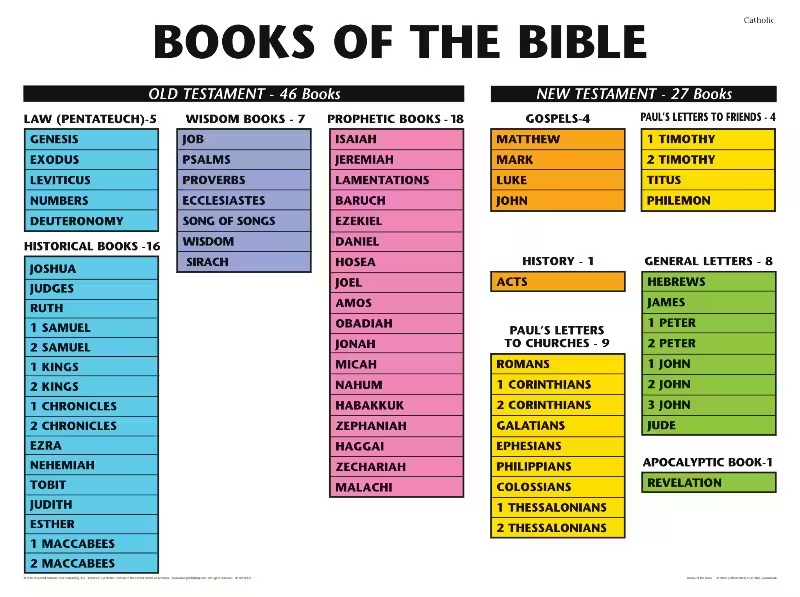
Before diving into specific reading orders, it’s crucial to grasp the Bible’s fundamental structure. It’s not a single novel written by one author, but rather a collection of sixty-six distinct books, divided into two major sections: the Old Testament and the New Testament. The Old Testament, written primarily in Hebrew with some Aramaic, details the history of the Israelites, their covenant with God, and the anticipation of a coming Messiah. The New Testament, written in Greek, focuses on the life and teachings of Jesus Christ, the establishment of the early Christian church, and letters to various communities.
The books within each testament are further categorized by genre. In the Old Testament, you’ll find the Pentateuch (the first five books), historical books, wisdom literature (like Psalms and Proverbs), and prophetic books. The New Testament includes the Gospels (accounts of Jesus’ life), the book of Acts (history of the early church), letters (Epistles) from apostles, and the Book of Revelation. Recognizing these categories helps demystify the content and understand the purpose of each section, which is key to determining what order should the Bible be read for maximum comprehension.
The Chronological Approach: Following the Storyline
One of the most intuitive ways to approach the Bible is through a chronological reading order. This method aims to present the biblical events as they happened, allowing the reader to follow the unfolding narrative of God’s plan from creation to the redemption of humanity. It’s like watching a historical documentary, where events are presented in the order they occurred, providing a clear sense of cause and effect and the development of God’s interactions with the world.
A chronological approach often begins with the creation accounts in Genesis, moves through the patriarchs, the Exodus from Egypt, the establishment of Israel, their kings, captivities, and the return. It then transitions to the life of Jesus, the spread of the early church, and finally, the prophetic visions of the future. This method is particularly beneficial for those who learn best by understanding the historical context and seeing how events and prophecies are interconnected, making the question of what order should the Bible be read a matter of tracing the grand narrative. For instance, understanding the prophecies in Isaiah can illuminate the significance of Jesus’ birth and ministry in the New Testament when read chronologically.
The primary advantage of reading the Bible chronologically is the clarity of the overarching story. You can see how God’s promises to Abraham were fulfilled in the nation of Israel, how their obedience and disobedience led to consequences, and how this ultimately paved the way for the Messiah. This sequential understanding can prevent disjointed reading, where one might jump between books without grasping the continuity of God’s redemptive plan.
Furthermore, this method helps to contextualize individual passages. When you read a specific psalm or a prophetic oracle within its historical setting, its meaning becomes richer and more profound. It allows you to appreciate the human struggles, triumphs, and the enduring faithfulness of God across different eras, answering the crucial question of what order should the Bible be read for a holistic understanding of divine intervention in human history.
Potential Challenges
However, a purely chronological approach can sometimes be challenging. The Old Testament, in particular, is not arranged chronologically within the traditional canon. Reordering it requires using a specific chronological Bible or a guide. This can also mean that poetic books or wisdom literature might be interspersed with historical narratives, disrupting the flow for some readers. It’s important to be prepared for this and to view these sections as reflections from within the ongoing historical narrative, rather than attempting to force them into a strict timeline.
The Canonical Order: Following the Traditional Structure
The canonical order is how the Bible is typically presented in most printed Bibles. This is the order established by church tradition over centuries, with the Old Testament books followed by the New Testament books, and within each testament, books are grouped by genre. This order reflects a theological and thematic arrangement, designed to guide the reader through different aspects of God’s revelation.
This method is often preferred by those who want to engage with the Bible as it has been traditionally studied and interpreted. It allows for a systematic exploration of the Old Testament’s preparatory role leading to the New Testament’s fulfillment in Christ. The question of what order should the Bible be read is, in this case, about respecting the historical compilation and theological intent of the canon.
Exploring the Old Testament First
Following the canonical order means starting with the Pentateuch (Genesis, Exodus, Leviticus, Numbers, Deuteronomy), which lays the foundation of God’s covenant with Israel. Then come the historical books (Joshua through Esther), detailing Israel’s journey in the Promised Land. Next are the poetic and wisdom books (Job, Psalms, Proverbs, Ecclesiastes, Song of Solomon), offering profound insights into life, faith, and suffering. Finally, the prophetic books (Isaiah through Malachi) deliver God’s messages of judgment and hope, often pointing towards a future deliverer.
After completing the Old Testament, the canonical order naturally leads to the New Testament. This begins with the four Gospels (Matthew, Mark, Luke, John), each offering a unique perspective on the life, ministry, death, and resurrection of Jesus Christ. The Book of Acts then chronicles the birth and expansion of the early church, followed by the Epistles (letters) written by apostles like Paul, Peter, and John, offering guidance and instruction to various churches and individuals. The New Testament concludes with the Book of Revelation, a complex but ultimately hopeful vision of God’s ultimate triumph. This structured progression answers what order should the Bible be read by following a well-established path of theological development.
The Thematic Approach: Focusing on Specific Topics
A thematic reading order is for those who have specific spiritual questions or interests they wish to explore. Instead of a linear progression, this approach involves selecting books or passages that directly address a particular theme, such as faith, love, forgiveness, prayer, or God’s sovereignty. This is a highly personalized and focused method of Bible study.
This approach can be incredibly rewarding for gaining deep insights into a particular aspect of faith. For example, if you’re wrestling with doubt and faith, you might choose to read the story of Abraham, the Psalms of David, the experiences of Elijah, and the interactions of Jesus with those who doubted. This method allows you to see how different authors and contexts illuminate the same core truths, answering the question of what order should the Bible be read based on your immediate spiritual needs.
Choosing Your Focus
You could dedicate weeks or months to exploring themes like God’s love, reading passages from 1 John, Romans, and the Gospels. Or, if you’re interested in wisdom for daily living, you might focus on Proverbs, Ecclesiastes, and Jesus’ teachings in the Sermon on the Mount. This method allows for deep dives into specific theological concepts and practical applications, making the Bible feel directly relevant to your life.
Building Blocks of Faith
This method can also be used to build a foundational understanding of core Christian doctrines. You might start with passages on God’s nature, then move to salvation through Christ, and then to the life of a believer. This is a highly effective way to learn what order should the Bible be read when you’re building your understanding piece by piece, focusing on specific building blocks of faith.
The Read-Through Plan: A Systematic Journey
For those who want a comprehensive and balanced approach, a read-through plan offers a structured way to cover the entire Bible over a set period, typically one year. These plans often involve reading a certain number of chapters or passages each day, sometimes from different parts of the Bible (e.g., one from the Old Testament, one from the New Testament, and one from Psalms or Proverbs). This ensures a varied and consistent exposure to the entirety of Scripture.
These plans are excellent for developing a regular Bible reading habit and for appreciating the diversity of biblical genres and messages. They aim to provide a holistic view of God’s Word without getting bogged down in any single section for too long, offering a practical answer to what order should the Bible be read for consistent engagement.
Daily Devotionals and Guides
Many devotional Bibles and Bible study apps offer pre-designed read-through plans. These plans might guide you to read, for example, a passage from Genesis on Monday, a Psalm on Tuesday, a Gospel on Wednesday, and an Epistle on Thursday, cycling through the different sections. This ensures you’re not just reading stories but also encountering wisdom, prophecy, and New Testament teaching regularly.
These plans are designed to help you consume the entire Bible at a steady pace, preventing overwhelm and fostering a consistent spiritual discipline. They are a practical way to tackle the question of what order should the Bible be read by providing a clear roadmap for daily engagement.
Experiencing the Whole Counsel
The beauty of a read-through plan is that it exposes you to the full breadth of biblical revelation. You’ll experience the historical sweep of the Old Testament, the life-changing words of Jesus, the foundational teachings of the apostles, and the prophetic hope of Revelation, all within a manageable timeframe. This systematic journey ensures you’re engaging with the whole counsel of God, providing a balanced and comprehensive understanding.
Finding Your Personal Path: What Order Should the Bible Be Read for You?
Ultimately, the question of what order should the Bible be read is deeply personal. There is no single “right” way, and the most effective method is the one that leads you to deeper understanding, greater faith, and a closer relationship with God. Consider your learning style, your current spiritual needs, and your personal goals when making your choice.
Perhaps you’ll start with a chronological approach to grasp the grand narrative, then transition to a thematic study on a topic that’s on your heart. Or maybe a one-year read-through plan will help you establish a consistent habit. You might even find yourself combining elements of different approaches, adapting as your journey through Scripture unfolds. The most important thing is to begin reading, to engage with the text prayerfully, and to allow the Holy Spirit to guide your understanding.
Remember, the Bible is a living Word. Don’t be afraid to experiment with different reading orders. What might feel overwhelming at first can become a familiar and beloved landscape with consistent effort. The journey itself is transformative, and by prayerfully considering what order should the Bible be read, you are taking a significant step towards unlocking its profound wisdom and divine message. Your personal journey with the Bible is a unique and sacred adventure.
Frequently Asked Questions: Reading the Bible & Religion
What order should the Bible be read?
There is no single “correct” order to read the Bible. Many people find it helpful to start with the Gospels (Matthew, Mark, Luke, or John) to understand the life and teachings of Jesus. Others prefer to begin with the Old Testament to gain historical context. Chronological reading plans also exist, which follow the historical timeline of events. Ultimately, the best order is one that helps you understand and connect with the text.
What is religion?
Religion is a system of beliefs, practices, and rituals that often relates to the supernatural or divine. It typically involves a moral code, a worldview, and often, a community of followers. Religions can provide answers to fundamental questions about life, death, and humanity’s place in the universe, and they often shape cultural norms and individual behavior.