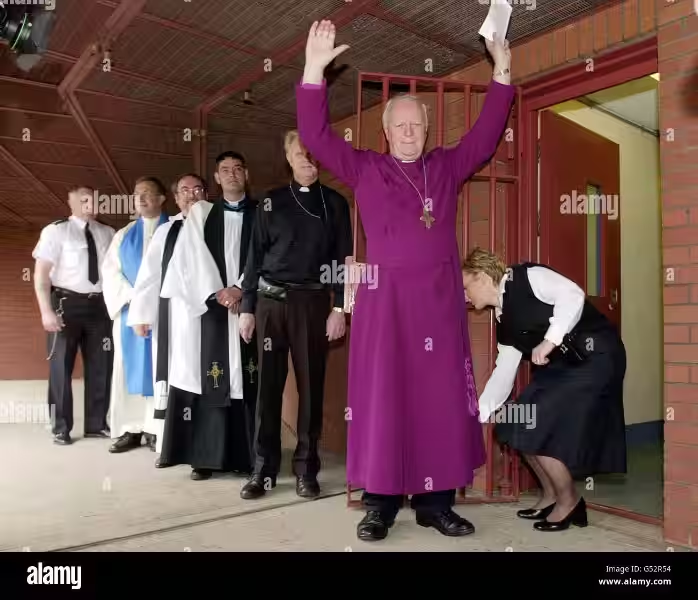
The walls of a correctional facility are often perceived as an impenetrable barrier, a place where the outside world fades and hope can become a scarce commodity. Yet, within these seemingly austere environments, a dedicated group of individuals works tirelessly, offering solace, guidance, and a much-needed connection to something larger than oneself. These are the prison chaplains, the unsung heroes who bring the transformative power of religion into the lives of those incarcerated. Their role extends far beyond mere religious services; they are counselors, confidantes, and bridges to redemption, reminding individuals that even in their darkest hours, humanity and spiritual connection remain.
The journey of a prison chaplain is rarely a straightforward one. It often requires a deep well of empathy, an unwavering commitment to service, and a profound understanding of the human condition, particularly its vulnerabilities. These individuals, drawn from diverse faith traditions, dedicate themselves to ministering to a population grappling with loss, regret, and the immense challenge of rebuilding their lives. The presence of prison chaplains and the practice of religion within correctional settings are not simply about administering sacraments; they are about nurturing the very essence of what it means to be human and offering a pathway toward personal transformation.
The work of prison chaplains is remarkably diverse, encompassing a wide array of responsibilities that go far beyond leading weekly services. They are often the first point of contact for inmates seeking spiritual guidance, emotional support, or simply someone to listen without judgment. This multifaceted ministry is crucial in an environment where the usual social structures and support networks are absent. The calming influence and spiritual grounding provided by prison chaplains can be instrumental in de-escalating tensions and fostering a more conducive atmosphere for rehabilitation.
Beyond scheduled religious gatherings, prison chaplains engage in individual counseling sessions, visit inmates in solitary confinement, and provide comfort during times of crisis, such as illness or the death of a loved one. They might help an inmate navigate the complex emotions associated with their past actions, explore theological concepts related to forgiveness and accountability, or simply offer a quiet space for reflection. This consistent, compassionate presence is a cornerstone of the chaplaincy program, demonstrating that even within the confines of a prison, individuals are seen, heard, and valued. For many, the chaplain becomes a vital link to maintaining their faith and sense of self.
Providing Spiritual Nourishment and Practical Support
At its core, the ministry of prison chaplains is about providing spiritual nourishment. This can manifest in various ways, from leading prayer groups and Bible studies to facilitating discussions on ethics, morality, and the search for meaning. These acts of faith are not merely symbolic; they offer inmates tangible tools for coping with the stresses of incarceration and for developing a more positive outlook on their future. By engaging with religious texts and teachings, individuals can find solace, perspective, and a renewed sense of purpose.
However, the role of prison chaplains is not solely focused on the spiritual realm. They also often act as advocates and intermediaries, helping inmates connect with resources that can support their reintegration into society. This might include assisting with re-entry programs, connecting them with legal aid, or simply offering encouragement as they prepare for release. Their understanding of both the spiritual and practical needs of inmates makes them invaluable members of the correctional team, contributing to a holistic approach to prisoner care and rehabilitation.
The Transformative Power of Religion in a Correctional Setting
Religion within a prison context is not an abstract concept; it is a living, breathing force that can profoundly alter an individual’s trajectory. For many, their incarceration represents a breaking point, a moment where they must confront the consequences of their choices and consider a different path forward. In this vulnerable state, the teachings and community offered by religion can provide a powerful framework for self-reflection and change. The very act of engaging with faith can be a form of atonement and a catalyst for personal growth.
The impact of religion on inmates is often observed in tangible ways. Studies and anecdotal evidence consistently highlight how involvement in religious programs can lead to reduced recidivism rates, improved behavior within the facility, and a greater sense of hope and well-being among participants. This is not to say that faith alone is a panacea, but rather that the religious principles of compassion, forgiveness, and redemption offer a potent antidote to despair and a powerful motivator for positive change. The prison chaplains are the facilitators of this transformative process.
Cultivating Community and Belonging
One of the most significant contributions of religion in prisons is its ability to foster a sense of community and belonging. In an environment where individuals are often isolated and estranged from their previous social circles, religious gatherings provide a space for connection and mutual support. Within these groups, inmates can share their experiences, offer encouragement to one another, and find solidarity in their shared journey of faith and recovery. This sense of being part of something larger than oneself is deeply healing.
Imagine an inmate, who for years felt ostracized and alone, finding a group of fellow believers who accept them, flaws and all. They might participate in a religious study group, singing hymns together, or simply sharing a meal after a service. This shared experience creates bonds that transcend their individual circumstances and offer a vital sense of belonging. The prison chaplains are instrumental in cultivating these supportive environments, ensuring that faith traditions are accessible and inclusive for all who seek them.
Guiding Towards Redemption and Reconciliation
The ultimate goal for many within the correctional system is redemption and reconciliation – with themselves, with their victims, and with society. Religion offers a powerful pathway toward achieving these profound aspirations. Through religious teachings, inmates can explore concepts of forgiveness, both for themselves and from others, and begin to understand the importance of making amends. This journey of redemption is often facilitated by the compassionate guidance of prison chaplains.
Consider an inmate who has committed a serious offense and is burdened by immense guilt. Through conversations with their prison chaplain, they might engage with religious narratives of sin and salvation, finding a framework for understanding their actions and the possibility of a changed life. This can lead to a sincere desire to apologize, to seek forgiveness, and to commit to a future where they actively contribute to society. The chaplains’ role in guiding these individuals toward reconciliation is a testament to the enduring power of faith.
The Challenges and Rewards of Chaplaincy
The work of prison chaplains is not without its significant challenges. They often operate with limited resources, face institutional bureaucracy, and must navigate the complex emotional landscape of individuals who have experienced trauma and hardship. The constant exposure to stories of pain and regret can take a toll, requiring chaplains to possess remarkable resilience, self-care practices, and a strong support network. The pressures are immense, demanding a constant outflow of emotional and spiritual energy.
Despite these difficulties, the rewards of prison chaplaincy are immense and deeply fulfilling. Witnessing an inmate find peace, experience a spiritual awakening, or successfully reintegrate into society after years of incarceration provides an unparalleled sense of purpose. The ability to be a catalyst for positive change, to offer a glimmer of hope in the darkest of places, and to remind individuals of their inherent worth is a profound privilege. The prison chaplains, through their dedication to religion and service, truly embody the spirit of compassion and transformation.
Frequently Asked Questions about Prison Chaplains and Religion
What is the role of a prison chaplain?
A prison chaplain is a religious minister who provides spiritual and emotional support to inmates and staff within a correctional facility. They offer counseling, lead religious services, perform sacraments, and act as a liaison between inmates and the outside world for religious matters.
Yes, correctional facilities are generally required to provide reasonable accommodation for inmates’ religious practices, provided these do not disrupt the security or order of the institution. This includes access to religious services, dietary options, and personal religious items.
Do chaplains in prison adhere to a specific religion?
Prison chaplains can represent a variety of faiths and denominations, including Christianity, Islam, Judaism, Buddhism, Hinduism, and others. Many correctional facilities employ chaplains from different religious backgrounds to serve the diverse inmate population.
Are prison chaplains trained professionals?
Yes, prison chaplains typically undergo specific training for ministry within correctional settings. This training often includes pastoral care, crisis intervention, understanding correctional systems, and working with diverse populations. Many are ordained ministers or hold degrees in divinity or related fields.
Can inmates request a chaplain of their specific faith?
Inmates can generally request to see a chaplain of their own faith. If a chaplain of a specific religion is not available on staff, the facility may arrange for a volunteer or community religious leader from that faith to visit.
Do chaplains have access to all parts of the prison?
Chaplains, like other staff, usually have access to most areas of the prison to minister to inmates. However, their movements may be subject to security protocols and supervision depending on the facility’s policies.
What kind of support do chaplains offer besides religious services?
Beyond religious services, chaplains provide counseling for personal issues, grief support, conflict resolution, guidance on ethical dilemmas, and assistance with re-entry preparation. They aim to support the holistic well-being of inmates.
Are chaplains involved in inmate discipline?
No, prison chaplains are not involved in disciplinary actions against inmates. Their role is pastoral and supportive, separate from the security and disciplinary functions of correctional officers.
Do chaplains receive a salary?
Yes, chaplains employed by correctional departments are typically salaried professionals. Volunteer chaplains offer their services without pay.
Can family members contact a prison chaplain on behalf of an inmate?
Family members can sometimes contact a prison chaplain to pass on messages of spiritual concern or to inquire about an inmate’s spiritual well-being, though direct communication might be limited by facility policies.