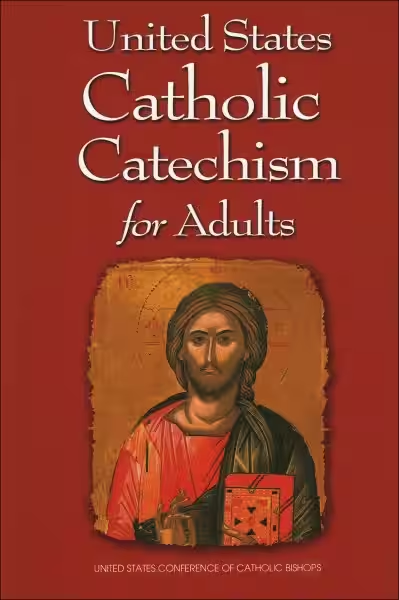
In the vibrant tapestry of American religious life, the United States Catholic Catechism for Adults stands as a beacon of clarity and depth for those seeking to understand and live out their Catholic faith. More than just a book of rules, it’s a comprehensive guide, a spiritual roadmap, and a profound resource designed to illuminate the teachings of the Catholic Church as they resonate within the American context. For many, navigating the intricacies of religious belief can feel like charting an unknown territory, and this catechism offers a familiar, yet deeply insightful, compass.
The United States Catholic Catechism isn’t a new invention, but rather a thoughtful adaptation and presentation of the universal teachings of the Catholic Church, specifically tailored for the unique cultural and religious landscape of the United States. It speaks directly to the questions, challenges, and opportunities faced by Catholics today, offering solid answers rooted in centuries of tradition and illuminated by contemporary understanding. Whether you are a lifelong Catholic seeking a deeper understanding, a new convert embarking on your spiritual journey, or someone simply curious about the Catholic faith, the United States Catholic Catechism provides a valuable entry point and a continuous source of illumination.
Understanding the Core of Catholic Belief: A Foundation from the United States Catholic Catechism
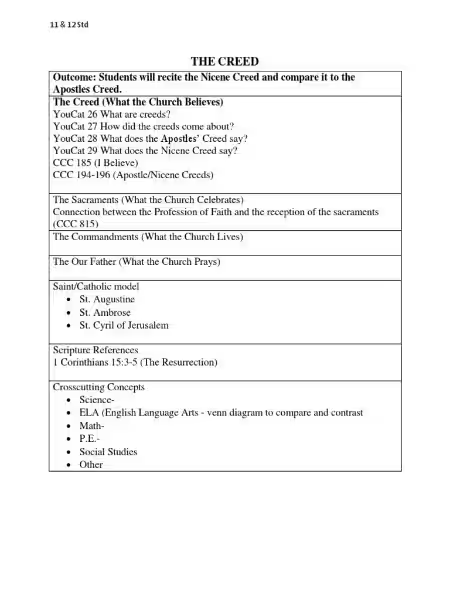
At its heart, the United States Catholic Catechism delves into the foundational tenets of the Catholic faith. It systematically explores what Catholics believe and, crucially, why they believe it. This isn’t about blind adherence; it’s about fostering an informed and intellectually engaged faith. The catechism meticulously unpacks the Nicene Creed, the bedrock statement of Christian belief, explaining each article of faith with accessible language and relevant examples.
For instance, when discussing the belief in God the Father, the United States Catholic Catechism moves beyond abstract theology to connect this belief to our daily lives. It highlights God’s providence, His constant care for humanity and creation. Think of a parent lovingly providing for their child; the catechism uses such relatable imagery to illustrate God’s unending love and active involvement in our world. Similarly, the explanation of Jesus Christ’s divinity and humanity isn’t just a theological exercise; it’s presented as the cornerstone of salvation, offering hope and redemption to all. The catechism emphasizes that understanding these core beliefs is the first step in truly living them out in a meaningful way.
The United States Catholic Catechism places significant emphasis on the Sacraments, the visible signs of invisible grace instituted by Christ. These seven sacred rites are not mere rituals, but powerful encounters with God’s love and mercy. The catechism guides readers through each sacrament, explaining its meaning, its effects, and its importance in the life of a believer. From Baptism, the gateway to Christian life, to the Eucharist, the “source and summit” of Christian life, each sacrament is presented as a vital channel through which God’s transformative grace flows.
The catechism makes the abstract concept of grace more tangible. Imagine a plant needing sunlight and water to grow. Sacraments are like those essential elements for our spiritual life, nourishing and strengthening our connection to God. For example, the Sacrament of Reconciliation (Confession) is explained not as a punitive measure, but as an act of divine healing, offering forgiveness and restoring our relationship with God and the Church. The United States Catholic Catechism encourages active participation in these sacraments, viewing them as opportunities for profound spiritual growth and encounter.
Here’s a brief overview of the sacraments as presented:
Baptism: Our entry into the Church, cleansing from original sin.
Confirmation: Strengthening our faith and empowering us for mission.
Eucharist: The real presence of Christ, nourishment for our souls.
Reconciliation: Forgiveness of sins and spiritual renewal.
Anointing of the Sick: Comfort and healing for those who are ill.
Holy Orders: For those called to serve the Church through priesthood and diaconate.
Matrimony: The sacred covenant of marriage, a reflection of Christ’s love for the Church.
Living the Catholic Life: Morality and the United States Catholic Catechism
Beyond belief and sacraments, the United States Catholic Catechism offers a clear and compelling guide to living a moral life. It’s here that the teachings of the Church are translated into practical guidance for everyday decisions. The catechism explores the Ten Commandments and the Beatitudes not as rigid rules, but as pathways to authentic happiness and fulfillment. It emphasizes that Catholic morality is rooted in love of God and neighbor, a love that seeks the good of all.
The catechism provides practical wisdom for navigating ethical dilemmas. Consider the commandment “You shall not steal.” The United States Catholic Catechism goes beyond the literal prohibition to explore issues of justice, fairness, and respect for property, whether it’s personal belongings or the common good. It offers a framework for making decisions guided by conscience, informed by faith, and oriented towards building a more just and compassionate society. The emphasis is on personal responsibility and the ongoing journey of conversion, making the moral teachings relatable and actionable.
The Church in America: Context and Mission of the United States Catholic Catechism
A unique strength of the United States Catholic Catechism is its contextualization of Catholic teachings within the American experience. It acknowledges the pluralistic society in which Catholics live and offers insights into how to engage with contemporary issues from a faith perspective. The catechism doesn’t shy away from discussing the role of the Church in public life, the importance of social justice, and the call to be leaven in the world.
This is where the United States Catholic Catechism truly shines for its intended audience. It addresses specific American contexts, such as the relationship between faith and democracy, the diversity of cultures within the Church in America, and the ongoing dialogue between faith and science. For example, discussions on religious freedom are presented not just as a legal concept, but as a fundamental human right and a vital aspect of living out one’s faith openly. The catechism empowers Catholics to be active participants in their communities, living out their faith with conviction and contributing positively to the broader American society.
Your Personal Journey with the United States Catholic Catechism
Ultimately, the United States Catholic Catechism is more than a reference book; it’s an invitation. It’s an invitation to deeper prayer, to more meaningful worship, and to a richer understanding of God’s love for you and for all of humanity. It encourages a lifelong journey of learning and growing in faith, providing the tools and insights needed to navigate the complexities of modern life with the guidance of the Catholic Church.
Whether you are looking to solidify your understanding of Catholic doctrine, explore the spiritual significance of the sacraments, or find practical guidance for living a virtuous life, the United States Catholic Catechism is an indispensable resource. It’s a testament to the enduring power of faith and a vital companion for anyone seeking to live their Catholic identity with clarity, purpose, and joy in the United States. Embrace its wisdom, and let it illuminate your path.
Frequently Asked Questions about the United States Catholic Catechism for Adults
What is the United States Catholic Catechism for Adults?
The United States Catholic Catechism for Adults is an official teaching document of the Catholic Church in the United States. It presents the core beliefs and practices of the Catholic faith in a clear, accessible, and comprehensive manner.
What topics does the United States Catholic Catechism for Adults cover?
It covers a wide range of topics, including the Creed, the Sacraments, Christian Morality, and Prayer. It delves into the teachings of Scripture, Tradition, and the Magisterium of the Church.
Who is the United States Catholic Catechism for Adults intended for?
While it is titled “for Adults,” it is intended for all Catholics seeking to deepen their understanding of their faith. This includes new converts, lifelong Catholics, catechists, teachers, and anyone interested in learning more about Catholicism.
How is the United States Catholic Catechism for Adults different from the Catechism of the Catholic Church?
The Catechism of the Catholic Church, published in 1992, is the universal catechism for the entire Catholic Church worldwide. The United States Catholic Catechism for Adults is a particular edition, approved by the U.S. Bishops, that offers commentary and explanations specific to the American context and culture, while remaining fully in line with the universal catechism.
Where can I find the United States Catholic Catechism for Adults?
It is widely available for purchase in Catholic bookstores, online retailers, and through the United States Conference of Catholic Bishops (USCCB) website. Many parishes also have copies available.
Is the United States Catholic Catechism for Adults a required reading for Catholics?
It is not a mandatory requirement for all Catholics, but it is highly recommended as a valuable resource for spiritual growth and catechesis. It serves as an excellent guide for understanding what Catholics believe and why.
Can I use the United States Catholic Catechism for Adults for religious education or RCIA?
Yes, it is an excellent resource for formal religious education programs, including the Rite of Christian Initiation of Adults (RCIA), as well as for personal study and small group discussions.
What is “religion” in the context of the United States Catholic Catechism for Adults?
In the context of the United States Catholic Catechism for Adults, “religion” refers to the established system of beliefs, practices, and worship that defines the Catholic faith. It encompasses a relationship with God, a moral code derived from divine revelation, and a community of believers united in faith and sacraments.