In the tapestry of Christian devotion, certain practices stand out for their profound capacity to connect us with the deepest human emotions and the divine. Among these, the Seven Sorrows Rosary offers a unique and powerful pathway for reflection, empathy, and spiritual growth. It’s not merely a repetition of prayers; it’s an invitation to walk alongside Mary, the Mother of God, as she experiences the profound sorrows of her life, and in doing so, to better understand our own journeys of faith and suffering. This ancient devotion, rooted in Scripture and tradition, provides a framework for meditating on the heartaches that touched Jesus’ life through the eyes of His mother, offering solace, strength, and a deeper appreciation for Christ’s sacrifice.
Many find that engaging with the Seven Sorrows Rosary offers a sense of grounding and purpose, especially during times of personal difficulty. It allows us to externalize our own anxieties and sorrows by uniting them with Mary’s, transforming them from isolating pains into shared experiences of redemptive suffering. This article aims to illuminate the significance and practice of the Seven Sorrows Rosary, making it accessible and deeply relevant for anyone seeking a richer spiritual life.
Understanding the Devotion: What is the Seven Sorrows Rosary?
At its core, the Seven Sorrows Rosary is a prayerful meditation on the seven most significant sorrows that afflicted the Blessed Virgin Mary. Unlike the more common Rosary, which focuses on the joyful, luminous, sorrowful, and glorious mysteries of Christ’s life, this devotion centers on Mary’s unique participation in His redemptive mission. Each sorrow is contemplated, often accompanied by a Hail Mary, creating a rhythm of prayer that allows for deep introspection. The structure typically involves meditating on one sorrow at a time, often using specific prayers or passages from Scripture as a guide. It’s a powerful way to connect with Mary’s maternal heart and learn from her unwavering faith in the face of unimaginable pain.
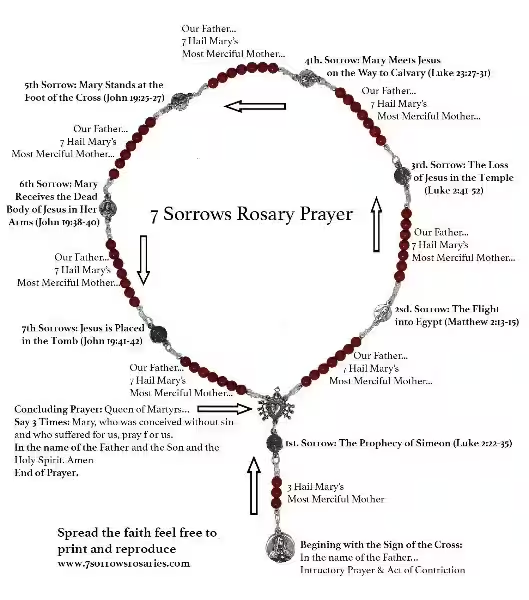
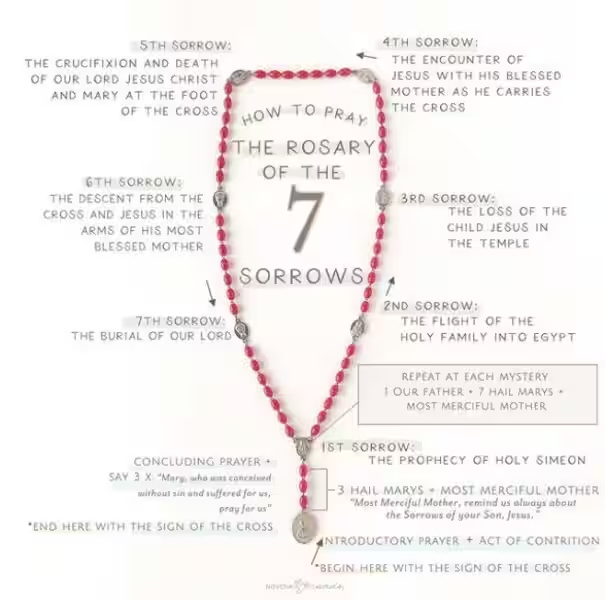
The traditional list of the Seven Sorrows Rosary includes: the prophecy of Simeon, the flight into Egypt, the loss of Jesus in the Temple, the meeting of Jesus on the Via Dolorosa, the crucifixion, the taking down of Jesus from the cross, and the burial of Jesus. These events represent significant moments of grief, fear, and loss that Mary endured. By contemplating these sorrows, we are invited to consider Mary’s strength, her love for Jesus, and her profound understanding of God’s will, even when it brought her immense suffering. This devotion can be prayed using a specific chaplet of seven decades, each consisting of an Our Father, seven Hail Marys, and a Glory Be, or simply by meditating on each sorrow and offering a few Hail Marys for each.
The First Sorrow: The Prophecy of Simeon
The first sorrow of the Seven Sorrows Rosary harks back to Mary’s journey to the Temple for the presentation of the infant Jesus. Here, the devout Simeon, guided by the Holy Spirit, encountered the Holy Family. He took Jesus into his arms and proclaimed a profound and deeply sorrowful prophecy: “Behold, this child is destined for the fall and the rising of many in Israel, and for a sign that is spoken against—and a sword will pierce your own soul too.” This moment marks the beginning of Mary’s understanding that her Son’s mission was intertwined with suffering, and that she, as His mother, would share in that pain. Imagine the young mother, holding her precious baby, hearing these foreboding words – the future of her Son, and her own heart, etched with sorrow.
This initial sorrow serves as a poignant reminder that even in moments of immense joy and fulfillment, like the presentation of a beloved child, foreknowledge of future trials can cast a shadow. For us, this first sorrow of the Seven Sorrows Rosary can help us reflect on the times we have received difficult news or faced unsettling prophecies in our own lives. It encourages us to trust in God’s plan, even when it’s not immediately clear or comforting, and to find strength in Mary’s courageous acceptance of this early glimpse into her Son’s destined path. Consider the weight of Simeon’s words and how Mary, with quiet faith, carried that prophecy within her heart from that day forward.
The Second Sorrow: The Flight into Egypt
Following the prophecy, Mary, Joseph, and the infant Jesus were forced to flee their homeland due to the murderous decree of King Herod, who sought to kill the child Jesus. This flight into Egypt represents a profound sorrow: the disruption of home, the danger of a perilous journey, and the constant fear for the safety of their child. Mary, a young mother accustomed to the peace of Nazareth, was thrust into a life of exile, facing the unknown dangers of a foreign land, all to protect the Messiah. This was not a planned pilgrimage, but a desperate escape, filled with anxiety and uncertainty.
The second sorrow of the Seven Sorrows Rosary calls us to meditate on the dislocations and sudden upheavals that can disrupt our lives. It might be an unexpected job loss, a move away from loved ones, or any situation that forces us to leave behind the familiar and comfortable. We can identify with Mary’s experience of vulnerability and her reliance on God’s protection in times of crisis. This sorrow reminds us that even the holiest families faced hardship and displacement, and that our own struggles with transitions and insecurity are not without precedent. The quiet determination with which Mary protected Jesus during this perilous journey offers a powerful example of maternal love and steadfast faith.
The Third Sorrow: The Loss of Jesus in the Temple
When Jesus was twelve years old, the Holy Family made their annual pilgrimage to Jerusalem for the feast of Passover. After the festival concluded, Mary and Joseph, believing Jesus was traveling with other family members, set out for home. It was only after a day’s journey that they realized Jesus was not with them. Their desperate search, lasting three agonizing days, culminated in finding Him in the Temple, seated among the teachers, listening to them and asking them questions. While Jesus’ response, “Did you not know that I must be in my Father’s house?”, revealed His divine nature and mission, the initial period of uncertainty and fear for Mary was a profound sorrow.
This third sorrow of the Seven Sorrows Rosary speaks directly to the universal experience of parents losing touch with their children, whether physically or emotionally. It highlights the anguish of separation and the deep yearning for connection. The prolonged period of searching and the eventual relief, coupled with the dawning realization of Jesus’ unique destiny, form a complex emotional landscape. This meditation encourages us to pray for those who are separated from their loved ones, for understanding in times of misunderstanding, and for the grace to let go and trust in God’s plan, even when it means our children are on paths we can’t fully comprehend. Mary’s journey through panic and relief, culminating in a deeper understanding of her Son, offers a profound lesson.
The Fourth Sorrow: Mary Meets Jesus on the Via Dolorosa
The Via Dolorosa, the “Way of Sorrows,” is the path Jesus walked carrying His cross to Calvary. The fourth sorrow of the Seven Sorrows Rosary depicts Mary’s heart-wrenching encounter with her Son along this torturous route. Imagine her anguish as she sees Him, scourged, bleeding, and bearing the heavy burden of the cross. Their eyes meet, a silent exchange of profound love, shared suffering, and the agonizing realization of what is to come. This is a moment of intense maternal grief, witnessing the physical torment of her beloved child, a suffering that cuts her to the core, fulfilling Simeon’s prophecy of a sword piercing her soul.
This encounter is perhaps one of the most emotionally charged meditations within the Seven Sorrows Rosary. It prompts us to reflect on the times we have witnessed suffering in others, especially those we love, and felt powerless to alleviate it. It calls us to empathize with Christ’s Passion and to recognize Mary’s unique role as the Mother of Sorrows, sharing in His redemptive agony. This sorrow invites us to offer our own sufferings to Jesus and Mary, finding solidarity in their shared journey of pain and love. The silent communication between mother and son on this brutal path speaks volumes about their unbreakable bond and sacrificial love.
The Fifth Sorrow: The Crucifixion
Standing at the foot of the cross, Mary witnessed the ultimate act of sacrifice and the agonizing death of her Son. This is the fifth sorrow of the Seven Sorrows Rosary, a moment of immeasurable pain and profound fulfillment. She saw Jesus, innocent and pure, enduring a brutal and public execution, all for the salvation of humanity. Her presence there, steadfast and unwavering, shows her complete acceptance of God’s will, even in the face of the most horrific suffering. This was not just the death of her Son; it was the culmination of a divine plan, a testament to God’s boundless love and Mary’s complete surrender.
The crucifixion is a cornerstone of Christian faith, and meditating on Mary’s sorrow at this moment adds a deeply human dimension to Christ’s sacrifice. It reminds us that while Jesus suffered physically, Mary suffered emotionally, experiencing a unique form of martyrdom by witnessing His torment. This sorrow of the Seven Sorrows Rosary calls us to contemplate the depth of God’s love and the immense price paid for our redemption. It encourages us to approach our own crosses with courage, knowing that we are never truly alone in our suffering, as Mary and Jesus have already walked that path.
The Sixth Sorrow: The Taking Down of Jesus from the Cross
After Jesus breathed His last, His lifeless body was taken down from the cross. This solemn and sorrowful event constitutes the sixth sorrow of the Seven Sorrows Rosary. Picture Mary, now receiving the broken body of her Son into her arms. This is the pietà moment, a profound depiction of maternal grief and love. The earthly mission of Jesus has ended, and Mary is left holding the tangible evidence of His sacrifice, the physical reality of His suffering culminating in death. The tenderness with which she would have held Him, the tears she would have shed, all speak to the depth of her loss and her enduring love.
The sixth sorrow of the Seven Sorrows Rosary invites us to reflect on the aftermath of suffering and loss. It’s about the quiet, often private, moments of grief and the process of coming to terms with finality. For parents who have lost children, for anyone who has experienced the death of a loved one, this sorrow resonates deeply. It reminds us that healing is a journey, and that even in the darkest moments, the love that binds us is eternal. Mary’s embrace of her lifeless Son is a powerful image of accepting the reality of death while cherishing the memory of life and love. It highlights the immense strength found in surrender and enduring love.
The Seventh Sorrow: The Burial of Jesus
The final sorrow in the Seven Sorrows Rosary is the burial of Jesus. After being taken down from the cross, Jesus’ body was anointed and wrapped in burial cloths before being laid in a tomb. Mary’s presence at this final earthly act underscores the completeness of her sorrow and her unwavering devotion. This was the finality of separation, the closing of the tomb signifying the end of Jesus’ earthly life and the profound grief experienced by His mother. She had nurtured Him, raised Him, walked with Him, and now she had to witness His final placement in the cold earth.
This seventh sorrow prompts us to consider the ultimate realities of life and death, and the peace that can be found even in profound sadness. It speaks to the hope that lies beyond the tomb, the promise of resurrection that Mary, with her perfect faith, would have held onto. The Seven Sorrows Rosary concludes with this act of burial, a moment of deep sorrow, yet it is also a prelude to the ultimate joy of the Resurrection. It teaches us that even in the face of death, there is a faith that can sustain us, a hope that can endure, and a love that transcends all earthly bounds. Mary’s silent vigil at the tomb offers a powerful image of enduring faith and quiet strength.
Integrating the Seven Sorrows Rosary into Your Life
The beauty of the Seven Sorrows Rosary lies in its adaptability and its profound spiritual resonance. It’s not a rigid obligation but a gentle invitation to deepen your relationship with Mary and, through her, with Jesus. You might choose to pray it daily, weekly, or during specific times of personal trial or penitential seasons like Lent. The key is approaching it with an open heart, ready to meditate on the mysteries presented.
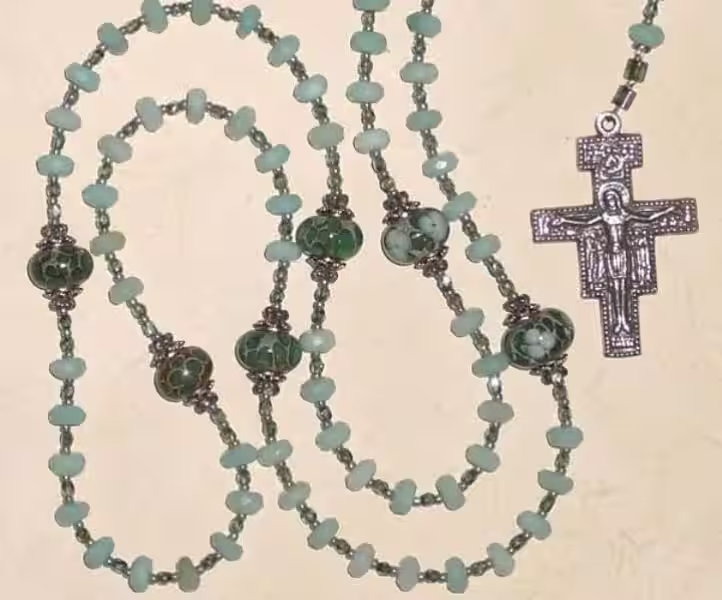
To truly integrate the Seven Sorrows Rosary into your life, consider setting aside a quiet time and space where you can minimize distractions. You don’t need a special chaplet; a simple string of seven beads or even just a list of the sorrows can suffice. Many find it helpful to read a short reflection or a passage from Scripture related to each sorrow before praying the associated Hail Marys. This practice transforms the prayer from mere recitation into a contemplative journey, allowing the graces of the devotion to unfold within you.
Practical Tips for Prayer
When embarking on the Seven Sorrows Rosary journey, remember that sincerity and reverence are more important than perfection. If your mind wanders, gently bring it back to the sorrow you are contemplating. You might find yourself drawn to certain sorrows more than others, and that’s perfectly normal. Each sorrow offers a unique lesson and a pathway to a deeper understanding of Mary’s love and Christ’s sacrifice.
Here are a few practical tips to enhance your experience with the Seven Sorrows Rosary:
Find a quiet space: Choose a place where you can pray without interruption. This could be a corner of your home, a chapel, or even during a quiet walk.
Use visual aids: Images depicting the Seven Sorrows can be very helpful in focusing your meditation.
Read reflections: Consider using a book or online resource that offers brief meditations for each sorrow.
Pray with others: Sometimes praying the Seven Sorrows Rosary in a group can offer mutual support and encouragement.
Connect your own sorrows: As you meditate on Mary’s sorrows, allow your own struggles and pains to surface. Offer them to Jesus and Mary, finding solace in their shared experience.
The Fruits of the Devotion
Engaging with the Seven Sorrows Rosary offers a rich harvest of spiritual benefits. It cultivates a deeper sense of empathy, not just for Mary and Jesus, but for those suffering around us. By meditating on her profound grief, we learn to approach our own difficulties with greater faith and resilience, recognizing that even in sorrow, God’s love and plan are present.
Among the many graces promised to those who devotionally pray the Seven Sorrows Rosary are: increased faith, hope, and charity; a more profound understanding of Christ’s Passion; comfort in times of tribulation; and a special intercession from the Blessed Mother. This devotion empowers us to carry our own crosses with greater courage and to find peace in the midst of life’s storms. It’s a journey of solidarity with the Mother of God, a journey that leads to a deeper love for Christ and a more profound spiritual life.
Frequently Asked Questions about the Seven Sorrows Rosary
What is the Seven Sorrows Rosary?
The Seven Sorrows Rosary, also known as the Servite Rosary or the Rosary of the Seven Dolors, is a devotion that meditates on the seven sorrows of the Blessed Virgin Mary. It is distinct from the more common five-decade Rosary, focusing specifically on the painful events in Mary’s life.
What are the Seven Sorrows of Mary?
The Seven Sorrows of Mary, as traditionally recognized, are:
1. The Prophecy of Simeon.
2. The Flight into Egypt.
3. The Loss of Jesus in the Temple.
4. The Meeting of Jesus and Mary on the Way to Calvary.
5. The Crucifixion.
6. The Taking Down of Jesus from the Cross.
7. The Burial of Jesus.
How is the Seven Sorrows Rosary prayed?
The Seven Sorrows Rosary is typically prayed using seven decades, with each decade consisting of one Our Father, seven Hail Marys, and one Glory Be. Before beginning the first decade, an Act of Contrition is often recited. After each decade, a reflection on the specific sorrow is encouraged. A concluding prayer is usually offered at the end.
What are the benefits of praying the Seven Sorrows Rosary?
Praying the Seven Sorrows Rosary is believed to foster a deeper understanding of Mary’s love and suffering, promote empathy, and increase devotion. It is said to bring solace, strength, and spiritual growth to those who pray it with a sincere heart. Promises are associated with this devotion, including the remission of sins and spiritual comfort.
Can I pray the Seven Sorrows Rosary if I am not Catholic?
While the Seven Sorrows Rosary is a Catholic devotion, individuals of other Christian faiths or those exploring spiritual practices may find value in meditating on Mary’s sorrows as a way to understand sacrifice, love, and maternal grief. The prayers themselves are generally accessible.
What distinguishes the Seven Sorrows Rosary from the regular Rosary?
The primary distinction lies in the focus and structure. The regular Rosary typically meditates on the joyful, sorrowful, and glorious mysteries of Christ’s life. The Seven Sorrows Rosary, on the other hand, centers exclusively on the sorrows Mary experienced throughout her life, particularly in relation to her Son, Jesus. The number of decades and the specific prayers within each decade also differ.