In the tapestry of religious life, few prayers resonate with as much personal significance and spiritual depth as the Act of Contrition. This humble yet potent prayer is more than just a recitation of words; it’s a heartfelt acknowledgment of our imperfections, a sincere desire for amendment, and a yearning for reconciliation with the divine. For many, particularly within the Christian tradition, the Act of Contrition serves as a cornerstone of their devotional practice, a reliable beacon guiding them back to a place of grace even after stumbling. Understanding its nuances and embracing its spirit can profoundly transform our relationship with God and ourselves.
The Act of Contrition, in its essence, speaks to the inherent human condition of falling short. We are all, by nature, prone to making mistakes, to succumbing to temptations, and to acting in ways that displease a higher power. This isn’t a cause for despair, but rather a fundamental aspect of our spiritual journey. The beauty of the Act of Contrition lies in its immediacy and accessibility. It’s a prayer we can turn to at any moment, in any circumstance, offering a direct channel to divine mercy. Whether we’ve committed a grave sin or a minor transgression, the prayer provides a framework for self-reflection and spiritual repair.
Understanding the Core Components of the Act of Contrition
At its heart, the Act of Contrition is a prayer that expresses deep sorrow for our sins. It’s not simply about feeling bad because we might get caught, but about genuinely regretting the offense against God’s infinite love and goodness. This sorrow is often referred to as “contrition,” and it’s the driving force behind the prayer. It stems from recognizing that our actions have wounded our relationship with the divine and have, in a sense, disappointed the God who loves us unconditionally.
This prayer typically involves several key elements:
Acknowledgement of Sin: The prayer begins with a clear and honest admission that we have sinned. Phrases like “Oh my God, I am heartily sorry for having offended Thee” immediately set the tone, taking responsibility for our wrongdoings. This isn’t about blame-shifting or making excuses; it’s about owning our choices.
Sorrow for Offense: The core of the prayer is the expression of profound regret. We lament not just the consequences of our actions, but the pain and sadness we’ve caused to God. This deep sorrow is the foundation of true repentance.
Firm Purpose of Amendment: Crucially, the Act of Contrition isn’t just about regretting the past; it’s about committing to a different future. We express a resolute determination to avoid sin in the future and to amend our lives. This is often stated as, “I firmly resolve, with the help of Thy grace, to sin no more and to avoid the near occasion of sin.” This active commitment to change is what makes the prayer so powerful and transformative.
Seeking Forgiveness: The ultimate goal of contrition is to receive God’s forgiveness. The prayer concludes with a plea for mercy, trusting in God’s boundless compassion and willingness to forgive, as embodied in verses like “I detest all my sins, and I beg Thy forgiveness.”
The Act of Contrition in Practice: A Personal Journey
The Act of Contrition is not just for grand pronouncements of faith; it’s a prayer for everyday life. Imagine a parent who, in a moment of frustration, speaks harshly to their child. Later, filled with remorse, they might quietly pray an Act of Contrition prayer, acknowledging their impatience and resolving to be more understanding. This personal application of the prayer demonstrates its relevance in the mundane moments where our faith is truly tested.
Another relatable scenario is when we might feel tempted to gossip or engage in petty dishonesty. Before succumbing, we can pause and invoke the spirit of the Act of Contrition, recognizing the potential harm and the offense against God’s command to love our neighbor. This proactive use of the prayer can act as a powerful spiritual safeguard, helping us to navigate daily challenges with greater integrity. The Act of Contrition prayer becomes a daily recommitment to living a life aligned with our faith.
Theological Significance: Contrition and Divine Mercy
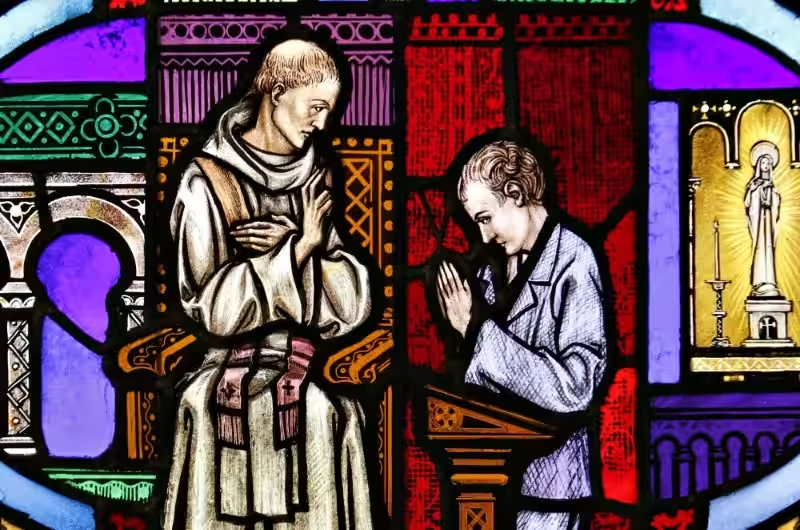
Theological tradition places immense value on contrition as a necessary disposition for receiving the sacrament of Penance (Confession). It is seen as the spiritual gateway that opens us to God’s unmerited grace and forgiveness. Without a contrite heart, the outward reception of the sacrament would be hollow. The Act of Contrition prayer is the personal expression of this disposition.
The concept of divine mercy is inextricably linked to contrition. God’s infinite love and desire for our salvation mean that He is always ready to forgive those who sincerely turn back to Him. The Act of Contrition prayer is our affirmation of this divine mercy, our reaching out to embrace the healing balm of God’s forgiveness. It’s a testament to the belief that no sin is too great for God’s mercy to overcome, especially when accompanied by a sincere Act of Contrition prayer.
Theological discussions often differentiate between perfect contrition and imperfect contrition. Perfect contrition arises from a love of God so profound that we regret sin primarily because it displeases Him. Imperfect contrition, while still valuable, stems from a fear of punishment or a dislike of the ugliness of sin itself. Regardless of the degree, any sincere Act of Contrition prayer is a step towards reconciliation. The Act of Contrition prayer is the vehicle through which we express this inner disposition.
The Act of Contrition as a Pathway to Spiritual Growth
Beyond its role in confession, the regular practice of reciting the Act of Contrition can be a powerful catalyst for spiritual growth. By consistently engaging in this prayer, we cultivate a deeper awareness of our sinfulness and, more importantly, a profound appreciation for God’s mercy. This dual awareness is essential for humility and spiritual maturity.
This prayer helps us to examine our conscience regularly, fostering a habit of self-reflection. It encourages us to take ownership of our actions and to understand the impact of our choices. This ongoing process of self-awareness is vital for breaking free from destructive patterns and for developing a more virtuous life. The Act of Contrition prayer becomes a daily exercise in spiritual discipline.
Furthermore, the Act of Contrition prayer reminds us that perfection is not the immediate goal, but rather persistent effort and a contrite heart. It fosters a spirit of perseverance in our faith journey, knowing that even when we fall, there is always a path back to grace. This understanding can alleviate the burden of guilt and empower us to continue striving for holiness with renewed hope, bolstered by the promise of forgiveness inherent in the Act of Contrition.
Frequently Asked Questions About the Act of Contrition
What is an Act of Contrition?
An Act of Contrition is a prayer or statement of sorrow for sins committed and a resolution to amend one’s life. It is a fundamental part of the Sacrament of Penance (Reconciliation) in the Catholic Church.
What are the key elements of an Act of Contrition?
The essential components are:
Sorrow for sins committed.
The recognition that sin offends God.
A firm purpose of sinning no more.
A desire to receive God’s forgiveness.
Is there a specific prayer for the Act of Contrition?
While there are traditional and commonly used prayers, the most important aspect is the sincere expression of contrition from the heart. One of the most well-known is:
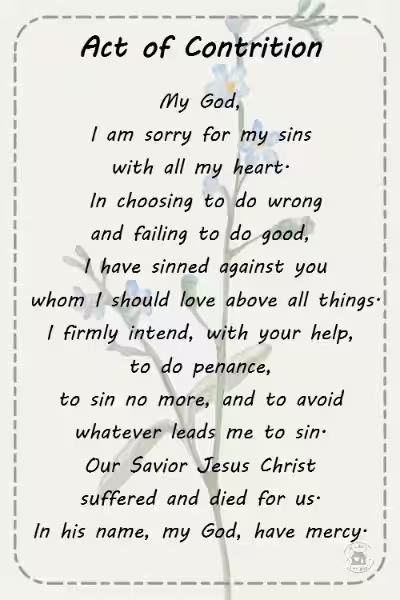
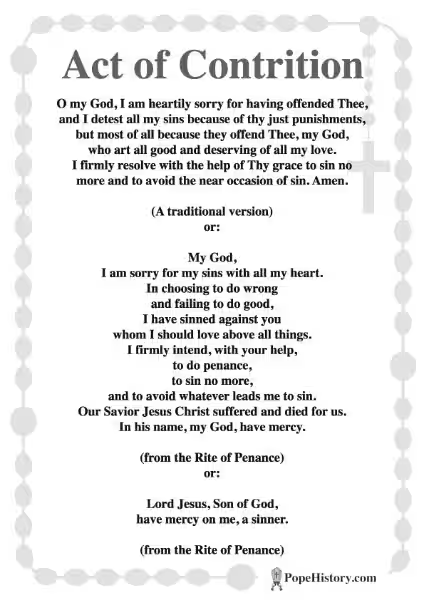
“O my God, I am heartily sorry for having offended Thee, and I detest all my sins, because of the fear of losing heaven and the hope of eternal life, but most of all because they offend Thee, my God, who art all good and deserving of all my love. I firmly resolve, with the help of Thy grace, to confess my sins, to do penance, and to sin no more.”
What is the purpose of saying an Act of Contrition?
The purpose is to express genuine remorse for sins, to acknowledge God’s goodness and justice, and to seek His mercy. It is an outward expression of an inner disposition of repentance.
When should one say an Act of Contrition?
It is typically said before receiving the Sacrament of Reconciliation. It can also be prayed at any time as an act of personal devotion and repentance for sins.
Does the Act of Contrition guarantee forgiveness?
The Act of Contrition is an essential part of the Sacrament of Penance. While the prayer itself expresses the necessary sorrow, the assurance of forgiveness comes through the Sacrament of Reconciliation, administered by a priest who acts in the person of Christ. For those unable to access the sacrament, a perfect Act of Contrition (contrition motivated by love of God) can obtain forgiveness of sins before confession.
What’s the difference between perfect and imperfect contrition?
Perfect Contrition: Sorrow for sins motivated by love of God, recognizing that sin offends a perfectly good and loving God.
Imperfect Contrition (Attrition): Sorrow for sins motivated by fear of punishment or the ugliness of sin, but not primarily by love of God.
Both forms of contrition are valuable, but perfect contrition is considered more meritorious.
Can non-Catholics use the Act of Contrition?
While the Act of Contrition is a Catholic prayer, the act of expressing sorrow for wrongdoing and seeking forgiveness is a universal spiritual practice. Anyone seeking to express repentance to God can do so, using similar sentiments or prayers.