Imagine standing before a magnificent statue of a revered deity or a saintly figure. What elevates that artwork from a mere object to a focal point of devotion and contemplation? Often, it’s the humble yet crucial sculpture pedestal. These seemingly simple bases are far more than just supports; they are integral to the narrative, the spiritual significance, and the very presentation of religious art across cultures and centuries. They are the silent pillars that hold aloft our faith, framing the sacred and guiding our gaze towards the divine.
From ancient altars adorned with carved stone to modern museum displays of spiritual icons, the role of the sculpture pedestal has been consistently vital. It defines the space for worship, separates the sacred from the everyday, and provides a visual hierarchy that directs our attention. Without these foundational elements, many of our most cherished religious sculptures would lose their intended impact, their power diminished by a lack of proper contextualization and elevation. This article will delve into the profound relationship between religious sculpture and its pedestals, exploring their historical significance, functional importance, and the subtle yet powerful ways they enhance our spiritual experience.
The Ancient Roots: Pedestals as Sacred Foundations
The use of pedestals in religious contexts dates back to the earliest civilizations. In ancient Egypt, statues of pharaohs and gods were frequently placed on elevated platforms, often carved from stone like granite or basalt. These sculpture pedestals served multiple purposes: to elevate the divine, making them appear more imposing and otherworldly, and to protect the sacred image from ground-level disturbances or contamination. Think of the colossal statues of Ramses II at Abu Simbel; their immense scale is further amplified by the solid, grounded pedestals that anchor them to the earth, connecting the earthly realm to the divine presence.
Similarly, in ancient Greece and Rome, statues of gods and heroes were commonly displayed on elaborate pedestals. These were not just functional supports but often served as narrative extensions of the artwork itself. Inscriptions detailing the deity’s deeds, dedications from worshippers, or mythological scenes were frequently carved directly onto the sculpture pedestals. This practice transformed the pedestal from a simple base into a crucial part of the artwork’s storytelling, offering viewers additional context and reinforcing the religious or civic importance of the depicted figure. For example, a statue of Athena might stand on a pedestal recounting her victory in a mythical battle, thereby enriching the viewer’s understanding and reverence.
Materials and Symbolism: More Than Just Stone
The choice of material for a religious sculpture pedestal was rarely arbitrary. Across different cultures and eras, specific materials were imbued with symbolic meaning, further enhancing the pedestal’s spiritual function. Marble, often associated with purity and divinity, was a popular choice for pedestals in Classical and Renaissance religious art. Its smooth, luminous surface reflected light beautifully, contributing to an ethereal quality of the sculpture above. The enduring nature of stone itself, whether it be granite, marble, or sandstone, symbolized the permanence and timelessness of the faith or the deity being represented.
Beyond mere durability, the form and decoration of a sculpture pedestal could also carry profound religious symbolism. Elaborate carvings of religious motifs, sacred texts, or symbolic animals were common. For instance, a pedestal supporting a statue of a guardian angel might be adorned with wings or protective symbols. In Buddhist traditions, a lotus flower motif is often incorporated into pedestals, representing purity and enlightenment. These decorative elements are not simply embellishments; they are an integral part of the sacred narrative, guiding the worshipper’s contemplation and reinforcing the spiritual message of the sculpture. A simple, unadorned pedestal might convey a sense of austerity and humility, while a richly decorated one could signify grandeur and divine power.
The Medieval and Renaissance Eras: Elevating the Sacred in Churches and Cathedrals
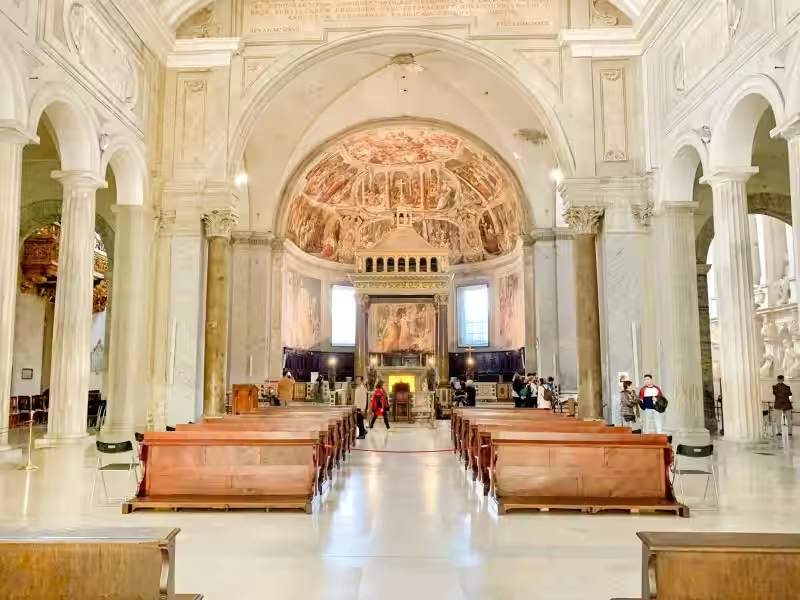
During the Medieval and Renaissance periods, the sculpture pedestal found its most prominent and revered home within the hallowed walls of churches and cathedrals. Here, these bases played a critical role in defining sacred spaces and directing congregational focus. Statues of saints, the Virgin Mary, and Christ were often placed on elevated plinths, particularly in prominent locations like altar screens, chapels, or along procession routes. This elevation served to distinguish the sacred from the secular, physically lifting the holy figures above the heads of the congregation and symbolizing their proximity to heaven.
The design of these sculpture pedestals also evolved to become integral to the architectural and devotional experience. Often crafted from the same stone or architectural style as the surrounding building, they created a visual harmony that reinforced the unity of faith. Many pedestals were intricately carved with biblical scenes, the lives of saints, or theological symbols. For example, a pedestal for a statue of St. Peter might feature motifs of keys or fishing nets, directly referencing his biblical narrative. This integration meant that the pedestal wasn’t just a stand; it was a visual sermon in stone, enriching the worshipper’s understanding and emotional connection to the sacred figures they venerated.
Function and Form: Guiding the Gaze and Enhancing Devotion
Beyond their aesthetic and symbolic roles, sculpture pedestals in religious settings served crucial functional purposes. Their height was carefully considered to ensure that the sculptures were visible and accessible to worshippers from various points within the church. Imagine a grand procession where a statue is carried aloft on its pedestal; the elevation ensures it can be seen and admired by all, fostering a collective sense of devotion. The stability of the pedestal was also paramount, providing a secure base for often heavy and valuable artworks, protecting them from accidental damage.
The form of the sculpture pedestal could also subtly influence the worshipper’s posture and focus. A pedestal that brought a sculpture to eye level might encourage direct engagement and personal reflection, fostering a sense of intimacy with the divine. Conversely, a much taller pedestal might inspire awe and a sense of transcendence. The careful consideration of lighting in relation to the sculpture and its pedestal further amplified their impact. A well-placed spotlight or natural light source could highlight the intricate details of the sculpture and the symbolism etched into its base, drawing the worshipper deeper into contemplation and prayer.
Modern Interpretations: Pedestals in Contemporary Religious Art
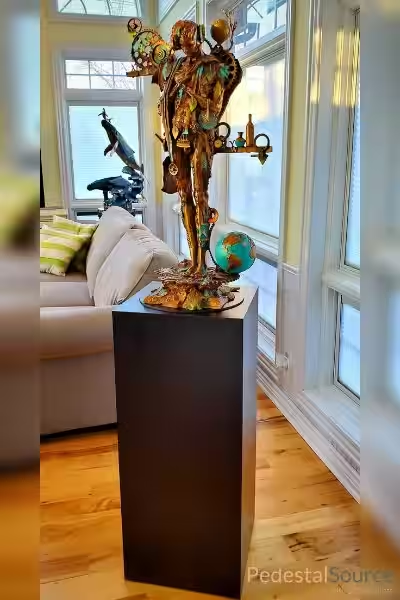
In contemporary religious art, the sculpture pedestal continues to be a vital element, though its forms and functions may be reimagined. Artists and curators often grapple with how to best present sacred sculptures in both traditional and secular spaces. While historical pedestals were often carved from stone and integrated into architectural designs, modern iterations can be more minimalist, employing materials like metal, acrylic, or even light itself. The goal remains the same: to isolate and elevate the sacred object.
Contemporary artists might use a stark, minimalist sculpture pedestal to draw maximum attention to the spiritual essence of their work, stripping away any distracting ornamentation. Alternatively, a pedestal might be designed to actively engage with the surrounding environment, perhaps using transparent materials to create a sense of floating or incorporating dynamic lighting to evoke a spiritual atmosphere. Consider a modern abstract sculpture representing divine love; its pedestal might be a sleek, polished steel cube, emphasizing the purity and geometric perfection often associated with spiritual concepts, or it could be a light-emitting base that glows with a soft, inviting hue.
The Enduring Significance: Framing the Sacred in a Changing World
Regardless of the era or the specific artistic style, the fundamental role of the sculpture pedestal in religious art remains remarkably consistent. It is the silent partner in the dialogue between the viewer and the divine, a crucial element that shapes our perception, our understanding, and our emotional response. By providing a dedicated space, a physical and symbolic elevation, and often a narrative complement, pedestals ensure that religious sculptures command the reverence and attention they deserve.
In our increasingly secularized world, the thoughtful use of sculpture pedestals becomes even more important for religious institutions and artists seeking to communicate enduring spiritual messages. They are not merely structural necessities but powerful tools for framing the sacred, guiding contemplation, and preserving the profound connection between art, faith, and the human spirit. The next time you encounter a religious sculpture, take a moment to appreciate the pedestal beneath it – it is, in its own quiet way, carrying the weight of devotion, history, and divine inspiration.
Frequently Asked Questions: Sculpture Pedestals and Religion
What is a sculpture pedestal and why is it used in a religious context?
A sculpture pedestal is a raised support or base for a sculpture. In religious contexts, pedestals serve to elevate sacred figures, relics, or symbols, separating them from the mundane and highlighting their spiritual significance. This elevation can symbolize divinity, authority, or importance.
Are there specific types of pedestals commonly used for religious sculptures?
Yes, the type of pedestal can vary greatly depending on the religion, the specific deity or saint being represented, and the architectural style of the place of worship. Common materials include stone (marble, granite), wood, and metal. Designs can range from simple geometric forms to intricately carved structures incorporating religious iconography or symbolic motifs.
How does the material of a religious sculpture pedestal convey meaning?
The choice of material can be symbolic. Precious metals like gold or silver might be used for highly venerated figures, signifying their divine status or the reverence they command. Stone can represent permanence, strength, and faith, while wood might be used for its natural qualities or its ability to be intricately carved with religious narratives.
Can the shape and design of a religious pedestal hold symbolic importance?
Absolutely. The shape can sometimes echo architectural elements found in religious buildings or represent specific spiritual concepts. For example, a pedestal shaped like a lotus flower is common in Buddhist art, symbolizing purity and enlightenment. The carvings on a pedestal can often depict scenes from religious texts, the lives of saints, or allegorical representations of virtues.
How do pedestals help in the veneration of religious figures?
By raising a religious figure or object, the pedestal creates a focal point for prayer and contemplation. It draws the viewer’s attention upwards, encouraging a sense of awe and spiritual connection. The separation from the surrounding environment reinforces the sacredness of the object it supports, facilitating a more profound devotional experience.
Are there any cultural or historical differences in how pedestals are used for religious sculptures?
Significant differences exist across cultures and religions. In Western Christianity, pedestals are common for statues of saints and the Virgin Mary in churches and cathedrals. In Buddhism, pedestals often feature elaborate lotus designs or tiered structures. In Hinduism, deities are frequently placed on intricately carved altars that function as pedestals, adorned with symbolic imagery. The scale and grandeur of pedestals can also vary widely depending on the historical period and the wealth of the sponsoring institution.