The Book of Revelation, the final testament in the Christian Bible, stands as a monumental and often enigmatic work. Its vivid imagery, prophetic pronouncements, and sweeping cosmic drama have captivated and confounded readers for centuries. Far from being a mere esoteric text for theological scholars, Revelation offers profound insights into the nature of God, the struggles of faith, and the ultimate destiny of humanity. This article aims to demystify its profound messages by embarking on a verse-by-verse exploration, illuminating its religious relevance for believers today, and revealing how its ancient words continue to resonate with timeless truths.
We will navigate its symbolic language, not as a rigid blueprint for future events, but as a powerful allegory conveying enduring spiritual principles. By understanding the context and intent behind its verses, we can unlock its potential to inspire, encourage, and guide us through the complexities of our own spiritual journeys. Prepare to encounter visions of celestial battles, divine judgments, and the ultimate triumph of good over evil, all woven into a tapestry of hope and redemption.
Chapter 1: The Vision of the Risen Christ – A Divine Introduction
The opening chapter of Revelation sets the stage with an awe-inspiring vision granted to the apostle John. In Revelation 1:1, we read, “The revelation from Jesus Christ, which God gave him to show his servants what must soon take place.” This verse immediately establishes the divine origin of the book, assuring us that its message is not human speculation but a direct impartation from the risen Christ. This is crucial for believers, as it anchors the entire narrative in the authority of God and His Son. It’s like receiving a vital message directly from the CEO of a global organization; its importance and accuracy are paramount.
Continuing this initial unveiling, Revelation 1:4-5 proclaims, “Grace and peace to you from him who is, and who was, and who is to come, and from the seven spirits before his throne, and from Jesus Christ, who is the faithful witness, the firstborn from the dead, and the ruler of the kings of the earth.” This Trinitarian blessing, encompassing God the Father, the Holy Spirit (represented by the seven spirits), and Jesus Christ, underscores the holiness and sovereignty of the divine. The descriptions of Jesus – “faithful witness,” “firstborn from the dead,” and “ruler of the kings” – are powerful affirmations of His victory over death and His ultimate authority over all earthly powers. This is a message of profound comfort and assurance for the faithful, reminding them that their Lord is in control, even amidst turmoil.
The Majestic Figure of Christ Revealed
The subsequent verses paint a breathtaking portrait of the glorified Christ. In Revelation 1:12-13, John describes seeing “seven golden lampstands, and among the lampstands was someone like a son of man, dressed in a robe reaching his feet and with a golden sash around his waist.” The “son of man” imagery connects back to Old Testament prophecies, particularly Daniel, signifying Christ’s humanity and divine authority. The “seven golden lampstands” are later identified as the seven churches (Revelation 1:20), symbolizing the visible presence of Christ working within His church. Imagine each lampstand as a beacon of light in the world, and Christ Himself is the source and sustainer of that light.
The description intensifies in verses 14-16: “His head and his hair were white like wool, white as snow, and his eyes were like a flame of fire. His feet were like burnished bronze, refined in a furnace, and his voice was like the sound of many waters. He held seven stars in his right hand, and from his mouth came a sharp two-edged sword.” These powerful metaphors speak to Christ’s infinite wisdom and purity (“white as wool”), His penetrating gaze that sees all things (“eyes like a flame of fire”), His unshakeable foundation and judgment (“feet like burnished bronze”), His powerful and authoritative voice, and His word as a weapon against evil (“sharp two-edged sword”). This is not a gentle, passive figure, but a divine warrior and judge, whose appearance instills both awe and reverence.
Chapter 2 & 3: Letters to the Seven Churches – Practical Faith in Action
Chapters 2 and 3 shift focus to specific messages addressed to seven distinct churches in Asia Minor. These letters, from Christ Himself, are not abstract theological treatises but practical exhortations and critiques directed at the real-life challenges faced by early Christian communities. Each letter begins with Christ identifying Himself in a way that is relevant to the specific church’s situation, followed by praise for their strengths, and then rebukes for their weaknesses, culminating in a promise to the one who overcomes. This structure makes them incredibly relatable and applicable to followers of Christ in any era.
Take, for instance, the letter to the church in Ephesus (Revelation 2:1-7). Christ commends them for their “hard work and perseverance” and for testing those who claim to be apostles. However, He also states, “Yet I hold this against you: You have forsaken the love you had at first” (Revelation 2:4). This serves as a stark reminder that genuine faith is not merely about adherence to doctrine or diligent activity; it requires a foundational element of love. It’s easy to get caught up in the “doing” of religion, the rituals and the responsibilities, and forget the “why” – the passionate, heartfelt connection to God and to one another. This message resonates deeply when we consider the potential for our own faith to become a series of duties rather than a vibrant relationship.
Navigating Challenges and Remaining Faithful
The letter to the church in Smyrna (Revelation 2:8-11) offers a message of encouragement for enduring persecution. Christ acknowledges their “poverty, but you are rich!” and warns them of impending suffering, stating, “Do not be afraid of what you are about to suffer. I tell you, the devil will put some of you in prison to test you, and you will suffer persecution for ten days. Be faithful, even unto death, and I will give you the crown of life” (Revelation 2:10). This is a powerful testament to resilience in the face of adversity. The promise of the “crown of life” is a profound incentive for steadfastness, assuring believers that their faithfulness, even through hardship and potential martyrdom, will be met with an eternal reward. It speaks to the ultimate victory of the spirit over material suffering.
Conversely, the letter to the church in Laodicea (Revelation 3:14-22) delivers a scathing critique for lukewarmness. Christ declares, “I know your deeds, that you are neither cold nor hot. I wish you were either one or the other!” (Revelation 3:15). The condemnation of their spiritual apathy is sobering. They are described as “miserable, pitiful, poor, blind and naked.” This isn’t about being perfect; it’s about authenticity and commitment. The call to “be zealous and repent” (Revelation 3:19) is a wake-up call for complacency, urging believers to move from a tepid, self-satisfied state to one of passionate engagement with God. The image they presented themselves as wealthy and in need of nothing was a stark contrast to their true spiritual poverty.
Chapter 4 & 5: The Throne Room of Heaven – Worship and Divine Authority
Chapters 4 and 5 transport the reader into the very throne room of heaven, offering a glimpse into the ultimate reality of God’s reign. In Revelation 4:2-3, John sees “a throne was standing in heaven, and one was seated on the throne. And he who was seated was like a jasper and a carnelian stone, and around the throne was a rainbow that looked like an emerald.” This imagery of divine glory and majesty is overwhelming. The precious stones likely symbolize God’s brilliance, perfection, and eternal covenant, while the emerald rainbow encircles the throne, perhaps representing God’s steadfast promise and presence amidst His awesome power. It’s a visual representation of the unapproachable holiness and beauty of the Almighty.
The scene is filled with celestial beings engaged in ceaseless worship. Revelation 4:8 describes the four living creatures and the twenty-four elders declaring, “Holy, holy, holy is the Lord God Almighty, who was, and is, and is to come.” This repeated declaration of “Holy, holy, holy” is a profound expression of God’s absolute and unparalleled holiness. It’s a worship that acknowledges His transcendence and unique divine nature. This constant, uninhibited adoration from the heavenly host serves as a model for all believers, reminding us of the primary purpose of creation and redemption: to bring glory to God.
The Lamb Who Is Worthy: Redemption’s Central Figure
Chapter 5 introduces a pivotal moment as a scroll is presented, sealed with seven seals, and no one in heaven or on earth is found worthy to open it. This scroll represents God’s plan and purposes, including judgment and redemption. The tension mounts as John weeps because no one is found worthy (Revelation 5:4). This signifies the immense gravity of God’s plan and the impossibility for mere human effort to fulfill it. It highlights the unique role and perfect nature required to carry out such a divine undertaking.
Then, a Lamb “looking as if it had been slain” appears and takes the scroll (Revelation 5:6). This is the Lamb of God, Jesus Christ, who, through His sacrificial death and resurrection, is the only one worthy to enact God’s plan. The elders and living creatures erupt in song, “You are worthy to take the scroll and to open its seals, because you were slain, and with your blood you purchased for God persons from every tribe and language and people and nation” (Revelation 5:9). This verse is central to Christian theology, emphasizing that salvation and the unfolding of God’s purposes are accomplished through Christ’s atoning sacrifice. It’s a powerful declaration of Christ’s redemptive work and His ultimate authority over all of history.
Chapters 6-19: The Unfolding of Judgment and Tribulation – Trials and Perseverance
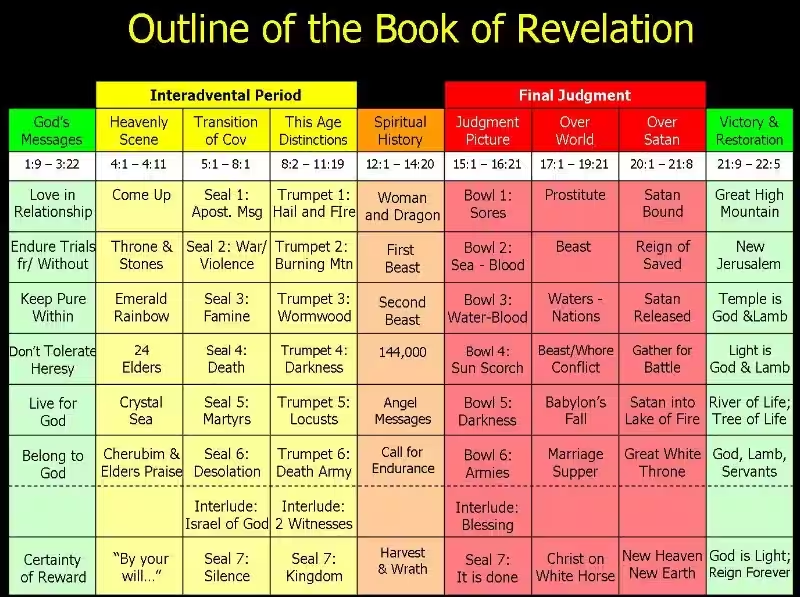
The subsequent chapters, from 6 through 19, detail the unfolding of God’s judgments upon the earth, often referred to as the Tribulation. These passages are filled with intense imagery of plagues, wars, famines, and the rise of antagonistic powers. The opening of the seven seals, the sounding of the seven trumpets, and the pouring out of the seven bowls of wrath represent progressive stages of divine judgment upon a rebellious world. It’s important to view these not as gratuitous violence, but as expressions of God’s righteous anger against sin and His ultimate desire for justice and repentance.
The opening of the first seal (Revelation 6:1-2) reveals a rider on a white horse with a bow, who goes out conquering and to conquer. This is often interpreted as representing conquest and potentially false peace or deceptive power. The second seal (Revelation 6:3-4) introduces a rider on a red horse, taking peace from the earth and causing people to kill each other, symbolizing war and bloodshed. These initial judgments serve as a warning and a consequence of humanity’s departure from God’s ways, demonstrating that disobedience carries significant and often devastating repercussions.
The People of God Amidst the Storm
Amidst these judgments, Revelation also vividly portrays the perseverance and faithfulness of God’s people. Chapter 7 introduces the sealing of the 144,000 from the tribes of Israel, signifying divine protection for a remnant. Following this, John sees “a great multitude that no one could count, from every nation, tribe, people and language, standing before the throne and in front of the Lamb” (Revelation 7:9). This vision is incredibly encouraging, illustrating that God’s redemptive plan extends to all peoples, and that even in times of immense tribulation, His faithful will be preserved and ultimately brought into His presence. This is a powerful counter-narrative to the forces of destruction, highlighting the resilience of faith and the promise of eternal security.
Chapters 12-14 depict a cosmic struggle between good and evil, often represented by a woman, a dragon, and beasts. The woman is frequently understood as representing Israel or the Church, the dragon as Satan, and the beasts as oppressive political and religious systems that oppose God. Revelation 13:7 states, “It was given to him [the second beast] to make war with the saints and to overcome them.” This verse acknowledges the reality of spiritual warfare and persecution that believers will face. However, it is crucial to understand that this “overcoming” is temporary and does not negate God’s ultimate victory. The message for believers is one of endurance and unwavering commitment, knowing that their struggle is part of a larger, divinely ordained conflict.
Chapters 20-22: The Climax of Victory and Eternal Hope – A New Beginning
The final chapters of Revelation bring us to the ultimate triumph of God and the establishment of His eternal kingdom. Chapter 20 describes the binding of Satan, the resurrection of the righteous, and the final judgment. The Great White Throne Judgment is depicted in Revelation 20:11-12: “Then I saw a great white throne and him who was seated on it. The earth and the heavens fled from his presence, and there was no place for them. And I saw the dead, great and small, standing before the throne…” This verse signifies the ultimate accountability of all humanity before a perfectly just God. There is no escaping His gaze, and His judgment will be impartial and absolute.
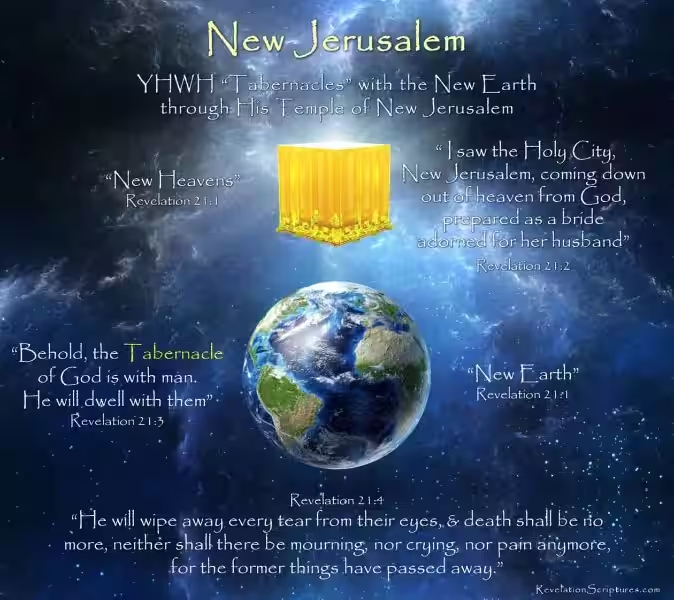
The climax of the book is the vision of the New Jerusalem in chapters 21 and 22. This is not merely a rebuilt earthly city, but a transformed reality, a pure and perfect dwelling place of God with His redeemed people. Revelation 21:3-4 promises, “And I heard a loud voice from the throne say, ‘Now the dwelling of God is with men, and he will live with them. They will be his people, and God himself will be with them and be their God. He will wipe every tear from their eyes. There will be no more death or mourning or crying or pain, for the old order of things has passed away.'” This is the ultimate fulfillment of God’s promises, a state of perfect peace, joy, and communion with the divine. It represents the eradication of all suffering and the restoration of creation to its intended glory.
The Coming of the Lord and the Enduring Invitation
The book concludes with repeated assurances of Christ’s imminent return. Revelation 22:12 states, “Behold, I am coming soon! My reward is with me, and I will give to each person what they have done.” This is a call to readiness and a reminder of personal responsibility. The coming of Christ is not a distant, abstract event but a soon-to-happen reality that should influence our present lives. Our actions now have eternal significance, and Christ’s return will bring with it divine recompense for our faithfulness or unfaithfulness. This verse instills a sense of urgency and anticipation for believers, encouraging them to live lives that are pleasing to God.
Finally, the book ends with a powerful invitation and a warning. Revelation 22:17 reads, “The Spirit and the bride say, ‘Come!’ And let him who hears say, ‘Come!’ Whoever is thirsty, let him come; and whoever wishes, let him take the free gift of the water of life.” This is the culmination of the Gospel message, an open-ended invitation to all who are spiritually thirsty to receive the life-giving gift of God’s grace through Jesus Christ. The final verses also contain a solemn warning against altering the prophecy, underscoring the integrity and divine authority of Revelation’s message. The entire book, from its initial vision to its final pronouncements, is a testament to God’s sovereignty, Christ’s redemptive power, and the ultimate hope of eternal life for those who believe.
Frequently Asked Questions: Revelation Verse by Verse Commentary & Religion
What is a verse-by-verse commentary on Revelation?
A verse-by-verse commentary on the Book of Revelation is an in-depth exploration of each individual verse within the book, aiming to explain its meaning, historical context, theological significance, and potential interpretations. Commentators analyze the imagery, symbolism, and linguistic nuances to offer insights into John’s apocalyptic vision and its relevance.
What are the main interpretive approaches to the Book of Revelation?
There are several prominent interpretive approaches to Revelation. The Preterist view sees most of the prophecies as fulfilled in the first century. The Historicist view interprets Revelation as a symbolic representation of the entire course of church history. The Futurist view believes most of the prophecies will be fulfilled in a future tribulation and millennium. The Idealist (or Symbolic) view sees Revelation as a timeless depiction of the ongoing spiritual struggle between good and evil. Many scholars also employ a consecutive or literary-historical approach, trying to understand the book within its original context and literary style.
How does Revelation relate to other religions?
While Revelation is a foundational text within Christianity, its interpretations and the concepts it presents can be seen in relation to other religious traditions in several ways. The themes of eschatology (end times), divine judgment, salvation, and the ultimate triumph of good over evil are common across many religions, though the specific narratives and figures differ significantly. For example, concepts of a final battle, a messianic figure, or a transformed world can be found in Judaism, Islam, and even some ancient pagan mythologies. However, the identity of Jesus Christ as the central figure in Revelation is uniquely Christian.
Is Revelation literal or symbolic?
The Book of Revelation is widely understood to be highly symbolic. While some elements might have literal correlations, the book is rich with apocalyptic imagery, visions, and allegorical language that represent spiritual realities and historical events rather than a straightforward, literal account. Understanding the symbolic nature of its language is crucial for accurate interpretation.
What is the purpose of studying Revelation from a religious perspective?
From a religious perspective, studying Revelation often serves to deepen faith, encourage perseverance in the face of adversity, provide hope for a future redeemed world, and offer guidance on living a righteous life. It can also be a tool for understanding God’s sovereignty, the nature of evil, and the ultimate victory of Christ.
Are there different denominations’ views on Revelation?
Yes, different Christian denominations often have distinct theological frameworks that influence their interpretation of Revelation. These differences can range from how they view the timing of Christ’s return (e.g., premillennialism, postmillennialism, amillennialism) to the specific meaning of prophetic events and the role of the Church in the end times.