In the tapestry of religious life, certain practices stand out not merely as rituals, but as divinely instituted channels of grace, meant to guide, strengthen, and sustain believers on their spiritual path. For many within the Christian tradition, particularly those in the Catholic, Orthodox, and some Anglican and Lutheran denominations, these pivotal moments are known as the Seven Sacraments. These aren’t just ceremonies; they are tangible signs that point to an invisible reality, the unfolding work of God in the lives of individuals and the community of faith. Understanding what are the seven sacraments and their meaning is akin to unlocking a deeper comprehension of the journey of faith, from birth to eternal life.
This exploration will delve into each of these sacred rites, illuminating their rich symbolism and transformative power. We’ll discover how each sacrament serves as a unique encounter with God’s love and presence, offering spiritual nourishment, healing, and empowerment for the challenges and joys of life. By grasping their essence, we can approach these sacraments with a more profound appreciation, allowing their grace to permeate our lives more fully.
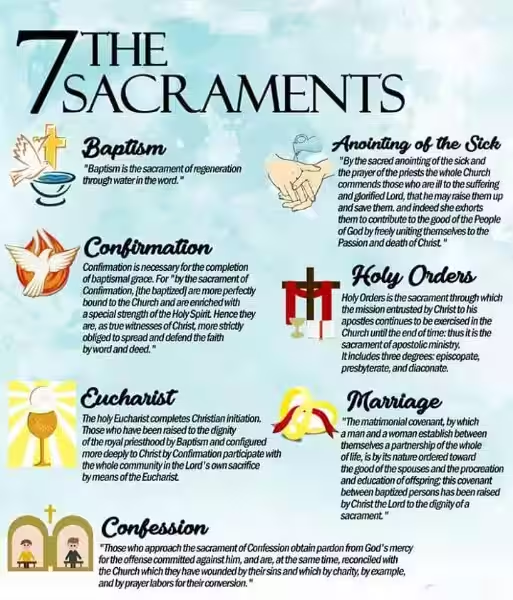
The Sacraments of Initiation: Welcoming into the Divine Family
The journey into the heart of the Christian faith often begins with a series of sacraments that initiate individuals into the community of believers and mark their entry into a new life in Christ. These are the foundational sacraments, the gateway to a deeper relationship with God and His church. They signify a profound transformation, a spiritual rebirth that sets believers on a path of ongoing discipleship.
Baptism: The Cleansing and Rebirth
Considered the primary sacrament of initiation, Baptism is the doorway to the spiritual life. Its meaning is multifaceted, representing a washing away of original sin and all personal sins, a new birth in the Holy Spirit, and our incorporation into the Body of Christ, the Church. Imagine a plant being transplanted from dry, barren soil into fertile ground, given water and sunlight to flourish. Baptism is like that transplant for the soul, moving us from a state of spiritual dryness to abundant life in God.
Through the pouring of water (or immersion), accompanied by the invocation of the Trinity – Father, Son, and Holy Spirit – a person is cleansed of sin and clothed in Christ. This act signifies a death to our old selves and a resurrection to a new life dedicated to God. It’s a permanent spiritual mark, a seal of belonging to God, ensuring that even if we falter, the grace of this sacrament remains, calling us back. This is why infants are often baptized; it’s a recognition that God’s love is unconditional and embraces us from the very beginning of our lives.
Confirmation: The Strengthening of the Spirit
Following Baptism, Confirmation serves to strengthen and seal the graces received in the earlier sacrament. It’s often described as the “sacrament of maturity” in the faith, where believers are empowered by the Holy Spirit to live out their Christian callings more fully. Think of it as receiving a divine upgrade, equipping you with the spiritual fortitude and gifts needed to witness to Christ in the world.
During Confirmation, the bishop (or a delegated priest) anoints the forehead of the candidate with sacred chrism, a blessed oil, while laying on of hands. This anointing signifies the descent of the Holy Spirit, bestowing specific charisms and virtues. It’s about receiving the same Spirit that empowered the apostles at Pentecost, giving us the courage to profess our faith, strength to overcome temptations, and wisdom to discern God’s will. This sacrament calls us to be active participants in the mission of the Church, to be instruments of God’s love and justice in our communities.
Eucharist: The Nourishment of the Soul
The Eucharist, also known as Holy Communion or the Mass, is the central and ultimate sacrament of Christian worship. It is here that believers nourish their souls by partaking in the Body and Blood of Jesus Christ under the appearance of bread and wine. This sacrament is the source and summit of Christian life, a foretaste of eternal life and a profound expression of God’s abiding presence among us.
Jesus instituted the Eucharist at the Last Supper, saying, “This is my body, which is for you; do this in remembrance of me.” and “This cup is the new covenant in my blood; do this, whenever you drink it, in remembrance of me.” Through the consecration by a priest, the bread and wine are transformed into the actual Body and Blood of Christ – a belief known as transubstantiation. Receiving the Eucharist connects us directly to Jesus, strengthening our union with Him and with each other as members of His mystical body. It’s a spiritual meal, providing the grace to live a Christ-like life and to love our neighbors as He loved us.
The Sacraments of Healing: Restoring and Reconciling
Life’s journey is rarely without its challenges, its stumbles, and its wounds, both spiritual and physical. Recognizing this human reality, the Church offers two sacraments of healing, providing divine intervention for restoration, forgiveness, and peace. These sacraments are a testament to God’s boundless mercy and His desire for our complete well-being.
Reconciliation (Penance/Confession): The Gracious Forgiveness
The Sacrament of Reconciliation, often called Confession or Penance, is the means by which Catholics can receive God’s forgiveness for sins committed after Baptism. It’s an act of humility and trust, where we confess our wrongdoings to a priest, acting as God’s minister, and receive absolution. This is where the healing balm of God’s mercy is applied to our souls.
Through sincere contrition (sorrow for sins), confession of those sins, and the priest’s absolution, our sins are forgiven. The priest also assigns an act of penance, such as prayers or good works, as a way to make amends and to strengthen us against future sin. Imagine a deep wound that needs to be cleaned and bandaged; Reconciliation is that process for our spiritual wounds, allowing us to realign ourselves with God’s love and to rebuild our relationship with Him and with others. It offers peace of conscience and the grace to live a more virtuous life.
Anointing of the Sick: Comfort and Strength in Suffering
The Anointing of the Sick is a sacrament specifically for those who are seriously ill, in danger of death, or facing significant physical or spiritual weakness. It’s a powerful encounter with God’s healing love and comfort, providing spiritual strength, peace, and courage during times of suffering. This sacrament is not solely about physical healing, though that can be a grace received; it is primarily about spiritual healing and preparation for whatever lies ahead.
Administered by a priest, the sacrament involves the anointing of the forehead and hands with blessed oil, accompanied by prayers. The grace of this sacrament can strengthen us to endure suffering, forgive sins (if the person is unable to confess), and restore us to health if it is God’s will. It’s a profound reminder that we are never alone in our suffering, and that God’s compassion extends to us even in our weakest moments. It offers hope and solace, assuring us of God’s unwavering presence.
The Sacraments of Service: Living Out the Call to Love
The final set of sacraments are those of service, designed to equip individuals for specific roles within the Church and society, enabling them to live out their faith in practical ways. These sacraments are about vocation and the sacred call to love and serve God and neighbor, often within particular commitments.
Holy Orders: The Ordained Ministry
Holy Orders is the sacrament through which men are ordained to the ordained ministry of the Church as deacons, priests, or bishops. This sacrament consecrates individuals for a specific service, enabling them to administer the sacraments, preach the Gospel, and shepherd the flock of Christ. It’s about setting apart individuals for a lifelong commitment to serving the Church in a unique and authoritative capacity.
Through the laying on of hands by a bishop, the candidate receives the indelible spiritual character of the sacrament, making them a living instrument of Christ within the Church. Priests, for example, are given the authority to celebrate the Eucharist, hear confessions, and preach. Bishops, as successors to the apostles, have the fullness of the priesthood and are responsible for the governance and teaching of the Church. This sacrament is a divine calling to a life of dedication, sacrifice, and pastoral care.
Matrimony: The Covenant of Love
Matrimony, or Marriage, is the sacrament that unites a man and a woman in a lifelong covenant of love and fidelity, reflecting the love of Christ for His Church. It’s a sacred commitment that is ordained by God for the procreation and education of children and for the mutual sanctification of the spouses. This sacrament is about building a domestic church, a sanctuary of love within the home.
In Matrimony, the couple exchanges vows of love, faithfulness, and support before God and the Church. Their union is blessed by God, and they receive the grace to live out their commitment through the challenges and joys of married life. The sacrament signifies an unbreakable bond, a sacred partnership where spouses support each other’s spiritual growth and raise their children in faith. It is a profound witness to the transformative power of committed love, an echo of the divine love that sustains all of creation.
In conclusion, the Seven Sacraments are not merely historical relics or abstract theological concepts. They are living encounters with the Risen Christ, visible signs of invisible grace, designed to guide, strengthen, and sanctify believers at every stage of their journey. From the cleansing waters of Baptism to the lifelong covenant of Matrimony, each sacrament offers a unique gift and a divine invitation to a deeper, more profound relationship with God and with His Church. By understanding what are the seven sacraments and their meaning, we can approach these sacred mysteries with open hearts and ready spirits, allowing their transformative power to shape our lives and draw us closer to the heart of God.
Frequently Asked Questions: The Seven Sacraments
What are the Seven Sacraments?
The Seven Sacraments are outward and visible signs, instituted by Christ, to give grace. They are Baptism, Confirmation, the Eucharist, Penance (Reconciliation), Anointing of the Sick, Holy Orders, and Matrimony.
What is the meaning of Baptism?
Baptism is the sacrament of initiation into the Christian Church. It symbolizes the washing away of original sin and all personal sins, and the recipient becomes a child of God and a member of Christ’s body.
What is the meaning of Confirmation?
Confirmation is the sacrament that strengthens the grace received at Baptism. It bestows the gifts of the Holy Spirit, empowering the recipient to live a stronger Christian life and to be a witness to the faith.
What is the meaning of the Eucharist?
The Eucharist, also known as Holy Communion, is the sacrament where Catholics believe Jesus Christ is truly present in the consecrated bread and wine. It is a spiritual nourishment and a memorial of Christ’s sacrifice.
What is the meaning of Penance (Reconciliation)?
Penance, or Reconciliation, is the sacrament through which the faithful receive God’s forgiveness for sins committed after Baptism. It involves confession of sins, contrition, and absolution by a priest.
What is the meaning of Anointing of the Sick?
The Anointing of the Sick is a sacrament administered to those who are seriously ill or in danger of death. It offers spiritual healing, comfort, and strength, and can also lead to physical healing if it is God’s will.
What is the meaning of Holy Orders?
Holy Orders is the sacrament by which men are consecrated to the service of God as bishops, priests, or deacons. It confers the spiritual power and grace to administer the sacraments and to serve the Church.
What is the meaning of Matrimony?
Matrimony is the sacrament that blesses the union of a man and a woman in marriage. It signifies the covenant between Christ and His Church and strengthens the couple to live out their vows of love and fidelity.