The journey of faith is a deeply personal one, yet for millions around the globe, it finds its roots and expression within the Catholic religion. It’s a tradition rich in history, vibrant in its practices, and profound in its teachings. Whether you’re exploring a new spiritual path, seeking to deepen your understanding, or simply curious about one of the world’s largest religious communities, grasping the Catholic religion basics can illuminate a world of meaning. This article aims to offer a clear, relatable, and informative guide, demystifying some of the core elements that define what it means to be Catholic.
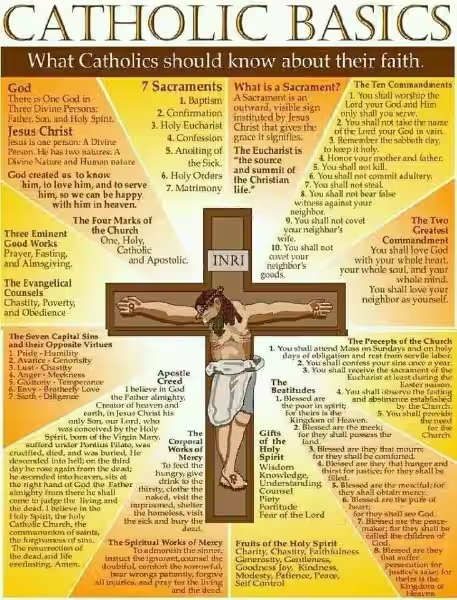
At the very core of Catholic belief is the understanding of God. Catholics believe in one God, a single, eternal, and all-powerful being who is the creator of all things. This God is not a distant or impersonal force, but a loving and personal presence actively involved in human history. This belief in a singular God is the bedrock upon which all other Catholic tenets are built, shaping the worldview and moral compass of believers.
Within this belief in one God, Catholics understand God as existing in three distinct, co-equal persons: the Father, the Son, and the Holy Spirit. This is known as the Holy Trinity. It’s a concept that can seem complex, but think of it like an egg: one egg, yet with a shell, the white, and the yolk, each distinct but all part of the single entity. Jesus Christ, the Son of God, is central to the faith. Catholics believe Jesus is fully God and fully human, who came to Earth, lived a life of perfect love and obedience, suffered, died, and was resurrected, offering salvation to humanity. The Holy Spirit is understood as God’s active presence in the world, guiding believers, inspiring them, and empowering them to live out their faith.
The Sacred Texts and Tradition: Guiding Lights
The Bible is a cornerstone of Catholic faith, considered the inspired Word of God. It’s a collection of books, divided into the Old and New Testaments, that tells the story of God’s relationship with humanity, culminating in the life and teachings of Jesus. Catholics don’t just read the Bible; they interpret it within the context of the living Church. This is where Sacred Tradition becomes equally important. Tradition encompasses the teachings and practices passed down from the Apostles themselves, guided by the Holy Spirit.
Think of it this way: the Bible is the divine instruction manual, but Sacred Tradition is the experienced teacher who helps explain its nuances and ensures its proper application through the ages. This dual reliance on Scripture and Tradition provides a rich and comprehensive framework for understanding Catholic doctrine and living a meaningful spiritual life. It means that the Church’s understanding of God’s will has evolved and been clarified over two millennia, ensuring a continuity of faith from the earliest days of Christianity to the present.
For Catholics, faith is not a solitary pursuit; it is lived out within a community, known as the Catholic Church. This Church is understood as the Body of Christ on Earth, a visible sign of God’s presence and love in the world. It’s a global family, united by shared beliefs, sacraments, and a common mission. The Church provides structure, guidance, and a network of support for its members, helping them to grow in their faith and to serve others.
Leading this community is the Pope, the Bishop of Rome, who is considered the successor of Saint Peter, the first Apostle. The Pope, along with the bishops, forms the Magisterium, the teaching authority of the Church, responsible for interpreting Scripture and Tradition and guiding the faithful. This hierarchical structure, while sometimes misunderstood, is intended to ensure unity and fidelity to Christ’s teachings. The Church is not just an institution; it is a living, breathing organism, a sacramental reality where God’s grace is made manifest through its members.
Sacraments: Visible Signs of God’s Grace
A defining aspect of the Catholic religion basics is the understanding and practice of sacraments. These are outward signs, instituted by Christ, to give grace. They are tangible encounters with God’s love and power, helping believers to draw closer to Him and to live out their Christian calling. There are seven sacraments in the Catholic Church, each with its unique purpose and significance.
Baptism: This is the gateway to the Christian life, marking a person’s entry into the Church. It signifies cleansing from sin and rebirth in Christ, often involving the pouring of water and the uttering of specific prayers. Imagine being welcomed into a loving family; Baptism is that profound welcome into God’s family.
Confirmation: This sacrament strengthens the graces received at Baptism, empowering individuals with the Holy Spirit to live a more committed Christian life and to bear witness to their faith. It’s often described as a “second
Pentecost,” a personal outpouring of the Holy Spirit.
Eucharist (Holy Communion): This is the central sacrament of Catholic worship. During Mass, Catholics believe that the bread and wine are transformed into the actual Body and Blood of Jesus Christ through the power of the Holy Spirit. Receiving the Eucharist is a profound act of communion with Christ and with one another. It’s the spiritual nourishment that sustains believers on their journey.
Reconciliation (Confession): This sacrament offers forgiveness of sins committed after Baptism. Through the ministry of a priest, individuals can confess their sins and receive God’s mercy and healing. It’s a powerful experience of God’s unconditional love and forgiveness.
Anointing of the Sick: This sacrament offers spiritual and sometimes physical healing to those who are seriously ill or facing death. It provides comfort, strength, and peace during times of suffering.
Holy Orders: This sacrament ordains men to serve the Church as bishops, priests, and deacons, continuing the ministry of Christ.
Matrimony: This sacrament celebrates the union of a man and a woman in marriage, consecrating their love and commitment before God and the Church.
Morality and Living the Faith: The Commandments and the Beatitudes
Living a Catholic life involves more than just attending Mass and receiving sacraments; it’s about living out one’s faith in concrete ways. This is guided by a strong moral framework, rooted in the Ten Commandments given to Moses, which outline fundamental moral principles for living a just and loving life. These commandments, such as “You shall not kill” and “You shall not steal,” are seen as timeless guides for ethical behavior.
In addition to the Commandments, Jesus offered the Beatitudes, a set of teachings that describe the qualities of those who are blessed by God. These include being “poor in spirit,” “meek,” and “merciful.” The Beatitudes offer a counter-cultural vision of happiness, emphasizing inner disposition and spiritual values over material wealth or worldly success. For Catholics, striving to live according to the spirit of the Beatitudes is a path to holiness and a demonstration of their commitment to Christ’s teachings. This involves acts of charity, justice, and compassion towards all, especially the poor and marginalized.
Prayer and Devotion: Connecting with the Divine
Prayer is the lifeline of Catholic faith, the means by which believers communicate with God. It’s a conversation, a dialogue of love and trust. Catholics engage in various forms of prayer, from vocal prayer, where words are spoken, to meditative prayer, where one reflects on Scripture or spiritual themes, and contemplative prayer, a deeper, more silent communion with God. The Our Father, taught by Jesus himself, is a foundational prayer, encompassing praise, petition, and a request for forgiveness.
Beyond personal prayer, there are also many devotional practices within the Catholic tradition. These can include praying the Rosary, a meditation on the life of Jesus and Mary through a series of prayers; venerating saints, who are seen as examples of Christian living and intercessors; and participating in liturgical celebrations like Mass, which is the highest form of prayer. These practices help to foster a deeper connection with God and to keep faith alive in daily life, reminding believers of the constant presence and love of God.
Conclusion: A Living Faith
Understanding the Catholic religion basics is an invitation to explore a profound and enduring faith. From the foundational belief in the Trinity and the central role of Jesus Christ, to the rich tapestry of sacraments, Scripture, Tradition, and devotional practices, Catholicism offers a comprehensive path for spiritual growth and a meaningful connection with the divine. It’s a tradition that emphasizes community, love, and service, calling believers to live out their faith with conviction and joy. Whether you are drawn to its historical depth, its spiritual richness, or its vibrant community, the Catholic faith provides a framework for a life lived in relationship with God.
Frequently Asked Questions about the Catholic Religion
What is the Catholic Church?
The Catholic Church is the largest Christian denomination, tracing its origins back to Jesus Christ and the apostles. It is a global community of believers united by faith in Jesus Christ, his teachings, and the sacraments administered by its clergy.
What are the core beliefs of Catholicism?
Core Catholic beliefs include belief in one God in three persons (the Trinity: Father, Son, and Holy Spirit), the divinity of Jesus Christ, his death and resurrection for the salvation of humanity, the authority of the Bible and Sacred Tradition, the importance of the Church as the Body of Christ, and the belief in heaven, hell, and purgatory.
What is the role of the Pope?
The Pope is the Bishop of Rome and the visible head of the Catholic Church. Catholics believe he is the successor of Saint Peter, to whom Jesus entrusted leadership of the Church. The Pope has supreme authority in matters of faith and morals for the entire Church.
What are the Sacraments?
The Sacraments are seven sacred rituals instituted by Jesus Christ that Catholics believe confer God’s grace. These are: Baptism, Confirmation, the Eucharist (Holy Communion), Penance (Reconciliation), Anointing of the Sick, Holy Orders, and Matrimony.
What is the Mass?
The Mass is the central act of Catholic worship. It is a liturgical celebration that commemorates the Last Supper and the sacrifice of Jesus Christ. It includes readings from Scripture, prayers, a homily (sermon), and the celebration of the Eucharist.
Who is Jesus Christ to Catholics?
Catholics believe Jesus Christ is the Son of God, fully divine and fully human. He is the Messiah, the Savior of the world, whose life, death, and resurrection offer redemption and eternal life to those who believe in him.
What is the Bible in Catholicism?
The Bible is considered the inspired Word of God. Catholics accept both the Old Testament and the New Testament as divinely inspired Scripture, forming the foundation of their faith.
What is the role of Mary, the mother of Jesus?
Catholics hold Mary in high esteem as the Mother of God (Theotokos). They believe she was conceived without original sin (the Immaculate Conception) and was assumed body and soul into heaven (the Assumption). They pray for her intercession.
What is tradition in the Catholic Church?
Sacred Tradition refers to the teachings and practices of the Church that have been handed down from the apostles, complementing and interpreting Scripture. It is considered a vital source of divine revelation alongside the Bible.
What is the Church’s teaching on salvation?
Catholics believe salvation is a gift from God, made possible through the sacrifice of Jesus Christ. It is received through faith, grace, and participation in the life of the Church, particularly through the Sacraments and living out Christian teachings.