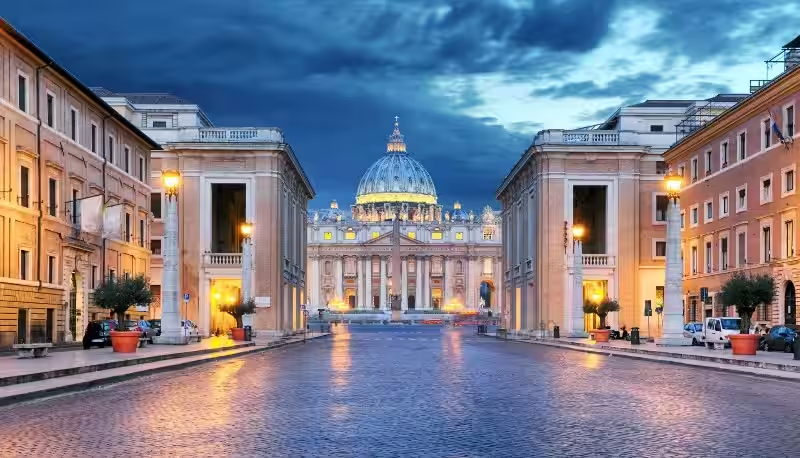
In the hushed stillness of dawn, before the sun fully crests the horizon, there’s a profound moment of transition. The darkness, once absolute, begins to recede, replaced by a soft, ethereal glow. This gradual emergence of light, this promise of a new day, mirrors a deeper, more existential journey that many find within the embrace of religion. For centuries, across diverse cultures and belief systems, religion has served as a vital source of illumination, offering answers to life’s most profound questions and giving light to the human condition.
This quest for understanding, for meaning, and for a guiding force is an inherent part of what makes us human. We are creatures who seek to comprehend our place in the universe, to navigate the complexities of existence, and to find solace in the face of uncertainty. Religion, in its myriad forms, provides frameworks, narratives, and practices that help us to do just that. It’s not always a sudden, blinding flash, but often a gentle, persistent radiance that helps us give light to our own lives and to the lives of others.
The Dawn of Meaning: Religion as a Beacon in the Unknown
The earliest stirrings of human consciousness were likely accompanied by a sense of awe and wonder at the natural world. The celestial bodies, the changing seasons, the very miracle of life and death – these phenomena demanded explanation. Religion emerged as a primary means of giving light to these mysteries. Ancient myths and creation stories provided order to the cosmos, attributing purpose and design to what might otherwise seem chaotic. These narratives, passed down through generations, offered comfort and a sense of belonging, giving light to a shared understanding of the world.
Consider the profound impact of understanding the cycle of the sun. Cultures that relied on agriculture saw the sun as a life-giving deity. Its predictable rise and fall wasn’t just a physical event; it was a divine promise of renewal and sustenance. This understanding gave light to their daily lives, shaping their rituals, their agricultural practices, and their very worldview. Similarly, the concept of an afterlife, prevalent in many religions, gives light to the fear of oblivion, offering hope for continuation and a sense of ultimate justice beyond the earthly realm.
Finding Direction: Moral Frameworks and Ethical Guidance
Beyond explaining the grand mysteries of existence, religion has historically served as a powerful force in establishing moral and ethical frameworks. Sacred texts and religious teachings often provide clear guidelines on how individuals should behave, fostering a sense of community and social cohesion. These principles, when internalized, give light to our decisions, helping us to discern right from wrong and to act with compassion and integrity. Think of the Golden Rule, a core tenet found in many faiths: “Do unto others as you would have them do unto you.” This simple yet profound instruction gives light to ethical interactions, encouraging empathy and mutual respect.
The practical application of these teachings can be seen in the development of charitable organizations, hospitals, and educational institutions that have their roots in religious traditions. These endeavors are not merely acts of altruism; they are tangible expressions of faith, where individuals are motivated by their beliefs to give light to those in need. Whether it’s feeding the hungry, comforting the sick, or educating the young, these actions demonstrate how religious principles can translate into concrete, positive societal impact, giving light to the darkest corners of human suffering.
Illuminating the Inner Landscape: Spirituality and Personal Growth
Religion often extends beyond communal practices and into the deeply personal realm of spirituality. This internal journey is about seeking connection with something larger than oneself, exploring one’s own consciousness, and striving for personal transformation. Practices like meditation, prayer, and contemplation are designed to give light to our inner selves, helping us to understand our emotions, our motivations, and our spiritual potential. This introspective work can be challenging, but it is often through these quiet moments that we truly begin to give light to our own inner strengths and weaknesses.
The process of spiritual growth is akin to slowly turning up the dimmer switch on a lamp. It’s not always a sudden revelation, but a gradual unfolding of understanding and self-awareness. For many, this journey involves confronting personal flaws, acknowledging past mistakes, and actively working towards becoming a better person. This self-reflection, giving light to our imperfections, is crucial for genuine growth. The ultimate goal is often to achieve a state of inner peace, contentment, and a deeper connection to the divine, giving light to a more fulfilling existence.
Overcoming Darkness: Resilience and Hope in Times of Adversity
Life, in its inherent unpredictability, inevitably brings periods of darkness – times of loss, suffering, and despair. It is in these moments that the light of faith can become most crucial. Religion offers a framework for understanding and coping with adversity, providing solace and a sense of enduring hope. The belief in a benevolent higher power, for instance, can give light to the pain of loss, offering the reassurance that loved ones are in a better place, or that suffering has a purpose beyond our immediate comprehension.
Consider the story of someone facing a devastating illness. While medical science offers physical healing, the emotional and spiritual support derived from faith can give light to their struggle, empowering them with the strength to face their challenges. This resilience isn’t about denying pain, but about finding a deeper wellspring of courage and hope from which to draw. Religious communities often rally around those in need, offering practical assistance and, perhaps more importantly, a shared belief that even in the deepest darkness, there is always the potential for light to return, giving light to the possibility of overcoming.
The Ongoing Illumination: Religion in the Modern World
In the 21st century, the role of religion continues to be debated and redefined. While some may see it as an outdated relic, for billions, it remains a vital source of giving light to their lives. The search for meaning, for community, and for ethical guidance is as relevant today as it has ever been. In a world often characterized by rapid change, digital distractions, and existential anxieties, the grounding influence of religious belief can provide a much-needed anchor, giving light to stability and purpose.
Furthermore, religious traditions are not static; they are living, evolving entities that continue to adapt to contemporary challenges. Many faiths are actively engaged in interfaith dialogue, social justice movements, and environmental stewardship, demonstrating their commitment to giving light to a more just and sustainable world. The core principles of compassion, love, and service remain potent forces, capable of inspiring individuals and communities to work towards positive change, giving light to a brighter future for all.
Frequently Asked Questions: Giving Light and Religion
What does “giving light” mean in a religious context?
“Giving light” in a religious context often refers to sharing spiritual knowledge, understanding, or the divine truth. It can involve teaching, preaching, guiding others towards enlightenment, or embodying virtuous qualities that inspire and illuminate the lives of those around you. The specific interpretation can vary greatly depending on the religion.
How do different religions interpret the concept of “giving light”?
Christianity: Often associated with sharing the Gospel, living a Christ-like life, and being a witness to God’s love and truth. This can manifest through evangelism, acts of charity, and discipleship.
Buddhism: Refers to sharing the Dharma (teachings of the Buddha), helping others achieve enlightenment, and practicing compassion. This can involve teaching meditation, offering guidance, and cultivating wisdom.
Islam: Encompasses sharing the message of Islam, living according to the Quran and Sunnah, and guiding others towards submission to Allah. This is often achieved through Da’wah (invitation to Islam), good deeds, and adherence to Islamic principles.
Judaism: Involves teaching Torah, living a righteous life according to Jewish law (Halakha), and contributing to the betterment of the world (Tikkun Olam). It can include educating future generations and upholding ethical standards.
Hinduism: Can involve sharing spiritual knowledge, performing rituals, and living a life of Dharma (righteousness and duty) to inspire others towards Moksha (liberation). This might include sharing scriptures, practicing yoga and meditation, and living a virtuous life.
Are there specific practices or actions associated with “giving light” in religions?
Yes, many religions have specific practices:
Teaching and Preaching: Sharing religious texts, doctrines, and moral teachings.
Acts of Charity and Compassion: Demonstrating love and kindness through service to others, which can illuminate the path of virtue.
Prayer and Meditation: Cultivating inner light and peace, which can then be shared by example.
Storytelling and Parables: Using narratives to convey spiritual truths and moral lessons.
Living a Virtuous Life: Embodying the ideals of one’s faith, serving as a role model for others.
Is “giving light” a mandatory religious duty?
While the interpretation and emphasis vary, in many religions, actively sharing one’s faith or living out its principles to positively influence others is considered a highly encouraged, if not a fundamental, aspect of religious life. It is often seen as a natural outflow of one’s spiritual journey and commitment.