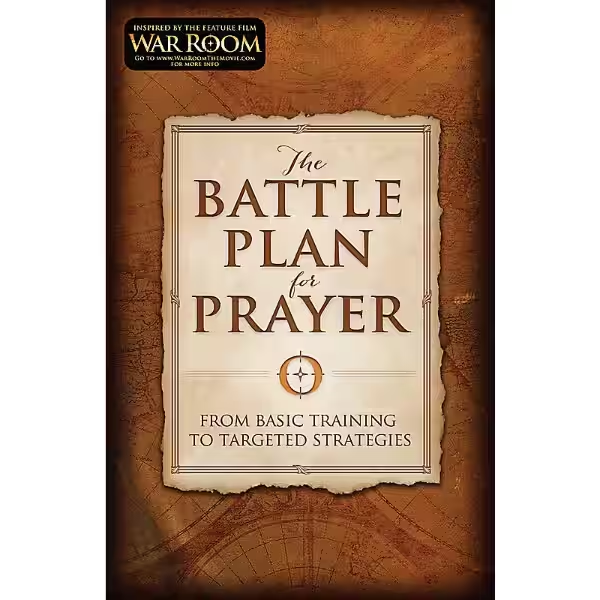
In the grand tapestry of faith, where conviction meets circumstance, we often find ourselves facing challenges that feel insurmountable. These aren’t just everyday hurdles; they are often spiritual battles that test our resolve, shake our foundations, and can leave us feeling overwhelmed. In these moments, the concept of a “battle plan for prayer” emerges not as a mere suggestion, but as a vital strategic tool for navigating the complexities of spiritual warfare. It’s about understanding that prayer is not a passive plea, but an active, intentional engagement with the divine, a powerful weapon forged in faith and wielded with purpose.
For many, the idea of a “battle plan for prayer” might sound overly militaristic or even intimidating. However, when we consider the biblical narratives and the profound impact prayer has had throughout history, it becomes clear that prayer is indeed a powerful force. It’s the weapon by which individuals and communities have overcome seemingly impossible odds, found solace in distress, and experienced miraculous transformations. This article aims to demystify this concept, offering a practical and relatable guide to developing your own effective battle plan for prayer, transforming your prayer life from a hopeful whisper into a resounding declaration of faith.
Understanding the Battlefield: Where Prayer Becomes a Weapon
Life, in its essence, is a constant interplay of forces. We experience internal struggles – doubts, fears, temptations – and external pressures – relational conflicts, financial anxieties, health concerns. These are not random occurrences; from a spiritual perspective, they can be seen as manifestations of a larger spiritual conflict. Recognizing this battlefield is the first crucial step in formulating a strategic approach to prayer. It’s about shifting our perspective from being passive recipients of life’s circumstances to becoming active participants in shaping them through divine connection.
Consider the analogy of a soldier preparing for deployment. They don’t simply march onto the battlefield without training, equipment, or a clear objective. Similarly, a “battle plan for prayer” involves understanding the terrain of your own life, identifying the specific challenges you face, and arming yourself with the tools of faith. This means acknowledging that there are spiritual dimensions to our struggles and that prayer is our primary means of engaging with those dimensions, bringing God’s power and wisdom to bear on our situations. It’s about understanding that God has equipped us with this incredible spiritual weapon, and it’s our responsibility to learn how to use it effectively.
Identifying Your Targets: What Needs Prayerful Intervention?
Every battle plan begins with a clear understanding of the objectives. In the context of prayer, this means identifying the specific areas of your life that require divine intervention. This isn’t about praying vaguely for “things to get better,” but about pinpointing precise needs. Are you struggling with a particular sin or temptation? Is there a strained relationship that needs healing? Are you facing financial hardship or a health crisis? Each of these becomes a target in your prayer strategy, requiring focused and intentional petition.
To truly engage in a “battle plan for prayer,” you must be willing to be honest and specific. This might involve journaling your concerns, discussing them with a trusted spiritual mentor, or simply taking quiet time to reflect on what weighs most heavily on your heart. For instance, instead of praying, “God, help me with my finances,” a more targeted approach within your battle plan would be: “Lord, I pray for wisdom in managing my current debt, for opportunities to increase my income, and for discernment in making wise financial decisions.” Specificity transforms a general wish into a directed prayer, a focused shot in your spiritual warfare.
Arming Yourself: The Essential Tools of Prayer Warfare
A soldier is only as effective as their equipment. In spiritual warfare, our “weapons” are not physical but divine. Understanding and utilizing these spiritual tools is paramount to a successful “battle plan for prayer.” These tools are readily available to every believer, unlocked through faith and consistent practice. They are the foundational elements that empower our prayers and ensure they are not mere words, but potent forces that can shift atmospheres and bring about divine intervention.
The primary weapon in our arsenal is, of course, the name and authority of Jesus Christ. When we pray in His name, we are tapping into His power and His promises. Another vital tool is the Word of God. Praying scripture back to God aligns our petitions with His will and His promises, making our prayers more potent. Furthermore, the Holy Spirit acts as our guide and intercessor, helping us to pray according to God’s perfect will, even when we don’t know exactly what to pray for. Confession and repentance also clear the channels for effective prayer, removing any barriers that might hinder God’s response.
The Power of Scripture: Praying God’s Promises
The Bible is not just a collection of stories and moral teachings; it is a living and active reservoir of God’s promises and principles. When we incorporate scripture into our “battle plan for prayer,” we are essentially aligning our requests with God’s own heart and His divine will. This is not about reciting verses mindlessly, but about understanding their context, their promises, and then presenting them to God as the basis for our petitions. Imagine a lawyer presenting irrefutable evidence in court; praying scripture is like presenting God with His own promises as the foundation for your case.
For example, if you are facing fear, you can turn to verses like Philippians 4:6-7, which promises peace that surpasses all understanding. Your prayer, integrated into your battle plan, might look like this: “Heavenly Father, you have promised in Philippians 4:6-7 that if I bring my anxieties to you, your peace will guard my heart and mind. I bring my fear of [specific fear] before you now, and I claim that promise of peace. Fill me with your presence, that I may not be overcome by this fear.” Praying God’s promises is a powerful way to pray with confidence and assurance, knowing that you are asking according to His will.
The Role of the Holy Spirit: Your Divine Intercessor
Often, we feel inadequate in our prayers, unsure of what to say or how to articulate our deepest needs. This is where the indwelling Holy Spirit becomes an indispensable part of our “battle plan for prayer.” The Bible tells us in Romans 8:26 that the Spirit intercedes for us with “groanings too deep for words.” This means that the Holy Spirit understands our hearts and our needs even when we cannot express them ourselves, and He communicates them perfectly to God the Father.
When you are struggling to pray, simply acknowledge the presence of the Holy Spirit and ask Him to guide your prayer. You might say, “Holy Spirit, I don’t know how to pray for this situation concerning [specific situation]. Please intercede on my behalf, aligning my heart with God’s will, and speak to the Father on my behalf.” This reliance on the Spirit transforms prayer from a potentially frustrating endeavor into a cooperative effort with the divine, ensuring our prayers are effective and impactful.
Executing Your Battle Plan: Strategies for Consistent Prayer
A battle plan is only effective if it is actively implemented. In the spiritual realm, this means approaching prayer with discipline, consistency, and a strategic mindset. It’s about moving beyond occasional, desperate pleas and establishing a consistent rhythm of prayer that fortifies you and allows you to actively engage in spiritual warfare. This requires intentionality and a commitment to prioritizing your prayer life, recognizing its vital importance in navigating life’s challenges.
Developing a robust “battle plan for prayer” involves more than just knowing what to pray for; it’s about establishing habits and strategies that ensure your prayers are heard and answered. This might include setting aside specific times for prayer, creating a prayer journal, or joining with others in corporate prayer. Consistency is key; just as a soldier trains regularly, we must practice prayer regularly to build our spiritual muscles.
The most effective “battle plan for prayer” is one that is woven into the fabric of your daily life. This means establishing a consistent prayer routine, even when you don’t feel like praying or when life gets overwhelmingly busy. Think of it like brushing your teeth – you do it daily, not just when you have a toothache. Similarly, regular prayer builds spiritual health and resilience.
Consider dedicating specific times, even if short, for prayer. This could be first thing in the morning before the day’s demands begin, during your lunch break, or before you go to bed. You can also incorporate prayer into everyday activities, such as praying while driving, during a quiet moment at work, or while walking. The goal is to make prayer a natural and consistent part of your existence, rather than an afterthought or a last resort.
Prayer Journaling: Tracking Your Spiritual Victories
A crucial element in any effective “battle plan for prayer” is documentation. Keeping a prayer journal allows you to track your petitions, record God’s answers, and witness firsthand the victories He has granted you. This practice serves as a powerful reminder of God’s faithfulness and can be a significant source of encouragement during times of doubt or struggle.
Your prayer journal can be as simple or as detailed as you wish. You might start by listing the specific requests you have, the date you prayed for them, and then later, the date and nature of God’s answer. Include praises for answered prayers, reflections on spiritual insights gained, and even notes on areas where you are still waiting for God’s intervention. This tangible record of your prayer journey becomes a testament to God’s power and your own growth in faith, reinforcing the effectiveness of your battle plan.
Beyond Personal Prayer: The Strength of Corporate Prayer
While individual prayer is foundational to any “battle plan for prayer,” we are also called to engage in spiritual warfare collectively. The Bible speaks powerfully about the efficacy of two or more gathered in His name. Corporate prayer amplifies our voices, strengthens our resolve, and brings the united faith of a community to bear on specific needs. It’s like a coordinated military operation rather than a lone soldier’s effort, bringing a much greater force to the spiritual battlefield.
When we pray together, we share burdens, offer encouragement, and stand in agreement, creating a powerful spiritual synergy. This collective faith can unlock divine intervention in ways that might not occur with individual prayer alone. The collective might of unified prayer is a potent force that should not be underestimated in our spiritual battle plans.
Standing in Agreement: The Power of Unity
Jesus Himself declared in Matthew 18:20, “For where two or three gather in my name, there am I with them.” This promise highlights the immense power inherent in corporate prayer, where believers stand in agreement on specific requests. This unity of purpose and faith creates a spiritual force multiplier, making your “battle plan for prayer” even more effective.
When you and others agree on a particular prayer request, you are essentially invoking God’s presence and power through shared faith. This could be praying for a sick loved one, a challenging situation within your church, or even for the needs of your community. The act of standing in agreement demonstrates a unified trust in God’s ability to act, making your collective prayer a formidable weapon in the spiritual realm.
Intercessory Prayer: Praying for Others
A vital component of any comprehensive “battle plan for prayer” is intercessory prayer – praying on behalf of others. This selfless act of praying for the needs of others expands our spiritual influence and demonstrates the love of Christ in a tangible way. It’s about extending your spiritual warfare beyond your own immediate concerns and becoming a conduit of God’s grace and power for those around you.
Consider identifying individuals or groups who are facing significant challenges and making them a priority in your prayer life. This could involve praying for friends struggling with addiction, for leaders facing difficult decisions, or for those in crisis situations. By consistently interceding for others, you are actively participating in God’s redemptive work in the world, and your prayer life becomes a beacon of hope and a tool for spiritual impact.
The Ongoing Battle: Prayer as a Lifestyle
Ultimately, the “battle plan for prayer” is not a one-time strategy, but a lifelong commitment to engaging with God through prayer. It’s about cultivating a prayerful lifestyle where seeking God’s presence and guidance becomes as natural as breathing. The challenges we face may change, but the power of diligent, faith-filled prayer remains constant. By embracing this active, strategic approach to prayer, we equip ourselves to face any battle with confidence, knowing that we are not alone, but empowered by the divine.
Embracing a “battle plan for prayer” is an invitation to a more profound and effective spiritual life. It’s about understanding that prayer is our most potent weapon, our direct line to the Creator, and our greatest source of strength. As you continue to develop and implement your own battle plan, remember that every prayer offered in faith is a step towards victory, a testament to your unwavering trust in the God who fights for you. May your prayer life be a powerful force for good, transforming lives and bringing glory to His name.
Frequently Asked Questions: The Battle Plan for Prayer
What is the “Battle Plan for Prayer”?
The “Battle Plan for Prayer” is a concept that views prayer not just as a passive request but as an active, strategic engagement with spiritual forces. It emphasizes understanding God’s will, using scripture as a guide, and praying with purpose and authority, much like a military commander plans a battle.
What are the core principles of the Battle Plan for Prayer?
Key principles include:
* Knowing your Commander: Understanding God’s character, promises, and authority.
* Knowing the Enemy: Recognizing spiritual opposition and its tactics.
* Knowing the Battlefield: Discerning the spiritual landscape and the specific areas needing prayer.
* Having a Strategy: Developing a focused approach to prayer, often based on scripture and God’s revealed will.
* Executing the Orders: Praying with faith, persistence, and obedience.
How does scripture fit into the Battle Plan for Prayer?
Scripture is the “manual” or “intelligence report” for the Battle Plan. It reveals God’s will, His promises, and His power, providing the basis for confident and effective prayer. Praying the Word of God (praying scripture back to Him) is a key strategy.
What is meant by “spiritual warfare” in the context of prayer?
Spiritual warfare, in this context, refers to the unseen conflict between God’s kingdom and opposing spiritual forces. The Battle Plan for Prayer equips believers to engage in this warfare through prayer, seeking to advance God’s purposes and counter the enemy’s influence.
Is the Battle Plan for Prayer only for experienced Christians?
No, the Battle Plan for Prayer is for any believer who desires to pray more effectively and understand their role in spiritual matters. It provides a framework for growth in prayer for all levels of faith.
How can I start implementing the Battle Plan for Prayer?
Begin by seeking to understand God’s will through His Word and through seeking His guidance in prayer. Identify specific areas where you feel led to pray, and then approach those prayers with intention and faith, relying on God’s power and promises.