In the vast ocean of religious thought and practice, many seek a reliable compass, a guiding star to illuminate their spiritual journey. For those drawn to the ancient traditions and rich theology of Orthodox Christianity, the Orthodox catechism serves precisely this purpose. It’s not merely a dry recitation of dogma, but a vibrant tapestry woven with Scripture, Tradition, and the lived experience of the Church. Think of it as a spiritual roadmap, designed to lead believers from a nascent understanding of God to a profound communion with Him, shaping their lives and interactions in the world according to divine principles.
This comprehensive framework offers a structured approach to understanding the core tenets of the Orthodox faith. It delves into the nature of God, humanity’s relationship with Him, the person and work of Jesus Christ, and the transformative power of the Holy Spirit. Beyond abstract theological concepts, the Orthodox catechism grounds these truths in practical living, offering guidance on prayer, worship, morality, and the sacraments – the very lifeblood of the Orthodox Christian experience. It provides a foundational understanding for newcomers and a constant source of enrichment for lifelong adherents, ensuring that faith is not just believed, but actively lived.
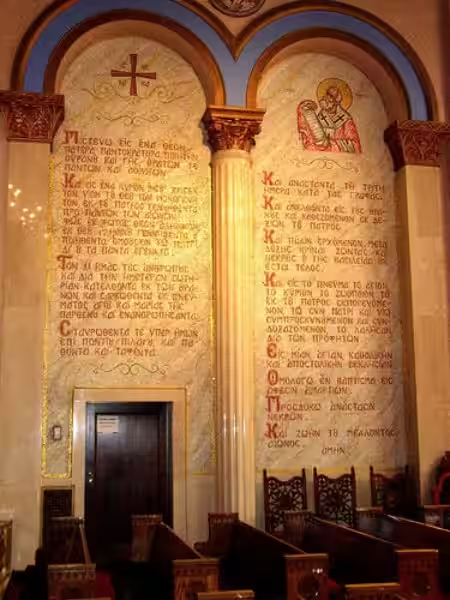
At its core, the Orthodox catechism is a teaching tool designed to transmit the faith from one generation to the next. It aims to equip individuals with a clear and coherent understanding of what the Orthodox Church believes and teaches. This isn’t about blind acceptance, but about fostering an informed and personal appropriation of the faith. The catechism often begins with foundational elements, such as the Nicene Creed, which encapsulates the essential doctrines of God the Father, Son, and Holy Spirit, and the nature of the Church. It then expands to explore the teachings on salvation, the sacraments as visible signs of invisible grace, and the moral life as a response to God’s love.
The beauty of the Orthodox catechism lies in its holistic approach. It doesn’t compartmentalize faith and life; rather, it demonstrates how theological truths directly impact our daily existence. For instance, understanding the Incarnation – that God became man in Jesus Christ – isn’t just an intellectual exercise. It has profound implications for how we view ourselves, our dignity, and our potential for deification. Similarly, the teachings on the Holy Trinity inform our understanding of community and love, encouraging us to mirror God’s relational nature in our own relationships. The catechism acts as a bridge, connecting the divine mysteries to the mundane realities of our lives, transforming the ordinary into the sacred.
The Orthodox catechism places immense importance on both correct belief and authentic worship. These are not seen as separate entities, but as intrinsically linked. The Creed, a concise statement of faith, forms the bedrock upon which all other teachings are built. It’s a declaration of our fundamental understanding of God’s nature and His work in the world. This foundational belief is then expressed and deepened through the Church’s liturgical life. The worship services, rich with symbolism and ancient prayers, are a living embodiment of the doctrines articulated in the Orthodox catechism.
Consider the sacrament of the Eucharist, or Holy Communion. The catechism explains its significance as Christ’s real presence, a divine encounter that nourishes and unites us with Him and with one another. This understanding then informs our participation in the liturgy, imbuing our prayers and actions with a profound sense of awe and reverence. The catechism helps believers understand why they stand, why they venerate icons, and why they partake in these sacred mysteries. It provides the “why” behind the “what,” transforming worship from a rote ritual into a powerful, transformative experience of encountering God.
Living the Faith: Morality and the Sacraments
Beyond creedal statements and liturgical participation, the Orthodox catechism offers practical guidance for living a Christian life. This encompasses a robust ethical framework, often drawing from the teachings of the Church Fathers and the commandments of God. It addresses issues of love, forgiveness, justice, and compassion, urging believers to reflect the character of Christ in their interactions with others. The catechism emphasizes that true faith is evidenced by our actions, by our commitment to living a life that honors God and serves our neighbor. This moral dimension is not about earning salvation through good works, but about responding to the salvific grace already offered to us.
The sacraments are presented not as optional add-ons, but as the essential channels of God’s grace through which believers are sanctified and strengthened. The Orthodox catechism offers detailed explanations of each sacrament, including Baptism, Chrismation (Confirmation), Confession (Repentance), Marriage, and Holy Unction. For example, Baptism isn’t just a symbolic washing away of sins; it’s a death and resurrection with Christ, a spiritual rebirth into the Church. Chrismation seals this new life with the gift of the Holy Spirit, empowering the believer for their spiritual journey. The catechism helps individuals understand the transformative power of these divine encounters and encourages consistent participation in them as vital means of spiritual growth.
It is crucial to understand that the Orthodox catechism is not a static document to be memorized and then set aside. Instead, it represents a lifelong journey of learning and spiritual formation. The initial teachings provide a solid foundation, but the deeper truths of the faith unfold over time, through prayer, study, and lived experience. As believers mature in their faith, they can return to the principles outlined in the Orthodox catechism with new understanding and insight, discovering fresh layers of meaning and application.
Think of it like learning a musical instrument. In the beginning, you learn the basic notes and chords. With practice and dedicated study, you begin to understand harmony, composition, and improvisation, allowing you to play with greater depth and expression. Similarly, the Orthodox catechism provides the fundamental “notes” of the faith. As you engage with the teachings, participate in the Church’s life, and seek God through prayer, you begin to grasp the “harmony” of God’s plan, leading to a richer and more profound spiritual life. The catechism is a constant companion, guiding, challenging, and inspiring us as we strive to live more fully according to God’s will.
Frequently Asked Questions about Orthodox Catechism
What is Orthodox Catechism?
Orthodox Catechism refers to the systematic teaching of the core beliefs, doctrines, practices, and spiritual life of the Orthodox Christian Church. It is a foundational guide for understanding and living out the Orthodox faith.
Who is Orthodox Catechism for?
Orthodox Catechism is intended for all who wish to understand the Orthodox Christian faith. This includes those preparing to become Orthodox Christians (catechumens), existing members seeking deeper knowledge, and anyone interested in learning about Orthodox Christianity.
What are the main topics covered in Orthodox Catechism?
Key topics typically include: the Holy Trinity, the nature of God, the creation of the world, the fall of humanity, salvation through Jesus Christ, the Holy Spirit, the Church as the Body of Christ, the Sacraments (Mysteries), the Holy Scriptures, the Holy Tradition, the life of prayer, the veneration of icons, and the teachings on the afterlife.
Orthodox Catechism can be taught through various methods, including formal classes in churches, private instruction, study groups, books, and online resources. It is often a guided process, with a priest or experienced catechist leading the instruction.
What is the purpose of Orthodox Catechism?
The primary purpose of Orthodox Catechism is to lead individuals to a living, personal relationship with God through Jesus Christ within the life of the Orthodox Church. It aims to provide a coherent understanding of the faith, foster spiritual growth, and equip believers to live an Orthodox Christian life.
Is Orthodox Catechism a rigid set of rules?
While Orthodox Catechism outlines essential doctrines and moral teachings, it is not merely a list of rigid rules. It emphasizes a lived experience of faith, prayer, and love, guided by the Holy Spirit and the teachings of the Church. It is about growing in Christ, not simply adhering to external regulations.
How long does the process of Orthodox Catechism typically take?
The duration of formal catechism can vary depending on the individual’s background, prior knowledge, and the specific parish or diocese. It can range from several months to a couple of years, especially for those preparing for Baptism or Chrismation. However, learning and growing in the Orthodox faith is a lifelong journey.
What is the role of the Bible in Orthodox Catechism?
The Holy Bible is central to Orthodox Catechism. It is understood as the inspired Word of God and the primary source of divine revelation. Catechism teaches how to read, understand, and apply the Scriptures within the context of the Holy Tradition of the Church.
What is Holy Tradition in relation to Orthodox Catechism?
Holy Tradition refers to the continuous life and teaching of the Church from the time of the Apostles. It encompasses the Holy Scriptures, the teachings of the Church Fathers, the decrees of Ecumenical Councils, the liturgical life, and the lives of the saints. Orthodox Catechism is deeply rooted in and inseparable from Holy Tradition.