In the tapestry of faith, the concept of sacramental gifts offers a profound lens through which to understand God’s active presence and transformative power within our lives. These are not mere tokens or material possessions, but rather divine graces bestowed through the sacred rituals of the Church. They are tangible expressions of an intangible truth, designed to strengthen our relationship with God and equip us for our spiritual journey. Understanding these gifts can revolutionize how we approach our faith, moving from passive observance to active participation in the unfolding mystery of salvation.
The word “sacrament” itself hints at something sacred and significant, a visible sign of an invisible grace. When we speak of sacramental gifts, we are referring to the supernatural aids that accompany these sacraments, empowering us to live out our baptismal promises and grow in holiness. These gifts are not earned; they are freely given, a loving outreach from the divine to the human. They are the very lifeblood of the spiritual life, nurturing, protecting, and guiding us through the complexities of existence. Embracing these sacramental blessings can lead to a richer, more fulfilling spiritual existence.
At their core, sacraments are understood within religious traditions as visible signs instituted by Christ to give grace. They are the appointed means by which God’s divine mercy and power flow into the lives of believers. Think of them as divine pipelines, channels through which God’s love and strength are poured out. Without these sacraments, the spiritual life would be a far more arduous and isolated journey. They serve as constant reminders of God’s covenant with humanity, offering assurance and hope.
Each sacrament, from the foundational gateway of Baptism to the ultimate nourishment of the Eucharist, carries with it specific sacramental gifts. These are not simply symbolic gestures; they are efficacious signs that produce the effect they signify. For instance, Baptism washes away original sin and bestows the gift of new life in Christ, making us adopted children of God. This is a profound transformation, a spiritual rebirth that equips us with the potential for a life lived in God’s grace. The Church, through its sacraments, acts as the custodian of these divine blessings, making them accessible to all who approach them with faith.
Baptism: The Gateway to Divine Adoption
Baptism, often described as the sacrament of initiation, is the first and foundational step in the Christian life. It is here that we are cleansed from sin and incorporated into the Body of Christ, the Church. The primary sacramental gift received at Baptism is the gift of sanctifying grace, which instills the theological virtues of faith, hope, and charity into our souls. This is akin to receiving a divine blueprint for a life lived in relationship with God, a spiritual DNA that marks us as His own.
Beyond sanctifying grace, Baptism also imprints an indelible spiritual mark on the soul, signifying that we are eternally consecrated to God. This means that the effects of Baptism are permanent and unrepeatable. Imagine receiving a divine seal of belonging, a permanent mark that identifies you as a beloved child of God, no matter the circumstances of your life. This profound transformation of identity is the bedrock upon which all other sacramental gifts are built, empowering us to live out our calling with divine assistance.
Confirmation: The Strengthening of the Spirit
Confirmation is the sacrament that confirms and strengthens the grace received in Baptism. It is often referred to as the “sacrament of the Holy Spirit,” as it bestows a special outpouring of the Holy Spirit upon the recipient. The sacramental gifts associated with Confirmation are designed to empower believers for mission and witness, enabling them to profess their faith boldly and to live it out in the world. This is like receiving a divine infusion of courage and conviction, equipping us to share the Good News with others.
The gifts of the Holy Spirit, often enumerated as seven, are particularly emphasized in Confirmation: wisdom, understanding, counsel, fortitude, knowledge, piety, and fear of the Lord. These are not just abstract concepts; they are practical, supernatural aids that help us to discern God’s will, to make right judgments, to stand firm in our convictions, and to love God and neighbor more deeply. Receiving these gifts of the Spirit is like being given a divine toolkit for navigating the challenges of life and for contributing to the building up of God’s Kingdom. It is a sacramental empowerment for active discipleship.
The Eucharist: Sustenance for the Soul
The Eucharist, also known as Holy Communion, is the central sacrament of the Christian faith, often called the “source and summit” of Christian life. In this sacrament, Christ Himself is truly present – body, blood, soul, and divinity – under the appearances of bread and wine. The sacramental gifts received here are manifold, but fundamentally, they offer spiritual nourishment and union with Christ. This is the ultimate divine alimentation, feeding our souls and drawing us closer to the divine heart.
Receiving the Eucharist with faith and reverence strengthens our union with Christ and with all other believers, fostering ecclesial unity. It also remits venial sins and protects us from future mortal sin, acting as both a spiritual medicine and a divine shield. Imagine the Eucharist as a divine energy bar, providing the strength and sustenance we need to face the day’s spiritual battles and to grow in love and service. The sacramental grace of the Eucharist is a powerful force for personal transformation and for the building of a more unified Christian community.
Beyond the Sacraments: Other Manifestations of Divine Gifts
While the seven sacraments are the primary channels of sacramental gifts, the concept of divine gifts extends beyond these formal rituals. God’s generosity is boundless, and He continues to bestow gracious endowments upon His people in various ways. These can include charismatic gifts given for the building up of the Church, as well as actual graces that move us to good thoughts and actions. These are the divine nudges and inspirations that guide us throughout our lives.
These non-sacramental divine gifts are often experienced as moments of clarity, inspiration, or a strong inner prompting to act in a particular way. For example, a gift of discernment might help you understand a difficult situation, or a gift of compassion might move you to help someone in need. These are all manifestations of God’s active love, working through us and with us. Recognizing these divine initiatives allows us to cooperate more fully with God’s plan, making our journey of faith a dynamic and responsive dialogue.
Charismatic Gifts: Empowering the Church for Mission
Within the broader spectrum of divine bestowals, charismatic gifts, also known as spiritual gifts, are special abilities or talents given by the Holy Spirit to individuals for the purpose of serving the Church and spreading the Gospel. These gifts are diverse and can include speaking in tongues, prophecy, healing, teaching, and administration. They are divine tools designed to equip the Church for its mission in the world.
These charismatic endowments are not about personal prestige but about functional service. They are meant to build up the community of faith, to encourage believers, and to evangelize those who are outside the Church. Think of them as specialized skills that the Holy Spirit assigns to different members of Christ’s body, enabling each person to contribute uniquely to the overall work of God. Understanding and utilizing these gifts of the Spirit is crucial for a vibrant and effective Christian community, fostering a spirit of mutual reliance and shared ministry.
Actual Graces: The Daily Divine Assistance
Perhaps the most commonly experienced, though often unrecognized, sacramental gifts are the actual graces. These are temporary interventions of God’s grace that enlighten our minds and strengthen our wills to perform good actions and avoid evil. They are the divine nudges that prompt us to pray when we don’t feel like it, to forgive someone who has wronged us, or to resist temptation. These are the everyday miracles of divine intervention that sustain our spiritual efforts.
Actual graces are essential for our spiritual progress. Without them, we would struggle to consistently choose the good and to grow in virtue. They are the divine encouragement that helps us overcome our weaknesses and to live out the sacramental graces we have received more fully. Recognizing and responding to these daily infusions of God’s strength allows us to live a life of conscious cooperation with divine will, transforming ordinary moments into opportunities for spiritual growth and sacramental living.
Living a Sacramental Life
To truly benefit from sacramental gifts, a receptive and faithful disposition is paramount. It’s not enough to simply participate in the rituals; we must approach them with open hearts and minds, ready to receive the divine graces being offered. This involves prayer, reflection, and a genuine desire to deepen our relationship with God.
Embracing a sacramental life means understanding that these gifts are not a one-time bestowal but an ongoing divine partnership. They provide the strength, guidance, and transformation we need to navigate the complexities of life, to overcome challenges, and to live out our faith with conviction. By actively engaging with the sacraments and being attentive to the promptings of actual and charismatic graces, we can experience the fullness of God’s transformative power in our lives, making our faith a vibrant and dynamic reality.
Frequently Asked Questions: Sacramental Gifts
What are sacramental gifts?
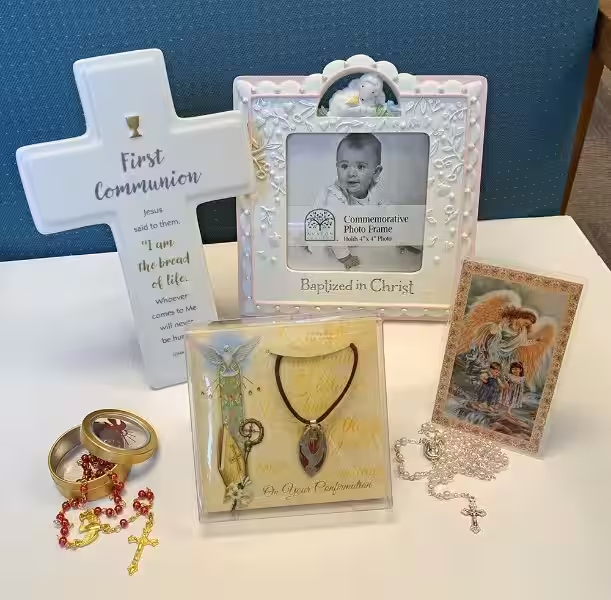
Sacramental gifts are tangible items that are blessed and intended to aid in one’s faith journey, often associated with specific sacraments or prayer practices within a religion. They are not magical but are considered sacred objects that can serve as reminders of divine presence and grace.
What are some examples of sacramental gifts?
Common examples include rosaries, prayer cards, holy water bottles, scapulars, crucifixes, and devotional statues. They can also include items specifically given during sacraments, such as a blessed medal for a baptism or confirmation.
How are sacramental gifts used?
Their use is personal and prayerful. A rosary is used for praying the Rosary, holy water can be used for blessings or personal anointing, and prayer cards can be used for meditation and reflection. They serve as physical aids to spiritual practices.
Are sacramental gifts considered idols?
No, sacramental gifts are not considered idols. They are seen as aids to worship and devotion, pointing towards the divine rather than being objects of worship themselves. The focus remains on God, not the object.
Where can I find sacramental gifts?
Sacramental gifts can typically be found in religious bookstores, church gift shops, online religious supply stores, or sometimes directly from religious communities.
Can anyone give or receive sacramental gifts?
Yes, sacramental gifts are generally meant to be shared and can be given by anyone as a gesture of faith or support. They are also commonly received as gifts for significant religious milestones.
Are sacramental gifts blessed?
Many sacramental gifts are blessed by a member of the clergy or are intended to be blessed by the user in their prayer life. The blessing signifies their sacred purpose and consecration for religious use.
What is the significance of sacramental gifts in religion?
They hold symbolic meaning, representing faith, hope, protection, and the connection between the earthly and divine realms. They can strengthen devotion, encourage prayer, and serve as a constant reminder of one’s religious beliefs and commitments.