For centuries, the Catholic Church has stood as a powerful force on the global stage, not only as a spiritual beacon but also as a vocal advocate for the marginalized and oppressed. This enduring commitment to social justice is woven into the very fabric of its teachings, a testament to a faith that calls its adherents to actively build a more equitable and compassionate world. From the earliest days of Christianity, the message of caring for the poor, the sick, and the stranger was paramount. This foundational principle continues to guide the Catholic Church’s engagement with the complex social issues of our time, urging believers to translate their faith into tangible action.
The concept of social justice within the Catholic Church is not a mere addendum to its doctrines; it is an integral part of its mission. It stems from a profound belief in the inherent dignity of every human person, created in the image and likeness of God. This dignity is universal and inalienable, meaning it cannot be taken away by circumstances, social status, or any human decree. Consequently, the Church’s social justice initiatives are rooted in the conviction that every individual deserves respect, fairness, and the opportunity to flourish. This unwavering principle forms the bedrock upon which all its social outreach and advocacy efforts are built.
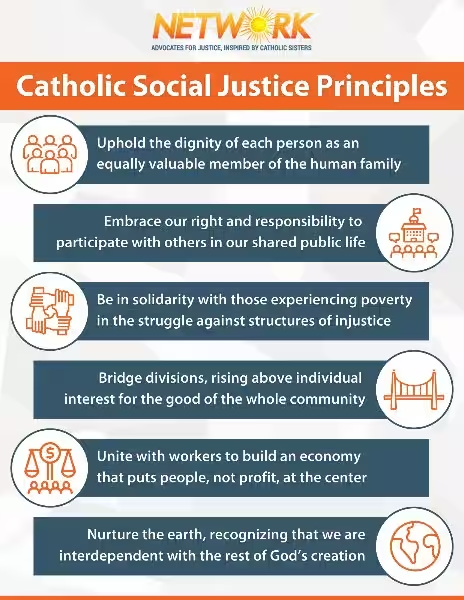
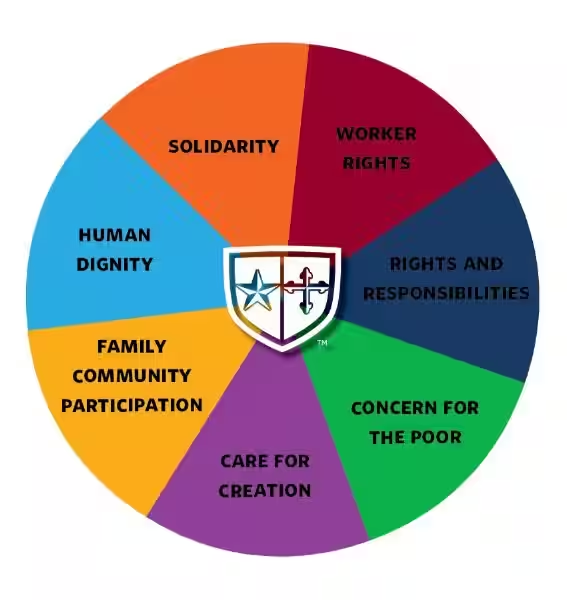
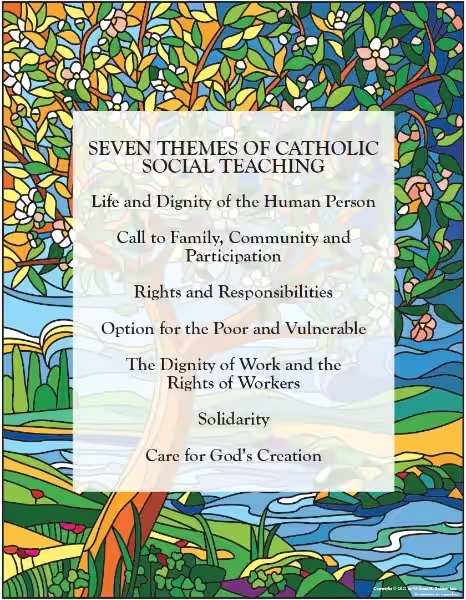
At the heart of the Catholic Church’s approach to social justice lies a rich tradition of social teaching, articulated through a series of papal encyclicals and foundational documents. These teachings offer a framework for understanding and addressing societal problems, providing moral guidance for individuals and institutions alike. Imagine a family deciding how to share resources; Catholic social teaching offers principles to ensure everyone’s needs are met fairly, not just the loudest voices. Key among these principles are the dignity of the human person, the common good, and solidarity. These are not abstract philosophical concepts but practical guides for living out one’s faith in the world.
These foundational pillars are further elaborated through other critical tenets. The preferential option for the poor and vulnerable emphasizes that society’s most marginalized should receive special attention and care. Think of a community organizing a food drive; the emphasis would be on reaching those who are struggling the most. Furthermore, the concept of rights and responsibilities highlights that while individuals have rights, they also have corresponding obligations to society and their fellow human beings. This interconnectedness underscores the social nature of humanity. Lastly, the principle of stewardship of creation calls for responsible care of the earth, recognizing it as a gift meant to be shared by all, now and in the future. These interconnected teachings provide a comprehensive roadmap for building a just and humane society.
Dignity of the Human Person: The Absolute Foundation
The unwavering belief in the inherent dignity of every human person is the cornerstone of the Catholic Church’s social justice agenda. This means that every individual, regardless of their background, beliefs, or circumstances, possesses an intrinsic worth that must be recognized and protected. This principle is inspired by the biblical narrative of creation, where humanity is made in God’s image. Consequently, any action or system that demeans, exploits, or disregards human dignity is seen as contrary to divine will. This fundamental respect forms the basis for advocating for the rights of all people, especially those who are most vulnerable.
This commitment translates into concrete actions. For example, the Catholic Church actively combats human trafficking because it represents a profound violation of human dignity. Similarly, its stance on issues like abortion and euthanasia is rooted in the belief that life itself is sacred from conception to natural death. When we consider the plight of refugees or immigrants, the Church’s emphasis on human dignity compels it to advocate for their humane treatment and integration into society. It’s about recognizing the sacred spark within each person and ensuring that this spark is never extinguished by injustice or indifference.
The Common Good: Building a Society for All
The concept of the common good is central to the Catholic Church’s understanding of social justice. It refers to the sum total of social conditions that allow people, both groups and individuals, to reach their fulfillment more fully and more easily. This is not about the greatest good for the greatest number, but rather about ensuring that everyone has the opportunity to thrive. Consider a neighborhood park; the common good is achieved when the park is accessible, safe, and enjoyable for children, the elderly, and everyone in between, not just a select few.
Achieving the common good requires active participation and a commitment to policies that promote the welfare of all members of society. This includes ensuring access to essential services like healthcare, education, and housing. The Catholic Church often advocates for systemic changes that address the root causes of poverty and inequality, believing that a just society is one where everyone has the opportunity to contribute and benefit. This involves working towards fair wages, equitable distribution of resources, and inclusive political processes that give voice to all segments of the population.
Solidarity: We Are All Connected
The principle of solidarity highlights the interconnectedness of the human family. It calls for a recognition that we are our brothers’ and sisters’ keepers, regardless of nationality, race, or social standing. This is not about pity, but about a deep-seated awareness of our shared humanity and a commitment to working together for the well-being of all. Imagine a global pandemic; solidarity means that countries rich in resources share them with those who are struggling, recognizing that an outbreak anywhere is a threat everywhere.
This principle compels the Catholic Church to address global issues such as poverty, war, and environmental degradation. It encourages efforts to alleviate suffering and promote peace, advocating for diplomatic solutions and humanitarian aid. Solidarity also means actively challenging structures and attitudes that create division and injustice. It’s a call to move beyond individualism and embrace a spirit of unity, working collectively to build a world where no one is left behind. This profound sense of interconnectedness is a driving force behind many of the Church’s social justice initiatives.
Putting Faith into Action: The Catholic Church’s Social Ministries
The Catholic Church’s commitment to social justice is not merely theoretical; it is expressed through a vast network of practical initiatives and ministries operating at local, national, and international levels. These efforts range from providing direct assistance to those in need to advocating for systemic change. Think of your local Catholic Charities; they are often on the front lines, offering food, shelter, and job training to the homeless and unemployed. These organizations embody the Church’s call to translate faith into tangible acts of mercy and justice.
These ministries address a wide spectrum of social issues. They include food banks and soup kitchens, homeless shelters, schools and educational programs, healthcare services, refugee resettlement programs, and advocacy groups that lobby for just laws and policies. The Church’s deep historical roots and widespread presence allow it to reach communities that might otherwise be overlooked, providing essential services and a message of hope. This hands-on approach demonstrates a profound understanding that faith must be lived out in service to others.
Advocacy and Systemic Change
Beyond direct service, the Catholic Church is a significant voice in advocating for systemic change. This involves engaging with governments and international bodies to promote policies that uphold human dignity and foster justice. Bishops and religious leaders often speak out on critical issues, urging policymakers to consider the impact of their decisions on the most vulnerable populations. This advocacy can take many forms, including writing letters to elected officials, participating in peaceful protests, and raising public awareness through educational campaigns.
The Church’s engagement in advocacy is guided by its social teachings, which provide a moral compass for policy decisions. For instance, when discussing economic policy, the Church might advocate for fair labor practices, progressive taxation, and social safety nets. In matters of environmental policy, it champions the protection of creation. This commitment to advocacy underscores the belief that true social justice requires addressing the underlying structures and systems that perpetuate inequality and suffering. It’s about creating a more just world, not just alleviating immediate hardship.
Empowering the Marginalized
A key aspect of the Catholic Church’s social justice work is its dedication to empowering the marginalized. This means not just providing aid, but also working to ensure that those who have been historically excluded have a voice and the agency to shape their own futures. This involves supporting grassroots organizations, promoting leadership development among disadvantaged communities, and challenging discriminatory practices. Think of a program that helps women in developing countries start their own businesses; this is empowerment in action.
The Church recognizes that true justice involves creating opportunities for all to participate fully in society. This can include supporting efforts to improve access to education and job training, advocating for voting rights, and challenging prejudice and discrimination. By empowering the marginalized, the Catholic Church seeks to build a more inclusive and equitable world where everyone has the opportunity to reach their full potential and contribute to the common good. This focus on agency and self-determination is a vital component of its social justice mission.
Challenges and the Future of Catholic Social Justice
The Catholic Church’s pursuit of social justice is not without its challenges. Navigating complex global issues, addressing internal divisions, and adapting to evolving societal norms require constant effort and discernment. The Church must continually strive to live up to its ideals in an ever-changing world. For example, addressing the growing issue of climate change requires a unified global response, which can be difficult to coordinate among diverse nations and interests.
Despite these challenges, the enduring commitment of the Catholic Church to social justice remains a powerful force for good. The future of its social justice efforts will likely involve continued emphasis on education, advocacy, and grassroots empowerment. As new social issues emerge, the Church will undoubtedly draw upon its rich tradition of social teaching to guide its response, seeking to be a beacon of hope and a catalyst for positive change. The ongoing dialogue between faith and justice will continue to shape its mission, inspiring generations to build a world where all are treated with dignity and share in the fruits of a just society.
Catholic Church and Social Justice – Frequently Asked Questions
What is Catholic Social Teaching?
Catholic Social Teaching (CST) is the body of doctrine developed by the Catholic Church on matters of social justice, involving faith and morals. It is a lens through which Catholics are called to examine and critique economic and social policies, and to build a more just and peaceful world.
What are the core principles of Catholic Social Teaching?
Key principles include: the dignity of the human person, the common good, the preferential option for the poor and vulnerable, the dignity of work and the rights of workers, solidarity, subsidiarity, and care for God’s creation.
How does the Catholic Church address issues of poverty and inequality?
The Church advocates for policies that promote fair wages, access to education and healthcare, and social safety nets. It emphasizes the moral obligation to care for the poor and to work towards systemic changes that address the root causes of poverty.
What is the Church’s stance on economic justice?
The Church teaches that the economy should serve people, not the other way around. It promotes an economy that respects the dignity of workers, ensures fair distribution of wealth, and prioritizes the needs of the marginalized over profit accumulation.
How does the Catholic Church view the environment?
The Church teaches that creation is a gift from God and that humanity has a responsibility to be stewards of the earth. It calls for sustainable practices and advocates for policies that protect the environment and address climate change.
What is the Church’s role in advocating for peace and human rights?
The Church actively promotes peace through diplomacy, non-violent resistance, and advocating for the rights of all people. It condemns war and violence, emphasizing the inherent dignity and rights of every human being, regardless of their background.
How can Catholics engage in social justice?
Catholics can engage in social justice through prayer, study of CST, advocacy, direct service to the poor, and by living out their faith in solidarity with others. This can involve volunteering, donating to charitable causes, and participating in civic life.
Does the Catholic Church endorse specific political parties or candidates?
No, the Catholic Church does not endorse specific political parties or candidates. It calls on its members to engage in the political process, informed by CST, and to vote for policies and leaders that promote justice and the common good.