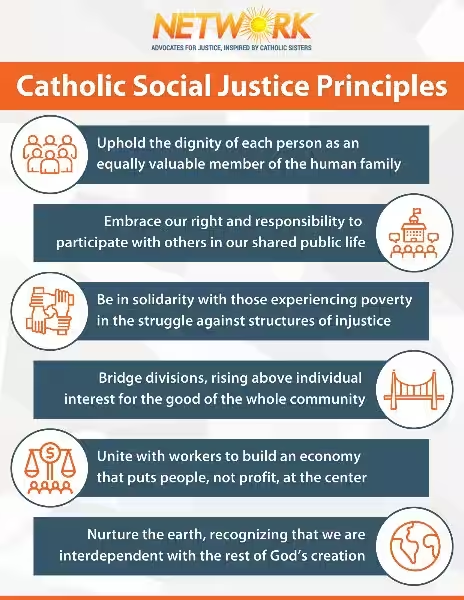
In the grand tapestry of human experience, we are constantly faced with questions of how to live, how to relate to one another, and how to build a just and flourishing society. For billions around the world, Catholic Social Teaching (CST) offers a profound and practical framework for navigating these complexities, deeply rooted in the tenets of the religion and traditions of the Catholic Church. It’s not just a set of abstract theological propositions; rather, it’s a living, breathing guide that speaks to the heart of our shared humanity and our responsibilities as members of a global community. From the local parish to the international stage, these principles provide a moral compass, urging us to consider the dignity of every person and the common good in all our endeavors.
This ancient wisdom, developed over centuries through papal encyclicals, council documents, and the lived experiences of countless faithful, provides a compelling vision for a world where justice, peace, and solidarity prevail. It challenges us to look beyond our immediate self-interest and to recognize the interconnectedness of all people. Understanding CST isn’t about subscribing to a rigid dogma, but about embracing a powerful ethical system that can inform our decisions as individuals, as families, and as citizens, ultimately shaping a more compassionate and equitable world.
At the very heart of Catholic Social Teaching lies an unwavering belief in the inherent dignity of every human being. This is not a dignity earned or conferred by society, but a dignity that flows from being created in the image and likeness of God. This foundational principle, often referred to as the “dignity of the human person,” means that every individual, regardless of their background, status, abilities, or beliefs, possesses an intrinsic worth that must be respected and protected. This is why CST vehemently opposes anything that degrades or violates human dignity, from abortion and euthanasia to exploitation and discrimination.
Consider the simple act of welcoming a stranger. CST calls us to see that stranger not as an outsider or a threat, but as a fellow human being with the same inherent worth as ourselves. This principle extends to advocating for the rights of the poor, the marginalized, and the vulnerable. It means that policies and practices should always prioritize the well-being of individuals, ensuring that everyone has access to the basic necessities of life and the opportunity to reach their full potential. Whether it’s a homeless person on the street or an oppressed group in another nation, their intrinsic value is paramount.
From Individual Worth to the Common Good
Building upon the dignity of the individual, Catholic Social Teaching emphasizes the “common good.” This concept refers to the sum total of social conditions that allow people, both groups and individuals, to reach their fulfillment more fully and more easily. It’s not simply the greatest good for the greatest number, but a good that benefits everyone, and particularly the most vulnerable. This means that we have a collective responsibility to create a society where everyone can thrive, not just a select few.
Think of a community garden. The common good isn’t just about one person having a bountiful harvest; it’s about the entire garden flourishing, with everyone contributing to its upkeep and sharing in its produce. This principle calls for active participation in civic life, advocating for policies that promote the well-being of all, and working towards solutions that address systemic injustices. It’s about fostering a sense of solidarity, recognizing that our own flourishing is inextricably linked to the flourishing of others.
The Power of Solidarity and Subsidiarity
Two other pillars of Catholic Social Teaching that are crucial for understanding its practical application are “solidarity” and “subsidiarity.” Solidarity is the principle that recognizes our interconnectedness and our shared responsibility for one another. It’s the understanding that we are all “our brother’s keeper” and that the suffering of one is the concern of all. This extends beyond our immediate families and communities to embrace all of humanity.
Imagine a global pandemic. Solidarity compels us not only to protect ourselves and our loved ones but also to extend aid and support to those suffering in other countries, sharing resources and knowledge to combat the disease. This principle is a powerful antidote to individualism and isolation, reminding us that true human flourishing is found in community and mutual support. It calls us to actively work for justice and peace, recognizing that these are not merely abstract ideals but concrete realities that require our commitment.
Complementing solidarity is “subsidiarity.” This principle states that decisions should be made at the lowest possible level of authority and that higher levels of authority should only intervene when necessary to assist lower levels and to coordinate efforts for the common good. This is about empowering individuals and local communities to solve their own problems and to take initiative. It prevents over-centralization of power and promotes local autonomy and responsibility.
Consider a neighborhood project, like organizing a local food drive. The principle of subsidiarity would encourage the residents themselves to take the lead, with perhaps a local community center offering support. A larger government entity would only step in if there were overwhelming needs that the local community couldn’t meet. This ensures that solutions are tailored to the specific needs of a community and that people are empowered to be agents of change in their own lives and surroundings.
The Preferential Option for the Poor
A particularly powerful and challenging aspect of Catholic Social Teaching is the “preferential option for the poor.” This doesn’t mean that the poor are more loved by God; rather, it means that our response to God’s love should lead us to prioritize the needs and concerns of those who are marginalized, oppressed, and lacking basic necessities. This principle calls us to actively work to alleviate poverty and injustice, ensuring that the voices of the poor are heard and that their dignity is upheld.
Think about offering your seat on a crowded bus to an elderly person or a pregnant woman. This simple act reflects the spirit of the preferential option for the poor, extending care and consideration to those who are most vulnerable. In a broader societal context, this principle demands that we examine our economic and political systems to ensure they are not perpetuating inequality and that they are actively working to lift people out of poverty. It’s about justice in action, ensuring that everyone has a fair chance to experience a life of dignity.
In recent decades, Catholic Social Teaching has increasingly emphasized the “care for our common home,” or “stewardship of creation.” This principle recognizes that the Earth and all its resources are a gift from God, and we have a responsibility to care for them for present and future generations. This is not just an environmental issue; it is a moral and spiritual imperative, deeply intertwined with our relationship with God and our fellow human beings.
Imagine inheriting a beautiful, fertile piece of land. You wouldn’t trash it or deplete its resources recklessly; you would nurture it and pass it on to your children and grandchildren in good condition. This is the essence of stewardship. CST calls us to be responsible caretakers of the environment, recognizing that ecological degradation disproportionately affects the poor and exacerbates existing injustices. It urges us to adopt sustainable practices, advocate for environmental protection, and recognize that our actions have far-reaching consequences for both people and the planet.
Work as Participation in God’s Creation
Furthermore, Catholic Social Teaching views “work” as more than just a means to an end; it is seen as a participation in God’s ongoing creation and a way for individuals to contribute to the common good and to live lives of dignity. This means advocating for fair wages, safe working conditions, and the right to organize. It’s about ensuring that work is not exploitative but is a source of fulfillment and allows individuals to provide for themselves and their families.
Consider a craftsman who takes pride in their work, creating something beautiful and useful. This embodies the CST view of work as a dignified activity. The teaching calls for a re-evaluation of our economic systems to ensure that all workers are treated with respect and that their labor is valued. It’s about fostering a society where meaningful employment is accessible to all, allowing everyone to contribute their talents and be recognized for their efforts.
Conclusion: Living the Principles in Everyday Life
The principles of Catholic Social Teaching offer a profound and enduring framework for navigating the complexities of life, faith, and society. They are not meant to be confined to religious study or theological debate, but to be lived out in our daily interactions and in our collective endeavors. By embracing the dignity of every person, striving for the common good, practicing solidarity, upholding subsidiarity, offering a preferential option for the poor, and acting as stewards of creation, we can contribute to building a more just, peaceful, and humane world.
These principles provide a powerful lens through which to view current events, to make informed decisions as consumers and citizens, and to engage in meaningful dialogue about the challenges facing our communities and our planet. They remind us that our faith is not a private affair but has profound implications for how we live our lives and how we interact with the world around us. Ultimately, Catholic Social Teaching is an invitation to live out our faith in action, transforming our world one act of justice and compassion at a time.
Frequently Asked Questions on Catholic Social Teaching and Religion
What is Catholic Social Teaching?
Catholic Social Teaching (CST) is the body of doctrine developed by the Catholic Church on matters of social justice, human dignity, and the common good. It is rooted in the Bible and in the tradition of the Church, and it calls believers to work for a more just and peaceful world.
What are the core principles of Catholic Social Teaching?
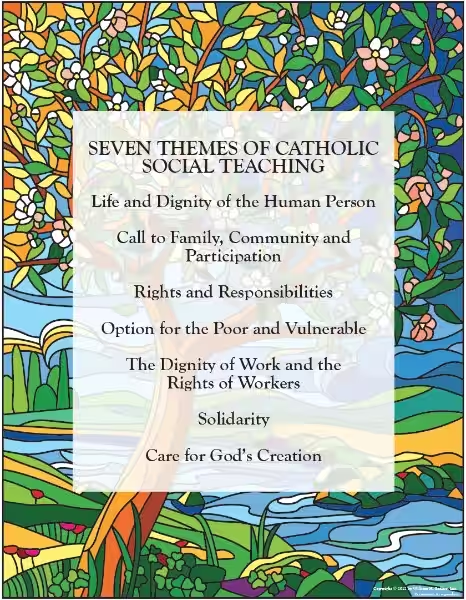
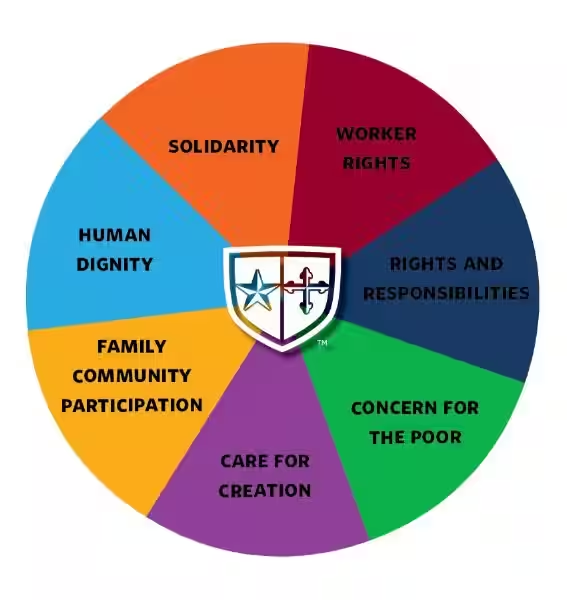
The core principles of CST include:
* The Dignity of the Human Person: Every individual is created in the image of God and has inherent worth and dignity.
* The Common Good: The sum total of social conditions which allow people, either groups or individuals, to reach their fulfillment more fully and more easily.
* Solidarity: The bond of human fellowship and the mutual concern that binds us together as a human family.
* Subsidiarity: A social principle that states that matters ought to be handled by the smallest, lowest, or least centralized competent authority.
* Rights and Responsibilities: Every person has a right to life and the things necessary for human flourishing, and with these rights come corresponding responsibilities.
* The Preferential Option for the Poor and Vulnerable: A commitment to prioritize the needs and concerns of those who are marginalized, oppressed, and lacking basic necessities.
* The Dignity of Work and the Rights of Workers: Work has dignity, and workers have rights to fair wages, safe conditions, and the ability to organize.
* Care for Creation: We are called to be stewards of the Earth and to protect the environment for future generations.
How does religion inform Catholic Social Teaching?
Religion, particularly Catholic faith, provides the foundation and inspiration for Catholic Social Teaching. The teachings of Jesus Christ, especially his emphasis on love of neighbor, compassion for the poor and suffering, and the inherent dignity of every person, are central to CST. The Church’s understanding of God as a loving creator and sustainer of all life underpins its commitment to justice and peace in society.
Are the principles of Catholic Social Teaching only for Catholics?
While CST is a body of teaching within the Catholic Church, its principles are universal and speak to all people of good will. The emphasis on human dignity, justice, peace, and the common good are values that can resonate with individuals of any faith or no faith, as they are based on reason and a concern for the well-being of humanity.
How can individuals live out the principles of Catholic Social Teaching?
Individuals can live out CST by:
* Respecting the dignity of all persons.
* Advocating for the poor and marginalized.
* Participating in civic life and working for justice.
* Living sustainably and caring for the environment.
* Promoting peace and reconciliation.
* Supporting ethical businesses and fair labor practices.
* Engaging in charitable works.