In a world often characterized by conflict, the call for non-violence echoes across centuries and continents, finding its most profound resonance within the sacred texts and teachings of various religions. While the paths to peace may differ, the underlying principle of rejecting violence as a means to an end is a cornerstone of many spiritual traditions. This article delves into these powerful pronouncements, exploring how diverse faiths offer a roadmap to understanding and practicing non-violence, making it a practical and essential guide for a more harmonious existence.
The allure of immediate solutions, the fiery rhetoric of retribution, and the deeply ingrained human instinct for self-defense can make the concept of non-violence seem idealistic, even naive. Yet, a closer examination of religious philosophy reveals a tested and enduring wisdom that prioritizes compassion, understanding, and the profound strength found in restraint. These traditions don’t just preach peace; they offer a transformative framework for living that can reshape individuals and societies.
The Divine Mandate for Peace: Religious Foundations of Non-Violence
Across the religious spectrum, the concept of a benevolent and loving divine being often underpins the imperative to avoid violence. This divine essence, it is believed, embodies peace and harmony, and by extension, its followers are called to reflect these qualities. The very act of creation, as described in many religious narratives, is often portrayed as an act of love and nurturing, not destruction. This foundational understanding instills a deep respect for life and an aversion to causing harm. Consider, for instance, the Golden Rule, a principle present in many faiths, which essentially states: “Do unto others as you would have them do unto you.” This simple yet profound directive inherently discourages violence, as no one desires to be subjected to it.
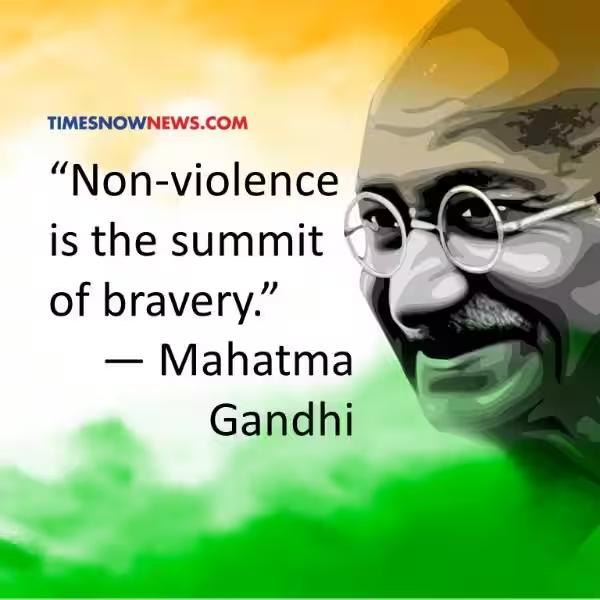
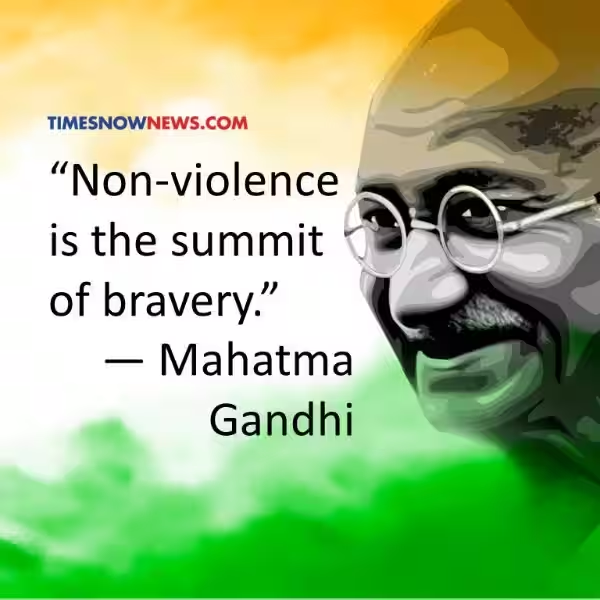
Furthermore, many religious texts emphasize the inherent dignity of every human soul, regardless of their beliefs, background, or actions. This belief fosters a sense of universal brotherhood and sisterhood, making violence against another a transgression against this shared divinity. The teachings often highlight the destructive nature of violence, not just on the victim but also on the perpetrator and the fabric of society as a whole. As Mahatma Gandhi, a towering figure in the non-violent movement, famously stated, “An eye for an eye will only make the whole world blind.” This quote, deeply influenced by his Hindu faith, encapsulates the futility of retaliatory violence and underscores the need for a more constructive approach.
Christianity: Love Your Enemies and Turn the Other Cheek
Within Christianity, the Sermon on the Mount offers some of the most iconic and challenging teachings on non-violence. Jesus’s admonition to “love your enemies and pray for those who persecute you” (Matthew 5:44) is a radical departure from conventional notions of justice and self-preservation. This teaching doesn’t advocate for passive acceptance of wrongdoing but rather for a transformative love that seeks to disarm the aggressor and break the cycle of violence. It’s a call to inner strength, to rise above the impulse for retaliation and to demonstrate the power of forgiveness and compassion.
The story of Jesus himself is often seen as the ultimate example of non-violent resistance. Despite facing betrayal, suffering, and ultimately crucifixion, he did not retaliate with force. His arrest was met with Peter’s impulsive act of drawing a sword, which Jesus immediately rebuked, saying, “Put your sword back in its place, for all who draw the sword will die by the sword” (Matthew 26:52). This act of restraint, even in the face of immense personal threat, underscores the profound commitment to non-violence as a core principle. This isn’t about weakness; it’s about a strategic and spiritual strength that seeks to overcome evil with good, believing in the ultimate redemptive power of love.
Islam: Peace as the Ultimate Goal
The very word “Islam” is derived from an Arabic root meaning “submission” and also relates to “peace.” This linguistic connection highlights the centrality of peace in the Islamic faith. While the Quran does permit defensive warfare under specific conditions, it strongly emphasizes restraint, justice, and the avoidance of aggression. The guiding principle is that conflict should only be a last resort, and even then, it must be conducted with strict ethical guidelines, protecting civilians and avoiding unnecessary destruction. The Quran states, “And if they incline towards peace, then incline towards it [also] and rely upon Allah. Indeed, it is He who is the Hearing, the Knowing.” (8:61)
Prophet Muhammad’s life is replete with examples of forgiveness and reconciliation, even towards those who had wronged him. His approach to conflict resolution often involved dialogue, mediation, and a deep desire to foster unity. He famously said, “The best among you are those who are best to their wives.” While this specific quote focuses on domestic relations, it reflects a broader ethos of kindness and respect that extends to all interactions. The emphasis on mercy and compassion within Islam is a powerful antidote to violence. It encourages believers to seek peaceful solutions, to extend grace, and to understand that true strength lies not in dominance but in empathy and understanding.
Buddhism: The Path of Compassion and Inner Peace
Buddhism is perhaps most widely recognized for its profound emphasis on non-violence, or “ahimsa.” This principle is not merely an absence of physical harm but a deep cultivation of compassion and goodwill towards all sentient beings. The Buddha taught that suffering arises from attachment and aversion, and that violence, in its many forms, stems from these very roots. Therefore, the path to peace begins with inner transformation, cultivating mindfulness, loving-kindness, and wisdom. The Four Noble Truths, a foundational teaching, highlight the cessation of suffering through the elimination of craving and ignorance, which are often at the heart of aggressive impulses.
The teachings of Buddhism advocate for a conscious and deliberate effort to refrain from harming others, whether through thought, word, or deed. This extends beyond human beings to encompass all living creatures. The concept of karma, the law of cause and effect, reinforces this, suggesting that violent actions will inevitably lead to negative consequences. The Dalai Lama, a prominent spiritual leader in Tibetan Buddhism, consistently advocates for universal responsibility and compassion, stating, “My religion is simple. My religion is kindness.” This succinct statement encapsulates the core of Buddhist ethics, where genuine compassion is the highest form of spiritual practice and the most effective path to enduring peace.
In Judaism, the concept of “Tikkun Olam,” often translated as “repairing the world,” is a central tenet that guides ethical behavior and social justice. This involves actively working towards a more just and peaceful society, recognizing that every individual plays a role in healing the world’s brokenness. While Judaism has a history of defending itself, the emphasis remains on seeking peace and preventing bloodshed whenever possible. The Torah itself contains numerous passages urging justice and compassion, and the sages have long debated the ethical boundaries of warfare. The principle of “Pikuach Nefesh,” the preservation of human life, is paramount, meaning that almost all commandments can be set aside to save a life, underscoring the sanctity of every individual.
The Jewish tradition emphasizes the importance of dialogue and understanding in resolving disputes. The concept of “Shalom,” meaning peace, is more than just the absence of conflict; it signifies a state of wholeness, completeness, and well-being. This ideal is pursued through acts of kindness, justice, and the cultivation of harmonious relationships. The pursuit of “Shalom” is an ongoing effort, requiring individuals and communities to actively work towards reconciliation and mutual respect. As the prophet Isaiah proclaimed, “They shall beat their swords into plowshares and their spears into pruning hooks; nation shall not lift up sword against nation, neither shall they learn war anymore.” (Isaiah 2:4)
Beyond Doctrine: Practical Applications of Non-Violence
The teachings on non-violence found in religious traditions are not abstract philosophical ideals; they are practical guides for everyday living. Embracing non-violence involves a conscious effort to cultivate inner peace, which then radiates outwards. This begins with self-awareness, understanding our own triggers and reactions, and learning to respond to conflict with deliberation rather than raw emotion. It means actively choosing to practice empathy, trying to see situations from another person’s perspective, even when it is difficult.
Furthermore, religious traditions often provide community support and frameworks for practicing non-violence. Prayer, meditation, communal worship, and acts of service all contribute to fostering a spirit of peace and understanding. For instance, the Buddhist practice of mindfulness helps individuals to observe their thoughts and emotions without judgment, enabling them to respond to challenging situations with greater clarity and compassion. Similarly, within Christianity, the practice of confession and seeking forgiveness can help to release anger and resentment, paving the way for reconciliation. The common thread is the recognition that true peace is built from within, and that our interactions with others are a direct reflection of our inner state. As the Sufi poet Rumi wisely observed, “Out beyond ideas of wrongdoing and rightdoing, there is a field. I’ll meet you there.” This field, often found through spiritual exploration, is where understanding and non-violence can truly flourish.
In conclusion, the wisdom embedded within religious quotes on non-violence offers a profound and enduring path to a more peaceful world. These teachings are not a call for passivity but a testament to the immense strength found in compassion, understanding, and the unwavering commitment to love. By embracing these principles, individuals can embark on a journey of personal transformation, contributing to a more just and harmonious society. The quiet revolution of non-violence, fueled by faith and practiced with courage and conviction, holds the potential to heal divides, mend brokenness, and ultimately, to build a future where peace is not just an aspiration, but a lived reality.
The legacy of figures like Gandhi, Martin Luther King Jr., and numerous others, deeply rooted in their respective faiths, demonstrates that non-violent resistance can be a powerful force for social change. Their examples remind us that the most impactful revolutions are often those that begin with a transformation of the heart, a commitment to seeing the divine in every being, and a steadfast refusal to meet violence with more violence. The journey may be challenging, but the rewards – inner peace and a more compassionate world – are immeasurable.
Frequently Asked Questions on Non-Violence, Religion, and Quotes
What is the relationship between non-violence and religion?
Many religions advocate for non-violence as a core principle. This often stems from beliefs in compassion, love, the sanctity of life, and the idea of overcoming evil with good. Religious texts and figures frequently provide moral frameworks that condemn aggression and promote peaceful resolution.
What are some common religious perspectives on non-violence?
Across various faiths, non-violence is often viewed as a moral imperative. For example, Buddhism emphasizes ahimsa (non-harming). Christianity, particularly through the teachings of Jesus, promotes turning the other cheek and loving one’s enemies. Islam, while having a concept of jihad, often interprets it as a struggle against one’s own flaws or as a defensive action, with a strong emphasis on peace and justice. Hinduism, also with its concept of ahimsa, encourages respect for all living beings. Judaism, while having traditions of self-defense, also holds strong pacifist currents.
Can you provide some famous quotes on non-violence from religious figures?
“An eye for an eye only ends up making the whole world blind.” – Mahatma Gandhi (drawing heavily on Hindu philosophy)
“Love your enemies and pray for those who persecute you.” – Jesus Christ (Christianity)
“He who conquers the self is the greatest warrior.” – Buddha (Buddhism)
“If you have met with violence, you must respond with good.” – The Quran (Islam)
“In a world where you can’t control everything that happens, you can control how you respond. I choose peace.” – Unknown, often attributed to various spiritual traditions.