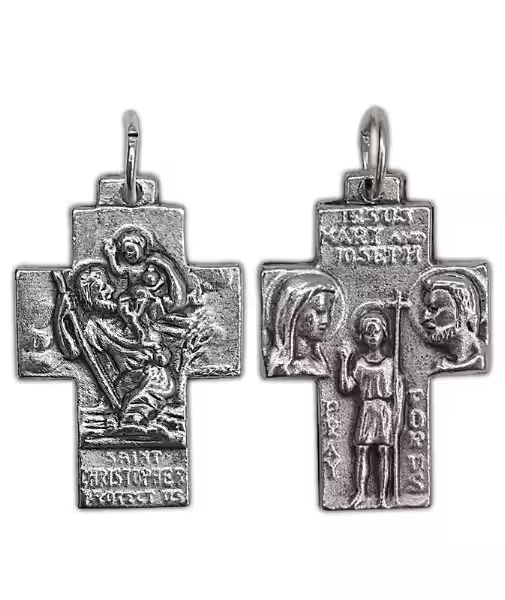
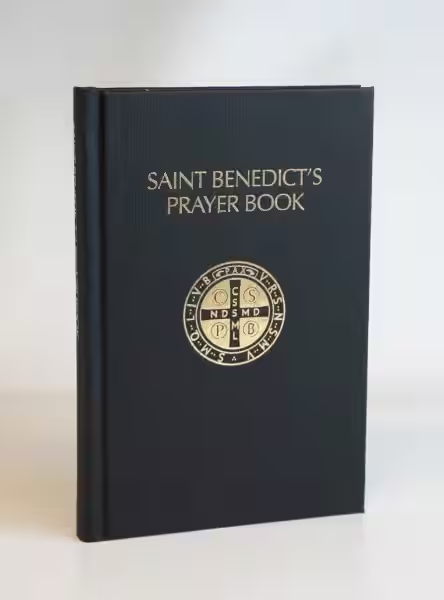
In the tapestry of religious devotion, where prayer, scripture, and community form the vibrant threads, the humble saint medal often emerges as a tangible, personal touchstone. It’s more than just a piece of adorned metal; it represents a profound connection to the divine, a silent prayer materialized, and a constant reminder of the spiritual guidance we seek. For countless individuals across diverse faith traditions, especially within Christianity, the wearing or keeping of a saint medal is a deeply ingrained practice, steeped in history, personal meaning, and the enduring belief in intercession.
This enduring popularity speaks volumes about the intrinsic human need for symbols that anchor us. In a world that often feels chaotic and fleeting, the solid weight of a saint medal in your hand or resting against your skin can offer a sense of stability and peace. It’s a tangible link to figures who have lived lives of extraordinary faith, offering them as heroes and examples for our own journeys. Let’s delve into the rich history, multifaceted meanings, and practical applications of the saint medal, exploring why it continues to resonate so powerfully in our modern religious lives.
A Glimpse into History: The Ancient Roots of Devotional Medals
The practice of using devotional medals stretches back centuries, predating the widespread adoption of what we typically recognize as a saint medal today. Early Christians, facing persecution and seeking solace, would often carry small amulets or tokens bearing symbols of their faith, such as the fish (ichthys) or the Chi-Rho. These were not necessarily representations of specific saints, but rather covert ways to profess their allegiance to Christ and to feel a sense of solidarity and protection. The very act of carrying a sacred symbol was a declaration of faith, a tangible embodiment of their spiritual commitment in a challenging world.
As the Church grew and the veneration of saints became more prominent, these devotional tokens evolved. Relics, fragments of saints’ bodies or possessions, were highly prized, but for many, a more accessible form of connection was needed. This led to the creation of medals bearing images and names of revered saints. These saint medal creations served as a portable reminder of the saint’s virtues and their potential to intercede on behalf of the wearer. Imagine a pilgrim embarking on a long journey, carrying a saint medal of St. Christopher, the patron saint of travelers, as a prayer for safe passage. This historical context highlights the deep-seated human desire to connect with the sacred through physical objects.
The Rise of the Miraculous Medal and its Profound Impact
Perhaps one of the most influential examples of the saint medal in modern history is the Miraculous Medal, also known as the Medal of Our Lady of Graces. Its story begins in 1830 with St. Catherine Labouré, a novice nun in Paris, who reported visions of the Blessed Virgin Mary. In these visions, Mary commissioned Catherine to have a medal struck, detailing the specific imagery: Mary standing on a globe, crushing a serpent, with rays of light emanating from her hands. The reverse side was to feature the letter “M” intertwined with a cross, and below it, the hearts of Jesus and Mary. The divine instructions were precise, and the resulting saint medal quickly gained a reputation for extraordinary graces and conversions.
The impact of the Miraculous Medal was truly global. People from all walks of life began to wear the saint medal, experiencing profound spiritual and even physical healing. Its popularity demonstrated the potent faith placed in Mary’s intercession and the power of a consecrated object. This phenomenon wasn’t just about the metal itself, but about the faith it inspired and the prayers it accompanied. The widespread distribution of the Miraculous Medal solidified the saint medal as a significant devotional item, showcasing its potential to foster a deep and personal relationship with the divine.
Choosing Your Saint Medal: A Journey of Personal Connection
Selecting a saint medal is often a deeply personal endeavor, a process of discernment that can feel akin to choosing a spiritual confidant. It’s not merely about picking a pretty design; it’s about finding a saint whose life story, patronage, or virtues resonate with your own spiritual aspirations, struggles, or petitions. For instance, someone facing financial hardship might choose St. Matthew, the patron saint of tax collectors and accountants, or St. Joseph, the patron of workers. A student preparing for exams might seek the intercession of St. Thomas Aquinas, the patron saint of students and scholars.
The act of choosing itself can be a form of prayer. You might spend time researching different saints, reading about their lives, and contemplating their witness. This research can be incredibly enriching, introducing you to inspiring figures whose faith journeys can illuminate your own. Consider the example of someone struggling with anxiety; they might feel drawn to St. Dymphna, known as the patron saint of the mentally ill, or St. Francis de Sales, who championed gentleness and patience. The decision often feels guided, a quiet whisper of connection between your heart and the saint’s legacy encapsulated in the saint medal.
Understanding the Patron Saint System and its Significance
The concept of patron saints is central to the devotion surrounding the saint medal. A patron saint is essentially a heavenly advocate, a saint who, through God’s grace, has a special connection to a particular person, place, group, or cause. This system is rooted in the belief that saints, now in God’s presence, can hear our prayers and intercede on our behalf, offering their spiritual support and guidance. The saint medal serves as a tangible representation of this chosen intercessor, a constant reminder of their advocacy and a focal point for prayer.
The diversity of patronages is vast, reflecting the multifaceted nature of human life and its challenges. You’ll find patron saints for professions (like St. Luke for artists and doctors), for specific needs (like St. Rita for impossible causes), and even for everyday situations (like St. Anthony for finding lost items). When you choose a saint medal, you are, in essence, inviting that saint to walk alongside you, to witness your journey, and to offer their prayers for your intentions. This understanding enriches the meaning of the saint medal, transforming it into a personalized prayer tool and a symbol of divine companionship.
Wearing Your Saint Medal: Practices and Personal Significance
The way one wears or keeps a saint medal is as varied as the individuals who cherish them. Some prefer to wear their saint medal as a pendant on a necklace, allowing it to rest close to their heart, a constant physical reminder of their faith and their chosen patron. Others might keep a saint medal in their wallet or purse, a discreet yet ever-present source of comfort and protection. For children, a saint medal might be attached to a bracelet or even sewn into the lining of a favorite toy, offering a sense of security and divine accompaniment.
The intention behind wearing the saint medal is paramount. It’s not about superstition or a magical charm, but about faith, prayer, and devotion. Each time you touch or see your saint medal, it can serve as a prompt to offer a brief prayer, to reflect on the saint’s virtues, or to simply acknowledge God’s presence in your life. For example, someone facing a difficult decision might touch their saint medal of St. Jude (patron of lost causes) and offer a silent prayer for wisdom and guidance. This personal connection transforms the saint medal from a mere accessory into a powerful spiritual aid.
Beyond the Pendant: Creative Ways to Integrate Saint Medals
While wearing a saint medal as jewelry is the most common practice, there are numerous other creative and meaningful ways to integrate these devotional items into one’s life. Some people choose to place a saint medal in their car for safe travels, perhaps a medal of St. Christopher. Others might place one in a new home for blessings and protection, or in a hospital room for healing and comfort. Many create prayer corners or altars where their saint medal collection is displayed, serving as a visual testament to their faith and their devotion to various saints.
Furthermore, a saint medal can be a cherished gift, especially for sacraments like Baptism, Confirmation, or First Communion. Presenting a saint medal during these significant life events marks the recipient with a spiritual blessing and a tangible token of divine protection and guidance. Consider the thoughtful gesture of giving a saint medal of St. Michael the Archangel to a young person entering the military, symbolizing their role as a protector and a spiritual warrior. These diverse applications underscore the versatility and enduring relevance of the saint medal in expressing and nurturing faith.
The Theology and Spirituality Behind Saint Medals
At its core, the devotion to the saint medal is deeply rooted in Catholic and Orthodox theology, emphasizing the concept of the “Communion of Saints.” This doctrine posits that all believers, both living and deceased, are united in Christ in one mystical body. The saints, who have already achieved heavenly glory, are seen as our elder brothers and sisters in faith, actively participating in God’s plan and interceding for us. The saint medal is a tangible manifestation of this spiritual solidarity, a reminder that we are never alone in our spiritual journey.
The saint medal is not intended to be an object of worship in itself, but rather a sacramental – an outward and visible sign of an inward and spiritual grace. The power lies not in the metal or the engraving, but in the faith of the individual and the grace of God that flows through the intercession of the saint. When we pray with a saint medal, we are invoking the saint’s prayers and asking for their aid, ultimately directing our hearts and minds towards God. This nuanced understanding elevates the saint medal from a simple trinket to a profound instrument of faith and devotion.
Intercession: The Heart of Saint Medal Devotion
The concept of intercession is central to the spiritual significance of the saint medal. We believe that saints can pray for us and present our petitions to God. This is not to say that they have independent power, but rather that they act as powerful intercessors, bringing our needs before the divine throne with a purity of intent that can move God’s heart. When you hold a saint medal, you are holding a symbol that represents this powerful spiritual connection, a call to prayer and a reminder of the saints’ ongoing love and support.
Think of it like asking a trusted friend to pray for you. You believe that your friend’s prayers are heard, and their close relationship with God can be particularly effective. In a similar vein, the saints, having lived exemplary lives and now being in direct communion with God, are believed to have a profound capacity for intercession. The saint medal serves as a constant reminder to engage in this practice of asking for their prayers, fostering a vibrant and active spiritual life where we feel supported by both those on earth and those in heaven.
Conclusion: The Enduring Legacy of the Saint Medal
In conclusion, the saint medal stands as a testament to the enduring human desire for connection, guidance, and divine protection. Far from being a relic of the past, it continues to be a vibrant and meaningful devotional practice for millions. Its journey from ancient amulets to intricately designed pendants highlights its adaptive nature and its ability to resonate across generations and cultures. The saint medal is a powerful reminder that our faith is not an abstract concept but a lived reality, enriched by the examples and intercessions of those who have walked the path before us.
Whether worn as a personal talisman, a gift of blessing, or a focal point for prayer, the saint medal offers a tangible link to the spiritual realm. It encourages us to reflect on the lives of saints, to emulate their virtues, and to trust in the power of prayer and intercession. As we navigate the complexities of modern life, the humble saint medal remains a steadfast companion, a silent whisper of faith, and a constant beacon of hope, reminding us that we are loved, supported, and never truly alone on our spiritual journey.
Frequently Asked Questions about Saint Medals
What is a saint medal?
A saint medal is a small devotional item, typically made of metal, bearing the image or symbol of a particular saint, and often inscribed with their name. They are worn as a form of devotion, protection, or as a reminder of the saint’s intercession.
What is the religious significance of a saint medal?
In Catholicism and some other Christian traditions, saint medals are seen as tangible symbols of faith and a connection to the communion of saints. They are believed to be instruments through which God’s grace can be channeled, offering protection, comfort, and intercession from the saint depicted. Devotees may pray to or through the saint for specific needs, seeking their prayers and support.
Can anyone wear a saint medal?
Yes, anyone can wear a saint medal. While they are most commonly associated with Christianity, particularly Catholicism, individuals of any faith or no faith may choose to wear them for personal reasons, such as aesthetic appreciation, cultural connection, or as a memento. However, their religious significance is primarily understood within a Christian context.
How are saint medals blessed?
Traditionally, particularly within Catholicism, saint medals are blessed by a priest or deacon. This blessing consecrates the medal and imbues it with spiritual significance, making it a sacramental. While many medals are purchased already blessed, a blessing can be requested from clergy.
Are saint medals meant to be magical?
No, saint medals are not considered magical objects. Their power is understood to come from God, with the saint acting as an intercessor. The medal is a tool for devotion and a focal point for prayer, not a charm with inherent magical properties. The faith and prayer of the wearer are central to their efficacy.
What are some popular saints whose medals are worn?
Some of the most popular saints whose medals are worn include Saint Christopher (patron saint of travelers), Saint Jude (patron saint of lost causes), Saint Michael the Archangel (protector against evil), Saint Francis of Assisi (patron saint of animals and nature), Saint Anthony (patron saint of finding lost things), and the Virgin Mary, often depicted as Our Lady of Grace or the Miraculous Medal. The choice of saint often relates to the wearer’s profession, personal needs, or devotion.