The moments leading up to Christ’s crucifixion were charged with an intensity that has resonated through millennia, shaping not just religious doctrine but the very fabric of Western civilization. Among the most profound and studied aspects of this historical event are Jesus’s last words. These final utterances, more than just a sequence of phrases, represent a concentrated outpouring of his teachings, his love, and his divine mission. Understanding these words offers a unique lens through which to explore the core tenets of Christianity and their enduring relevance in our own lives, regardless of our faith background. They are not merely historical curiosities but living pronouncements that continue to guide and inspire millions.
The narrative surrounding Jesus’s last words is deeply embedded in the Gospels, each account offering a slightly different emphasis while painting a cohesive picture of immense suffering interwoven with profound peace. These weren’t uttered in a vacuum; they were spoken amidst betrayal, abandonment, and unimaginable physical agony. Yet, in this crucible of pain, his words reveal a remarkable steadfastness of purpose and an unwavering commitment to his Father’s will. They serve as a powerful testament to the strength of conviction that can emerge even in the darkest of hours.
The Seven Sayings: A Tapestry of Love and Forgiveness
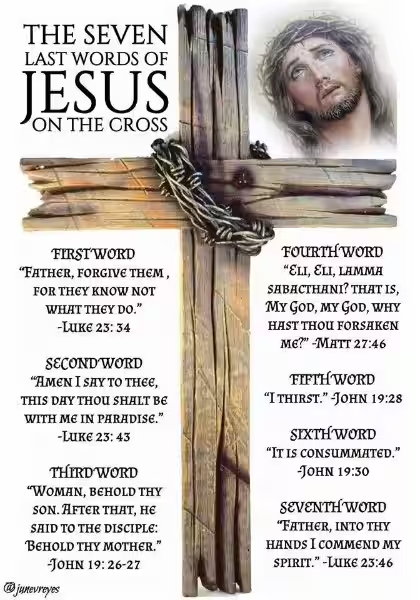
Traditionally, Christian scholarship has identified seven distinct sayings of Jesus from the cross, often referred to as the “Seven Last Words.” These are not necessarily chronologically listed in every Gospel, but when compiled, they form a powerful summary of his ministry and his ultimate sacrifice. Each saying offers a distinct facet of his character and his mission, providing rich material for reflection and spiritual growth. Exploring these words allows us to connect more intimately with the human and divine aspects of Christ’s suffering.
The first of these significant utterances, often cited as Jesus’s last words in a broader sense of his final teachings on the cross, is a prayer for his tormentors: “Father, forgive them, for they do not know what they are doing” (Luke 23:34). This extraordinary act of compassion and grace in the face of immense cruelty is a cornerstone of Christian ethics. It demonstrates a willingness to extend mercy even to those who are actively causing him harm, a concept that is challenging yet deeply aspirational for many. This illustrates a forgiveness that transcends human understanding, offering a model for how we might approach conflict and hurt in our own lives.
“Father, Forgive Them”: The Zenith of Compassion
This initial statement, “Father, forgive them,” uttered as the nails pierced his flesh, is arguably the most astonishing display of love in human history. It’s easy to understand anger and retribution when wronged, but Jesus’s prayer for his executioners points to a higher moral plane. He saw beyond their immediate actions to their spiritual blindness, their lack of comprehension regarding the profound significance of what they were doing. This wasn’t a passive plea; it was an active intercession, a testament to his boundless love for humanity, even in its fallen state.
Consider a situation where someone has grievously wronged you, perhaps spread malicious rumors or caused significant financial loss. The natural human inclination is to retaliate, to seek justice, or at least to hold onto resentment. Jesus, however, models a different path. His prayer suggests that true strength lies not in vengeance but in understanding and ultimately, in forgiveness. It encourages us to look beyond the surface of an offense and consider the underlying ignorance or pain that might be driving the offender, fostering a more empathetic and restorative approach to interpersonal relationships.
“Today You Will Be With Me in Paradise”: The Promise of Salvation
The second of the Jesus’s last words is directed to one of the criminals crucified alongside him: “Truly, I say to you, today you will be with me in paradise” (Luke 23:43). This promise is remarkable for its unconditional nature and its immediate assurance of salvation. The thief, who had likely lived a life of lawlessness, demonstrated a flicker of faith, acknowledging Jesus’s innocence and his kingship. In response, Jesus offers him not a delayed or conditional salvation, but an instantaneous entry into paradise.
This declaration highlights the radical inclusivity of God’s grace as presented in Christianity. It suggests that salvation is not solely earned through a lifetime of perfect deeds, but can be received through genuine repentance and faith, even at the very last moment. For many, this promise provides immense comfort and hope, illustrating that it is never too late to turn to God. It’s a powerful counterpoint to the idea that one must be perfect to find acceptance, offering a message of hope to the marginalized and the repentant.
“Woman, Behold Your Son; Behold Your Mother”: The Legacy of Care
The third and fourth sayings, spoken to his mother Mary and the disciple John, are: “Woman, behold your son!” and then to John, “Behold your mother!” (John 19:26-27). These words, spoken amidst his own suffering, reveal Jesus’s profound concern for the welfare of his loved ones, even as he faced his own imminent death. He was ensuring that his mother would have a supportive home and family after his departure, entrusting her to the care of his most beloved disciple. This demonstrates the importance of human relationships and familial responsibility within his teachings.
This act underscores the humanity of Jesus and his deep connection to those around him. It’s a poignant reminder that even in the face of cosmic events, the simple acts of care and responsibility for our fellow human beings remain paramount. It encourages us to think about our own responsibilities towards our families and communities, ensuring that those we love are provided for and supported, especially in times of vulnerability. This is a very practical application of Jesus’s last words, reminding us of our earthly duties.
The Cry of Abandonment and the Quest for Understanding
The middle part of the cross experience, as depicted in the Gospels, includes a cry that resonates with a deep sense of human anguish and a questioning of divine presence. This moment, while challenging, is also crucial in understanding the fullness of Christ’s sacrifice, encompassing not just physical pain but also spiritual desolation. These words, more than others, highlight the profound struggle he endured on behalf of humanity.
“My God, My God, Why Have You Forsaken Me?”: The Depths of Suffering
One of the most intensely debated and emotionally charged of Jesus’s last words is the cry from the cross: “My God, my God, why have you forsaken me?” (Matthew 27:46; Mark 15:34). This exclamation, often interpreted as a quote from Psalm 22, doesn’t necessarily imply a literal abandonment by God. Instead, it is seen by many theologians as Jesus taking upon himself the full weight of human sin and separation from God. It is the sound of the divine bearing the ultimate consequence of humanity’s estrangement.
This statement speaks to the immensity of the sacrifice – not just the physical pain, but the spiritual agony of feeling cut off from the divine source. It allows believers to connect with Jesus’s suffering on a deeper, more relatable level, understanding that he experienced even the darkest moments of doubt and despair. It is a profound expression of empathy for human struggle, assuring us that even in our loneliest moments, Christ has been there. This is a powerful reminder that God is with us even in our darkest valleys.
Following his cry of abandonment, Jesus utters, “I am thirsty” (John 19:28). This is a simple, human statement that underscores the intense physical suffering he was enduring. After hours of torture, bleeding, and exhaustion, his body was crying out for basic sustenance. The soldiers offer him sour wine on a sponge, a gesture that, while perhaps intended as mockery, also fulfills this last human need. This seemingly small statement has profound implications for understanding Jesus’s dual nature – fully divine yet also fully human.
This is a moment where Jesus’s last words are stripped of complex theological pronouncements and reduced to a primal human need. It highlights that his sacrifice was not an abstract event; it was experienced by a real body enduring real pain. For many, this relatable expression of thirst makes his suffering more tangible and his commitment more admirable. It reminds us that humanity’s deepest needs are understood and shared by the divine.
The Triumph of Completion and the Legacy of Trust
The final words from the cross are imbued with a sense of accomplishment and an unwavering trust in the divine plan. They signify not an end, but a transition to a new covenant and the successful fulfillment of his mission. These concluding declarations offer a powerful message of hope and assurance, solidifying the foundation of Christian faith.
“I Thirst”: The Fulfillment of Scripture
While the cry of “I am thirsty” is a human need, it also holds theological significance in its fulfillment of prophecy. When Jesus says, “I thirst,” it is noted in the Gospel of John that this happens so that the Scripture might be fulfilled, leading to the offering of vinegar. This demonstrates how even his physical suffering was part of a larger divine plan, woven into the fabric of ancient prophecies designed to authenticate his identity and mission. It’s a testament to the interconnectedness of the divine and the human in the unfolding of salvation history.
This aspect of Jesus’s last words encourages us to look for the deeper meanings within our own experiences, even the seemingly mundane or painful ones. It suggests that there can be a divine purpose at play, even when we cannot fully comprehend it. This perspective can offer solace and a sense of meaning in the midst of suffering, reminding us that our lives are part of a grander narrative.
“It Is Finished”: The Victory of Redemption
Perhaps the most powerful and conclusive of Jesus’s last words is, “It is finished” (John 19:30). This declaration signifies the completion of his earthly mission, the atonement for sins, and the establishment of a new covenant between God and humanity. It is a cry of victory, not of defeat, marking the culmination of his life’s work and the ultimate triumph over sin and death. This was the moment the divine plan reached its apex.
This statement is the bedrock of Christian hope. It assures believers that the work of redemption is complete, and that through Christ’s sacrifice, reconciliation with God is made possible. It’s a message of assurance and liberation, freeing individuals from the burden of guilt and the fear of eternal separation. The power of “It is finished” lies in its absolute finality and its promise of new beginnings.
“Father, Into Your Hands I Commit My Spirit”: The Ultimate Act of Trust
Finally, as his life ebbs away, Jesus commends his spirit to God: “Father, into your hands I commit my spirit” (Luke 23:46). This final utterance is a profound act of surrender and ultimate trust. Even in the face of death, Jesus places his complete confidence in his Father’s loving care and ultimate sovereignty. It is a testament to an unwavering faith that transcends even the grave. This is the ultimate expression of Jesus’s last words, a final breath of perfect reliance.
This final act reinforces the centrality of relationship with God in Christian belief. It teaches that even in our final moments, and indeed throughout our lives, the most profound peace comes from committing ourselves to God’s will and care. It’s a powerful example of faith in action, demonstrating that even death is not an end but a transition into the loving presence of the divine. This ultimate act of trust offers a model for how we might face our own inevitable endings with peace and assurance.
In conclusion, Jesus’s last words are far more than historical quotes; they are eternal declarations that continue to shape faith, inspire compassion, and offer profound hope to billions around the globe. From the boundless forgiveness of “Father, forgive them” to the triumphant declaration of “It is finished,” these final utterances provide a roadmap for living a life of faith, love, and ultimate trust in the divine. They are a enduring legacy, a divine whisper that echoes through time, inviting us all to reflect on their profound meaning and to integrate their wisdom into our own journeys.
Frequently Asked Questions: Jesus’ Last Words and Religion
What are generally considered Jesus’ last words from the cross?
The Gospels record several sayings of Jesus from the cross. The most commonly cited last words include “Father, forgive them, for they know not what they do” (Luke 23:34), “Truly, I say to you, today you will be with me in paradise” (Luke 23:43), “Eloi, Eloi, lema sabachthani?” which translates to “My God, my God, why have you forsaken me?” (Mark 15:34, Matthew 27:46), “I thirst” (John 19:28), “It is finished” (John 19:30), and “Father, into your hands I commit my spirit” (Luke 23:46).
How do different Christian denominations interpret Jesus’ last words?
While the core events are accepted, interpretations can vary. For example, the understanding of “It is finished” can emphasize the completion of Christ’s atoning sacrifice, the fulfillment of prophecy, or the end of the Old Covenant. The cry of abandonment is often understood as Jesus experiencing the full weight of humanity’s sin, rather than a genuine separation from God the Father. The forgiveness expressed on the cross is seen as a paramount example of Christian love and mercy.
What is the theological significance of Jesus’ last words for Christianity?
Jesus’ last words are profoundly significant. They demonstrate his obedience to God, his love for humanity, his victory over sin and death, and the completion of his redemptive mission. His words offer assurance of salvation, illustrate forgiveness, and provide a model for enduring suffering with faith.
How do Jesus’ last words relate to the concept of sacrifice in religion?
In Christianity, Jesus’ death on the cross, punctuated by his last words, is understood as the ultimate sacrifice for the sins of humanity. His willing submission and suffering, culminating in his final utterances, fulfill ancient sacrificial systems and establish a new covenant. The words “It is finished” signify the once-for-all nature of this sacrifice.
Are there other religious perspectives on Jesus’ final moments and sayings?
Other religions do not hold Jesus’ last words as religiously authoritative in the same way Christianity does. For instance, in Islam, Jesus (Isa) is a revered prophet, but his crucifixion is not understood as a salvific sacrifice, and he is believed to have ascended to heaven without experiencing death on the cross. Judaism views Jesus as a historical figure, but not as the Messiah or divine. Hinduism and Buddhism have their own theological frameworks and do not incorporate Jesus’ crucifixion into their doctrines.