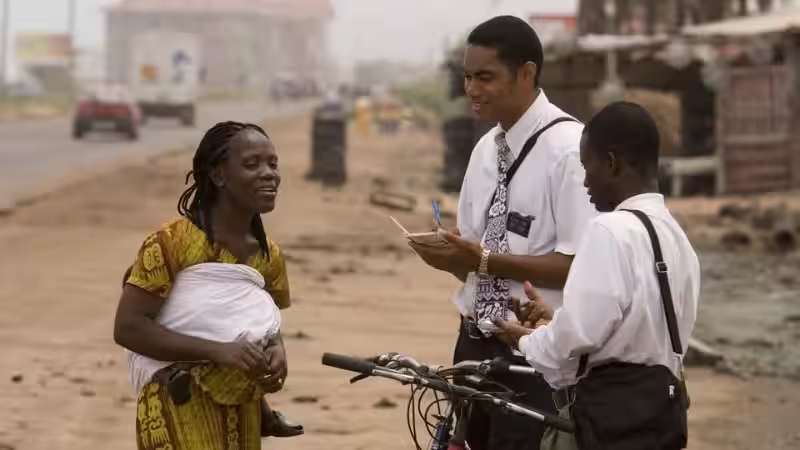
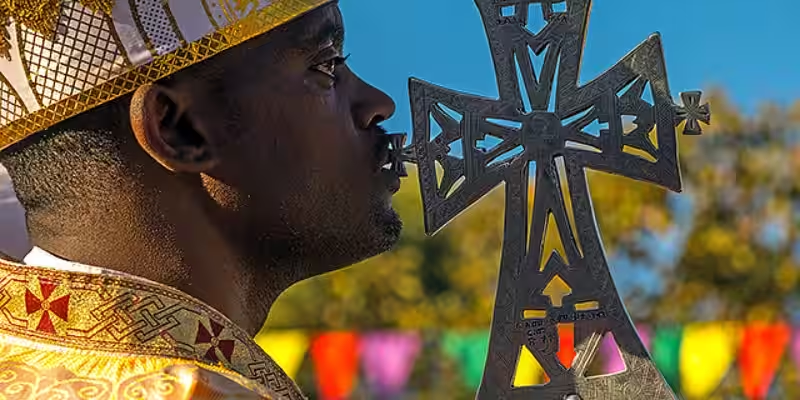
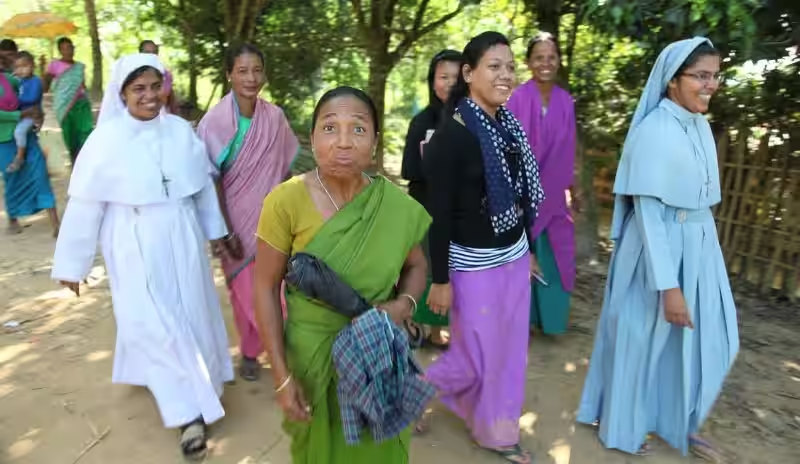
The story of missionaries in Africa is a narrative as vast and complex as the continent itself. For centuries, individuals driven by profound faith and a desire to share their beliefs have journeyed to African lands, leaving an indelible mark on its religious landscape and societal fabric. This is not a simple tale of one-way imposition; rather, it’s a dynamic interplay of religion, cultural exchange, and human endeavor that continues to shape communities across Africa today. Understanding the impact of missionaries in Africa requires delving into their motivations, the diverse approaches they employed, and the multifaceted legacies they’ve left behind.
The arrival of missionaries in Africa was often a watershed moment, heralding significant shifts in traditional belief systems, social structures, and even the introduction of new technologies and educational practices. While the motivations of early missionaries were often rooted in a sincere desire for spiritual conversion, their work inevitably intersected with colonial ambitions, creating a complex and sometimes contentious history. Today, the presence and impact of missionaries in Africa remain a subject of ongoing discussion and analysis, reflecting the evolving nature of faith and its role in a rapidly changing world.
Motivations Behind the Mission: Seeds of Faith and Social Change
The driving forces behind the journeys of missionaries in Africa were as varied as the individuals themselves. At its core, the primary motivation for most was a deep-seated religious conviction. They believed they possessed a truth that would bring salvation and spiritual fulfillment to those they encountered. This evangelical imperative was a powerful catalyst, inspiring countless individuals to dedicate their lives to spreading their faith, often in the face of immense hardship and personal sacrifice.
Beyond the spiritual, many missionaries in Africa were also propelled by a desire to enact social good. They recognized the dire need for education, healthcare, and humanitarian aid in many parts of the continent. For example, establishing schools and hospitals became a common and tangible aspect of missionary work. These institutions often provided opportunities and services that were previously unavailable, significantly improving the lives of many Africans. This dual focus on spiritual and material well-being was a hallmark of much missionary endeavor, aiming to uplift individuals holistically.
The Diverse Faces of Mission: Approaches and Adaptations
The experience of missionaries in Africa was far from monolithic. Their approaches varied significantly, influenced by their denominations, their personal philosophies, and crucially, the specific cultural contexts they entered. Some missionaries adopted a more assimilationist stance, encouraging converts to adopt Western customs and lifestyles alongside Christian practices. This often meant focusing on language translation, literacy programs, and the establishment of churches that mirrored European architectural styles and liturgical forms.
Conversely, other missionaries in Africa recognized the importance of cultural sensitivity and adaptation. They sought to integrate Christian teachings with existing African traditions, finding common ground and allowing for a more organic growth of faith. This could involve adapting music and art to local styles, incorporating traditional storytelling into religious narratives, or even working with existing leadership structures. These more nuanced approaches often fostered a stronger sense of ownership and authenticity within the burgeoning African Christian communities.
Impact and Legacy: A Multifaceted Inheritance
The legacy of missionaries in Africa is a profound and often debated topic. On one hand, their work undeniably contributed to the spread of Christianity, which has become a dominant religion in many African nations. The establishment of educational institutions by missionaries laid the groundwork for literacy and higher learning, empowering generations of Africans and contributing to the development of intellectual and professional classes. Furthermore, the healthcare services provided by missionary hospitals and clinics, often operating in remote and underserved areas, saved countless lives and improved public health outcomes.
However, the impact is not without its complexities. The historical entanglement of missionary work with colonialism cannot be ignored. In some instances, missionary activities were inadvertently or intentionally used to facilitate colonial expansion, leading to the erosion of indigenous cultures and the imposition of foreign values. This has led to a critical reassessment of the missionary narrative, acknowledging both the positive contributions and the detrimental consequences. Today, the vibrant and independent African church, with its unique expressions of faith, stands as a testament to both the enduring power of the gospel and the resilience of African cultures in shaping their own spiritual destinies.
Contemporary Missions: Evolving Roles and New Horizons
The landscape of missionaries in Africa is continually evolving. While traditional forms of missionary work persist, there’s a growing emphasis on indigenous leadership and African-led initiatives. Many contemporary missions are now driven by African Christians themselves, who are taking the lead in evangelism, social development, and theological education. This signifies a powerful shift towards self-sufficiency and empowerment within African Christian communities.
Furthermore, the motivations and methods of missionaries in Africa are adapting to the challenges and opportunities of the 21st century. This includes a greater focus on addressing contemporary issues such as poverty, disease outbreaks, and political instability, often through community development projects and advocacy work. The role of technology in communication and outreach has also transformed how missions operate, connecting individuals and organizations across vast distances. The ongoing story of missionaries in Africa is a testament to the enduring human quest for meaning and connection, played out on a continent rich in both challenges and boundless potential.
Frequently Asked Questions: Missionaries in Africa and Religion
What is the primary role of missionaries in Africa?
Missionaries in Africa traditionally focus on spreading their religious faith, often Christianity, through evangelization, teaching, and community outreach. This can include establishing churches, providing education, offering healthcare services, and engaging in humanitarian aid.
What religions are most commonly represented by missionaries in Africa?
Christianity, particularly Protestant and Catholic denominations, has historically been the most prevalent religion represented by missionaries in Africa. However, other religious groups, including Islam and, to a lesser extent, other faiths, also have missionary activities on the continent.
What are some of the positive impacts of missionary work in Africa?
Missionary efforts have often contributed to the establishment of schools and hospitals, providing access to education and healthcare in underserved areas. They have also played a role in literacy programs, social development initiatives, and the preservation of cultural heritage in some communities.
What are some of the criticisms or controversies surrounding missionary work in Africa?
Criticisms include historical instances of cultural imposition, the legacy of colonialism, and concerns about proselytization undermining local belief systems. There are also debates about financial transparency, the sustainability of aid, and the potential for missionaries to create dependency.
How has the role of missionaries in Africa evolved over time?
The role of missionaries has shifted from direct evangelization and establishment of institutions to more collaborative approaches. Many contemporary missionaries focus on partnership with local leaders, capacity building, and addressing socio-economic issues in conjunction with spiritual guidance, often emphasizing inculturation (integrating faith with local culture).
What is the relationship between missionary work and political influence in Africa?
Historically, missionary work was sometimes intertwined with colonial expansion and political influence. In the modern era, while overt political manipulation is less common, missionary organizations can still hold significant social and economic influence, which can indirectly impact political landscapes.
Are there African missionaries working within Africa?
Yes, increasingly, there are many African individuals and denominations who are actively engaged in missionary work within their own countries and across the continent. This reflects a growing sense of religious independence and a desire to evangelize and serve within African contexts.
What is the impact of missionary work on traditional African religions?
The impact varies. In some cases, missionary work has led to the decline or abandonment of traditional religious practices as people convert to introduced faiths. In other instances, there have been syncretic developments, where elements of traditional beliefs and practices are incorporated into new religious expressions.