In the heart of Africa, where vibrant cultures and ancient traditions intertwine, lies a story of profound faith and unwavering courage that continues to resonate through generations. The narrative of the Uganda Martyrs is not merely a historical account of religious persecution; it is a testament to the enduring power of conviction, a cornerstone of Uganda’s religious identity, and a powerful reminder of the sacrifices made for spiritual freedom. Their story, etched in the annals of history, offers profound lessons on religion, resilience, and the very essence of what it means to stand firm in one’s beliefs, even in the face of unimaginable adversity.
This profound saga, deeply woven into the fabric of Uganda’s national consciousness, speaks to the universal human struggle for faith and identity. It’s a story that transcends simple religious adherence, touching upon themes of loyalty, sacrifice, and the profound impact individuals can have when driven by an unshakeable inner compass. Understanding the Uganda Martyrs is to understand a significant part of Uganda’s religious heritage and the deep-seated spirituality that animates its people.
The late 19th century in the Kingdom of Buganda was a period of immense change. European explorers and missionaries arrived, bringing with them new technologies, political influences, and, crucially, Christianity. While the Baganda people had their own rich spiritual traditions, the arrival of the Catholic and Anglican faiths presented a new way of understanding the divine. Initially, the young King Mwanga II showed a degree of tolerance, even curiosity, towards the new religions. However, as the influence of the missionaries grew, particularly their emphasis on morality and their refusal to participate in certain traditional court practices, a sense of unease began to brew within the royal court.
The missionaries preached a message of love, forgiveness, and obedience to a higher power, a message that resonated with many, particularly the young men who served in the king’s court. These newly converted Christians, inspired by their faith, began to assert their newfound principles, leading to clashes with the king’s authority and the established social order. This growing tension, fueled by both religious conviction and political maneuvering, was a precursor to the tragic events that would soon unfold, forever marking the Uganda Martyrs as symbols of unwavering faith in a time of immense upheaval.
The Escalation of Persecution: A King’s Fear and a Martyrs’ Resolve
King Mwanga II, increasingly feeling his authority challenged by the growing number of Christians who prioritized their faith over his commands, reacted with fear and anger. He perceived the missionaries and their followers not just as a religious threat, but as a political one, potentially undermining his rule and the traditions of Buganda. This fear led to a brutal crackdown. The king issued edicts against the Christians, demanding their renunciation of faith. Many were given the stark choice: recant or face death.
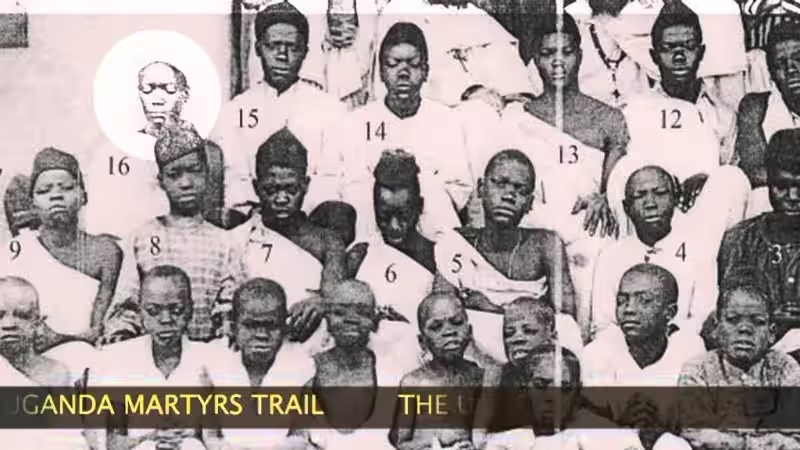
The response of the young converts was nothing short of astounding. Rather than abandoning their beliefs, many chose to embrace martyrdom. The most prominent among them were the 22 Catholic and 12 Anglican martyrs, who, despite enduring horrific torture and agonizing deaths, refused to deny their faith. Their steadfastness in the face of such brutality became a powerful testament to the depth of their commitment. The story of St. Charles Lwanga, the leader of the Catholic martyrs, and the Anglican martyrs, who faced their end with prayers and hymns, continues to inspire awe and reverence centuries later. This period of intense persecution solidified their place in Ugandan history and religious lore.
The Road to Namugongo: A Pilgrimage of Faith and Remembrance
The place where many of the Uganda Martyrs met their tragic end, the hill of Namugongo, has since become a sacred site. It is here that the Uganda Martyrs’ Shrine stands, a beacon of religious pilgrimage and a place of profound spiritual significance. Every year, on June 3rd, thousands upon thousands of pilgrims, from Uganda and beyond, converge on Namugongo to commemorate the sacrifices of these brave individuals. This annual event is one of the largest religious gatherings in Africa, attracting people of all denominations who come to pay their respects and seek spiritual inspiration.
The pilgrimage to Namugongo is more than just a historical commemoration; it is a vibrant expression of living faith. Pilgrims often undertake the journey on foot, traveling hundreds of kilometers, enduring hardships, and praying for guidance and intercession. This arduous journey symbolizes their own spiritual struggles and their desire to connect with the enduring spirit of the martyrs. The atmosphere at Namugongo during this time is electric, filled with prayer, song, and a palpable sense of community and shared devotion.
The Enduring Impact: Faith, Identity, and National Unity
The Uganda Martyrs have left an indelible mark on Uganda’s national identity and its religious landscape. Their story serves as a powerful reminder of the importance of religious freedom and the courage it takes to defend one’s beliefs. For many Ugandans, the martyrs are not just historical figures; they are intercessors and role models, embodying virtues such as faithfulness, courage, and sacrifice. Their legacy has fostered a deep sense of religious tolerance and understanding within the country, with Catholics, Anglicans, and other denominations recognizing their shared heritage in these heroic figures.
The Uganda Martyrs have also played a significant role in shaping Uganda’s spiritual resilience. In times of national difficulty or personal struggle, their story offers a source of hope and strength. It teaches that even in the darkest of times, faith can provide an unyielding anchor. The ongoing veneration of the Uganda Martyrs ensures that their message of unwavering commitment to one’s spiritual convictions continues to inspire and guide the nation, solidifying their status as a vital pillar of Uganda’s religious and cultural heritage for generations to come.
Uganda Martyrs: Frequently Asked Questions
Who were the Uganda Martyrs?
The Uganda Martyrs were a group of 22 Catholic and 23 Anglican converts to Christianity who were executed for their faith in the late 19th century in the Kingdom of Buganda, present-day Uganda.
The majority of the Catholic martyrs were executed between 1885 and 1887 under the orders of Kabaka Mwanga II. The Anglican martyrs were executed at various times, with the most prominent group in 1886.
Why were they executed?
Their executions were primarily driven by a combination of political and religious factors. Kabaka Mwanga II perceived the growing influence of Christianity, which challenged his authority and traditional religious practices, as a threat to his power and the stability of his kingdom. The martyrs refused to renounce their faith and continued to practice their religion openly.
What is their religious significance?
The Uganda Martyrs are venerated as saints and martyrs by both the Catholic Church and the Anglican Communion. They are a symbol of faith, courage, and sacrifice.
When are they commemorated?
The feast day for the Uganda Martyrs is celebrated on June 3rd. This day is a major pilgrimage and celebration in Uganda, attracting thousands of people from both within and outside the country.
Where are the Uganda Martyrs buried?
The remains of the Catholic martyrs are interred at the Uganda Martyrs’ Shrine Namugongo, a significant pilgrimage site. The Anglican martyrs are also commemorated at Namugongo and have their own shrines.
What is the role of the Uganda Martyrs in Ugandan society?
The Uganda Martyrs hold a significant place in Ugandan identity and religious life. They are seen as patrons and intercessors, and their story continues to inspire faith and encourage religious tolerance and commitment.
Are there specific shrines dedicated to the Uganda Martyrs?
Yes, the most prominent shrine is the Uganda Martyrs’ Shrine at Namugongo, a major Catholic pilgrimage destination. There are also Anglican shrines and other places of worship and commemoration dedicated to them across Uganda.