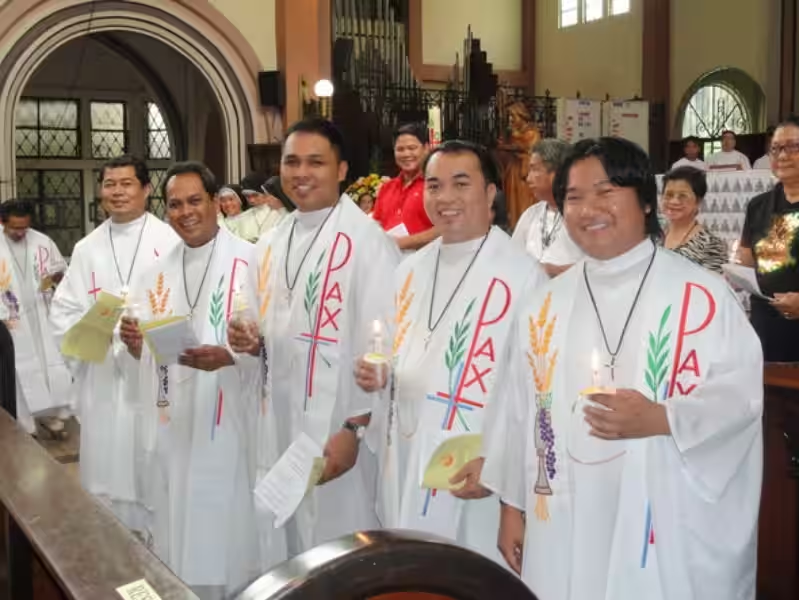
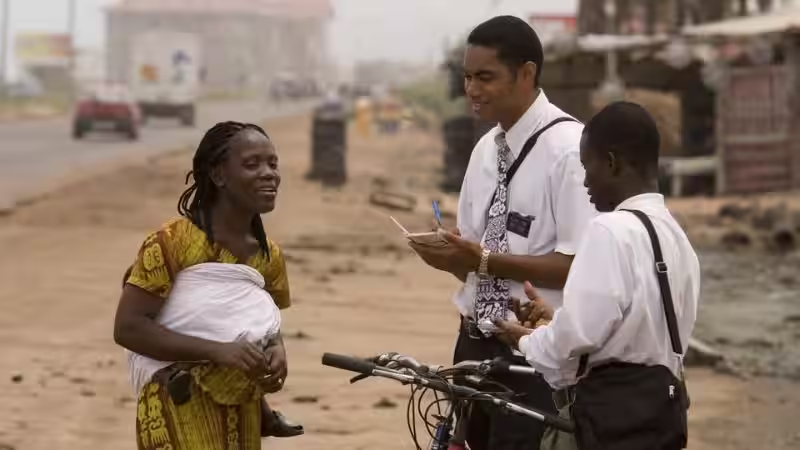
Across continents and cultures, a quiet yet powerful force has been shaping the religious landscape for decades: the Filipino missionary. These dedicated individuals, driven by an unwavering faith and a deep desire to share their spiritual calling, represent a profound aspect of the global religious tapestry. Their stories are often untold, their sacrifices unheralded, yet their influence is undeniable, weaving a narrative of devotion, resilience, and profound human connection that transcends borders and beliefs. From bustling metropolises to remote villages, Filipino missionaries are the unseen hands extending the reach of faith.
The journey of a Filipino missionary is rarely a simple one. It’s a path marked by personal sacrifice, cultural adaptation, and an unshakable commitment to their chosen path. This article delves into the multifaceted world of Filipino missionaries, exploring their motivations, the challenges they face, and the profound impact they have on individuals and communities worldwide. We will discover how their unique cultural background, deeply rooted in faith, informs their approach to ministry and strengthens the global presence of various religions.
Roots of Faith: The Cultural Tapestry of Filipino Spirituality
To understand the phenomenon of Filipino missionaries, one must first appreciate the rich spiritual heritage that permeates Filipino culture. The Philippines, a nation with a predominantly Christian population, has a history deeply intertwined with religious devotion. This isn’t just a matter of tradition; it’s a living, breathing aspect of daily life, evident in the ubiquitous presence of churches, the vibrant celebrations of religious fiestas, and the deeply ingrained sense of community often centered around faith. This inherent spirituality provides a fertile ground for individuals to consider a life of service beyond their immediate surroundings.
The Filipino psyche is often characterized by a strong sense of community (bayanihan), a willingness to help others, and a deep respect for elders and tradition. These cultural values, when combined with a fervent religious calling, create individuals who are compassionate, adaptable, and profoundly dedicated to their mission. This inherent predisposition towards service and connection makes them uniquely suited for the demanding and often challenging work of global evangelism and humanitarian aid. Consider the simple communal act of preparing a feast for a neighbor in need; this spirit of shared responsibility is often magnified in the missionary context.
The decision to become a missionary is rarely born out of a single impulse. For Filipino missionaries, the motivations are often a complex interplay of deep personal conviction, a desire to alleviate suffering, and a profound sense of purpose. Many feel a direct calling from a higher power, a whisper in their hearts urging them to dedicate their lives to spreading a message of hope and love. This isn’t just about spreading dogma; it’s about offering solace, building communities, and providing tangible support to those in need. This internal compass guides them towards a life of unwavering dedication.
Furthermore, the experience of witnessing social inequalities and poverty within their own nation often fuels a desire to extend their efforts globally. Having experienced hardship themselves, Filipino missionaries possess a unique empathy and understanding for those facing similar struggles in other parts of the world. They are not just preachers; they are often builders, educators, healthcare providers, and counselors, addressing the holistic needs of the communities they serve. Their motivation is often rooted in a tangible desire to make a real difference, to be a beacon of light in the darkness.
Navigating New Worlds: Challenges and Triumphs of the Filipino Missionary
The path of a Filipino missionary is anything but smooth. They face a myriad of challenges, from language barriers and cultural misunderstandings to navigating complex political landscapes and sometimes outright hostility. Adapting to entirely new ways of life, far from the familiar comforts of home, requires immense resilience and a profound capacity for empathy. The simple act of sharing a meal can become a complex cultural negotiation, requiring patience and a willingness to learn.
Despite these hurdles, the triumphs of Filipino missionaries are often deeply profound. They witness the transformation of lives and communities, seeing their efforts bear fruit in ways that often exceed their initial expectations. The establishment of schools, the provision of clean water, the healing of the sick, and the spiritual upliftment of individuals are commonplace achievements. These successes are not just statistical victories; they represent individual lives changed for the better, families strengthened, and hope rekindled. This is the essence of their rewarding yet arduous journey.
The Power of Adaptation: Blending Faith and Local Culture
One of the most remarkable aspects of Filipino missionary work is their ability to adapt and integrate their faith with the diverse cultures they encounter. Unlike a rigid, one-size-fits-all approach, Filipino missionaries often demonstrate a remarkable flexibility, finding ways to express their religious beliefs that resonate with local customs and traditions. This isn’t about compromising their faith, but about finding common ground and building bridges of understanding. They understand that true evangelism is about connection, not coercion.
This cultural sensitivity allows them to build authentic relationships within their host communities. Instead of imposing foreign practices, they often seek to understand and incorporate local expressions of spirituality. For example, a Filipino missionary might learn traditional songs and weave them into their worship services, or adapt their teaching methods to suit the educational styles of the local population. This respectful integration fosters trust and makes the message of faith more accessible and meaningful. It’s like learning a new language to truly communicate with someone you care about.
Beyond Borders: The Global Footprint of Filipino Missionary Endeavors
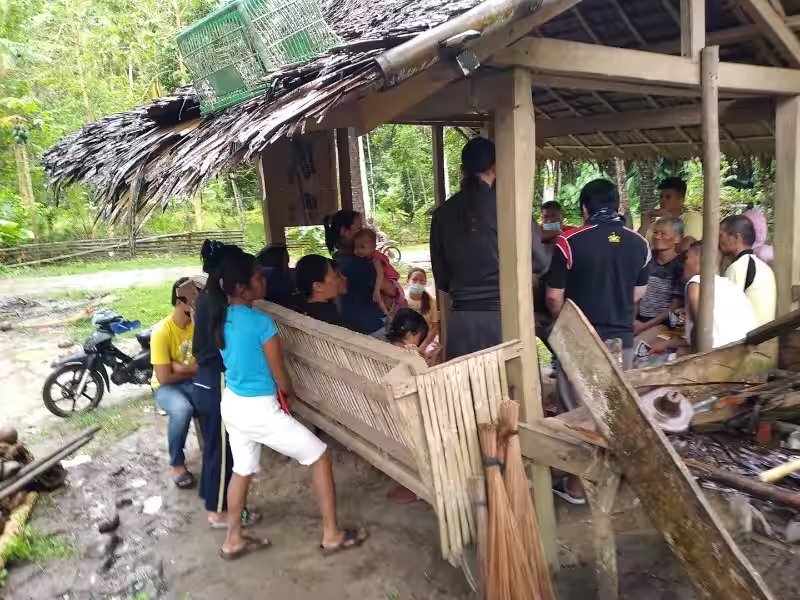
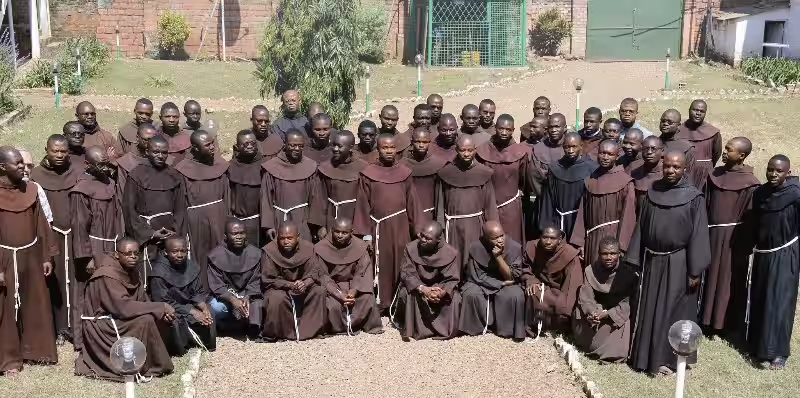
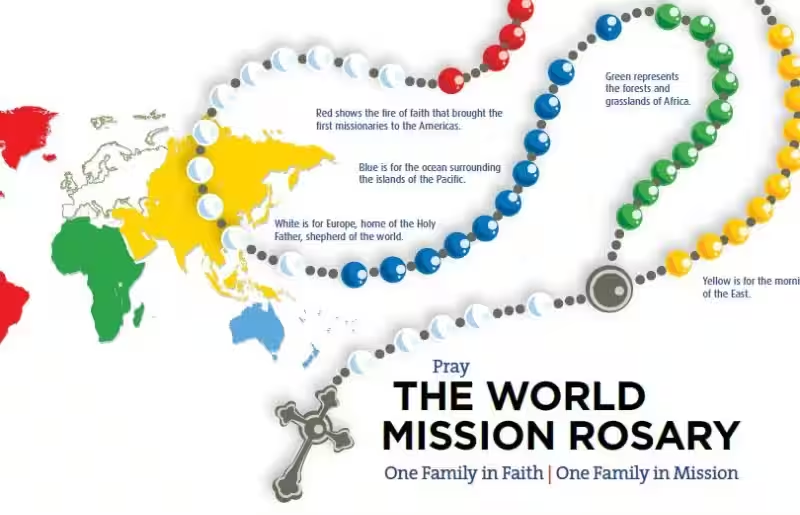
The influence of Filipino missionaries extends far beyond the shores of their homeland. They serve in virtually every corner of the globe, from the bustling streets of New York and the remote villages of Africa to the diverse landscapes of Asia and the emerging communities in South America. Their presence is a testament to the global reach of faith and the enduring power of human connection. Whether they are part of a large, established religious order or working independently, their impact is palpable.
These missionaries contribute significantly to the diversification and enrichment of religious practices worldwide. They bring with them unique perspectives, vibrant traditions, and a deep well of compassion that resonates with people from all walks of life. Their dedication to service often transcends specific religious denominations, fostering interfaith dialogue and promoting a shared sense of humanity. The world is a richer place because of the unseen hands of these devoted individuals. Their work is a living testament to the universal values of love, compassion, and service.
Frequently Asked Questions: Filipino Missionaries and Religion
What are the primary religions that Filipino missionaries are involved with?
Filipino missionaries are predominantly involved with Christianity, with a significant majority serving within Catholic and various Protestant denominations. However, there are also instances of Filipino individuals engaging in missionary work for other faiths, though this is less common.
What motivates Filipino individuals to become missionaries?
The primary motivations for Filipino missionaries often stem from a deep-seated faith, a desire to share their religious beliefs, and a calling to serve others, particularly those in need. Cultural factors such as a strong sense of community and familial obligation to spread good values also play a role.
Are Filipino missionaries primarily sent to other countries, or do they also work within the Philippines?
Filipino missionaries serve both domestically and internationally. Many are sent to remote areas or underserved communities within the Philippines to spread their faith and provide social services. A significant number also go abroad, particularly to countries with large Filipino diaspora populations or where their religious organizations have a strong presence.
What types of work do Filipino missionaries typically undertake?
The work of Filipino missionaries is diverse and often includes evangelism, religious education, pastoral care, humanitarian aid, disaster relief, community development projects (such as building schools or clinics), and social justice advocacy.
Are there specific religious orders or organizations that heavily recruit Filipino missionaries?
Yes, many Catholic religious orders (like the Society of the Divine Word, Missionaries of the Sacred Heart, and various contemplative orders) and Protestant mission agencies actively recruit and support Filipino missionaries, recognizing their dedication and often their resilience.
How does Filipino culture influence their missionary work?
Filipino culture, with its emphasis on hospitality, strong family ties, resilience, and a deep spiritual inclination, significantly shapes their approach to missionary work. They often bring a unique blend of joyous faith, communal spirit, and a willingness to adapt to local customs while remaining true to their religious calling.
What challenges do Filipino missionaries commonly face?
Challenges can include language barriers, cultural misunderstandings, adapting to different climates and living conditions, financial limitations, feelings of homesickness, and sometimes even safety concerns depending on their mission location. They may also face internal challenges related to maintaining their faith and calling in the face of adversity.