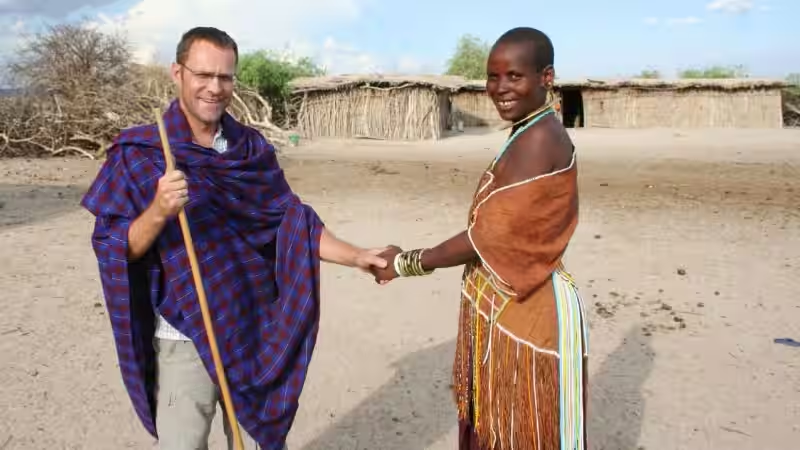
The vibrant tapestry of East Africa is woven with many threads, and speaking Swahili is undoubtedly one of its most prominent. More than just a language; it’s a bridge, a cultural connector, and for many, a profound spiritual pathway. If you’re curious about how this beautiful Bantu language intersects with religion, you’ve embarked on a fascinating journey. This article aims to illuminate that connection, offering insights into how speaking Swahili can deepen your understanding and appreciation of faith in this dynamic region.
The beauty of speaking Swahili lies in its universality within East Africa. Whether you find yourself in the bustling markets of Nairobi, the serene shores of Zanzibar, or the spiritual heartland of Uganda, the ability to communicate in Swahili opens doors. This linguistic common ground is particularly significant when exploring the religious landscape, fostering genuine interactions and a deeper sense of community.
The Pillars of Faith: Islam and Christianity in Swahili-Speaking Lands
Speaking Swahili provides direct access to the core tenets and practices of the two dominant religions in East Africa: Islam and Christianity. The vast majority of Swahili speakers adhere to one of these faiths, and the language is intrinsically linked to their expression, dissemination, and daily lived experience. Understanding this link is crucial for anyone interested in the religious fabric of the region.
For centuries, speaking Swahili has been the language of Islamic scholarship and practice along the Swahili Coast. From the call to prayer (Adhan) echoing through the minarets of ancient mosques to the eloquent sermons delivered on Fridays at Masjid, Swahili serves as a vital medium. Learning Swahili allows you to engage with Islamic literature, understand theological discussions, and connect with the rich history of Islam in places like Lamu, Mombasa, and Kilwa. The very vocabulary of Islamic worship – words like sala (prayer), dhikr (remembrance of God), and imaan (faith) – are seamlessly integrated into everyday Swahili conversation.
Similarly, Christianity has found a powerful voice through speaking Swahili. Missionaries, both historical and contemporary, have utilized the language to translate the Bible, disseminate Christian teachings, and establish enduring congregations. Hymns sung in Swahili, often with incredibly moving melodies and poignant lyrics, are a testament to this. Speaking Swahili enables you to participate in church services, understand the nuances of theological education conducted in the language, and appreciate the spiritual journeys of millions who find solace and guidance in their Christian faith, expressed through this common tongue.
Understanding Religious Texts and Traditions in Swahili
The act of speaking Swahili is not merely about conversational fluency; it’s about unlocking a wealth of cultural and religious knowledge embedded within the language itself. Many foundational texts and oral traditions, particularly those predating widespread Western education, were preserved and transmitted through Swahili. This linguistic heritage offers a unique window into the spiritual lives of communities.
The translation of the Holy Quran into Swahili, for instance, has been a monumental undertaking, making the divine message accessible to a broader audience. Speaking Swahili allows you to engage with these translations, potentially reading and comprehending verses that might otherwise remain inaccessible. Furthermore, the rich oral traditions of storytelling, proverbs, and epic poems, often infused with religious morals and wisdom, are best understood and appreciated when you can converse and listen in Swahili. These narratives, passed down through generations, offer invaluable insights into the ethical frameworks and spiritual values that shape societies.
Beyond formal texts, even everyday expressions can carry religious weight. Phrases like “Mungu akubariki” (May God bless you) or “Inshallah” (God willing) are commonplace, weaving faith into the social fabric. Speaking Swahili naturally incorporates these expressions, fostering a more profound connection to the spiritual undercurrents of daily life. These seemingly small linguistic choices reflect a worldview where religion is not a separate compartment but an integral part of existence.
The Social and Spiritual Dimensions of Speaking Swahili
The power of speaking Swahili extends beyond theological understanding to encompass the social and spiritual bonds that religion fosters. In Swahili-speaking communities, shared faith often translates into strong communal ties, and the language acts as the lubricant for these interactions. Whether it’s participating in community outreach programs, attending religious festivals, or simply sharing a meal with fellow worshippers, speaking Swahili facilitates genuine connection.
The concept of “umoja” (unity) is deeply resonant within Swahili culture, and religion often serves as a catalyst for this principle. When you can communicate in Swahili, you can more readily participate in community initiatives driven by faith-based organizations. This could involve volunteering at an orphanage supported by a local church or contributing to a Ramadan food drive organized by a mosque. Speaking Swahili allows you to move beyond being an observer to becoming an active participant, experiencing the solidarity and mutual support that are hallmarks of religiously motivated communities.
Furthermore, the spiritual journey is often a communal one. Speaking Swahili enables you to join study groups, attend prayer meetings, and engage in heartfelt conversations about faith. These shared experiences, amplified by the ability to communicate directly, can be incredibly enriching. Instead of relying on translations or intermediaries, you can directly hear the stories, ask the questions, and offer the support that are so crucial to spiritual growth. The warmth and hospitality often extended to those who make an effort to speak Swahili can also be a deeply spiritual experience in itself, reflecting the welcoming nature of many religious traditions.
Bridging Divides and Building Understanding Through Language
In a world often marked by division, speaking Swahili offers a remarkable tool for building bridges and fostering mutual understanding, especially across religious lines. East Africa is remarkably diverse, with a rich mosaic of ethnicities and beliefs. While Islam and Christianity are prominent, indigenous African spiritual beliefs and other faiths also coexist. The ability to speak Swahili provides a common ground that can transcend these differences, allowing for respectful dialogue and shared experiences.
Imagine attending a cultural festival where both Christian and Muslim performers are showcasing their traditions. If you can speak Swahili, you can engage with people from both communities, learn about their respective celebrations, and appreciate the shared humanity that underlies their distinct practices. This is far more impactful than simply observing from a distance. Speaking Swahili empowers you to ask questions, share your own perspectives, and forge connections that might otherwise remain out of reach.
This linguistic bridge is particularly valuable when discussing sensitive topics. Speaking Swahili allows for nuance and empathy, enabling conversations that might be fraught with misunderstanding in another language. For instance, understanding the Islamic concept of “jihad” directly from a Swahili-speaking scholar, rather than through potentially biased media interpretations, can offer a completely different perspective. Similarly, hearing a Christian pastor explain the significance of the Eucharist in Swahili can provide a deeper appreciation for the rite. Ultimately, speaking Swahili fosters an environment where religion can be explored with openness, respect, and a genuine desire for connection.
Frequently Asked Questions about Swahili and Religion
What is Swahili and where is it spoken?
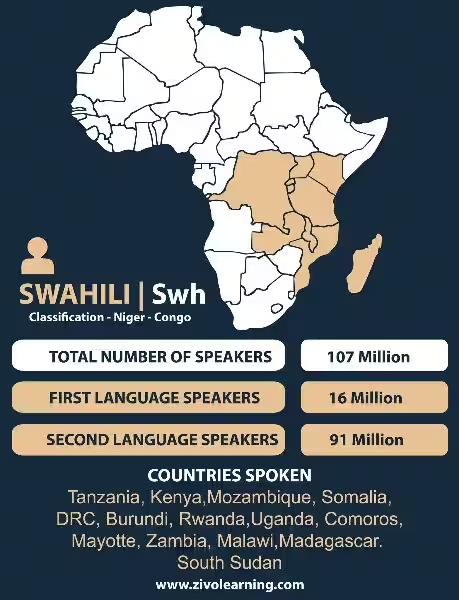
Swahili, also known as Kiswahili, is a Bantu language spoken by millions of people in East Africa. It is an official language in Tanzania and Kenya and is widely used as a lingua franca in Uganda, Rwanda, Burundi, Mozambique, and the Democratic Republic of Congo.
Is Swahili a difficult language to learn?
Swahili is generally considered one of the easier African languages for English speakers to learn. It has a regular grammar, a relatively straightforward pronunciation, and a significant amount of vocabulary borrowed from Arabic, Persian, and English, which can be familiar to learners.
What are the main religions in Swahili-speaking regions?
The primary religions in Swahili-speaking regions are Islam and Christianity. Islam is particularly prevalent in coastal areas and has had a significant influence on Swahili culture and language. Christianity is also widely practiced, with various denominations present across the region.
Are there indigenous African religions in Swahili-speaking countries?
While Islam and Christianity are dominant, indigenous African traditional religions are also practiced in many Swahili-speaking areas, often alongside or blended with the major religions. These traditional beliefs and practices vary greatly by ethnic group and region.
Is there religious diversity in Swahili-speaking countries?
Yes, there is considerable religious diversity. While Islam and Christianity are the most widespread, there are also smaller communities of Hindus, Sikhs, Jews, and adherents of traditional faiths. This diversity contributes to the rich cultural tapestry of East Africa.