Embracing the Spirit of Lent: More Than Just Rules
The season of Lent, a solemn period of 40 days leading up to Easter, holds a profound significance within the Catholic faith. It’s a time dedicated to prayer, fasting, and almsgiving, offering believers a unique opportunity for spiritual introspection and growth. For many, the phrase “Lent rules Catholic” conjures up images of strict regulations and prohibitions. While there are indeed established guidelines, understanding the underlying spirit behind these practices is key to a truly meaningful Lenten observance. Lent isn’t about suffering for the sake of it; rather, it’s a deliberate journey of drawing closer to God, recognizing our human frailty, and preparing our hearts to celebrate the resurrection of Jesus Christ.
Think of Lent as a spiritual detox. Just as we might cleanse our bodies of unhealthy habits, Lent invites us to shed spiritual “clutter” – the attachments, distractions, and sins that distance us from God and our neighbor. The specific Lent rules Catholic observance provides a framework for this purification, guiding us through practices that foster humility, self-discipline, and a deeper appreciation for Christ’s sacrifice. These aren’t arbitrary restrictions; they are ancient traditions designed to cultivate a more prayerful and penitential spirit, ultimately leading to a richer experience of the Easter joy.
The Pillars of Lent: Understanding the Core Practices
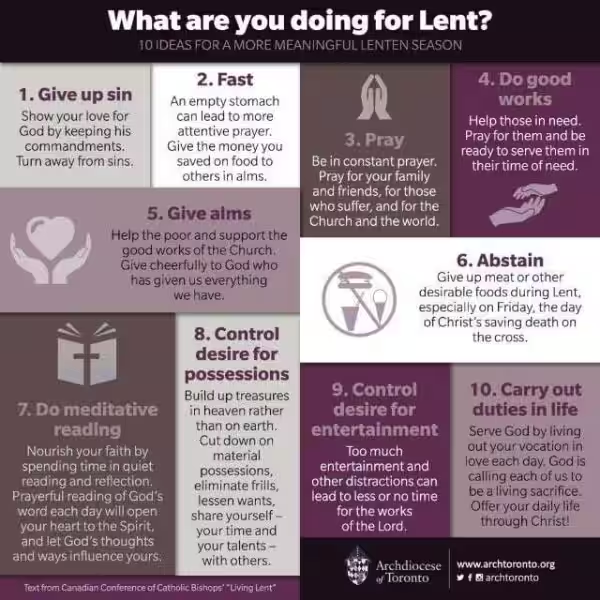
At the heart of Catholic Lent lie three fundamental practices: prayer, fasting, and almsgiving. These pillars are not merely suggestions but integral components of a faithful observance. Each offers a distinct path to spiritual transformation, working in synergy to deepen our relationship with God and to cultivate a more compassionate heart towards others. Understanding the purpose and application of each is crucial for navigating the Lent rules Catholic framework effectively.
Prayer is the bedrock of our relationship with God. During Lent, the Church encourages us to intensify our prayer life. This can manifest in various ways: increased attendance at Mass, personal prayer, spending time with Scripture, or engaging in devotional practices like the Stations of the Cross. It’s about intentionally seeking God’s presence and listening to His voice amidst the noise of daily life. Consider setting aside just 15-20 minutes each day for quiet reflection or reciting the Rosary; even small, consistent efforts can yield significant spiritual rewards.
Fasting and Abstinence: Disciplining the Body and Soul
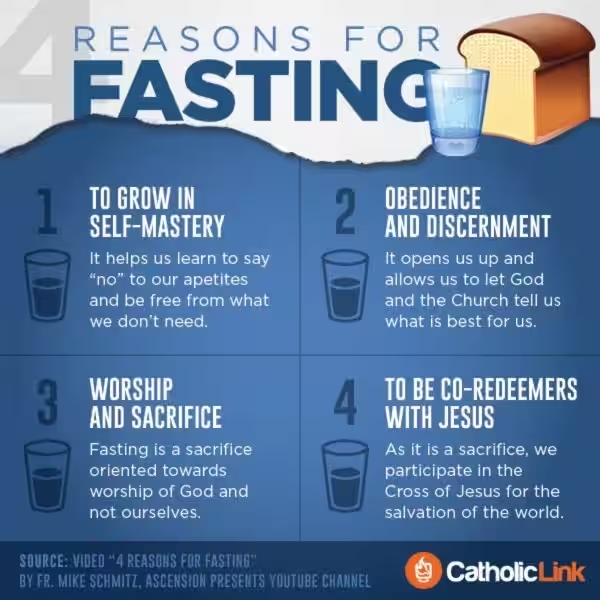
Fasting and abstinence are perhaps the most commonly recognized aspects of Lent rules Catholic. These practices are designed to help us gain mastery over our desires and to identify with Christ’s suffering. They are acts of self-denial that, when undertaken with the right intention, can lead to greater interior freedom and a heightened awareness of our dependence on God.
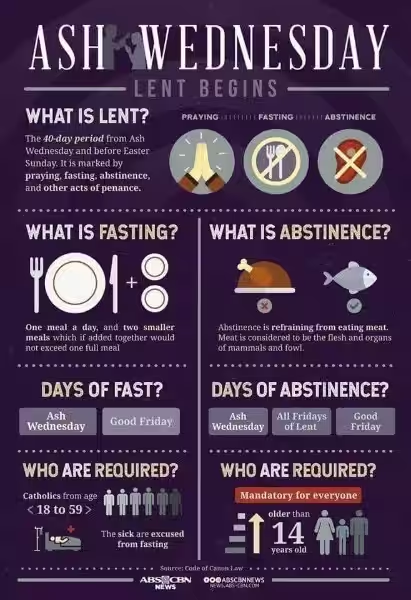
The specific guidelines for fasting and abstinence are rooted in Church tradition. Ash Wednesday and Good Friday are days of fasting and abstinence. Fasting means eating only one full meal, with two smaller meals that do not together equal the size of the full meal, and no eating between meals. All persons 18 to 59 years of age are bound to fast. Abstinence from meat is observed on all Fridays during Lent, as well as on Ash Wednesday and Good Friday. This means refraining from eating meat (mammals and birds) on these days. All persons 14 years of age and older are bound to abstain from meat. It’s important to note that dispensations may be granted for health reasons or other serious circumstances. For example, someone with a medical condition that requires them to eat regularly or who is unable to digest meat might receive a dispensation from the fasting or abstinence requirements.
While prayer and fasting focus inward, almsgiving directs our attention outward, compelling us to share God’s love and mercy with those in need. It’s a tangible expression of our faith and a way to put Christ’s teachings into practice. Almsgiving during Lent isn’t just about donating money; it encompasses acts of charity, kindness, and solidarity with the less fortunate.
The spirit of almsgiving is about generosity and recognizing the inherent dignity of every person. This could involve volunteering at a local soup kitchen, donating gently used clothing, offering a helping hand to a neighbor, or supporting reputable Catholic charities that serve the poor and vulnerable. Consider the impact of a small, consistent act of giving. Perhaps you can commit to skipping your daily latte and donating that money to a cause you believe in. These acts, no matter how modest, are powerful manifestations of the Lent rules Catholic call to charity, reflecting God’s abundant love for all humanity.
Navigating the 40 Days: Practical Tips for a Fruitful Lent
The 40 days of Lent can feel like a significant commitment, and it’s natural to wonder how to best integrate these practices into our busy lives. The key is to approach Lent with intentionality and to tailor the observance to your personal circumstances, always keeping the core principles of prayer, fasting, and almsgiving in mind. The Lent rules Catholic provide a framework, but the spirit of the observance is personal.
One effective approach is to choose one or two specific areas to focus on. Instead of feeling overwhelmed by trying to do everything, select a particular Lenten discipline that resonates with you. This could be dedicating more time to prayer, giving up a specific indulgence like social media or sweets, or committing to a regular act of service. For instance, if you find yourself constantly distracted by your phone, making a conscious effort to limit your screen time and use that saved time for prayer or reading Scripture can be a powerful Lenten practice. Similarly, if you struggle with generosity, actively seeking out opportunities to help others, even in small ways, will cultivate a more charitable heart. Remember, the goal is not perfection, but progress and a deeper conversion of heart.
Beyond the Basics: Personalizing Your Lenten Journey
While the core Lent rules Catholic are the foundation, Lent offers a beautiful opportunity for personal spiritual growth. This involves reflecting on your own life and identifying areas where you can draw closer to God. It’s a time to examine your conscience, identify your weaknesses, and seek God’s grace for transformation. This personal reflection might lead you to give up a particular habit that hinders your spiritual life, or to cultivate a virtue you wish to develop, such as patience, humility, or forgiveness.
For example, if you notice a tendency towards impatience, Lent can be the perfect time to consciously practice patience in frustrating situations, whether at work, at home, or in traffic. This might involve taking a deep breath, offering a quick prayer, and refraining from harsh words. These personal Lenten sacrifices, when coupled with increased prayer and acts of charity, can lead to profound personal renewal. The Church encourages us to see Lent as a time of penitence and reconciliation, and this often begins with an honest self-assessment and a sincere desire for change.
The Ultimate Goal: Preparing for Easter Joy
Ultimately, the Lent rules Catholic are not an end in themselves but a means to a glorious end: the celebration of Easter. Lent is a spiritual pilgrimage that prepares us to fully appreciate the joy and triumph of Christ’s resurrection. By engaging in prayer, fasting, and almsgiving, we purify our hearts, strengthen our faith, and become more receptive to the graces that Easter offers.
The sacrifices we make during Lent, the prayers we offer, and the charity we extend all contribute to a deeper understanding of Christ’s love and sacrifice for humanity. As we emerge from the somber reflection of Lent, we are meant to be transformed, renewed, and filled with the radiant hope of Easter. Embracing the spirit of the Lent rules Catholic allows us to experience this transformative journey more fully, ensuring that the celebration of Easter is not just a holiday, but a profound and personal encounter with the Risen Lord.
Frequently Asked Questions About Lent Rules in the Catholic Church
The following questions and answers aim to clarify common inquiries about the practices and rules of Lent for Catholics.
What is Lent?
Lent is a solemn religious observance in the Christian liturgical calendar that begins on Ash Wednesday and ends on Holy Saturday. It is a 40-day period of prayer, fasting, and almsgiving in preparation for Easter, the celebration of Jesus Christ’s resurrection. The 40 days represent the 40 years the Israelites wandered in the desert and the 40 days Jesus spent in the desert before beginning his public ministry.
Who is required to observe Lent?
In the Catholic Church, all Catholics aged 18 to 59 are obligated to fast on Ash Wednesday and Good Friday. All Catholics who are 14 years of age and older are obliged to abstain from meat on Ash Wednesday and all Fridays during Lent.
What does it mean to abstain from meat during Lent?
Abstinence from meat means refraining from eating the flesh of mammals and birds. Fish and shellfish are permitted, as are eggs and dairy products.
Fasting involves eating only one full meal on days of fasting, with up to two smaller meals that do not together equal the size of the full meal. Eating between meals is not permitted. This practice is observed on Ash Wednesday and Good Friday.
Are there exceptions to the fasting and abstinence rules?
Yes, exceptions are made for those who are chronically ill, frail, pregnant or nursing women, and those whose work is especially strenuous. Those who are under the age of 14 and those 60 or older are also exempt from the obligation of fasting and abstinence. The Church also encourages mercy and understanding in cases of genuine need.
What are some common practices during Lent besides fasting and abstinence?
Beyond fasting and abstinence, Catholics are encouraged to engage in prayer, almsgiving (charitable giving), and other forms of penance. This can include acts of service, reading scripture, attending Mass more frequently, praying the Stations of the Cross, or giving up a particular habit or luxury as a form of sacrifice.
When does Lent begin and end?
Lent begins on Ash Wednesday, which is the Wednesday 46 days before Easter Sunday. It concludes on Holy Saturday, the day before Easter Sunday. The liturgical season of Lent itself ends at the Evening Mass of the Lord’s Supper on Holy Thursday.
What is the significance of Ash Wednesday?
Ash Wednesday marks the beginning of Lent. On this day, ashes, made from the burned palms of the previous year’s Palm Sunday, are imposed on the foreheads of the faithful in the shape of a cross. The minister says, “Remember that you are dust, and to dust you shall return” or “Repent, and believe in the Gospel.” This signifies penitence and mortality.
What is the significance of Good Friday?
Good Friday is the day on which Christians commemorate the crucifixion and death of Jesus Christ. It is a day of solemn remembrance, prayer, and fasting, and it is a day of obligatory abstinence from meat.
Can I eat seafood during Lent Fridays?
Yes, seafood, including fish and shellfish, is permitted on Fridays during Lent.
What if I forget and eat meat on a Friday during Lent?
The Church’s laws are intended to foster our spiritual growth. If an unintentional lapse occurs, it is an opportunity for reflection and a recommitment to the Lenten practices. The emphasis is on sincere effort and repentance.
Is it mandatory to give something up for Lent?
While not a strict obligation in the same way as fasting and abstinence on specific days, the tradition of “giving something up” for Lent is highly encouraged. It serves as a personal sacrifice and a way to grow in self-discipline and focus on spiritual matters.