The rhythm of life for Roman Catholics is intimately tied to a vibrant tapestry of celebrations, each a Roman Catholic holiday that offers moments of profound reflection, communal joy, and spiritual renewal. These aren’t just days off; they are sacred milestones, carefully woven into the fabric of the Church’s year, marking pivotal events in the life of Jesus Christ, the Virgin Mary, and the saints. For believers, participating in these holidays is more than a tradition; it’s a living expression of their religion, a way to connect with the divine and with each other.
These observances provide a framework for faith, offering predictable periods for deeper engagement with religious teachings and practices. Whether it’s the solemnity of Lent or the exuberant joy of Easter, each Roman Catholic holiday serves as a powerful reminder of core tenets of the Catholic faith. They are opportunities to pause the ordinary, to embrace the extraordinary, and to reaffirm the enduring presence of God in the world. Understanding the meaning and purpose behind these special days can illuminate the richness and depth of the Catholic spiritual journey.
The Foundation: Liturgical Seasons and Their Roman Catholic Holiday Expressions
The Roman Catholic holiday calendar is not a random collection of dates; it is meticulously organized into liturgical seasons, each with its own distinct spiritual character and focus. These seasons are the bedrock upon which all the major celebrations are built, shaping the prayers, readings, and themes of worship throughout the year. Think of it like a year-round narrative of salvation history, unfolding in stages that allow for focused contemplation.
The most prominent season is Ordinary Time, which, despite its name, is far from ordinary for a Catholic. This period, broken into two parts, emphasizes the public ministry of Jesus. It’s a time for deepening one’s faith through habitual practice, learning from scripture, and applying Christ’s teachings to everyday life. This is where many of the Feast Days of saints also occur, celebrating the lives of those who have heroically embodied the Christian faith, serving as inspirational role models for all believers. For example, the feast of St. Francis of Assisi, celebrated on October 4th, offers a chance to reflect on simplicity, care for creation, and radical obedience to God.
Advent and Christmas: The Anticipation and Arrival of the Divine
Advent, the four-week period leading up to Christmas, is a time of eager anticipation. It’s characterized by themes of hope, peace, joy, and love, as Catholics prepare their hearts for the coming of Jesus. Think of waiting for a beloved friend to arrive; Advent is that patient, joyful preparation. During this season, churches often feature an Advent wreath, a circular wreath with four candles, one lit each week, symbolizing the growing light of Christ as Christmas approaches. This Roman Catholic holiday season is a perfect example of how the Church uses symbolism to convey profound theological truths.
Then comes Christmas, the joyous celebration of the Incarnation – the birth of Jesus. This is arguably the most universally recognized Roman Catholic holiday, marked by midnight Mass and festive gatherings. The focus is on the miraculous birth of Christ, God becoming human, a central mystery of the Christian faith. It’s a time for rejoicing in God’s immense love for humanity, expressed through the gift of His Son. The sheer joy of this period often spills over into decorations, carols, and acts of kindness, reflecting the spirit of giving that Christmas embodies.
Lent and Easter: The Path to Redemption and Resurrection
Lent, a 40-day period of prayer, fasting, and almsgiving, is a solemn season of preparation for Easter. It mirrors Jesus’ 40 days in the desert, a time of spiritual discipline and intense reflection. This is a time for introspective examination of one’s relationship with God and neighbor, identifying areas where one has strayed from Christ’s teachings. Many Catholics undertake specific Lenten practices, such as giving up a particular food or habit, to grow in self-control and deepen their spiritual focus. This Roman Catholic holiday season is fundamentally about purification and repentance.
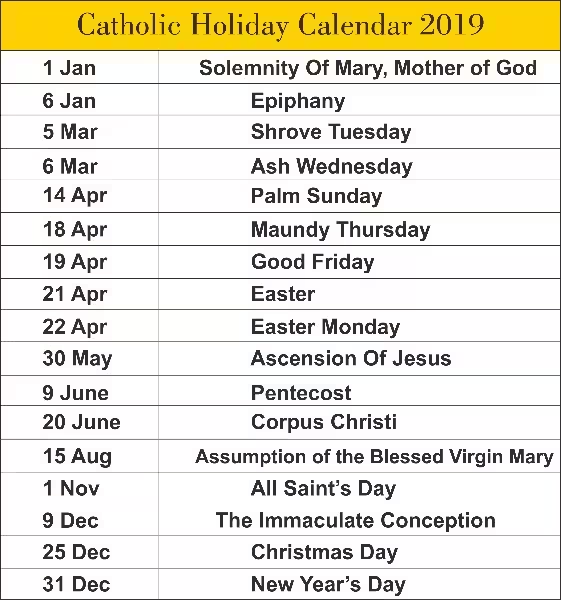
The culmination of Lent is Holy Week, leading to the solemnity of Good Friday, commemorating Christ’s crucifixion, and culminating in the glorious celebration of Easter Sunday. Easter is the cornerstone of the Christian faith, celebrating the resurrection of Jesus Christ from the dead. This is the ultimate Roman Catholic holiday, signifying Christ’s victory over sin and death, and offering hope for eternal life to all believers. The joy and triumph of Easter are palpable, transforming the somberness of Lent into an explosion of divine life. It is a profound affirmation of the resurrection, the promise of new beginnings, and the ultimate triumph of good over evil.
Beyond the Major Feasts: Saints and Devotional Roman Catholic Holidays
While Christmas and Easter are the undisputed titans of the Roman Catholic holiday calendar, the Church also honors a vast array of saints on their feast days. These celebrations, while perhaps less universally observed with public holidays, are deeply significant for Catholics, offering powerful examples of Christian virtue and lived faith. Each saint’s life story is a testament to God’s grace working in ordinary individuals, demonstrating that sanctity is attainable for all.
Consider the Feast of the Annunciation on March 25th, celebrating Mary’s acceptance of God’s will to bear Jesus. This is a profoundly important Roman Catholic holiday that highlights the role of Mary, the Mother of God, and a model of faith and obedience. Similarly, the Feast of St. Peter and St. Paul on June 29th honors the foundational apostles of the Church. These days provide opportunities to learn about specific aspects of Catholic doctrine and history, often through unique scripture readings and prayers associated with the honored saint. Engaging with these devotional holidays enriches one’s understanding of the Church’s rich heritage and the communion of saints.
The Living Tradition: Experiencing a Roman Catholic Holiday Today
Experiencing a Roman Catholic holiday is a multi-sensory, deeply communal event. It involves more than just attending Mass; it’s about immersing oneself in a tradition that has been passed down through generations. The liturgy itself is a carefully choreographed performance of faith, with specific prayers, readings, music, and rituals that guide the faithful through the mystery being celebrated.
For instance, during the Roman Catholic holiday of the Feast of the Epiphany, celebrated on January 6th, churches often see the “Blessing of the Chalk,” where priests bless chalk that parishioners can use to write the initials of the Magi (e.g., 20+C+M+B+24) above their doorways. This is a simple yet tangible way to extend the blessing of the Epiphany – the manifestation of Christ to the world – into the home. These small, meaningful traditions are what bring the faith to life, making these holidays relatable and personally significant for individuals and families. They are reminders that the divine intersects with the everyday, transforming ordinary spaces and moments into something sacred.
Frequently Asked Questions about Roman Catholic Holidays
What are the major Roman Catholic holidays?
The most important Roman Catholic holidays are the liturgical seasons of Christmas (celebrating the birth of Jesus) and Easter (celebrating the resurrection of Jesus). Other significant holidays include Pentecost, the Solemnity of Mary, Mother of God, the Ascension of Jesus, and the Feast of All Saints.
What is the Holy Trinity in Roman Catholicism?
The Holy Trinity is the central doctrine of Roman Catholicism, stating that God is one God in three co-equal, co-eternal Persons: the Father, the Son (Jesus Christ), and the Holy Spirit.
What are Holy Days of Obligation?
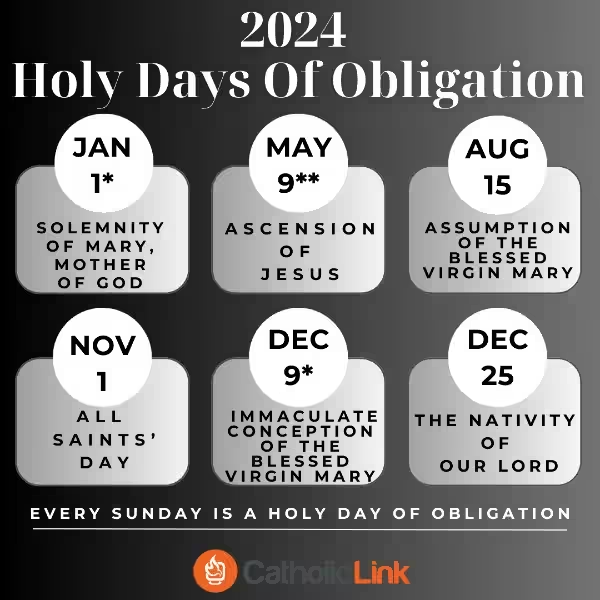
Holy Days of Obligation are feast days in the Roman Catholic Church that require the faithful to attend Mass, unless they are excused due to sickness or pastoral duty. These include Christmas, the Solemnity of Mary, Mother of God, the Ascension, the Assumption of Mary, the Feast of All Saints, and Immaculate Conception.
What is the significance of the Eucharist in the Catholic Church?
The Eucharist, also known as Holy Communion, is considered the “source and summit” of the Christian life. Catholics believe that during the Mass, the bread and wine are transformed into the actual Body and Blood of Jesus Christ through a process called transubstantiation, making it a true spiritual nourishment and a commemoration of Jesus’ sacrifice.
What is the role of saints in Roman Catholicism?
Saints are individuals who are recognized by the Catholic Church as having lived exceptionally holy lives and are now in heaven. Catholics do not worship saints, but they ask them to intercede on their behalf with God, similar to how one might ask a friend to pray for them.