For many, the Catholic faith is more than just a set of beliefs; it’s a living, breathing tapestry woven with moments of profound significance, marked by the observance of Catholic holy days. These special occasions aren’t mere calendar entries; they are echoes of divine intervention, invitations to deeper spiritual reflection, and opportunities to connect with the rich history and enduring traditions of Catholicism. Understanding these holy days offers a powerful lens through which to appreciate the vibrant nature of religion and its profound impact on the lives of millions.
These days serve as sacred pauses in the often-hectic rhythm of daily life. They call us to step back, to remember, and to renew our commitment to the spiritual journey. Whether you are a lifelong Catholic seeking a deeper understanding or someone curious about the practices of this global faith, exploring the Catholic holy days provides valuable insight into the heart of Catholicism and its enduring appeal.
The liturgical year for Catholics doesn’t begin with January 1st, but rather with Advent. This season, which typically falls in late November or early December, is a period of patient waiting and joyful anticipation. It marks the beginning of the Church’s new year and prepares the faithful for the celebration of the Nativity of Our Lord Jesus Christ, a cornerstone Catholic holy day.
During Advent, the faithful are encouraged to cultivate virtues like hope, peace, joy, and love. The use of the Advent wreath, with its four candles lit progressively each week, symbolizes the growing light of Christ entering the world. This period is not just about waiting for Christmas; it’s also about reflecting on the second coming of Christ, a constant reminder of God’s ultimate plan for humanity. It’s a time for introspection, for making amends, and for opening our hearts to the divine presence in our lives.
Christmas: The Incarnation and the Birth of Hope
At the heart of the Catholic holy days lies Christmas, a solemnity celebrating the Incarnation of Jesus Christ, the Son of God becoming human. This is arguably the most widely recognized and celebrated Catholic holy day globally. The period leading up to it, Advent, builds this anticipation, culminating in the joyous celebration of Jesus’ birth in Bethlehem.
The celebration of Christmas extends beyond a single day, often encompassing the Octave of Christmas, a period of eight days of feasting and joy. For Catholics, Christmas is a profound reminder of God’s immense love and his desire to be intimately present with humanity. It’s a time for family gatherings, giving thanks, and reflecting on the message of peace and goodwill that Jesus brought into the world. The birth of Christ is seen not just as a historical event, but as the dawn of a new covenant, offering salvation and redemption to all who believe.
Lent: A Time of Penance, Prayer, and Almsgiving
Following the joyous season of Christmas and the Epiphany, the Catholic Church enters the solemn season of Lent. This forty-day period, preceding Easter, is a time of intense spiritual preparation and purification. It mirrors the forty days Jesus spent fasting in the desert, a crucial period of reflection before his public ministry.
Lent is characterized by the practices of penance, prayer, and almsgiving. Catholics are encouraged to engage in acts of self-denial, to deepen their prayer life, and to generously support those in need. This is a time for confession and reconciliation, seeking forgiveness and strengthening one’s relationship with God and fellow believers. The ashes placed on foreheads on Ash Wednesday, a poignant reminder of our mortality, serve as a powerful call to repentance and conversion.
Holy Week: The Passion, Death, and Resurrection of Christ
Holy Week is the culmination of Lent, the most sacred and significant week in the Catholic calendar. It commemorates the final days of Jesus’ earthly life, leading to his crucifixion and glorious resurrection. Each day of Holy Week holds profound theological meaning and is marked by unique liturgical celebrations.
Palm Sunday: This day commemorates Jesus’ triumphant entry into Jerusalem, where crowds hailed him with palm branches, foreshadowing his coming sacrifice.
Maundy Thursday: This evening marks the Last Supper, where Jesus instituted the Eucharist and the priesthood, and washed the feet of his disciples as a sign of humble service.
Good Friday: This is a day of solemn mourning and reflection, commemorating the Passion and crucifixion of Jesus. It is a day of fasting and abstinence, and the faithful meditate on Christ’s sacrifice for humanity.
Holy Saturday: This day is a time of quiet waiting and anticipation. The Easter Vigil, held on the night of Holy Saturday, is the most important liturgy of the year, celebrating the resurrection of Christ and the triumph of life over death.
The Easter season bursts forth from the solemnity of Holy Week, celebrating the resurrection of Jesus Christ. This is the central tenet of the Christian faith, the victory of life over death, and the promise of eternal life for believers. The joy and hope of Easter permeate the Catholic Church for fifty days, up to the Ascension of Jesus into heaven.
Easter Sunday is a day of profound rejoicing, marked by vibrant celebrations and the renewal of baptismal promises. It signifies the new life that is offered to all through Christ’s sacrifice and resurrection. The Easter message is one of hope, redemption, and the ultimate triumph of good over evil. Understanding the significance of Easter is crucial to grasping the core of Catholic theology and the enduring power of religion.
The Feast of All Saints and All Souls’ Day: Remembering the Faithful Departed
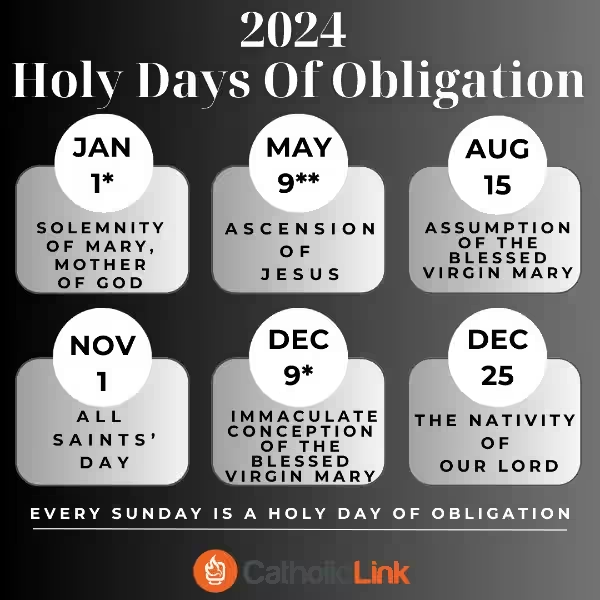
Beyond the major feasts celebrating Christ’s life, the Catholic Church also dedicates time to honor the saints and remember the faithful departed. The Feast of All Saints, celebrated on November 1st, is a joyous occasion to honor all the saints in heaven, both known and unknown. These are individuals who have lived exemplary lives of faith and are now in God’s presence.
Following closely is All Souls’ Day on November 2nd. This is a day of prayer and remembrance for all the souls of the faithful departed, particularly those in purgatory who are undergoing purification before entering heaven. Catholics pray for them, offering Masses and indulgences to aid their journey. These Catholic holy days underscore the communion of saints, a belief that the Church on earth, in heaven, and in purgatory are all united in Christ.
The Importance of Holy Days in the Life of a Catholic
The observance of Catholic holy days is not merely a matter of tradition; it is an integral part of the spiritual life of a Catholic. These days provide structured opportunities for worship, sacred reflection, and community building. They act as divine appointments, drawing believers together to commemorate pivotal moments in salvation history and to deepen their relationship with God.
In a world often characterized by its relentless pace, Catholic holy days offer a much-needed rhythm of sacred time. They invite us to step out of the ordinary and into the extraordinary, to remember our faith’s foundational truths, and to experience the transformative power of God’s love and grace. By understanding and embracing these holy days, one gains a richer appreciation for the depth and beauty of the Catholic religion and its enduring impact on the human spirit.
Frequently Asked Questions about Catholic Holy Days
What are Catholic holy days?
Catholic holy days are special feast days in the Catholic Church that commemorate important events in the life of Jesus Christ, the Virgin Mary, or saints, and are observed with religious services and often with abstaining from work.
What are the most important Catholic holy days?
The most important Catholic holy days are:
Christmas: Celebrates the birth of Jesus Christ.
Easter: Celebrates the resurrection of Jesus Christ.
Ascension Thursday: Commemorates Jesus’ ascension into heaven.
Pentecost: Commemorates the descent of the Holy Spirit upon the Apostles.
The Solemnity of Mary, Mother of God: Celebrates Mary’s role as the mother of Jesus.
The Assumption of the Blessed Virgin Mary: Celebrates Mary being taken body and soul into heaven.
All Saints’ Day: Honors all saints, known and unknown.
Are all Catholic holy days days of obligation?
No, not all Catholic holy days are days of obligation. Days of obligation are those on which Catholics are required to attend Mass and abstain from work. In most countries, the mandatory days of obligation are Christmas and the Solemnity of Mary, Mother of God, and Easter. Other holy days may be observed with Mass but are not strictly mandatory. Local bishops’ conferences can determine which holy days are days of obligation in their respective territories.
What is the difference between a holy day and a saint’s feast day?
A holy day is a general term for a day of religious observance. A saint’s feast day specifically celebrates the life and witness of a particular saint. Some saint’s feast days are also holy days of obligation, but many are observed with Mass without being mandatory.
When is Easter celebrated?
Easter is a movable feast, meaning its date changes each year. It is celebrated on the first Sunday after the first full moon following the vernal equinox (around March 20th). This typically falls between March 22nd and April 25th.
When is Christmas celebrated?
Christmas is celebrated annually on December 25th.