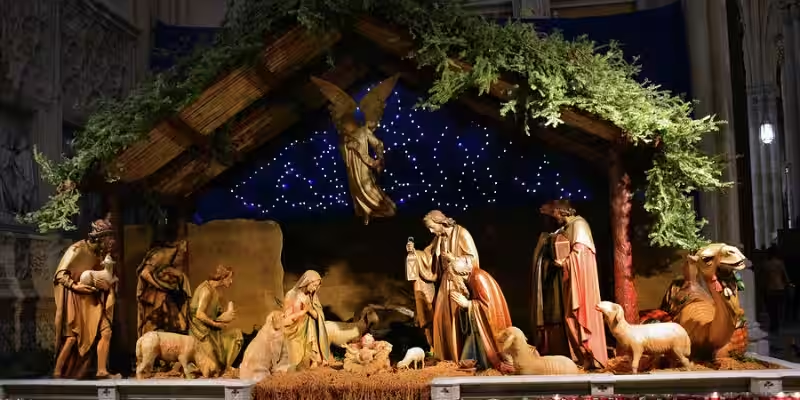
As the winter air grows crisp and the scent of pine needles begins to fill our homes, a familiar and deeply cherished symbol emerges: the Christmas creche. More than just a decorative arrangement of figurines, the creche, also known as a nativity scene, is a profound visual narrative, a tangible representation of the foundational event of Christianity. It invites us to pause, to reflect, and to connect with the very essence of the Christmas season, reminding us of the humble beginnings of a message of hope that has resonated across centuries and cultures. The enduring appeal of the Christmas creche lies in its ability to distill complex theological truths into a universally understood and profoundly moving tableau.
For many, the act of setting up or visiting a Christmas creche is a cherished family tradition, a ritual that deepens their connection to their faith and to each other. It’s a visual sermon, a story told in silent figures, depicting the night of Jesus’ birth. The central figures – Mary, Joseph, and the infant Jesus in the manger – are surrounded by shepherds, wise men, angels, and often, stable animals, each element contributing to the rich tapestry of the nativity story. This humble scene, meticulously recreated in homes, churches, and public spaces, serves as a powerful reminder of the Incarnation – God becoming human – and the profound implications of this divine act for all of humanity. The creche is not merely an artistic display; it is a sacred space, a focal point for prayer and contemplation.
Unpacking the Symbolism: More Than Just Pretty Figures
The Christmas creche is a masterclass in symbolic communication, each element carefully chosen to convey deep theological meaning. At its heart is the infant Jesus, swaddled and lying in a manger. This vulnerability is paramount; it signifies God’s willingness to enter our world not with power and might, but in the most helpless form, demonstrating his immense love and humility. The manger itself, a feeding trough for animals, underscores the poverty and simplicity of Jesus’ birth. This choice was not accidental; it was a deliberate act to show that God’s kingdom is not built on earthly wealth or status, but on love, compassion, and faith. Consider the simplicity of a wooden manger; it speaks volumes about the values that the Christmas story champions.
Beyond the central family, the surrounding figures amplify the message. The shepherds, humble laborers, were the first to be told of Jesus’ birth by angels, highlighting that salvation is for everyone, regardless of social standing. The wise men (Magi), representing Gentile nations, bring symbolic gifts: gold (for kingship), frankincense (for divinity), and myrrh (for suffering and death), foreshadowing Jesus’ earthly mission. Even the animals, like the ox and the donkey, are often included, referencing biblical passages that speak of their recognition of their Master. These elements combine to create a narrative that is both historically grounded and symbolically rich, offering layers of interpretation for those who engage with it. The careful placement of each figure, the choice of materials, and the overall composition of the Christmas creche all contribute to its profound spiritual impact.
For individuals and families, the creation of a Christmas creche can be a deeply personal and spiritual journey. It’s an opportunity to engage with the nativity story on a more intimate level, transforming a decorative object into a powerful tool for faith formation. Many families begin with a few basic pieces and gradually add to their collection over the years, each new figurine representing a stage in their faith or a particular aspect of the Christmas narrative they wish to emphasize. This gradual accumulation mirrors the unfolding of the Christmas story itself, a slow revelation of divine love. The simple act of placing each figure – Mary’s gentle gaze, Joseph’s protective stance, the tiny form of Jesus – can become a prayer, a moment of quiet reflection amidst the holiday bustle.
The beauty of the Christmas creche lies in its adaptability. Whether it’s a grand, elaborately carved wooden set passed down through generations, a humble collection of painted ceramic figures, or even a simple, handmade creation crafted by little hands, the essence remains the same. It’s about bringing the sacred narrative of Christ’s birth into the heart of our homes. This act of bringing the nativity into our domestic sphere makes the divine relatable and accessible, grounding the extraordinary event of the Incarnation in the ordinary spaces of our lives. It’s a way to invite the peace and hope of Bethlehem into our own living rooms, transforming them into spaces of spiritual significance. The Christmas creche, in its many forms, serves as a constant reminder of the true meaning of Christmas. For example, a child’s simple drawing of the nativity, taped to the refrigerator, can hold as much spiritual weight as the most exquisite artisan creation.
The Global Reach of the Christmas Creche: A Universal Language of Faith
The Christmas creche transcends geographical and cultural boundaries, speaking a universal language of faith that resonates with Christians worldwide. Across continents and in countless languages, the visual narrative of the nativity remains remarkably consistent, a testament to its enduring power. Whether you find yourself in a bustling European city square adorned with a life-sized creche, a quiet village church in Latin America with a vibrant, colorful display, or a modest home in Asia with a carefully arranged tabletop scene, the core message of hope and divine love is immediately recognizable. This shared visual language fosters a sense of global Christian community, reminding us that we are part of a vast and interconnected family united by the same foundational belief.
The diversity in the creation and presentation of Christmas creches is as fascinating as it is beautiful. While the biblical narrative is constant, artistic interpretations vary wildly, reflecting local traditions, materials, and cultural aesthetics. You might encounter creches made from terracotta, wood, metal, textiles, or even natural materials like straw and shells. Figures might be depicted in traditional religious attire, or they might be dressed in the clothing of the region where the creche is found, further localizing the sacred story. This artistic diversity doesn’t dilute the message; rather, it enriches it, demonstrating how the profound truth of the Incarnation can be expressed in a multitude of beautiful and meaningful ways, making the Christmas creche an incredibly versatile symbol of religion. For instance, a creche made by indigenous artisans might feature figures with distinct facial features and traditional adornments, beautifully weaving local culture into the sacred narrative.
The Creche as a Teaching Tool: Passing Down the Faith
The Christmas creche serves as an invaluable teaching tool, particularly for children, helping them to grasp the foundational narrative of Christianity in an engaging and understandable way. As parents and grandparents set up the creche, they can explain the significance of each figure and event, bringing the story to life beyond the pages of a book. This hands-on approach allows children to visualize the humility of Jesus’ birth, the joy of the shepherds, and the reverence of the Magi. It transforms abstract theological concepts into concrete elements they can see, touch, and interact with. This active participation in the religious tradition fosters a deeper understanding and appreciation for the Christmas story, embedding it in their memories and hearts.
Beyond simple storytelling, the Christmas creche can be a catalyst for deeper spiritual conversations. Discussing the sacrifice involved in God sending his son, the hope that Jesus’ birth represents, and the love that underpins the entire event can lead to meaningful dialogue about faith, values, and the meaning of life. The presence of the creche throughout the Advent and Christmas seasons provides ongoing opportunities for reflection and prayer. It’s a constant, quiet reminder of the divine presence in our lives, a beacon of light and hope during a busy and often materialistic time of year. The Christmas creche, therefore, is not just a decoration; it is a dynamic tool for faith formation, a visual anchor that guides us through the spiritual significance of the season. Think of it as a visual catechism, presenting the core tenets of Christianity in a relatable and accessible format.
The Enduring Legacy: Why the Christmas Creche Still Matters
In a world that often feels increasingly secularized and commercialized, the Christmas creche stands as a powerful and persistent beacon of religious devotion and humble beginnings. It reminds us that amidst the dazzling lights and the endless gift-giving, the true spirit of Christmas lies in a profound act of divine love and a message of hope for all people. The simplicity of the nativity scene, with its focus on a vulnerable infant, challenges the prevailing narratives of power and success, directing our attention to the values of compassion, humility, and faith. Its enduring presence in homes, churches, and public spaces is a testament to its deep-seated importance in the Christian faith and its ability to connect us to something far greater than ourselves.
The Christmas creche is more than just an artifact of religious history; it is a living tradition that continues to inspire and unite. It offers a sanctuary for reflection, a focal point for prayer, and a tangible connection to the sacred narrative of salvation. As we gaze upon the familiar figures, we are invited to participate in a story that has shaped civilizations and continues to offer solace and meaning to millions. The religious significance of the Christmas creche is undeniable, providing a constant reminder of the Incarnation and its profound implications. It is a quiet yet powerful declaration of faith, a beautiful and enduring symbol that proclaims, year after year, the miraculous birth of Jesus Christ and the enduring hope it brings to the world. This humble arrangement, in its myriad forms, continues to be a cornerstone of Christmas celebration. The Christmas creche remains a powerful symbol of faith, a testament to the enduring power of a humble birth to change the course of history and the hearts of humanity.
Frequently Asked Questions about Christmas Creches
What is a Christmas creche?
A Christmas creche, also known as a nativity scene or manger scene, is a display that depicts the birth of Jesus Christ. It typically includes figures representing Mary, Joseph, the baby Jesus, shepherds, wise men, and often animals like sheep and donkeys.
What is the religious significance of a creche?
The creche commemorates the birth of Jesus, which is the central event of Christianity. It serves as a visual reminder of the incarnation, God becoming human, and the humble beginnings of Jesus’ life.
What are the main figures in a creche?
The essential figures are Mary (the mother of Jesus), Joseph (her husband), and the baby Jesus himself, usually depicted in a manger. Other common figures include angels, shepherds who visited Jesus after his birth, and the Three Wise Men (Magi) who brought gifts.
Where did the tradition of displaying creches originate?
The tradition is widely attributed to Saint Francis of Assisi, who created the first living nativity scene in Greccio, Italy, in 1223. This was intended to help people better understand the story of Jesus’ birth.
Are creches only displayed in churches?
No, while creches are commonly found in churches, they are also displayed in homes, public spaces, and as part of Christmas decorations in many communities around the world.
What religious denominations display creches?
Creches are primarily associated with Christian denominations, especially those that celebrate the Nativity of Jesus. This includes Catholic, Orthodox, Protestant, and Anglican traditions.
Is the creche a mandatory part of Christmas celebrations for all Christians?
No, the display of creches is a devotional practice and a tradition, not a mandatory requirement for celebrating Christmas. Individual Christians and denominations may choose to incorporate them into their celebrations to varying degrees.
What does the baby Jesus figure represent?
The baby Jesus figure symbolizes hope, salvation, and the fulfillment of prophecies. His birth in humble circumstances emphasizes God’s love for humanity and the value of simplicity.
What do the wise men represent?
The Three Wise Men represent the Gentiles (non-Jews) who recognized Jesus as king. Their journey and gifts symbolize the spreading of the Gospel to all nations and the reverence due to Christ.
Can people of other faiths appreciate a creche?
Many people of various faiths and no faith can appreciate the artistic craftsmanship, historical narrative, and cultural significance of creches as part of the Christmas season and its traditions.