In a world grappling with complex challenges – from devastating natural disasters to persistent poverty and widespread hunger – the role of humanitarian aid and development organizations is more critical than ever. Among these vital players, the partnership between the United States Agency for International Development (USAID) and Catholic Relief Services (CRS) stands out as a powerful example of how faith-driven initiatives, supported by governmental resources, can create profound and lasting positive change. This collaboration is not merely about distributing aid; it’s about fostering dignity, building resilience, and empowering communities through a shared commitment to human well-being, deeply rooted in religious principles.
For many, the mention of USAID evokes images of large-scale projects and international policy. Similarly, Catholic Relief Services is recognized for its extensive network and its dedication to serving the world’s poorest people, guided by Catholic social teaching. What might not be as widely understood is the intricate and effective synergy between these two entities. This partnership leverages the strengths of both: USAID provides crucial funding and broad programmatic reach, while CRS brings its deep field presence, community trust, and faith-based operational ethos to bear on critical development and humanitarian efforts. Understanding this dynamic reveals a compelling narrative of how religion, when channeled through effective organizations like Catholic Relief Services, becomes a potent force for global betterment.
The Foundation of Partnership: Faith, Values, and Shared Goals
At its core, the partnership between USAID and Catholic Relief Services is built on a bedrock of shared values and a mutual understanding of the importance of human dignity. While USAID operates under a secular mandate to advance U.S. foreign policy interests and promote global development, it recognizes the immense capacity and reach of faith-based organizations (FBOs) like CRS. These FBOs often have a long history of working in challenging environments, possessing invaluable local knowledge and established relationships within communities. For Catholic Relief Services, their work is intrinsically linked to their religion and the Gospel call to serve those most in need. This inherent motivation fuels their dedication and shapes their approach, emphasizing compassion, justice, and solidarity.
This shared foundation allows for a remarkably effective collaboration. USAID, through its funding mechanisms, empowers Catholic Relief Services to scale up its life-saving programs. This isn’t about proselytization; it’s about recognizing that organizations driven by faith often possess a profound commitment to serving all people, regardless of their background or beliefs, and can effectively implement programs that address critical needs. For instance, a project focused on improving agricultural practices in a drought-stricken region might be funded by USAID and implemented by CRS. The underlying motivation for CRS is one of justice and stewardship, ensuring that God’s creation is cared for and that communities can thrive, a direct reflection of their religion.
Empowering Communities Through Sustainable Development
One of the most significant areas where USAID and Catholic Relief Services collaborate is in sustainable development initiatives. These programs aim to equip communities with the tools and knowledge they need to overcome long-term challenges, fostering self-reliance rather than perpetual dependency. Think of a community struggling with food insecurity. USAID funding can support CRS in implementing a comprehensive agricultural program. This might involve training local farmers on climate-resilient farming techniques, introducing drought-resistant seeds, and establishing community savings groups to help farmers invest in better equipment. The goal is to create a ripple effect, where improved yields lead to better nutrition, increased income, and greater stability.
The role of religion in shaping these development approaches is subtle yet profound. For Catholic Relief Services, the dignity of every person is paramount. This means not just providing food in a crisis but also working to ensure that individuals have the means to feed themselves and their families sustainably. Their faith teaches them to see every person as a child of God, deserving of respect and opportunity. This perspective influences how they engage with communities – fostering dialogue, building trust, and ensuring that local voices are central to program design and implementation. This aligns perfectly with USAID‘s goals of empowering local ownership and ensuring that development efforts are contextually appropriate and culturally sensitive.
Responding to Humanitarian Crises with Compassion and Efficiency
Beyond long-term development, the partnership between USAID and Catholic Relief Services is crucial in responding to immediate humanitarian crises. When natural disasters strike, such as earthquakes, floods, or famines, swift and effective action is paramount. USAID often serves as a primary source of funding for emergency relief efforts, and CRS, with its established global network and experienced emergency response teams, is frequently at the forefront of delivering aid. This can include providing immediate shelter, clean water, sanitation facilities, and vital medical supplies to affected populations.
The faith-based motivation of Catholic Relief Services imbues their humanitarian response with a deep sense of urgency and compassion. Their religion calls them to act with empathy and to prioritize the suffering of others. This translates into a commitment to reaching the most vulnerable populations, often in remote or hard-to-access areas. For instance, after a major earthquake, CRS personnel on the ground, supported by USAID grants, might be among the first to reach isolated villages, assessing needs and distributing essential items. This rapid deployment is made possible by their extensive preparedness and their unwavering dedication, which is deeply informed by their religious convictions.
Building Resilience: A Long-Term Vision
The partnership extends beyond immediate relief to building long-term resilience in vulnerable communities. This involves creating systems and capacities that allow people to better withstand future shocks and stresses, whether they are environmental, economic, or social. USAID funding channeled through Catholic Relief Services can support initiatives like disaster risk reduction training, which educates communities on how to prepare for and respond to natural hazards. It can also fund programs that promote peacebuilding and conflict resolution, helping to address the underlying causes of instability.
For Catholic Relief Services, building resilience is an expression of their belief in the inherent potential of every community. Their religion teaches them about hope and the possibility of transformation. They work with communities to identify their strengths and build upon them, fostering a sense of agency and self-determination. For example, a program might focus on strengthening local governance structures, empowering community leaders to advocate for their needs and manage resources effectively. This multi-faceted approach, supported by USAID, ensures that the impact of their work is not fleeting but endures, creating a more secure and prosperous future for generations to come.
Addressing Root Causes: Health, Education, and Economic Opportunity
Ultimately, effective development and humanitarian aid require addressing the root causes of poverty and vulnerability. The collaboration between USAID and Catholic Relief Services plays a vital role in tackling these fundamental issues. This can manifest in numerous ways, from improving maternal and child health services in underserved areas to expanding access to quality education for children, particularly girls, and fostering economic opportunities through vocational training and microfinance initiatives.
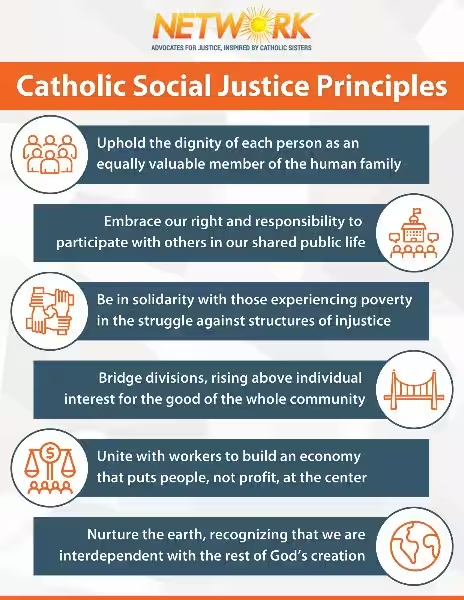
The principles of Catholic social teaching, which guide Catholic Relief Services, strongly emphasize the importance of life, the common good, and solidarity. These principles naturally lead to a focus on comprehensive human development. When CRS works on a health program, for instance, funded by USAID, they are driven by a religious imperative to protect and promote life. This might involve training community health workers, providing essential medicines, and educating families about preventative healthcare. The belief that every life has inherent value, a cornerstone of their religion, fuels their dedication to ensuring that all individuals, especially the most marginalized, have the opportunity to live healthy and fulfilling lives.
The Power of a Shared Mission: Impact and Legacy
The partnership between USAID and Catholic Relief Services exemplifies a powerful synergy where governmental resources and faith-based dedication converge to achieve extraordinary results. This collaboration is not about imposing one worldview, but about recognizing a shared humanity and a collective responsibility to alleviate suffering and foster development. The extensive reach and proven effectiveness of Catholic Relief Services, combined with USAID‘s significant funding and global presence, create a formidable force for positive change.
Looking at the tangible impact – children receiving life-saving vaccinations, farmers doubling their crop yields, communities recovering from devastating disasters with renewed strength – it becomes clear that this partnership is more than just programmatic; it’s a testament to the enduring power of human compassion and the profound influence of religion when it inspires action. The legacy of this collaboration is written in the improved lives, increased opportunities, and enhanced resilience of countless individuals and communities around the world, a direct outcome of their shared mission and commitment to serving humanity.
Frequently Asked Questions: USAID and Catholic Relief Services on Religion
What is Catholic Relief Services (CRS)?
Catholic Relief Services is the overseas humanitarian aid agency of the Catholic community in the United States. It works to help those most in need, regardless of their race, religion, or nationality. CRS implements programs in areas such as emergency response, health, agriculture, education, and peacebuilding.
How does religion factor into CRS’s work and its partnership with USAID?
CRS’s faith-based identity is central to its mission and operations. It draws inspiration from Catholic social teaching and strives to serve individuals and communities with dignity, compassion, and justice. USAID partners with a diverse range of organizations, including faith-based ones like CRS, to achieve development and humanitarian goals. USAID seeks partners who can effectively reach vulnerable populations and deliver essential services. The partnership between USAID and CRS is based on shared objectives of improving lives and addressing global challenges, not on promoting any specific religion.
Does USAID fund religious proselytization through its partnership with CRS?
No. USAID’s funding for organizations like CRS is strictly for humanitarian and development activities, such as providing food, shelter, healthcare, and education. USAID regulations prohibit the use of its funds for proselytization or any activity that coerces or discriminates based on religion. CRS, in its implementation of USAID-funded programs, adheres to these regulations and focuses on providing assistance to all individuals in need.
How does CRS ensure its programs are inclusive and respectful of diverse religious beliefs?
CRS is committed to serving all people, regardless of their faith. Its programs are designed to be culturally sensitive and inclusive. When working in diverse communities, CRS often partners with local organizations that understand the local context and can help ensure that programs are delivered in a way that respects all religious and cultural traditions. CRS’s staff are trained in cultural competency and interfaith dialogue to foster understanding and collaboration.
Can individuals of any religion benefit from programs implemented by CRS with USAID funding?
Yes. The core principle of CRS’s work, and a requirement of USAID funding, is to serve all individuals in need without discrimination based on religion, ethnicity, or any other characteristic. Anyone eligible for a particular program’s services will receive them, regardless of their religious affiliation.