The Polish speaking world is a vibrant tapestry woven with threads of history, culture, and, profoundly, religion. For many, faith is not a peripheral aspect of life but a central pillar, shaping traditions, communities, and individual identities. Understanding the role of Polish speaking communities in relation to religion offers a fascinating glimpse into the enduring power of belief and its multifaceted expression. This article aims to explore the rich religious landscape within Polish speaking populations, delving into its historical roots, contemporary expressions, and the profound impact it has on daily life.
From the ancient forests of Poland to the bustling diaspora communities across the globe, the Polish speaking voice has often been a voice of prayer, petition, and praise. Religion, particularly within the Polish speaking context, has served as both a unifying force and a cornerstone of cultural preservation, especially during periods of political upheaval and subjugation. The shared rituals, the common understanding of spiritual narratives, and the collective participation in religious life have provided a sense of belonging and continuity for generations of Polish speaking individuals.
The Enduring Legacy of Catholicism: A Historical Perspective
Historically, the Polish speaking population has been overwhelmingly Roman Catholic. This denomination has not merely been a religious affiliation but has deeply intertwined with the very fabric of Polish identity for over a millennium. The baptism of Mieszko I in 966 is widely considered the foundational event that cemented Christianity within the Polish lands, initiating a relationship that would shape the nation’s destiny for centuries. The Polish speaking people have often looked to the Church as a bulwark against foreign influences and a symbol of national sovereignty.
The Catholic Church, through its institutions and clergy, played a pivotal role in the education and cultural development of Polish speaking communities. Monasteries and churches served as centers of learning, preserving ancient texts and fostering artistic expression. During times of partition and occupation, the Church often became the last bastion of Polish language and culture, with priests acting as spiritual leaders and, at times, national heroes. This deep historical connection means that for many Polish speaking individuals, Catholicism is more than just a faith; it’s an intrinsic part of their heritage.
A powerful symbol of this enduring link is the Black Madonna of Częstochowa. Revered as the Queen of Poland, this icon has been a focal point of pilgrimage and national devotion for centuries. During periods of foreign rule, the image of the Black Madonna became synonymous with Polish resistance and a prayer for liberation. Polish speaking soldiers, facing insurmountable odds, would often invoke her name, finding strength and hope in her image. This deeply ingrained devotion highlights how religion, for the Polish speaking, can transcend the personal and become a potent symbol of collective identity and national aspirations.
The veneration of the Black Madonna is not confined to historical narratives; it continues to be a vibrant aspect of religious life for many Polish speaking people today. Annual pilgrimages to the Jasna Góra Monastery in Częstochowa draw hundreds of thousands, a testament to the enduring power of this sacred site. The shared experience of faith at such gatherings reinforces the sense of community and belonging among Polish speaking pilgrims, connecting them to a lineage of faith stretching back generations.
Contemporary Religious Expressions in Polish Speaking Communities
While Catholicism remains the dominant religious force within Polish speaking populations, contemporary society sees a more diverse and nuanced religious landscape. Globalization, increased mobility, and evolving societal attitudes have introduced new perspectives and practices. However, the core tenets and traditions often persist, adapting and finding new expressions within modern Polish speaking communities, both in Poland and its extensive diaspora.
The role of the church in Polish speaking communities extends beyond Sunday Mass. It often serves as a vital social hub, offering community events, charitable initiatives, and educational programs. For Polish speaking immigrants, religious institutions can be crucial for maintaining cultural connections, providing a familiar language and set of traditions in a new environment. These spaces foster a sense of continuity and support, helping individuals navigate the complexities of assimilation while holding onto their heritage.
Beyond Catholicism: A Spectrum of Beliefs
Although Catholicism holds a significant position, it’s important to acknowledge other religious traditions that are present within Polish speaking communities. Historically, there were substantial Jewish and Protestant populations in Poland, and their descendants, along with converts and individuals from other faiths, contribute to the richer religious mosaic. While these groups may be smaller, their presence is significant and adds to the multifaceted nature of faith among Polish speaking people.
Furthermore, within the Catholic faith itself, there are diverse expressions. Some Polish speaking communities might have a more traditional and conservative approach to religious practice, while others embrace more progressive interpretations and social outreach. Religious organizations and lay movements, both within Poland and in diaspora communities, offer various avenues for spiritual engagement. These can range from intensive prayer groups and retreats to social justice advocacy inspired by faith, demonstrating the dynamic and evolving nature of religious life for Polish speaking individuals.
The Impact of Religion on Daily Life and Culture
The influence of religion on the daily lives of Polish speaking people is profound and pervasive. Religious holidays, such as Christmas (Boże Narodzenie) and Easter (Wielkanoc), are celebrated with deep-rooted traditions that often blend religious observance with cultural practices. These festivities are central to family gatherings and community life, reinforcing the shared values and beliefs that are so important within Polish speaking households.
Family traditions: Many Polish speaking families observe specific religious customs, such as blessing food for Easter or singing carols (kolędy) at Christmas. These practices are passed down through generations, creating a sense of continuity and connection to their heritage.
Moral and ethical frameworks: Religious teachings often provide a moral compass for Polish speaking individuals, influencing their understanding of right and wrong, their approach to social issues, and their sense of personal responsibility. The emphasis on charity, compassion, and family values is frequently rooted in religious doctrine.
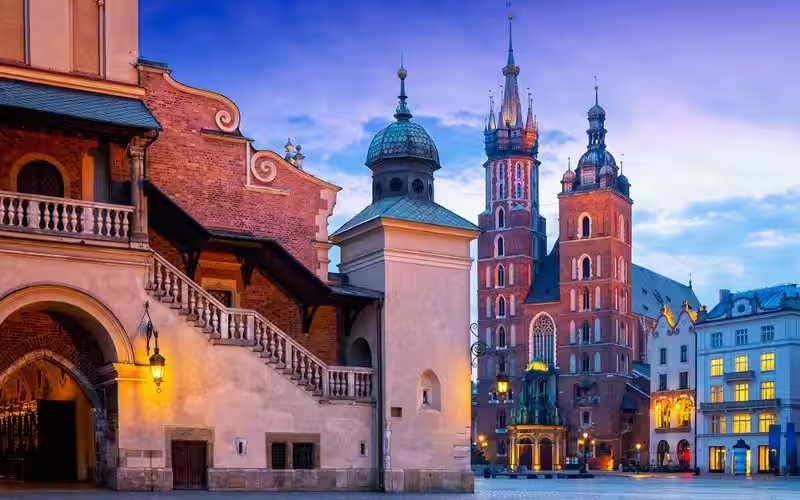
Art and architecture: The Polish speaking world is dotted with stunning examples of religious art and architecture, from ornate churches and cathedrals to intricate folk art. These creations are not just aesthetically pleasing; they are tangible expressions of faith and a testament to the cultural significance of religion within Polish speaking societies.
The Polish speaking language itself is deeply intertwined with religious expression. Many prayers, hymns, and religious texts are inherently tied to the nuances and beauty of the Polish language. The act of praying or singing in Polish connects individuals to a specific spiritual heritage and can evoke a powerful sense of cultural and religious identity. Even for Polish speaking individuals living abroad, reciting prayers in their native tongue can be a profound way to maintain a connection to their roots and their faith.
The vocabulary of faith within the Polish speaking world is rich and evocative. Terms like “Bóg” (God), “święty” (holy/saint), “modlitwa” (prayer), and “łaska” (grace) are not just words but carry deep emotional and spiritual weight. The specific phrasing and idiomatic expressions used in religious discourse within Polish speaking communities often reflect centuries of theological development and cultural interpretation, making the language a living repository of faith.
Frequently Asked Questions about Polish Speaking and Religion
What are the primary religions practiced in Poland?
The predominant religion in Poland is Roman Catholicism. Other Christian denominations are present, as well as smaller communities of other faiths.
Is religion a significant part of Polish culture?
Yes, religion, particularly Catholicism, has played a very influential role in shaping Polish history, culture, and social life for centuries.
Are there many non-religious people in Poland?
While Catholicism is dominant, the number of people identifying as non-religious, including atheists and agnostics, has been steadily growing in recent years.
How has the Polish language influenced religious practices?
Religious services, prayers, and sacred texts in Poland are primarily conducted and available in the Polish language, deeply embedding religious expression within the national tongue.
Are there any unique religious traditions in Poland?
Poland has several unique religious traditions and celebrations, often tied to Catholic holidays, which are deeply ingrained in the cultural calendar and often involve specific Polish customs and language.