The traditional Roman Catholic calendar is far more than just a list of dates; it’s a sacred timetable, a divine rhythm that has guided believers for centuries. It provides a structured framework for faith, shaping the spiritual lives of Catholics through a cycle of feasts, fasts, and reflections. Understanding this calendar is like unlocking a deeper understanding of the Catholic faith itself, revealing the profound narrative of salvation history that unfolds throughout the year. It’s a constant invitation to encounter God in a tangible, recurring way, reminding us that our faith is not a static belief but a vibrant, living journey.
This intricate system, meticulously preserved and observed by many, offers a rich tapestry of spiritual experiences. It’s a way to live out the faith fully, not just on Sundays, but every single day, by aligning our lives with the liturgical seasons and the lives of the saints. The calendar doesn’t just mark time; it sanctifies time, imbuing ordinary days with extraordinary meaning. For those seeking a deeper connection to their Catholic heritage and a more profound engagement with their faith, delving into the traditional Roman Catholic calendar is an essential and rewarding endeavor.
At its core, the traditional Roman Catholic calendar is organized around the central mysteries of Christianity, primarily the life, death, and resurrection of Jesus Christ. The year is not a linear march of days but a cyclical unfolding of God’s salvific plan. This cyclical nature allows for repeated contemplation and deeper assimilation of these pivotal events, transforming them from historical occurrences into present realities for the faithful. Think of it like a recurring echo, each time resonating with new depth and understanding.
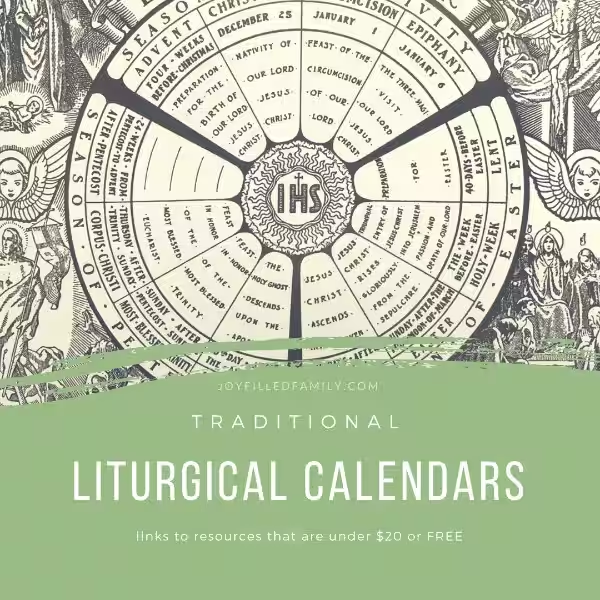
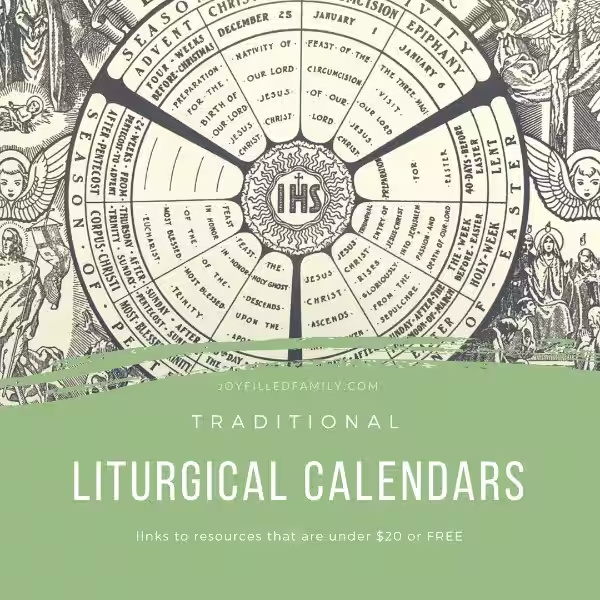
The liturgical year is broadly divided into several major seasons, each with its own distinct character, penitential tone, and theological focus. These seasons provide the overarching structure, guiding the faithful through periods of joyous celebration, solemn reflection, and fervent preparation. The traditional Roman Catholic calendar doesn’t just present these seasons; it breathes life into them, offering specific prayers, readings, and observances that illuminate their unique spiritual significance.
Advent: The Season of Hopeful Waiting
The traditional Roman Catholic calendar commences with Advent, a season of joyful anticipation and hopeful waiting. This four-week period leading up to Christmas is a time for preparing our hearts to receive the newborn King. It’s a season marked by the Advent wreath, with its progressively lit candles symbolizing the growing light of Christ in the world. The readings during Advent often focus on the prophecies of the Messiah and the call to repentance and vigilance.
During Advent, the Church encourages a spirit of penitence and prayer, a turning away from sin and a turning towards God. This doesn’t mean somberness, but rather a purposeful redirection of our focus. We are called to be like the wise virgins, ready with our lamps lit, awaiting the bridegroom. The traditional Roman Catholic calendar emphasizes this readiness through specific prayers and reflections that encourage us to examine our consciences and deepen our relationship with God.
Christmas and Epiphany: Celebrating the Incarnation
Following Advent, the traditional Roman Catholic calendar bursts forth with the joy of Christmas, celebrating the Incarnation of Jesus Christ. This is a season of profound joy, a time to marvel at the wonder of God becoming man. The Christmas season is traditionally extended beyond the single day of December 25th, encompassing a period of feasting and thanksgiving. The liturgical colors shift to white and gold, reflecting the glory and festivity of this miraculous event.
The celebration continues with the Feast of Epiphany, which commemorates the manifestation of Christ to the Gentiles, often symbolized by the visit of the Magi. This feast highlights the universal scope of Christ’s mission and the call for all nations to recognize Him as Lord. The traditional Roman Catholic calendar marks these feasts with specific Masses and devotions, reminding us of the immense gift of God’s love made manifest in the birth of Jesus.
Lent: A Time of Penance and Transformation
The traditional Roman Catholic calendar then ushers in Lent, a solemn season of forty days of penance, fasting, and prayer. This period is a time for spiritual purification and renewal, mirroring Christ’s forty days in the desert. It’s a deliberate turning inward, a shedding of the superfluous to make room for God’s grace. The liturgical color changes to purple, signifying penitence and preparation.
During Lent, the Church encourages increased prayer, almsgiving, and fasting. These practices are not mere rituals but means to cultivate humility, compassion, and self-control. We are invited to reflect on Christ’s sacrifice and to participate in His sufferings through our own acts of penance. The traditional Roman Catholic calendar provides a framework for this journey, with readings and homilies that guide us through the path of conversion and deeper commitment.
The Paschal Triduum and Easter: The Climax of Salvation
The pinnacle of the traditional Roman Catholic calendar is the Paschal Triduum, encompassing Holy Thursday, Good Friday, and Holy Saturday. These three days mark the most sacred events of our faith: Christ’s institution of the Eucharist, His crucifixion, and His triumphant resurrection. This is a period of profound spiritual intensity, where the narrative of salvation history reaches its dramatic climax.
Following the solemnity of the Triduum, the traditional Roman Catholic calendar explodes into the joyful season of Easter. This fifty-day period of celebration rejoices in Christ’s victory over sin and death. The alleluia returns, and the liturgical colors are vibrant, often white and gold, reflecting the triumph of the Resurrection. The Easter season is a powerful reminder of hope, new life, and the promise of eternal salvation.
The Saints: Companions on the Journey
Beyond the major seasons, the traditional Roman Catholic calendar is populated with the feasts of saints. These are not simply historical figures but models of Christian living, men and women who walked faithfully with God and whose lives offer inspiration and guidance to us today. Each saint’s feast day is a particular opportunity to learn from their virtues and intercede through their prayers.
The traditional Roman Catholic calendar includes a hierarchy of feasts, from solemnities to memorials, each given its appropriate place of honor. This rich array of saints ensures that the entire spectrum of Christian experience is represented, from martyrs and doctors of the Church to humble laypeople who lived lives of extraordinary holiness. By celebrating these feasts, we are reminded that the path to sanctity is attainable for all, and that we are never alone in our spiritual journey, but have a cloud of witnesses cheering us on.
Following the major seasons, the traditional Roman Catholic calendar enters periods known as Ordinary Time. While the name might suggest a lack of significance, these periods are crucial for sustaining the spiritual momentum gained during the more intense seasons. Ordinary Time is a time for consistent growth in holiness, for living out the faith in the everyday moments of life.
During Ordinary Time, the Gospels are read in their entirety, following a three-year cycle (Year A, B, and C), allowing for a comprehensive exploration of Christ’s teachings. The focus is on living the Gospel message in our daily interactions, our work, and our relationships. The traditional Roman Catholic calendar provides a steady, grounding rhythm, reminding us that our relationship with God is an ongoing commitment, not just an occasional event.
The Practical Application of the Calendar
For the average Catholic, understanding and engaging with the traditional Roman Catholic calendar can seem daunting at first.
Observe the Liturgical Colors: The vestments worn by priests, the altar cloths, and even flowers often reflect the season. Purple for Advent and Lent, white for Christmas and Easter, green for Ordinary Time – these colors are visual cues that help us enter into the spirit of the liturgical season.
Prayer and Devotion: Each season and feast day often has specific prayers, novenas, or devotions associated with it. Seeking out these practices can deepen your understanding and personal connection to the liturgical year. For example, praying the Angelus at its appointed times throughout the day is a beautiful way to connect with the Incarnation.
Readings and Homilies: Pay attention to the Scripture readings at Mass. The traditional Roman Catholic calendar carefully selects these readings to correspond with the liturgical season, offering a consistent theological theme throughout the week. The homily often serves to explain and apply these readings to our lives.
Fasting and Abstinence: The calendar dictates specific days of fasting and abstinence, particularly during Lent and on Fridays. These are not arbitrary rules but spiritual disciplines designed to foster self-mastery and solidarity with Christ’s sacrifice.
Feasts of Saints: Make an effort to learn about the saints whose feasts are celebrated. Consider saying a prayer to them on their special day, or reading a short biography to be inspired by their lives.
The traditional Roman Catholic calendar is a living, breathing guide for the spiritual life. It offers a structured yet dynamic path for encountering God’s grace, for growing in virtue, and for living out the fullness of the Catholic faith. By embracing its rhythm, we align ourselves with the timeless narrative of God’s love, finding profound meaning and transformative grace in the unfolding cycle of the liturgical year. It is a gift of immense spiritual richness, waiting to be explored and lived.
Frequently Asked Questions about the Traditional Roman Catholic Calendar
What is the Traditional Roman Catholic Calendar?
The Traditional Roman Catholic Calendar, often referred to as the Traditional Liturgical Calendar or the Tridentine Calendar, is the calendar of feasts and fasts that was in widespread use in the Roman Catholic Church prior to the liturgical reforms following the Second Vatican Council. It is largely based on the liturgical calendar established in the 16th century following the Council of Trent.
What is the difference between the Traditional Calendar and the current Roman Calendar?
The primary differences lie in the number and prominence of feasts, particularly the feasts of saints. The Traditional Calendar generally has fewer optional feasts and fewer saints celebrated with their own Mass on days that are not major feasts. Some saints who were removed or downgraded in the general Roman Calendar after Vatican II are still observed with proper liturgies in the Traditional Calendar. The numbering of Sundays in Ordinary Time also differs, with the Traditional Calendar often using “after Pentecost” and “before Lent” designations, while the current calendar uses “after Epiphany” and “after Pentecost.”
Does the Traditional Calendar still have the same seasons of the Church Year?
Yes, the fundamental seasons of the Church Year remain the same: Advent, Christmas, Ordinary Time (before Lent), Lent, Easter, and Ordinary Time (after Easter/Pentecost). The specific placement and duration of some minor feasts within these seasons might differ.
Are the major feasts celebrated on the same days?
Yes, the major feasts such as Christmas (December 25th), Epiphany (January 6th), Ascension Thursday, Pentecost Sunday, and Easter Sunday (which follows the lunar calendar) are celebrated on the same days in both the Traditional and current Roman Calendars.
Which saints are more prominent in the Traditional Calendar?
Saints who were very important in the history of the Church, but whose feasts were suppressed or made optional in the General Roman Calendar, often retain their place of honor in the Traditional Calendar. Examples might include saints like Saint George, Saint Christopher, or certain martyrs and popes whose veneration was deeply rooted in local or older traditions.
Is the Traditional Calendar still officially recognized by the Catholic Church?
Yes, the Traditional Roman Calendar is still officially recognized by the Catholic Church. The motu proprio Summorum Pontificum (2007) and its successor Traditionis Custodes (2021) address the use of the 1962 Roman Missal and its accompanying calendar. While restrictions have been placed on its use, it remains a valid and recognized part of the Church’s liturgical patrimony.
Can I follow the Traditional Roman Catholic Calendar?
The ability to follow the Traditional Roman Catholic Calendar depends on local diocesan norms and the availability of priests who are authorized to celebrate Mass according to the 1962 Roman Missal. For laypeople, attending Mass celebrated using the Traditional Calendar is the primary way to observe its liturgical schedule.
Where can I find a Traditional Roman Catholic Calendar?
Traditional Roman Catholic Calendars are typically published by organizations or communities that celebrate Mass according to the 1962 Roman Missal. These can often be found online through websites dedicated to the Traditional Latin Mass, or through Catholic bookstores specializing in traditional liturgical materials.