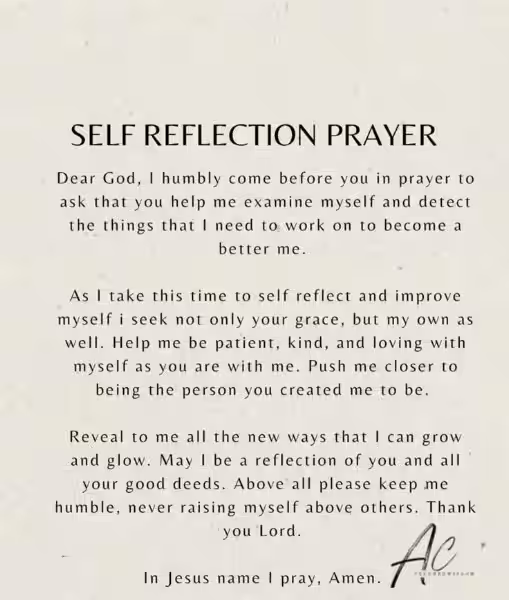
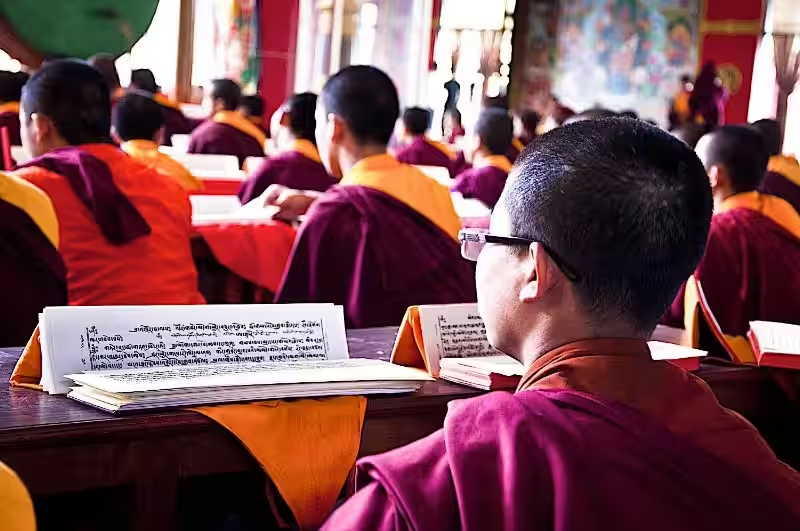
In the bustling landscape of modern life, where notifications ping and to-do lists stretch endlessly, finding moments of genuine quiet can feel like an impossible luxury. Yet, within the heart of every faith tradition lies an invitation to stillness, a call to a practice that nourishes the soul: prayer. More than just a recitation of words or a desperate cry for intervention, prayer can evolve into a profound act of listening, of contemplation, of reflective prayer. This isn’t about demanding answers, but about opening ourselves to the divine presence, allowing our faith to deepen and our understanding to expand. It’s a journey inward, guided by the whispers of the Spirit, a conversation that transforms our relationship with God and with ourselves.
For many, the concept of prayer conjures images of kneeling in formal settings or reciting memorized verses. While these expressions hold their own sacred value, reflective prayer invites us to a more intimate and personal communion. It’s about setting aside distractions, both external and internal, to simply be present. Think of it like tending a garden; you wouldn’t expect to harvest rich fruits without preparing the soil, watering regularly, and patiently waiting for growth. Similarly, reflective prayer is the diligent tending of our spiritual garden, cultivating a space where faith can truly flourish.
At its core, reflective prayer is a conscious and intentional engagement with God through quiet contemplation and mindful consideration. It’s less about asking for things and more about listening for guidance, seeking to understand God’s will, and aligning our hearts with divine love. This form of prayer often involves meditation on scripture, the natural world, or the experiences of our lives, looking for the divine imprint within them. It’s a practice that encourages introspection, prompting us to examine our motivations, our actions, and our spiritual journey with honesty and grace. For instance, instead of simply praying for a difficult situation to resolve, reflective prayer might involve pondering the lessons God might be teaching us through that very challenge.
The importance of reflective prayer in our religious lives cannot be overstated. In a world often characterized by noise and haste, it provides a much-needed sanctuary for the soul. It’s through this quiet contemplation that we can begin to discern the subtle promptings of the Holy Spirit, to understand the deeper meanings embedded in our faith traditions, and to nurture a more intimate and resilient relationship with the divine. This practice helps us move beyond a superficial understanding of religion, fostering a faith that is lived out not just in outward actions, but in the very fabric of our being. It’s a cornerstone for spiritual growth, offering a pathway to greater peace, wisdom, and compassion.
Exploring the Many Faces of Reflective Prayer
The beauty of reflective prayer lies in its adaptability. It’s not a rigid dogma, but a flexible approach that can be tailored to individual needs and spiritual sensibilities. One of the most common forms is scripture meditation, where individuals immerse themselves in a particular biblical passage, not just to understand its literal meaning, but to allow its truths to resonate within their hearts. Imagine reading the parable of the Good Samaritan. Instead of just noting the heroic actions, reflective prayer would involve asking: “Where in my life can I be a ‘Good Samaritan’ today?” or “How have others shown me the compassion of the Good Samaritan?” This process allows the sacred text to become a living, breathing guide for our daily lives.
Another powerful avenue for reflective prayer is contemplation of creation. Many faiths recognize the divine hand in the natural world. Spending time in nature, observing the intricate details of a flower, the vastness of the sky, or the rhythmic ebb and flow of the ocean, can be a profound prayer experience. This practice encourages us to see God’s artistry and power in everything around us, fostering a sense of awe and gratitude. Even a simple act like reflecting on a single blade of grass can open us to a profound sense of wonder and connection to the divine architect. Ultimately, the goal is to cultivate a prayerful awareness that extends beyond formal prayer times, permeating our everyday existence.
Practical Pathways to Reflective Prayer
Embarking on a journey of reflective prayer doesn’t require elaborate rituals or hours of dedicated time. It’s about cultivating small, consistent practices that can gradually deepen your connection to the divine. One accessible method is mindful breathing. Simply taking a few slow, deep breaths, focusing on the sensation of air entering and leaving your lungs, can be a powerful way to quiet the mind and create a sacred space within yourself. During these breaths, you might silently repeat a short prayer or a divine name, allowing the rhythm of your breath to anchor your focus. This simple exercise is a gateway to presence, helping you to transition from the external world to an internal dialogue.
Another practical approach is journaling. Taking a few minutes each day to write down your thoughts, feelings, and any insights that arise during your reflective prayer can be incredibly beneficial. You might start by writing about your day, then transition to asking questions like: “Where did I feel God’s presence today?” or “What challenge am I facing, and what wisdom might God be offering me?” This act of putting thoughts to paper can clarify your mind and reveal patterns or themes you might not otherwise notice. Consider keeping a dedicated “gratitude journal” or a “prayer intention journal” to further focus your reflections. The key is to find a method that resonates with you and to commit to it regularly, even if it’s just for a few minutes each day.
Overcoming Obstacles on the Path of Reflection
It’s natural to encounter challenges when trying to cultivate reflective prayer. The most common adversary is often our own restless mind. Thoughts can race, anxieties can surface, and the temptation to get up and attend to other tasks can be overwhelming. When this happens, the practice is not to suppress these thoughts, but to gently acknowledge them without judgment and then, with kindness, redirect your attention back to your prayer. Imagine your thoughts are like clouds passing in the sky; you can see them, but you don’t need to get caught up in them. This process of returning to the present moment is, in itself, a form of prayer.
Another hurdle can be the feeling of spiritual dryness or a lack of perceived connection. There will be days when prayer feels like an empty exercise, a one-sided conversation. During these times, it’s important to remember that faith is not solely dependent on feelings. Continue the practice, trusting that God is present even when you don’t feel an immediate response. This is a crucial period for perseverance and trust. Think of a plant that is dormant in winter; it may not show outward signs of life, but its roots are still drawing nourishment and preparing for new growth. Reflective prayer during dry spells is about sustaining the roots of your faith, knowing that spring will eventually come.
The Transformative Power of Reflective Prayer in Religion
The ultimate reward of engaging in reflective prayer is the profound transformation it brings to our spiritual lives and our understanding of religion. By consistently setting aside time to listen to God’s voice, we begin to align our will with the divine. This alignment fosters a deeper sense of peace, even amidst life’s storms, and cultivates a resilient inner strength. Our faith moves from being an intellectual assent to a lived reality, permeating our decisions, our relationships, and our outlook on the world. It’s about developing a contemplative heart, one that sees the divine in the mundane and responds with love and compassion.
Furthermore, reflective prayer helps us to move beyond rigid interpretations of religion and to embrace the vastness of God’s love. It encourages a personal encounter with the sacred, allowing us to discover truths that resonate deeply with our souls. This journey of reflection can lead to a more authentic and vibrant faith, one that is both deeply rooted in tradition and open to ongoing revelation. The practice of reflective prayer is not merely a religious exercise; it is a pathway to discovering the deepest truths about ourselves, our faith, and our connection to the divine, leading to a richer, more meaningful existence.
Frequently Asked Questions: Reflective Prayer
What is reflective prayer?
Reflective prayer is a form of prayer that emphasizes contemplation, meditation, and introspection. It involves a quiet, internal space where an individual seeks to connect with the divine or their inner self through thoughtful consideration, imagery, and awareness of their surroundings and emotions. Rather than petitionary prayer (asking for something) or intercessory prayer (praying for others), reflective prayer focuses on listening, experiencing, and deepening one’s understanding.
How is reflective prayer different from other types of prayer?
While many prayer traditions include elements of reflection, reflective prayer specifically prioritizes it as the primary mode of engagement. Unlike formulaic prayers or prayers focused on specific requests, reflective prayer is often unstructured and personal. It’s less about speaking and more about quiet receptivity, allowing thoughts, feelings, and insights to emerge. It can be seen as a way to cultivate a deeper, more intimate relationship with the divine through presence and awareness.
Can anyone practice reflective prayer, regardless of their religion?
Yes, the practice of reflective prayer can be adapted and utilized by individuals of any religious background or no religious background. While the conceptualization of the “divine” may vary greatly (e.g., God, the universe, a higher power, one’s own inner wisdom), the core practice of quieting the mind, focusing inward, and engaging in thoughtful contemplation is universally accessible. Many secular mindfulness and meditation practices share significant overlap with reflective prayer.
What are some common methods or techniques used in reflective prayer?
Common techniques include:
* Contemplation of Scripture or Sacred Texts: Meditating on specific verses or passages, allowing them to resonate and reveal deeper meaning.
* Use of Imagery: Visualizing divine presence, sacred scenes, or personal symbols to facilitate connection.
* Mindful Awareness: Paying attention to breath, bodily sensations, and the surrounding environment as a way to be present with the divine.
* Journaling: Recording thoughts, feelings, and insights that arise during prayer to process and understand them.
* Silence and Stillness: Simply sitting in quiet presence, allowing the mind to settle and receptivity to grow.
* Focusing on Attributes of the Divine: Reflecting on qualities like love, peace, wisdom, or justice.
How can reflective prayer benefit me?
Reflective prayer can offer numerous benefits, including:
* Increased inner peace and calm.
* Deeper self-awareness and understanding.
* Enhanced emotional regulation.
* A stronger sense of connection to the divine or to something larger than oneself.
* Improved focus and concentration.
* Greater clarity in decision-making.
* A more profound spiritual or personal growth.
How often should I practice reflective prayer?
There is no strict rule for how often one should practice reflective prayer. Consistency is generally more beneficial than duration. Even a few minutes each day can make a difference. Many find that setting aside a regular time, such as in the morning or evening, helps to establish a routine. The key is to find a rhythm that feels sustainable and nourishing for your personal journey.
Do I need a special place or time to practice reflective prayer?
While a dedicated quiet space can be conducive to reflective prayer, it is not strictly necessary. You can practice reflective prayer in various settings, such as a quiet corner of your home, during a walk in nature, or even on public transport if you can find a moment of stillness. The most important element is the intention to create an internal space for reflection, regardless of external circumstances.