The concept of the Holy Trinity symbol is one of the most profound and enduring tenets of Christianity, representing the divine nature of God as Father, Son, and Holy Spirit. This isn’t merely a theological abstraction; it’s a rich tapestry woven into the fabric of religious art, personal devotion, and the very understanding of God’s relationship with humanity. For many, the Holy Trinity symbol serves as a visual anchor, a constant reminder of a God who is both singular in essence and wonderfully multifaceted in His being. Its presence in churches, homes, and personal adornments speaks to its deep significance, transcending mere iconography to become a powerful expression of faith.
Understanding the Holy Trinity symbol requires delving into the core beliefs of Christianity. It posits that there is one God, indivisible, yet existing in three co-equal and co-eternal persons: God the Father, the Creator; God the Son, Jesus Christ, the Redeemer; and God the Holy Spirit, the Sanctifier. This complex doctrine, often referred to as the mystery of the Trinity, is not meant to be fully comprehended by human intellect but rather embraced through faith and revealed through scripture and tradition. The Holy Trinity symbol strives to capture this divine unity in diversity, offering a visual language for this central mystery.
Visualizing the Divine: Common Representations of the Holy Trinity Symbol
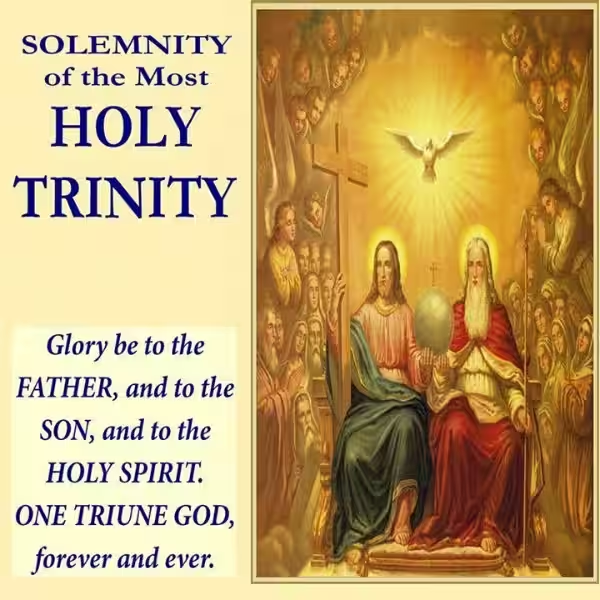
Throughout history, artists and theologians have grappled with how to visually represent the Holy Trinity symbol. While no single image can perfectly encapsulate the divine mystery, several recurring motifs have emerged, each offering a unique perspective. These visual aids are not meant to be literal depictions but rather symbolic representations designed to inspire contemplation and deepen understanding of God’s triune nature.
One of the most prevalent and recognizable forms of the Holy Trinity symbol is the shield of the Trinity, also known as the Scutum Fidei. This geometric design, often appearing as a square or rhombus, interlinks three overlapping circles or lobes, each bearing one of the divine names: Pater (Father), Filius (Son), and Spiritus Sanctus (Holy Spirit). At the intersections, the Latin word “Non est” (is not) appears, signifying that each person is distinct, while at the center, “Deus est” (is God) asserts their singular divine essence. This Holy Trinity symbol elegantly communicates the co-equality and co-eternity of the three persons, while simultaneously emphasizing their unity as one God.
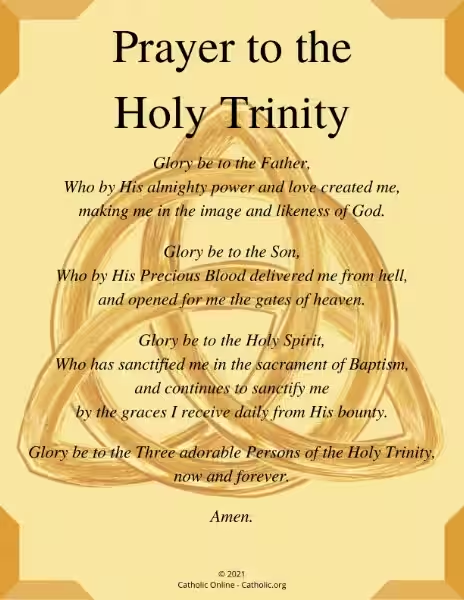
Another significant representation is the Celtic Trinity knot, or Triquetra. This intricate knot, composed of three interweaving loops, lacks any discernible beginning or end, symbolizing the eternal nature of God and the interconnectedness of the Father, Son, and Holy Spirit. The Holy Trinity symbol of the Triquetra is often depicted with a circle encompassing its entirety, representing the eternal unity of God and the encompassing love that binds the divine persons together. This ancient design, prevalent in early Christian art, particularly in Celtic cultures, resonates with a sense of timelessness and the unending nature of God’s presence.
Beyond the Visual: The Theological Significance of the Holy Trinity Symbol
The Holy Trinity symbol is much more than just a pretty picture; it carries profound theological weight that shapes Christian belief and practice. It speaks to the very nature of God’s being and His active engagement with the world. Understanding this symbolism provides a deeper appreciation for the Christian understanding of salvation and the ongoing work of God in believers’ lives.
The distinction within the unity of the Holy Trinity symbol is crucial for understanding the roles of each divine person. The Father is often associated with creation and divine will, the originator of all things. The Son, Jesus Christ, embodies redemption and divine love, through His earthly life, sacrificial death, and resurrection. The Holy Spirit represents sanctification and divine presence, empowering believers and guiding them in truth. This division of roles, while maintaining a unified divine essence, allows for a richer understanding of God’s multifaceted relationship with humanity.
Consider, for instance, the act of prayer. Christians often address their prayers to the Father, through the Son, by the power of the Holy Spirit. This reflects the intricate interplay of the Holy Trinity symbol in the life of faith. It’s a testament to the collaborative nature of the divine, where each person contributes to the divine plan of salvation and the ongoing spiritual journey of individuals. The Holy Trinity symbol thus provides a framework for understanding how God interacts with us on multiple levels, offering comfort, guidance, and transformation.
Personal Connection: How the Holy Trinity Symbol Impacts Individual Faith
The Holy Trinity symbol isn’t confined to theological discussions or artistic masterpieces; it has a deeply personal impact on the faith journeys of countless individuals. For many, it serves as a tangible reminder of God’s omnipresence and His unwavering love. The Holy Trinity symbol can be a source of strength in times of trial and a beacon of hope in moments of despair.
Many Christians wear jewelry featuring the Holy Trinity symbol, such as a pendant or ring, as a constant personal reminder of their faith. This simple act of adornment can serve as a silent prayer, a declaration of belief, and a source of personal strength throughout the day. It’s a way to carry the essence of God’s triune nature with them, imbuing their daily lives with a sense of divine connection.
Moreover, the Holy Trinity symbol can inspire acts of love and service. Recognizing that God Himself is a unity of love between the Father, Son, and Spirit encourages believers to emulate this divine love in their relationships with others. The Holy Trinity symbol serves as a model for community and interconnectedness, prompting individuals to foster unity, forgiveness, and compassion within their own lives and the wider world. This outward expression of faith, rooted in the inward understanding of the Holy Trinity symbol, is a powerful testament to its enduring relevance.
Frequently Asked Questions about the Holy Trinity Symbol
What is the Holy Trinity symbol?
The Holy Trinity symbol represents the Christian doctrine of God as three co-equal, co-eternal persons: the Father, the Son (Jesus Christ), and the Holy Spirit. While there isn’t one single, universally recognized symbol, common representations include the triangle, the shamrock, and the triquetra.
What does the triangle represent in the Holy Trinity symbol?
The equilateral triangle is a common representation of the Holy Trinity due to its three equal sides and angles, symbolizing the equality and unity of the three persons of God. Often, the Greek letters Alpha and Omega are placed within or around the triangle to signify God as the beginning and the end, or a simple “T” or the word “Trinitas” (Latin for Trinity) might be present.
What is the significance of the shamrock in relation to the Holy Trinity?
The shamrock, a three-leaf clover, is often associated with St. Patrick, who is said to have used it to explain the concept of the Trinity to the Irish pagans. The three leaves represent the Father, Son, and Holy Spirit, while the single stem signifies their unity as one God.
What is a triquetra and how does it relate to the Holy Trinity?
The triquetra, also known as a trinity knot, is an ancient symbol composed of three interlocked arcs or loops. It represents the interconnectedness and eternal nature of the Father, Son, and Holy Spirit. Its continuous, unbroken lines symbolize the eternal nature of God and the interconnectedness of the three persons.
Are there other symbols used to represent the Holy Trinity?
Yes, other symbols have been used throughout history, though less common. These can include three concentric circles, three fish, or even three candles. The core idea behind these symbols is to visually convey the concept of three distinct entities united as one.
What is the theological meaning behind the Holy Trinity?
The doctrine of the Trinity is a cornerstone of Christian theology. It teaches that there is only one God, but this one God exists as three co-equal and co-eternal persons: God the Father, God the Son (Jesus Christ), and God the Holy Spirit. Each person is fully God, yet they are not three gods, but one God.
Is the Holy Trinity symbol found in the Bible?
While the word “Trinity” itself does not appear in the Bible, the concept of God existing as Father, Son, and Holy Spirit is understood by Christians to be present throughout scripture. Passages like the baptism of Jesus and the Great Commission are often cited as biblical evidence for the Trinity.
Who uses the Holy Trinity symbol?
The Holy Trinity symbol is primarily used by Christians across various denominations, including Catholic, Orthodox, Protestant, and Anglican churches. It is often found in religious art, architecture, jewelry, and liturgical items.